




Consolidation Redraws the Map: When Simulation and EDA Converge
The shifting technological trajectories described above have triggered a massive wave of commercial consolidation, which culminated in 2025. For Siemens Digital Industries Software, the company’s PLM division, the combination of EDA and S&E tools generated an estimated $4.2 billion revenue, according to research by PLM&ERP News. Since Siemens’ PLM division does not disclose breakdown figures for its individual domains, our publication’s figures are based on estimates synthesized from various market sources.
What is doubtlessly clear, however, is that a substantial portion of this revenue directly drives the growth of Siemens’ PLM division. With total estimated revenues reaching $7.5 billion in 2025 the division solidifies its position as the world’s largest commercial force and the undisputed leader in the broader PLM market, ahead of Dassault Systèmes.
Equally remarkable is Siemens’ strengthening position within the specialized Simulation & Analysis (S&A) segment. The company currently ranks as the presumptive global number two in the CAE space. In this specific arena, the newly merged Synopsys/Ansys entity still maintains the top spot, while Dassault Systèmes holds third place—though exact market shares fluctuate slightly depending on how one categorizes MathWorks’ revenues from proprietary mathematics and systems modeling.
That said, Siemens’ competitors have hardly been standing still. In a series of high-stakes maneuvers, Synopsys famously executed a massive $35 billion acquisition of Ansys. Meanwhile, Cadence, another EDA heavyweight, expanded aggressively through 2024 and 2025 by acquiring Beta CAE Systems and Hexagon Design & Engineering for a combined $4.3 billion.
Yet, amidst this deeply transformative landscape, few players have navigated the convergence as effectively as Siemens. In this race, their strategic acquisition of Altair stands out as the true milestone defining the path forward.
By integrating Altair’s highly specialized expertise in high-performance computing (HPC) and geometric deep learning directly into the Simcenter portfolio, Siemens is tackling one of the simulation world’s greatest legacy bottlenecks: computation time. This architectural integration marks a profound paradigm shift for industrial engineering. It decisively steers the sector away from traditional, time-consuming Finite Element Method (FEM) and Computational Fluid Dynamics (CFD) solvers, moving instead toward real-time validation in the earliest, most critical stages of product design.

Meshless Analysis and Structural Tests Directly on Raw 3D CAD Data
In the Summer 2026 Simcenter release, this strategic integration comes to life, merging both highly specialized technology stacks into a single, unified portfolio. Core tools from the former Altair suite—including HyperMesh, Inspire, OptiStruct, and Simsolid—now operate natively inside the Siemens Simcenter ecosystem.
A particularly groundbreaking advancement within this release is the introduction of next-generation meshless analysis. By embedding Simcenter Simsolid alongside Designcenter NX, the workflow allows design engineers to run highly accurate structural tests directly on raw, unsimplified 3D CAD data—completely bypassing the traditionally tedious, error-prone phase of geometry cleanup and mesh creation. Furthermore, tightly connected multi-domain workflows now enable the simultaneous cross-disciplinary analysis of complex thermal, fluid, and electromagnetic systems in a single loop.
On the Physics AI front, these new capabilities are heavily augmented by a physics-aware generative AI engine. This advanced tool can synthesize entirely new design concepts in mere seconds by cross-referencing target engineering metrics against historical training data.
Geometric Deep Learning and shifting Left
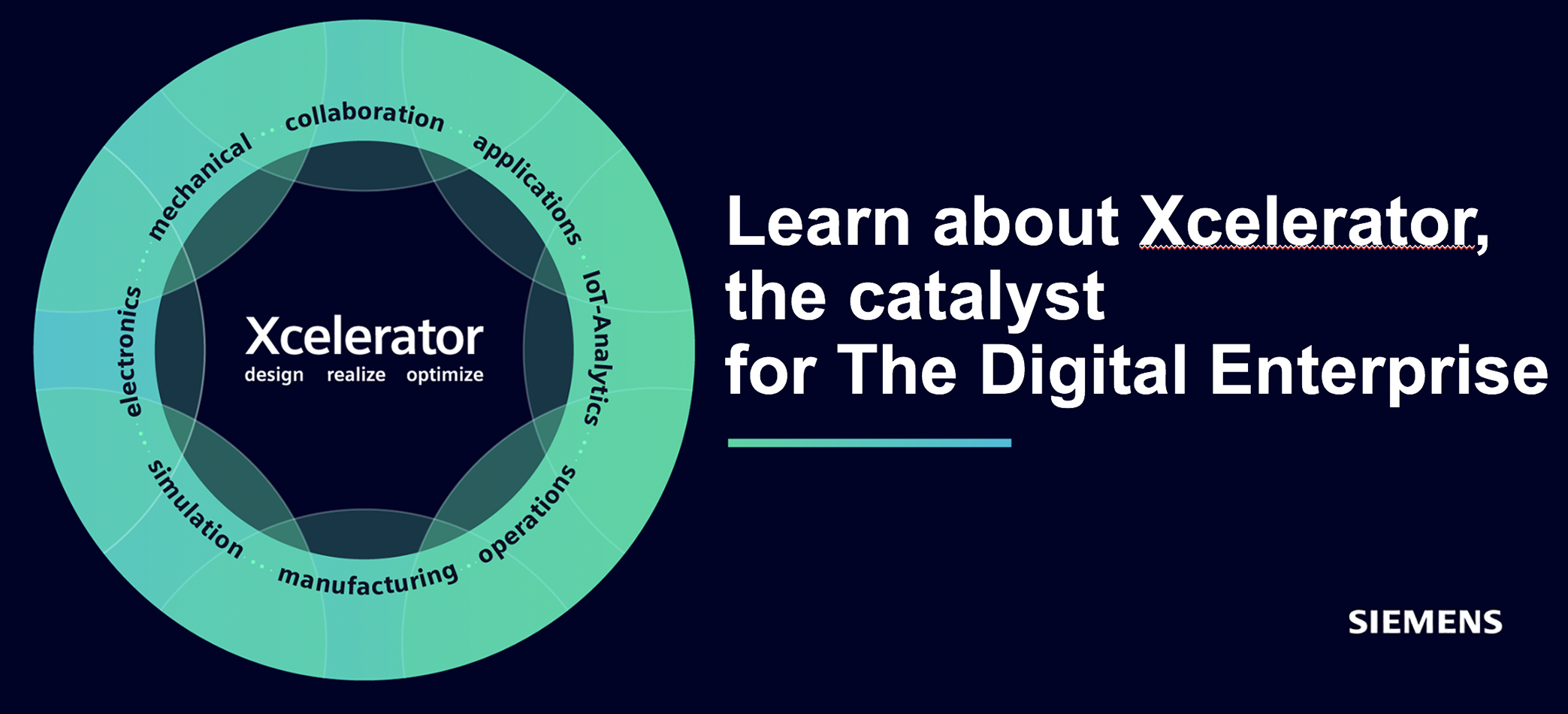
Ultimately, Siemens’ Summer 2026 Simcenter release marks the official architectural amalgamation of its core simulation portfolio with the newly acquired Altair technologies. It is a strategic integration that pivots heavily toward geometric deep learning, automated concept generation, and meshless structural validation. By embedding Altair’s foundational solvers—including HyperMesh, Inspire, and Simsolid—directly into the Siemens Xcelerator open business platform, the company is attempting to shift simulation into earlier, mainstream product engineering phases while dramatically reducing computational overhead.
As engineering challenges grow in complexity, organizations face escalating pressure to evaluate a vast design space while managing increasingly intricate, multi-domain systems. The latest updates address these industry bottlenecks by delivering faster execution speeds, earlier performance insights, and tightly connected workflows across traditionally siloed engineering disciplines. By aligning these disparate technologies within a consistent user experience, Siemens aims to reduce data translation friction, helping engineering teams apply simulation more broadly across the lifecycle to improve front-end decision-making.
According to Sam Mahalingam, the future of engineering relies on an organization’s ability to turn insight into action faster than ever before.
”We have united industry-leading simulation capabilities across physics domains into shared workflows, making simulation more accessible,” Mahalingam states. ”This portfolio empowers enterprise customers to explore more possibilities sooner, scale simulation across diverse teams, and accelerate innovation with greater confidence.”

AI-Accelerated Innovation via PhysicsAI
The AI-based capabilities within the 2026 Simcenter portfolio focus heavily on reducing an engineering team’s reliance on time-intensive, traditional numerical simulation runs. By identifying the most promising concepts much earlier in the development cycle, these tools deliver predictive results in a fraction of the time associated with legacy workflows. This enables teams to iterate rapidly while focusing detailed, deterministic validation precisely where it delivers the highest value.
Central to this strategy is Simcenter PhysicsAI, Siemens’ geometric deep learning technology that transforms historical simulation data into high-fidelity predictive models. This technology allows engineers to evaluate a significantly larger number of design concepts and make confident layout decisions up to 1,000 times faster than traditional solver simulations. Furthermore, the data and predictive models generated within these workflows can now be fully leveraged by Intelligence Center X, Siemens’ newly introduced industrial AI orchestration software.
”Engineering simulation isn’t limited by physics—it’s limited by how quickly we can explore possibilities,” explains Sam Mahalingam. ”Our strategy is to help customers learn from past work, accelerate exploration, and use AI as a prescriptive engine for innovation. We’re not replacing deterministic truth; we’re making it scalable and immediate.”

Mahalingam further highlights that the platform harnesses AI to help engineers rapidly explore and pinpoint the best solutions to their problems. ”Simcenter PhysicsAI allows customers to target challenges with unprecedented speed and intelligence, frees teams from repetitive tasks and fragmented data, and empowers engineers to focus on what matters most: driving creativity and accelerating innovation.”
The integration of PhysicsAI spans several core components of the newly unified portfolio:
- Simcenter Inspire: When integrated into Simcenter Inspire software, PhysicsAI enables engineers to predict performance results across a broad spectrum of analysis and production processes. This includes general-purpose structural analysis as well as manufacturing-specific validations for casting, molding, die stamping, and extrusion processes.
- Simcenter HyperMesh: Siemens’ PhysicsAI technology inside HyperMesh has been extended to support more efficient data training workflows, providing significantly higher confidence in structural results during high-fidelity preprocessing.
- Simcenter STAR-CCM+: With the introduction of multi-GPU support, computational fluid dynamics (CFD) engineers can train AI models from fluid simulations significantly faster—achieving speed improvements of 10x and beyond—allowing for rapid aerodynamic and thermal iterations.
Additionally, Siemens has introduced Simcenter PhysicsAI Generate, a module that allows engineering teams to create entirely novel and innovative design concepts in seconds using existing knowledge and product data. By utilizing a physics-aware generative AI engine, the software synthesizes new concepts based on target dimensions, performance KPIs, and historical training data, radically removing traditional barriers to broad, physics-based design space exploration.

Democratizing Simulation: Meshless Front-End Validation
To push simulation earlier into the design process, the latest updates focus heavily on making validation tools accessible across the entire product lifecycle, rather than restricting their use to specialist analysts. Design engineers can now evaluate mechanical performance directly on 3D CAD models with minimal geometry preparation. This effectively ”shifts left,” bringing simulation to the absolute front-end of the design cycle to accelerate downstream management decisions.
This democratization of traditional engineering workflows is driven by the tight, native integration of Simcenter Simsolid software with Siemens’ Designcenter software for advanced product engineering. This unified workflow unlocks three critical operational capabilities:
- Seamless Geometry Transfer: 3D CAD geometry transfers instantly from Designcenter to Simsolid, entirely eliminating the need for tedious mid-surface extraction or manual geometry cleanup.
- Direct CAD Constraints: Engineers can apply physical loads and constraints directly to the raw, unsimplified 3D CAD data.
- Zero Mesh Generation: The system bypasses traditional mesh generation entirely, cutting structural performance feedback loops down from hours to mere minutes. This allows designers to instantly assess physical performance at the exact point of CAD creation.

Delivering Comprehensive Multiphysics and System-Level ROMs
Beyond AI and automation, the latest updates continue to expand Siemens’ core mission of establishing a highly comprehensive multiphysics simulation environment. A pivotal development focus for this release centers on enhancing digital connectivity between multi-domain simulation technologies across complex systems, enabling a fundamentally more holistic approach to design exploration.
For example, engineers can now seamlessly link electromagnetic, thermal, and system simulation workflows, unlocking earlier insights into the physical performance of electric powertrain systems. New capabilities—such as exporting reduced-order models (ROMs) of electric motors directly from Simcenter Flux software into 3D and system-level simulation tools—operate alongside enhanced multiphysics pipelines within Simcenter STAR-CCM+. This optimized data flow significantly increases simulation accuracy in critical engineering domains like motor cooling and battery thermal behavior, while fostering more efficient collaboration across cross-disciplinary engineering teams.
Together, these technical advancements support a highly connected, AI-enhanced approach to simulation as part of the broader Siemens Xcelerator open business platform. By enabling a continuous, bidirectional flow of engineering insights across design, validation, and real-world operations, the 2026 release provides a flexible simulation environment engineered to help organizations accelerate development speed, mitigate engineering risks, and deliver higher-performing physical products.

The Simulation Arms Race After the Altair Consolidation
The Summer 2026 release of Siemens Simcenter is far more than a standard software update; it represents a direct volley in the high-stakes simulation arms race between the ”Big Three” PLM titans: Siemens Digital Industries Software, Ansys (now integrated into Synopsys), and Dassault Systèmes. By natively absorbing Altair’s crown jewels—HyperMesh, Simsolid, and its advanced HPC architecture—Siemens has structurally shifted its long-term competitive positioning.
Historically, Siemens excelled in heavy multiphysics (via STAR-CCM+) and CAD-embedded simulation (via NX and Simcenter 3D). However, it frequently relied on third-party pre-processors like Altair HyperMesh to handle complex, multi-CAD automotive and aerospace meshes. By bringing Altair directly into the fold, Siemens has closed its most glaring portfolio gaps while leapfrogging competitors in two critical, forward-looking domains: geometric deep learning and meshless structural validation.
With the 2026 Simcenter Summer release, Siemens has successfully shifted its narrative focus from mere product ”validation” to early-stage ”exploration.” Competitively, Dassault Systèmes still maintains an edge in ultra-high-fidelity structural non-linearity via its legacy Abaqus solvers, while Ansys remains deeply entrenched in terms of independent, multi-domain physics.
However, by combining Altair’s high-performance computing (HPC) backbone with meshless simulation and generative AI, Siemens now possesses the most formidable front-end design pipeline in the industrial software industry. If Siemens can successfully manage the inevitable licensing frictions and convince legacy Altair users to adopt the broader Xcelerator ecosystem, it is uniquely well-positioned to dominate the enterprise market for next-generation electric vehicle and aerospace design.

Commercially in 2025, according to CIMdata, S&A revenues grew by 8.5% to $11.67 billion and is projected to surpass $18 billion by 2030. Equipped with Siemens EDA and the strategic capabilities of their aqcuisitions Siemens PLM chief, Tony Hemmelgarn ,and the head of simulation and analysis, Sam Mahailingam, are distinctively primed to move successfully in the industry landscape.

