




The Synopsys Offensive
The global semiconductor industry is approaching a critical tipping point. As the complexity of modern chip and system architectures explodes, development windows are shrinking to absolute minimums—and the engineering talent pool simply cannot keep pace. This is a gap EDA giant Synopsys refuses to watch from the sidelines.
Already heavily fortified by its acquisition of CAE titan Ansys, Synopsys made a monumental leap beyond today’s basic AI assistants with the launch of Synopsys AgentEngineer. According to Ravi Subramanian, the company’s product chief, this marks a paradigm shift.
Rather than simple chatbots, Subramanian notes that AgentEngineer delivers a broad portfolio of domain-specific, deeply integrated AI agents capable of operating over long time horizons. Anchored by the new open Synopsys Autopilot platform, the ultimate goal is to enable intelligent agents to independently reason, plan, and execute complex workflows all the way from silicon to complete systems. The ambition is clear: by deploying agents embedded with deep domain expertise across verification, implementation, analog design, manufacturing, and simulation, Synopsys aims to fully automate time-critical and complex engineering processes.

Targeting the Industry’s Pain Point
Subramanian targets a core vulnerability across the industry: ”Our customers are currently forced to completely re-engineer their workflows just to keep pace with escalating system complexity. With AgentEngineer and the Autopilot platform, we are accelerating the transition from AI-assisted design to autonomous engineering—grounded directly in our core EDA and simulation engines.” Intriguingly, Subramanian joined Synopsys from a major rival: Siemens Digital Industries Software.
What makes Synopsys’ new gambit particularly compelling from a PLM and system-design perspective is its dual-layered architecture. The system divides tasks between domain-specific agents managing entire end-to-end workflows, and specialized, task-oriented agents. The latter are engineered to solve highly targeted bottlenecks, such as autonomous coverage closure, software validation, advanced 3DIC architecture assembly, PPA (Power, Performance, Area) optimization, analog layout analysis, and signal integrity.
In its official launch materials, Synopsys underscores that the Autopilot platform serves as an ”agentic backbone,” orchestrating memory, telemetry, and governance across the AI ecosystem. This framework ensures that the agents fundamentally comprehend design intent while retaining seamless access to historical design data.
Further reinforcing this digital architecture is Ansys Minerva, which functions as the platform’s SPDM (Simulation Process and Data Management) core. This strategic asset, absorbed through the Ansys acquisition, provides a vital piece of the puzzle. While it may not be a traditional PLM system for physical products, Minerva expertly manages the massive datasets generated during heavy simulation and analysis. This creates a rock-solid, data-rich foundation for Synopsys’ new AI agents to stand on.

The Siemens Advantage and the PLM Backbone
This is precisely where Siemens’ solutions bring an undeniable strength to the table through its unified Teamcenter backbone. But how exactly does this play out?
A critical requirement for AI agents to operate effectively across any engineering discipline is context. Agents must be able to act with a holistic understanding of the system, anchored by a fundamental first principle: they must be fed the absolute ”ground truth.”
Siemens’ PLM chief, Tony Hemmelgarn, recently addressed this core requirement, noting: ”Good data yields good AI, while bad data yields bad AI. This is precisely why Teamcenter plays such a pivotal role. It serves as the digital backbone that connects engineering knowledge, product information, and processes across the entire enterprise. In engineering, AI only becomes effective when grounded in reliable, up-to-date data and the specific context that surrounds it. Teamcenter lays that very foundation.”
Yet, the value proposition goes deeper. Hemmelgarn argues that the solution functions as a definitive Single Source of Truth, ensuring that modifications ripple seamlessly across every link in the value chain. For instance, when an engineer alters a component on a circuit board within Siemens’ EDA environment, Teamcenter can instantly calculate how that change impacts the product’s mechanical chassis (in NX CAD), thermal dynamics (in Simcenter CAE), and the broader supply chain managed in the ERP system. The data management challenge is solved at its core.
Historically, Synopsys has lacked this overarching PLM backbone. However, as they roll out Synopsys Autopilot and their AgentEngineer solutions, they counter by asserting they have constructed an ”agentic and cognitive backbone” instead. The question of which approach will emerge as the industrially preferred winner is coming to a head.
Shifting the Playground: The Synopsys Perspective
It is undeniable that Synopsys’ new solutions offer significant and highly valuable innovations. AgentEngineer serves as a prime example of how competitive dynamics can be fundamentally disrupted overnight:

- Parallel Design Over Linear Processes: By leveraging a task-oriented autonomous agent, engineering teams can rapidly simulate and optimize complex multi-die architectures (3DIC). Rather than waiting for hardware schematics to be fully finalized, teams can continuously feed performance data back into the PLM system’s digital twin in real time.
- System-Level PPA Optimization: Power, Performance, and Area (PPA) remain the holy trinity of the chip world. However, AI agents are pushing this optimization further up the value chain. When an agent independently balances power consumption against performance, system architects receive immediate feedback on how the chip will influence the entire product’s energy profile, thermal behavior, and ultimately, end-user battery life.
- An Unbroken Digital Thread: From a pure PLM perspective, the greatest value lies in these agents operating under a strict ”ground truth” principle. The optimization paths and decisions executed by the AI agent are driven by ironclad EDA data, which remains fully traceable and directly mapped to the product’s overarching requirements within the PLM environment.
Autopilot—The Secure Cloud OrchestratorThe very foundation of this autonomy is the Synopsys Autopilot platform. This is where the orchestration, memory retention, and governance take place. The platform functions as a secure environment where AI agents can coordinate their activities, retrieve design knowledge, and execute tasks without risking sensitive IP.
Synopsys has been clever enough to build the platform with high flexibility. It supports full freedom of choice regarding infrastructure, models, and data—whether the customer chooses to run Synopsys’ own tools or integrate solutions from third-party partners. Furthermore, the platform is optimized for what is known as ”token efficiency.” This means it leverages proprietary context to deliver faster results at a significantly lower computational cost and latency than generic AI models.
Industry Heavyweights Validate the Technology
That this is far more than mere marketing rhetoric becomes evident when looking at the global giants already evaluating the technology in production environments. The results speak for themselves:

- Fujitsu: Reports a productivity increase of between 10 and 30 percent in RTL code generation for its advanced computing platforms, driven by the efficient generation of SystemVerilog statements and code refactoring.
- Intel: Views agentic AI as a key to solving bottlenecks in bug testing and verification. Manoj Selva, VP at Intel, underscores that the technology can dramatically accelerate debugging in complex environments.
- MediaTek: Collaborates on analog and mixed-signal systems (AMS) to fundamentally transform how their teams create and optimize complex analog layouts.
- NVIDIA: Contributes its hardware acceleration and the NVIDIA Agent Toolkit (including Nemotron models). Tim Costa, VP at NVIDIA, notes that Synopsys combines its silicon-to-system expertise with NVIDIA’s secure runtime environments to build agents that genuinely comprehend design intent.
- Samsung Electronics & TSMC: Both Asian giants point out that agentic AI is becoming absolutely essential for managing next-generation AI infrastructure—where extreme memory architectures and advanced packaging place enormous demands on thermal analysis and power integrity.
A Paradigm Shift for System-on-Chip (SoC)
With the launch of Autopilot and AgentEngineer, Synopsys demonstrates a clear path toward the next era of electronic design. For some time, the conversation has centered on generative AI as a mere support tool for engineers—a ”copilot.” What Synopsys is doing now is shifting AI from the passenger seat to the driver’s seat.
These specialized agents are not just smart, isolated solutions for chip experts. They represent the missing link that allows the digital thread to run unobstructed all the way from microscopic silicon to the finished, complex system.
For the semiconductor industry—and, by extension, the global tech and automotive sectors dependent on custom chips—this marks a necessary paradigm shift. If the promised productivity gains of up to 30 percent hold up at scale, it will not only slash lead times but also democratize the development of next-generation superchips for AI and autonomous systems.

What Are Siemens’ Advantages in the Race?
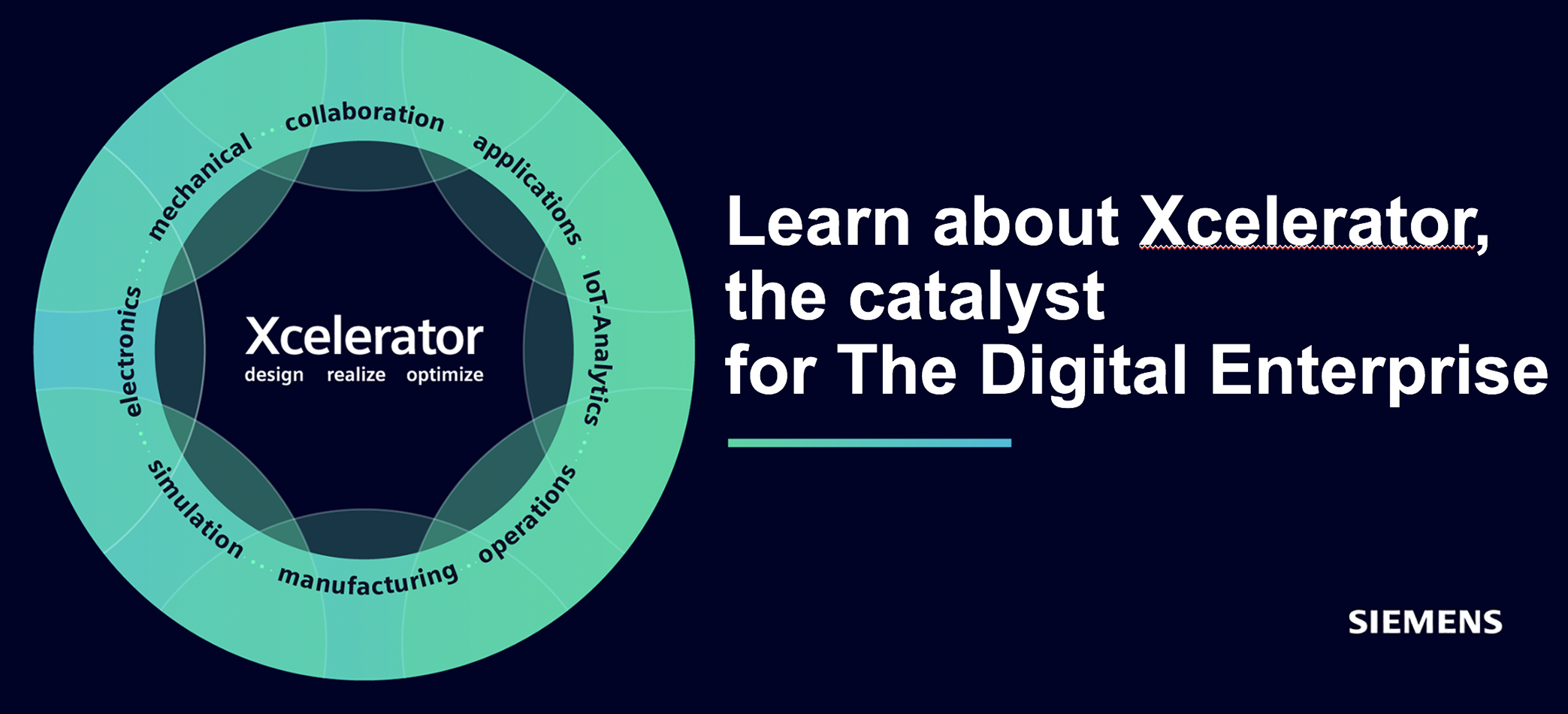
Yet, Siemens is by no means defenseless in this AI offensive. Their strategic framework holds heavyweight, inherent advantages that Synopsys will find difficult to match independently. Siemens’ trump card is spelled breadth, context, and system-wide control—delivered via the native digital thread of the Xcelerator portfolio. While Synopsys’ AI agents view the world through the lens of silicon, transistors, and logic gates, an AI integrated into Teamcenter has access to the product’s entire lifecycle.
It understands that the chip will sit inside an electronic control unit, which in turn will be mounted inside a truck’s gearbox. If an AI assistant within the Siemens environment optimizes a component, it can immediately calculate how that change impacts the mechanical chassis in NX, the thermal fluid dynamics in Simcenter, or whether the material selection conflicts with sustainability mandates in the supply chain. By owning the entire chain—from EDA to mechanics and factory automation—Siemens’ digital thread is a native reality, not a patchwork of complex API integrations.
When this backbone is fed perfectly structured, version-controlled data from a single central source (a Single Source of Truth), the risk of the AI making flawed decisions is minimized. This grants Siemens unparalleled stability when optimizing products for actual manufacturability.
The fact that Siemens EDA has Teamcenter in its corner gives the company an unshakeable, structural advantage in enterprise-level data analysis and the physical validation of both hardware and software. Because Teamcenter functions as a unified, centralized data lake for all mechanical, electrical, and enterprise-wide resources, Siemens can seamlessly map code and layout modifications directly to a machine’s physical digital twin.
In sharp contrast stands Synopsys’ agentic architecture (Autopilot and AgentEngineer). This system wins market share through autonomous execution speed, deep EDA-specific algorithmic intelligence, and advanced reasoning capabilities. Even if Synopsys has historically lacked an overarching PLM backbone akin to Teamcenter, their new ”cognitive and agentic backbone” bypasses simpler copilots. Instead, the architecture can drive completely closed, multi-day engineering workflows that deliver massive productivity gains—such as up to 50 times faster verification processes.

The Industrial Whole
The question the entire PLM and semiconductor ecosystem is now asking is, of course, who actually leads this strategic race toward the future? Looking strictly at AI maturity and technological autonomy, Synopsys is exceptionally well-positioned. By making the mental and architectural leap from passive copilots to long-term planning, autonomous agents via Autopilot and AgentEngineer, they have migrated into entirely new terrain. The fact that they have onboarded the industry’s absolute heaviest heavyweights—including Intel, NVIDIA, Samsung, and TSMC—proves that these are not mere future visions from a PowerPoint slide. This is functional, cutting-edge technology solving acute bottlenecks where next-generation microchips are actively being developed. Add to this the acquisition of Ansys and its SPDM platform Minerva, and Synopsys has suddenly equipped its agents with what appears to be a stable, physical memory bank to operate from.
Yet, despite this technical brilliance, the winner in the broad, heavy manufacturing sector is typically the player who controls the whole—and here, Siemens’ position remains virtually unthreatened. Through Teamcenter and the Xcelerator portfolio, Siemens already constitutes the digital backbone for thousands of global enterprises across the automotive, aerospace, and heavy industrial machinery sectors. While Synopsys must construct advanced API bridges for its chip agents to comprehend the mechanical and software environments around them, Siemens’ AI solutions operate natively within a finished, holistic digital twin. For an R&D director at a global automotive OEM, an AI capable of optimizing the entire vehicle for production and supply chain execution is often far more valuable than an isolated super-agent optimizing silicon structures in a vacuum.

Under Philomin’s leadership, the company will spearhead the development of a foundational industrial model engineered to deliver industrial-grade AI that is safe, secure, reliable, and trustworthy. This strategic move is textbook Siemens, mirroring the architecture of its Xcelerator portfolio. Here, digital tools are tightly integrated across every domain-related phase of product development—spanning from initial requirements definition, CAD, and electrical/electronic design to simulation, materials management, software orchestration, and ultimately, MES, BOP, and manufacturing.
Siemens’ Aggressive Agent Strategy
Who, then, stands as the ultimate victor five to ten years down the road? If the future of product development becomes entirely chip- and software-centric—where the physical product around them becomes a mere passive shell—Synopsys is perfectly positioned to ride its agentic wave to dominance.
However, Siemens is quietly weaponizing its own agent front. Over the course of 2026, the company rolled out a highly aggressive agent strategy. The fundamental difference lies not in whether they deploy agents, but where those agents operate and what they are designed to achieve.
Siemens spearheads its autonomous ecosystem with two primary pillars: the Siemens Fuse EDA AI Agent and the Teamcenter AI Agent. The Fuse agent, built on NVIDIA infrastructure, orchestrates complex workflows across the entire EDA portfolio. Its defining feature is ”self-verification”—meaning the agent’s design decisions are immediately tested against Siemens’ physics-based simulation engines for real-world validation. Simultaneously, autonomous agents are being deeply integrated into Teamcenter AI to manage the broader product lifecycle and factory automation. These agents can autonomously analyze the digital thread, manage complex Bills of Materials (BOMs), generate process plans, and automatically prepare manufacturing structures using natural language commands.
If the future hinges on mastering hyper-complex, cyber-physical systems where mechanics, electronics, and factory automation must harmonize perfectly, Siemens holds the strategic advantage. Ultimately, it is far easier for Siemens to embed smart agents into its existing data monopoly than it is for Synopsys to construct a global PLM empire from scratch.
One thing is certain: the battle for the future of autonomous engineering has only just begun. As AI adoption accelerates, the highest value will not necessarily go to the company using the most AI. Instead, victory will belong to those who possess the most trusted, structured, and complete data for AI to act upon.

