

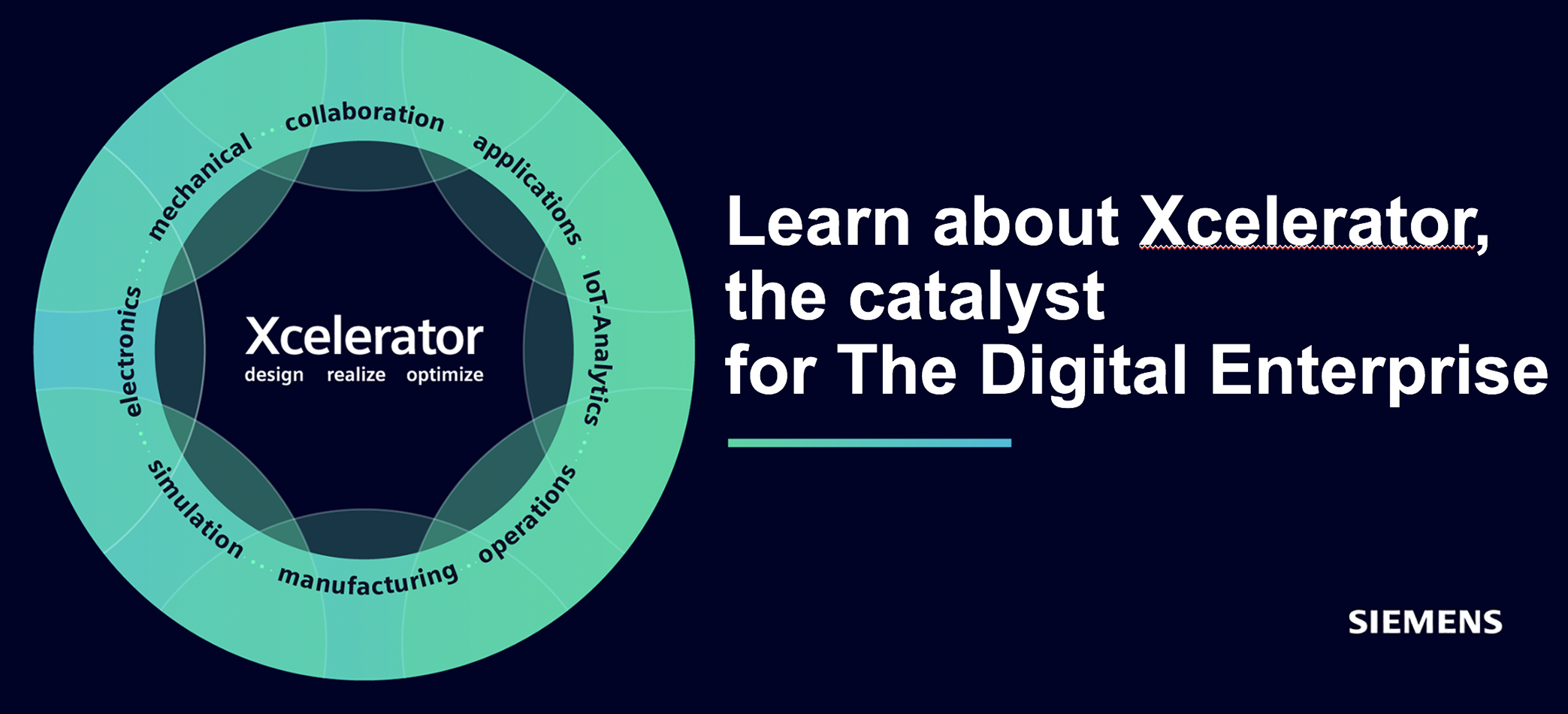



Frances Evans further notes that the platform is fundamentally engineered to help users mitigate development risks.
“We are simultaneously accelerating the pace of innovation through enhanced cross-disciplinary collaboration, earlier insights into design constraints, and more confident, decisive decision-making when developing complex electromechanical products,” she adds.
Intertwining Software with Electrical and Electronic Engineering
Integrating electrical and mechanical engineering solves only half the equation. In modern systems, it is the software that breathes life into the hardware. Establishing a true digital thread requires that software lifecycle management (ALM – Application Lifecycle Management) be linked directly to electrical and electronic design (ECAD). Siemens addresses this by natively integrating its ALM platform, Polarion, with Teamcenter and its electronic design suite, Xpedition.
In practice, this deep integration delivers three critical operational advantages:

- Hardware-Independent Software Requirements: When a systems engineer defines a function—such as an anti-lock braking feature—in Polarion, the requirements are mapped directly to the physical microcontroller on the circuit board and to the specific pins within the Capital wiring schematic. If an electrical engineer swaps a connector or alters a signal pin, the software team is automatically alerted. This prevents development teams from writing code for hardware configurations that no longer exist.
- Virtual Validation (HIL and SIL): By bridging the software code in Polarion with the physical electrical and mechanical models, organizations can run comprehensive Software-in-the-Loop (SIL) and Hardware-in-the-Loop (HIL) simulations. Developers can test software behavior against a digital twin of the electrical system to observe how circuits and wire harnesses respond to various control signals—long before physical prototypes are manufactured.
- Digital Traceability for Regulatory Compliance: In strictly regulated environments like the automotive and medical device industries, end-to-end traceability is non-negotiable. This integration enables organizations to trace a specific line of code, through its test protocol, to the exact circuit board (ECAD) and wire harness (Capital) where it executes. This creates an unbroken chain of custody from initial requirements to the finished product.
The Altair Acquisition Redraws the Battle Lines Against Synopsys/Ansys
With its latest Capital release and core focus on the digital twin, Siemens is cementing its unique market position. However, the most monumental tectonic shift in the market recently is the mega-merger where semiconductor titan Synopsys acquired simulation leader Ansys. This transaction created an industry powerhouse aimed at controlling the entire design stack—from silicon microchips to finished physical systems.
Siemens responded swiftly and decisively to this competitive threat with its strategic, multi-billion-dollar ($10.3 billion) acquisition of Altair Engineering. This move radically alters the balance of power, highlighting two distinct engineering philosophies and core strengths between the two competing camps:
Synopsys/Ansys – Core Strength: From Silicon to Physical Simulation. Together, Synopsys and Ansys form a hard to beat duo in semiconductor design (EDA) and highly advanced physical simulation. Their unique strength lies in optimizing silicon-level performance and simulating complex electromagnetic fields, thermal radiation, and fluid dynamics (CFD). They approach system design from the bottom up—starting with the microchip’s architecture and scaling outward into the physical world. Historically, however, their primary challenge has been the lack of a broader, well-established enterprise PLM backbone to manage the entire product lifecycle, factory floor planning, and heavy enterprise resource planning (ERP) integrations.


Enterprise PLM Meets AI-Driven Simulation
Even before the Altair acquisition, Siemens was the undisputed industry leader in orchestrating the broader, industrial product lifecycle (PLM) via Teamcenter, as well as managing production and automation on the factory floor. By absorbing Altair, Siemens effectively plugs its own gaps in advanced physical simulation while gaining a unique strategic weapon: Altair’s world-class expertise in AI-driven simulation and data analytics.
Where Synopsys/Ansys focuses on exact physical simulation—which demands massive computational power—Altair introduces machine learning algorithms capable of predicting system behavior in real time. This enables Siemens to deploy a highly effective ”top-down” strategy. Through Teamcenter and its industrial software suite, Siemens owns the foundational digital backbone and factory automation stack. Now, it can also optimize complex mechatronic systems in a more agile, AI-supported manner.
By closing the gap between electrical systems and mechanics via Capital, integrating software through Polarion, and scaling its simulation capabilities with Altair, Siemens has signaled its intent for total dominance over the digital twin ecosystem. The battlefield has shifted; the competition is no longer between standalone CAD or simulation tools, but about who can deliver the most complete, unified, and intelligent ecosystem. For industrial enterprises, these advancements mean the long-held vision of fully automated, synchronized, and AI-optimized product development is finally becoming an operational reality.

In summary: Siemens is exceptionally well-positioned with its toolchain in a product development landscape where the boundaries between hardware, electrical systems, and software are rapidly dissolving.

