

X-mas & New Year’s Greetings From PLM&ERP News Team
To all the great people in the PLM, Automation and ERP Businesses – few can do so much to PROVIDE a BETTER WORLD than you. Technology and innovation mean a lot for human progress and all efforts and contributions are important. Thanks a lot for 2024 and let’s join forces for new exiting advancements during 2025.
All the best from Verdi Ogewell and PLM&ERP News' Editorial Team!
All the best from Verdi Ogewell and PLM&ERP News' Editorial Team!

Why the Codebeamer Purchase Can Develop to Become PTC’s Smartest Move in Years
“THE BEST of both worlds,” when MICROSOFT and VOLKSWAGEN together with PTC develop a generative AI-based Copilot for the ALM solution Codebeamer.
SOFTWARE/AUTOMOTIVE: One of the most interesting news on the PLM front in terms of software development this month is the announcement that PTC, Microsoft and Volkswagen Group are developing a copilot for generative AI based on PTC’s ALM solution Codebeamer. This copilot will support software development in physical products by enabling software engineers to create and manage product requirements more efficiently, as well as test, validate and release them.
The news raises the question of whether PTC’s purchase of Codebeamer in 2022 is not one of the company’s smartest moves in years. The solution was acquired by PTC, as part of the purchase of German Intland Software, and fits well into an industrial world where software has become a key domain. Not least on the automotive side where cars are increasingly living up to the image of “computers on four wheels,” or more correctly, SDVs (Software Defined Vehicles). How does PTC Codebeamer fit into this?
Mainly because it is a capable Application Lifecycle Management (ALM) solution for advanced software development. The open platform extends ALM functions with flexible configuration options for different product lines, thereby providing unique configurability in complex processes. Manufacturers are increasingly using software to differentiate their products and create different versions of them. In particular, car manufacturers require tightly integrated ALM and variant-based software management solutions to plan and deliver their different configurations.
On the user side, PTC's latest acquisition, Pure Systeme's pure::variants solution, plays a complementary role in the Codebeamer environment; manufacturing companies use this solution to manage different variants of software and system technology assets across their product configurations, especially in regulated industries such as automotive, aerospace and medical technology.
But now PTC, together with Microsoft and Volkswagen, is taking new development steps. They involve embedding generative AI via Microsoft Azure's AI capabilities. The background is that the VW Group made a decision in principle a little over a year ago that Codebeamer should be used to integrate, develop and cost-effectively maintain the increasingly complex software. The development of Codebeamer Copilot builds on VW's adoption of this ALM platform across all of the company's brands.
Undeniably a substantial order from the German automotive giant–which also owns the Audi, Porsche, Seat and Skoda brands–which can lead as far as desired, both technically and commercially. It is not just VW that is interested in Codebeamer…
"Microsoft Azure AI in the Codebeamer software can help us create new specifications and test cases. It can also improve the quality of our requirements by removing duplicates and checking against existing quality standards," says Robert Kattner, Head of IT Technology at the VW Group.
"The best of both worlds," says PTC's CPO, Kevin Wrenn.
Click on the headline to read more on PLM&ERP News.
The news raises the question of whether PTC’s purchase of Codebeamer in 2022 is not one of the company’s smartest moves in years. The solution was acquired by PTC, as part of the purchase of German Intland Software, and fits well into an industrial world where software has become a key domain. Not least on the automotive side where cars are increasingly living up to the image of “computers on four wheels,” or more correctly, SDVs (Software Defined Vehicles). How does PTC Codebeamer fit into this?
Mainly because it is a capable Application Lifecycle Management (ALM) solution for advanced software development. The open platform extends ALM functions with flexible configuration options for different product lines, thereby providing unique configurability in complex processes. Manufacturers are increasingly using software to differentiate their products and create different versions of them. In particular, car manufacturers require tightly integrated ALM and variant-based software management solutions to plan and deliver their different configurations.
On the user side, PTC's latest acquisition, Pure Systeme's pure::variants solution, plays a complementary role in the Codebeamer environment; manufacturing companies use this solution to manage different variants of software and system technology assets across their product configurations, especially in regulated industries such as automotive, aerospace and medical technology.
But now PTC, together with Microsoft and Volkswagen, is taking new development steps. They involve embedding generative AI via Microsoft Azure's AI capabilities. The background is that the VW Group made a decision in principle a little over a year ago that Codebeamer should be used to integrate, develop and cost-effectively maintain the increasingly complex software. The development of Codebeamer Copilot builds on VW's adoption of this ALM platform across all of the company's brands.
Undeniably a substantial order from the German automotive giant–which also owns the Audi, Porsche, Seat and Skoda brands–which can lead as far as desired, both technically and commercially. It is not just VW that is interested in Codebeamer…
"Microsoft Azure AI in the Codebeamer software can help us create new specifications and test cases. It can also improve the quality of our requirements by removing duplicates and checking against existing quality standards," says Robert Kattner, Head of IT Technology at the VW Group.
"The best of both worlds," says PTC's CPO, Kevin Wrenn.
Click on the headline to read more on PLM&ERP News.

Volvo Group Takes Further Steps in Autonomous Truck Development
Collaborates with DHL SUPPLY CHAIN with a purpose-built vehicle for autonomous driving, even with a virtual "driver". One of the more interesting subsidiaries within the Volvo Group is Volvo Autonomous Solutions (V.A.S). The company's focus is state-of-the-art: it has set itself the goal of tackling the transport industry's capacity constraints through safe, sustainable and efficient autonomous transport solutions. To produce this they offer packaged autonomous transport solutions (ATS), which include hardware, software and services required to operate self-driving transport. The concept is based on a hub-to-hub model: Autonomous trucks take care of the highway part of the transports and drive all hours of the day between the transfer hubs. While human drivers are responsible for local operations.
It was in mid-2023 that the company opened a US branch in Texas to accelerate the development and introduction of autonomous transport solutions in collaboration with major industry players, including DHL and Uber Freight, both part of V.A.S. key customer program. This is aimed at freight forwarders, carriers, logistics service providers and freight brokers that V.A.S. works with to establish pilots and commercialize autonomous solutions. The initiative has also begun to bear fruit:
V.A.S. reports that together with DHL Supply Chain, it has made significant progress for its autonomous business by launching freight transport in accordance with its concept. The business will be enabled by the purpose-built, production-ready Volvo VNL Autonomous vehicle, operated by Aurora Driver. The vehicle is purpose-built for autonomous driving, has a virtual “driver”, necessary infrastructure and operation, and a cloud solution that controls the transport system and manages logistics flows.
The start of the business marks a critical phase in the validation of the entire ecosystem required for large-scale autonomous transport. At this stage, a safety driver will be present to monitor performance and ensure seamless integration into existing logistics networks. Freight will initially be transported on two lanes, Dallas to Houston and Fort Worth to El Paso.
“Early adopters play a crucial role in accelerating the implementation and acceptance of autonomous technology, allowing us to validate both safety and operational performance,” comments Sasko Cuklev, Head of On-Road Solutions at Volvo Autonomous Solutions.
Nils Jaeger (pictured), CEO of Volvo Autonomous Solutions, added: “As part of the Volvo Group, we have access to industry-leading product development, world-class manufacturing and a mature dealer and service network.”
The truck is designed in PTC’s Creo CAD software and product data-managed in the same company’s Windchill solution.
Click on the headline to read more about Volvo's VNL Autonomous vehicle and the DHL cooperation on PLM&ERP News.
It was in mid-2023 that the company opened a US branch in Texas to accelerate the development and introduction of autonomous transport solutions in collaboration with major industry players, including DHL and Uber Freight, both part of V.A.S. key customer program. This is aimed at freight forwarders, carriers, logistics service providers and freight brokers that V.A.S. works with to establish pilots and commercialize autonomous solutions. The initiative has also begun to bear fruit:
V.A.S. reports that together with DHL Supply Chain, it has made significant progress for its autonomous business by launching freight transport in accordance with its concept. The business will be enabled by the purpose-built, production-ready Volvo VNL Autonomous vehicle, operated by Aurora Driver. The vehicle is purpose-built for autonomous driving, has a virtual “driver”, necessary infrastructure and operation, and a cloud solution that controls the transport system and manages logistics flows.
The start of the business marks a critical phase in the validation of the entire ecosystem required for large-scale autonomous transport. At this stage, a safety driver will be present to monitor performance and ensure seamless integration into existing logistics networks. Freight will initially be transported on two lanes, Dallas to Houston and Fort Worth to El Paso.
“Early adopters play a crucial role in accelerating the implementation and acceptance of autonomous technology, allowing us to validate both safety and operational performance,” comments Sasko Cuklev, Head of On-Road Solutions at Volvo Autonomous Solutions.
Nils Jaeger (pictured), CEO of Volvo Autonomous Solutions, added: “As part of the Volvo Group, we have access to industry-leading product development, world-class manufacturing and a mature dealer and service network.”
The truck is designed in PTC’s Creo CAD software and product data-managed in the same company’s Windchill solution.
Click on the headline to read more about Volvo's VNL Autonomous vehicle and the DHL cooperation on PLM&ERP News.

Anticimex vässar fältservicesidan (FSM): Graderar upp till IFS molnplattform
”IFS fältservice-lösningar TOPPRANKAS bland analytiker som IDC, Gartner och CIMdata.” IFS meddelar idag att Anticimex Sverige, del av Anticimex Group, satsar på IFS Cloud och molnplattformen för att stärka och vässa sitt fätservicearbete, inte minst för att förbättra sina kunders tjänsteupplevelser. Bolagen har ett 25 år långt partnerskap i ryggen, och Anticimex har nu valt att uppgradera till IFS Cloud som en del av sin strategiska övergång från att tillhandahålla en behandlingsbaserad metod till förebyggande skadedjursbekämpning. Anticimex kommer att använda den nya plattformen för att standardisera fältserviceprocesser, och tillhandahålla den skalbarhet som behövs för att stödja framtida tillväxt och långsiktiga hållbarhetsmål genom ökad digitalisering.
Just fältservice-området är en av den svenska affärssystemutvecklarens absolut främsta distanser. Bland annat rankas bolagets lösning som marknadsledande i analytikern IDC MarketScape: Worldwide Field Service Management Applications 2023-2024 Vendor Assessment. Men även Gartners har rankat IFS’ lösningar som ledande i sin kvadrant för fältservice, Gartner Magic Quadrant for FSM.
En viktig faktor bakom uppgraderingsbeslutet var möjligheten att fortsätta använda de senaste industriella AI-drivna Planning Scheduling & Optimization (PSO)-funktionerna i plattformen. Tillsammans med Mobile Work Order-appen och Advanced Forms kommer IFS Cloud att göra det möjligt för Anticimex att fortsätta optimeringen av sin fältservice, och öka effektiviteten genom snabbare svarstider, minskad operativ komplexitet och förbättrad kundnöjdhet.
Utöver fältservice kommer IFS Cloud att stödja kritiska affärsfunktioner, inklusive ekonomi och hantering av leveranskedjan. När lösningarna är fullt implementerade kommer de att omfatta IFS Customer Engagement och IFS Advanced Forms – en plattform utan kod för att förbättra datainsamling och arbetsflöden. Dessa tillägg kommer att göra det möjligt för Anticimex att förbättra sitt kundfokus genom att effektivisera verksamheten, utan större anpassningar.
I en kommentar säger Alexander Storckenfeldt, CEO för Anticimex Sweden, att övergången till IFS Cloud ger en god grund för ambitionerna att fortsätta utveckla verksamheten:
”Den tekniska uppgraderingen ger oss möjligheter att ytterligare förbättra vår kundresa, så att vi kan leverera den bästa servicen och expertkunskapen till våra kunder. IFS branschkunskap och lösningar som är skräddarsydda för våra behov har varit avgörande.”
IFS Norden-bas, Ann-Kristin Sander konstaterar i ett uttalande att man med IFS Cloud kan bygga mer integrerad och effektiv verksamhetsmodell:
”Genom att använda den fulla potentialen i IFS Cloud, inklusive PSO och våra bredare industriella AI-kapaciteter, kommer Anticimex att vara väl positionerat för att driva på företagets innovation under hela sin transformationsresa,” summerar hon.
Klicka på rubriken för att läsa mer om IFS, Anticimex och fältservicelösningarna på PLM&ERP News.
Just fältservice-området är en av den svenska affärssystemutvecklarens absolut främsta distanser. Bland annat rankas bolagets lösning som marknadsledande i analytikern IDC MarketScape: Worldwide Field Service Management Applications 2023-2024 Vendor Assessment. Men även Gartners har rankat IFS’ lösningar som ledande i sin kvadrant för fältservice, Gartner Magic Quadrant for FSM.
En viktig faktor bakom uppgraderingsbeslutet var möjligheten att fortsätta använda de senaste industriella AI-drivna Planning Scheduling & Optimization (PSO)-funktionerna i plattformen. Tillsammans med Mobile Work Order-appen och Advanced Forms kommer IFS Cloud att göra det möjligt för Anticimex att fortsätta optimeringen av sin fältservice, och öka effektiviteten genom snabbare svarstider, minskad operativ komplexitet och förbättrad kundnöjdhet.
Utöver fältservice kommer IFS Cloud att stödja kritiska affärsfunktioner, inklusive ekonomi och hantering av leveranskedjan. När lösningarna är fullt implementerade kommer de att omfatta IFS Customer Engagement och IFS Advanced Forms – en plattform utan kod för att förbättra datainsamling och arbetsflöden. Dessa tillägg kommer att göra det möjligt för Anticimex att förbättra sitt kundfokus genom att effektivisera verksamheten, utan större anpassningar.
I en kommentar säger Alexander Storckenfeldt, CEO för Anticimex Sweden, att övergången till IFS Cloud ger en god grund för ambitionerna att fortsätta utveckla verksamheten:
”Den tekniska uppgraderingen ger oss möjligheter att ytterligare förbättra vår kundresa, så att vi kan leverera den bästa servicen och expertkunskapen till våra kunder. IFS branschkunskap och lösningar som är skräddarsydda för våra behov har varit avgörande.”
IFS Norden-bas, Ann-Kristin Sander konstaterar i ett uttalande att man med IFS Cloud kan bygga mer integrerad och effektiv verksamhetsmodell:
”Genom att använda den fulla potentialen i IFS Cloud, inklusive PSO och våra bredare industriella AI-kapaciteter, kommer Anticimex att vara väl positionerat för att driva på företagets innovation under hela sin transformationsresa,” summerar hon.
Klicka på rubriken för att läsa mer om IFS, Anticimex och fältservicelösningarna på PLM&ERP News.

”A Digital Milestone”: EPLAN and Siemens Establish Seamless Compatibility in Machine Engineering
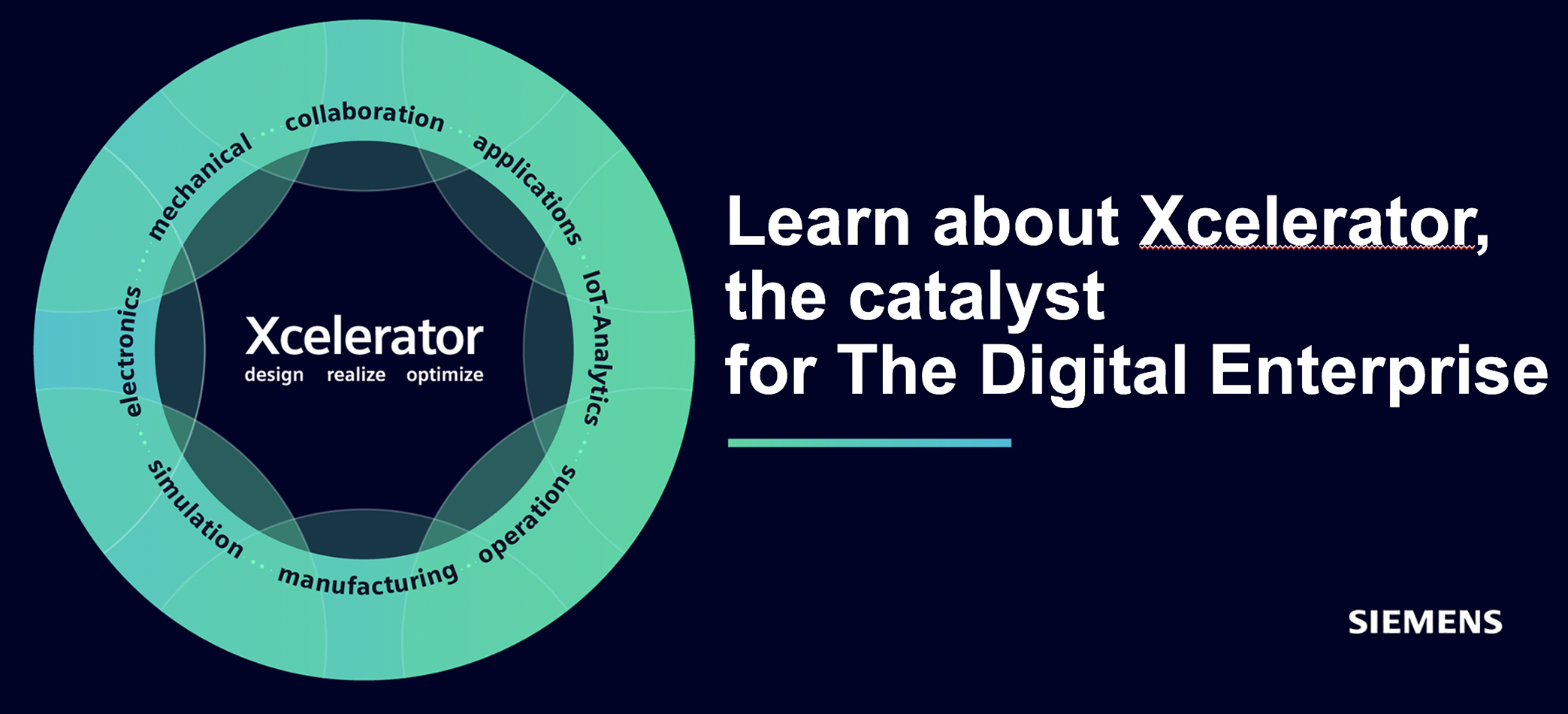
ABB, TESLA and SpaceX among EPLAN's users. When it comes to software and service solutions in electrical engineering, automation and mechatronics, German EPLAN is undoubtedly one of the more prominent players. The company specializes above all in machine, line and panel builders. Not least for this reason, today's announced extended collaboration with Siemens Digital Industries Software is of great interest: The companies are deepening the collaboration and connections between EPLAN's software and the Siemens Xcelerator portfolio. They thereby significantly increase the compatibility between their products. It is generally about automated interactions between Siemens Teamcenter X software and TIA Portal on the one hand, and EPLAN Electric P8 and Pro Panel on the other.
A heavy point is that all technical information now becomes available directly in EPLAN and vice versa; in other words, factors that allow you to directly benefit from a more efficient tool chain for machine and line technology, which also contributes to the fact that the electrical work can be done much faster and the risks of errors are reduced.
In the press material, it is pointed out that the collaboration on both sides expands the companies' partner ecosystem: Siemens Xcelerator's open digital business platform and EPLAN's Partner Network. The effects are as follows:
• Seamless data exchange between Siemens Teamcenter X, TIA-Selection Tool and EPLAN's software
• Collaboration improves the tool chain in mechanical engineering
• Machine builders can realize their projects in construction, operation and expansion faster and more efficiently.
"The partnership between Siemens and EPLAN is a milestone in digital technology. The optimized data exchange makes it possible to realize your projects in construction, operation and expansion faster and more efficiently," says Cedrik Neike, board member of Siemens AG and CEO of Digital Industries. "Through this collaboration, we strengthen the Siemens Xcelerator ecosystem and create greater value for customers than any of us could do individually."
EPLAN's CEO, Sebastian Seitz adds:
"With this collaboration, Eplan and Siemens combine their broad experiences in mechanical engineering to provide our joint customers with comprehensive tool chain. This makes engineering processes much faster and less prone to errors."
Companies using EPLAN include well-known players such as ABB, Tesla, Neilsoft, Bachner Elektro and SpaceX.
Click on the headline to read more on PLM&ERP News.
Click on the headline to read more on PLM&ERP News.

”En digital milstolpe”: EPLAN och Siemens etablerar sömlöst kompatibel maskinteknik
ABB, TESLA och SpaceX bland EPLANs användare. När det gäller mjukvaru- och servicelösningar inom elektroteknik, automation och mekatronik är tyska EPLAN tveklöst en av de mer framstående aktörerna. Bolaget spetsar framför allt för maskin-, linje- och panelbyggare. Inte minst av detta skäl är dagens annonserade utökade samarbete med Siemens Digital Industries Software av stort intresse: Bolagen fördjupar samarbetet och kopplingarna mellan EPLANs programvaror och Siemens Xcelerator portfölj. Man utökar därmed kompatibiliteten avsevärt mellan sina produkter. Det handlar övergripande om automatiserade interaktioner mellan Siemens Teamcenter X-mjukvara och TIA Portal å ena sidan, och EPLAN Electric P8 och Pro Panel å den andra.
En tung poäng är att all teknisk information nu blir tillgänglig direkt i EPLAN och vice versa; alltså faktorer som gör att man direkt kan dra nytta av en effektivare verktygskedja för maskin- och linjeteknik, vilket också bidrar till att det eltekniska arbetet kan göras mycket snabbare och riskerna för fel minskar.
I pressmaterialet pekar man på att samarbetet på båda sidor utökar bolagens partner-ekosystem: Siemens Xcelerators öppna digitala affärsplattform och EPLANs Partner Network. Effekterna blir följande:
• Sömlöst datautbyte mellan Siemens Teamcenter X, TIA-Selection Tool och EPLANs programvaror
• Samarbete förbättrar verktygskedjan inom maskinteknik
• Maskinbyggare kan förverkliga sina projekt inom konstruktion, drift och utbyggnad snabbare och effektivare.
"Partnerskapet mellan Siemens och EPLAN är en milstolpe inom digital teknik. Det optimerade datautbytet gör det möjligt för att kunna realisera sina projekt inom byggnation, drift och utbyggnad snabbare och effektivare", säger Cedrik Neike, styrelseledamot för Siemens AG och CEO för Digital Industries. "Genom detta samarbete förstärker vi Siemens Xcelerator-ekosystemet och skapar ett större värde för kunderna, än vad var och en av oss skulle kunna göra individuellt."
EPLANs CEO, Sebastian Seitz tillägger:
"Med detta samarbete slår EPLAN och Siemens ihop sina breda erfarenheter inom maskinteknik för att ge våra gemensamma kunder och heltäckande verktygskedja. Detta gör ingenjörsprocesser mycket snabbare och mindre benägna för fel."
Bland företag som använder EPLAN finns välkända spelare som ABB, Tesla, Neilsoft, Bachner Elektro och SpaceX.
En tung poäng är att all teknisk information nu blir tillgänglig direkt i EPLAN och vice versa; alltså faktorer som gör att man direkt kan dra nytta av en effektivare verktygskedja för maskin- och linjeteknik, vilket också bidrar till att det eltekniska arbetet kan göras mycket snabbare och riskerna för fel minskar.
I pressmaterialet pekar man på att samarbetet på båda sidor utökar bolagens partner-ekosystem: Siemens Xcelerators öppna digitala affärsplattform och EPLANs Partner Network. Effekterna blir följande:
• Sömlöst datautbyte mellan Siemens Teamcenter X, TIA-Selection Tool och EPLANs programvaror
• Samarbete förbättrar verktygskedjan inom maskinteknik
• Maskinbyggare kan förverkliga sina projekt inom konstruktion, drift och utbyggnad snabbare och effektivare.
"Partnerskapet mellan Siemens och EPLAN är en milstolpe inom digital teknik. Det optimerade datautbytet gör det möjligt för att kunna realisera sina projekt inom byggnation, drift och utbyggnad snabbare och effektivare", säger Cedrik Neike, styrelseledamot för Siemens AG och CEO för Digital Industries. "Genom detta samarbete förstärker vi Siemens Xcelerator-ekosystemet och skapar ett större värde för kunderna, än vad var och en av oss skulle kunna göra individuellt."
EPLANs CEO, Sebastian Seitz tillägger:
"Med detta samarbete slår EPLAN och Siemens ihop sina breda erfarenheter inom maskinteknik för att ge våra gemensamma kunder och heltäckande verktygskedja. Detta gör ingenjörsprocesser mycket snabbare och mindre benägna för fel."
Bland företag som använder EPLAN finns välkända spelare som ABB, Tesla, Neilsoft, Bachner Elektro och SpaceX.

The Manufacturing Industry’s New Paths: Real Time Data, IoT/IIoT and Networks Drive the Industry...
COGNIZANT's HAMPUS LINDVALL and BIRGITTE VILLADSEN on IoT/IIoT (Industrial IoT) and SMART MANUFACTURING. The rapid development in networking and IoT is driving a change in the manufacturing industry. Production lines, machines and factories are increasingly connected, creating a digital ecosystem where real-time data drives the next phase of smart manufacturing.
This is claimed in today's guest column by Hampus Lindvall, Automation Consultant and Birgitte Villadsen, Director IoT and Engineering, at the global IT and technology consultant Cognizant.
"IoT is an important enabler where physical assets are connected with the digital world. It gives manufacturers increased visibility into operations and promotes efficiency, flexibility and sustainability. From predictive maintenance to intelligent supply chains, IoT enables optimized processes, reduced downtime and customized production,” they write, arguing that business transformation is driven by generative AI (Gen AI), which augments human expertise using machine learning (ML). “Combined with IoT, Gen AI improves decision-making, automates routine tasks and promotes innovation by analyzing data from IoT systems. These technologies form the basis of the smart factories of the future, where human creativity and machine intelligence work together.”
But the current trends in networking, IoT and AI in the manufacturing industry are not only about technology, but also about changing business models and processes and creating a more sustainable and stable industrial future:
"Many organizations lack the ability to take advantage of the new opportunities. Digitization and implementation of connected devices is crucial. Organizations that have been lagging behind are now rushing to catch up and begin their journey towards Industry 4.0. According to Mobica, the IIoT market is worth $865 billion, with projected growth to $33.3 trillion by 2030,” the authors write.
Click on the headline to read the full article on PLM&ERP News.
This is claimed in today's guest column by Hampus Lindvall, Automation Consultant and Birgitte Villadsen, Director IoT and Engineering, at the global IT and technology consultant Cognizant.
"IoT is an important enabler where physical assets are connected with the digital world. It gives manufacturers increased visibility into operations and promotes efficiency, flexibility and sustainability. From predictive maintenance to intelligent supply chains, IoT enables optimized processes, reduced downtime and customized production,” they write, arguing that business transformation is driven by generative AI (Gen AI), which augments human expertise using machine learning (ML). “Combined with IoT, Gen AI improves decision-making, automates routine tasks and promotes innovation by analyzing data from IoT systems. These technologies form the basis of the smart factories of the future, where human creativity and machine intelligence work together.”
But the current trends in networking, IoT and AI in the manufacturing industry are not only about technology, but also about changing business models and processes and creating a more sustainable and stable industrial future:
"Many organizations lack the ability to take advantage of the new opportunities. Digitization and implementation of connected devices is crucial. Organizations that have been lagging behind are now rushing to catch up and begin their journey towards Industry 4.0. According to Mobica, the IIoT market is worth $865 billion, with projected growth to $33.3 trillion by 2030,” the authors write.
Click on the headline to read the full article on PLM&ERP News.

Om kompetensbristen: ”Utan samlat grepp riskerar vi att tappa både konkurrenskraft och möjligheter”
IT-branschen står inför en allvarlig utmaning. Kompetensbristen hotar inte bara tillväxt och innovation utan riskerar att stjälpa företag i deras digitala transformation.
”Om vi inte tar ett samlat grepp nu, riskerar vi att förlora både konkurrenskraft och framtidens möjligheter,” säger Jonas Olsson, Nordenchef på digitala ingenjörsföretaget Nagarro, i en intervju där han delar sin syn på branschens akuta behov och möjliga lösningar.
Jonas Olsson hänvisar till aktuella rapporter som visar en tydlig obalans mellan utbud och efterfrågan på teknisk kompetens. Enligt Manpower Group har 77 procent av svenska företag svårt att hitta rätt kompetens inom IT och data.
”Det här är inte ett nytt problem, understryker han. Men gapet blir bara större, och utan strategiska förändringar kommer vi inte kunna möta framtidens behov."
”För unga IT-talanger är arbetsmiljön minst lika viktig som lönen,” konstaterar Olsson vidare. Han menar att företag måste erbjuda arbetsplatser som är flexibla, innovativa och hälsofrämjande. Det handlar om att skapa en miljö där människor vill stanna kvar och utvecklas, inte bara arbeta.
I takt med att tekniken utvecklas krävs det ständigt uppdaterad kunskap. ”Interna vidareutbildningsprogram är en investering, inte en kostnad, säger Jonas och lyfter fram vikten av att företag hjälper sina anställda att växa både professionellt och personligt.” Han fortsätter:
”Framtiden handlar om AI, dataanalys och IT-säkerhet. Vi måste rusta oss för att möta den. Det är en fråga som AI-kommissionen betonar i sin rapport, och det är bra, men det krävs konkret handling nu.”
Klicka på rubriken för att läsa mer om Jonas Olssons, Nagarro, syn på saken.
Jonas Olsson hänvisar till aktuella rapporter som visar en tydlig obalans mellan utbud och efterfrågan på teknisk kompetens. Enligt Manpower Group har 77 procent av svenska företag svårt att hitta rätt kompetens inom IT och data.
”Det här är inte ett nytt problem, understryker han. Men gapet blir bara större, och utan strategiska förändringar kommer vi inte kunna möta framtidens behov."
”För unga IT-talanger är arbetsmiljön minst lika viktig som lönen,” konstaterar Olsson vidare. Han menar att företag måste erbjuda arbetsplatser som är flexibla, innovativa och hälsofrämjande. Det handlar om att skapa en miljö där människor vill stanna kvar och utvecklas, inte bara arbeta.
I takt med att tekniken utvecklas krävs det ständigt uppdaterad kunskap. ”Interna vidareutbildningsprogram är en investering, inte en kostnad, säger Jonas och lyfter fram vikten av att företag hjälper sina anställda att växa både professionellt och personligt.” Han fortsätter:
”Framtiden handlar om AI, dataanalys och IT-säkerhet. Vi måste rusta oss för att möta den. Det är en fråga som AI-kommissionen betonar i sin rapport, och det är bra, men det krävs konkret handling nu.”
Klicka på rubriken för att läsa mer om Jonas Olssons, Nagarro, syn på saken.

He Leads Europe’s Car Manufacturers in 2025: Mercedes Benz Chief Ola Källenius Elected ACEA...
The German-Swedish Ola Källenius, President and CEO of Mercedes Benz, can add another top post to his CV: The board of the European Automobile Manufacturers' Association, ACEA, has today appointed him chairman for 2025. Källenius succeeds Renault's CEO, Luca de Meo.
ACEA was founded in 1991 and consists of Europe's 14 major car and truck manufacturers and has close cooperation with the 31 national car industry organizations in Europe.
“ACEA is one of the most trusted voices in Brussels,” says Källenius, adding: “Under my presidency, ACEA will focus on improving the regulatory environment to sharpen our competitiveness in the digital and electric era. We will work for a market-driven transition towards reducing the industry's carbon dioxide emissions. And we will stand up for international trade that is free, fair and rules-based.”
Källenius' appointment undeniably comes at a time of dramatic change in the automotive industry. Above all, what characterizes the development, particularly noticeable in the automotive sector, is the exponentially increasing proportion of electricity, electronics and software in all vehicles. This at the same time as AI is gaining ground in the automotive industry, which has always been at the forefront of digital product and production development.
The software part in particular has made great demands on change and the introduction of new industrial methodology in both product development and manufacturing work; something that has largely characterized, for example, Mercedes.
In short, today's cars are more connected, software-controlled, autonomous and electric than ever. Each of the vehicles contains, or will soon contain, millions of lines of code and must be able to handle terabytes of data on a daily basis. This is a huge undertaking and it has led to a "volcanic" change in the way several major vehicle manufacturers work, not least now rapidly building up sophisticated infrastructures for software development.
The change in approach comes in light of a future in the industry that is increasingly about the development of software-defined vehicle (SDV) platforms that are profoundly changing the automotive and transportation industry, as well as electric and hybrid cars. Within his own company, Mercedes–which btw works in a product development environment which on the PLM side means that Siemens Digital Industries NX CAD and Teamcenter PLM/cPDFm tools play main roles–Källenius has worked hard to meet the demands of the new era, including through the group's commitment and investment in a sophisticated infrastructure for software development, which cost hundreds of millions of euros.
"I am convinced that the automotive industry in Europe has what it takes to continue to be successful in global competition," he says in a comment on the ACEA appointment.
The automotive industry has gained a knowledgeable, process-competent and strong voice in Brüssel.
Click on the headline to read the full article on PLM&ERP News.
“ACEA is one of the most trusted voices in Brussels,” says Källenius, adding: “Under my presidency, ACEA will focus on improving the regulatory environment to sharpen our competitiveness in the digital and electric era. We will work for a market-driven transition towards reducing the industry's carbon dioxide emissions. And we will stand up for international trade that is free, fair and rules-based.”
Källenius' appointment undeniably comes at a time of dramatic change in the automotive industry. Above all, what characterizes the development, particularly noticeable in the automotive sector, is the exponentially increasing proportion of electricity, electronics and software in all vehicles. This at the same time as AI is gaining ground in the automotive industry, which has always been at the forefront of digital product and production development.
The software part in particular has made great demands on change and the introduction of new industrial methodology in both product development and manufacturing work; something that has largely characterized, for example, Mercedes.
In short, today's cars are more connected, software-controlled, autonomous and electric than ever. Each of the vehicles contains, or will soon contain, millions of lines of code and must be able to handle terabytes of data on a daily basis. This is a huge undertaking and it has led to a "volcanic" change in the way several major vehicle manufacturers work, not least now rapidly building up sophisticated infrastructures for software development.
The change in approach comes in light of a future in the industry that is increasingly about the development of software-defined vehicle (SDV) platforms that are profoundly changing the automotive and transportation industry, as well as electric and hybrid cars. Within his own company, Mercedes–which btw works in a product development environment which on the PLM side means that Siemens Digital Industries NX CAD and Teamcenter PLM/cPDFm tools play main roles–Källenius has worked hard to meet the demands of the new era, including through the group's commitment and investment in a sophisticated infrastructure for software development, which cost hundreds of millions of euros.
"I am convinced that the automotive industry in Europe has what it takes to continue to be successful in global competition," he says in a comment on the ACEA appointment.
The automotive industry has gained a knowledgeable, process-competent and strong voice in Brüssel.
Click on the headline to read the full article on PLM&ERP News.

Is the Manufacturing Industry Suffering From Digital Action Paralysis?
"A SURVEY from IFS shows that 68% of companies are STUCK IN THE EARLY STAGE OF DIGITALIZATION." That is perhaps the most startling conclusion in a study produced for business system developer IFS, which takes the pace of digital maturity in the manufacturing industry. The company's Nordics leader, CEO Ann-Kristin Sander, says in a comment:
"The background is that the manufacturing industry is at a crossroads," she says, pointing out that the survey shows that a full 68% of Swedish companies are stuck in the early stages of digitalization without any concrete plans on how to proceed. At the same time, most manufacturing companies know that they need to invest in digitalization to survive in the long term. Nevertheless, less than 10% can be described as digital role models, according to the survey from IFS.
The results are interesting, not least because it is a fairly extensive study in which 815 manufacturing companies, from among others Europe, North America, and the Nordics, participated.
A reasonable interpretation of the answers in the study is that many manufacturing companies are fumbling with their digitalization and have difficulty prioritizing which technology to invest in. They stand more or less still. At the same time, 79% realize that a stronger commitment to the digitalization of the business is crucial for its future, and that the business will not survive more than 1-3 years if it does not carry out modernization of its digital technology.
As noted above one aspect of the problem seems to have to do with difficulties with technical priorities. According to the study, 89% of the Swedish manufacturing companies have problems choosing which technology is the most important to invest in and marked as “essential” in the answer boxes all technology areas that were included as alternatives. This is more than the global average of 80 percent. The domains covered were: • Artificial intelligence • Data analysis • Large language models (LLM) • IoT • Augmented reality
In the press material IFS characterized the study’s results as an indication of a kind of paralysis of action within the manufacturing industry; a paralysis that appears even heavier when you look more closely at how the companies internally pull in different directions: It turns out that the expectations for digitalization are different depending on where you are in the organization. Almost all managers of the Swedish companies (97%) believe that virtual/augmented reality is the most important technology to invest in, while only 78% of operational decision makers believe that this technology is the most important. The technology investment that both executives (96%) and operational decision makers (89%) most agree is important is IoT.
“Many understand the urgency, but get stuck due to indecision, waiting for others to invest in the technology first so they can see the results. Or they wait for guidance from a trusted partner before taking action. This means that they stop in their development and risk falling behind their competitors,” says Sander.
Click on the headline to read the full article on PLM&ERP News.
"The background is that the manufacturing industry is at a crossroads," she says, pointing out that the survey shows that a full 68% of Swedish companies are stuck in the early stages of digitalization without any concrete plans on how to proceed. At the same time, most manufacturing companies know that they need to invest in digitalization to survive in the long term. Nevertheless, less than 10% can be described as digital role models, according to the survey from IFS.
The results are interesting, not least because it is a fairly extensive study in which 815 manufacturing companies, from among others Europe, North America, and the Nordics, participated.
A reasonable interpretation of the answers in the study is that many manufacturing companies are fumbling with their digitalization and have difficulty prioritizing which technology to invest in. They stand more or less still. At the same time, 79% realize that a stronger commitment to the digitalization of the business is crucial for its future, and that the business will not survive more than 1-3 years if it does not carry out modernization of its digital technology.
As noted above one aspect of the problem seems to have to do with difficulties with technical priorities. According to the study, 89% of the Swedish manufacturing companies have problems choosing which technology is the most important to invest in and marked as “essential” in the answer boxes all technology areas that were included as alternatives. This is more than the global average of 80 percent. The domains covered were: • Artificial intelligence • Data analysis • Large language models (LLM) • IoT • Augmented reality
In the press material IFS characterized the study’s results as an indication of a kind of paralysis of action within the manufacturing industry; a paralysis that appears even heavier when you look more closely at how the companies internally pull in different directions: It turns out that the expectations for digitalization are different depending on where you are in the organization. Almost all managers of the Swedish companies (97%) believe that virtual/augmented reality is the most important technology to invest in, while only 78% of operational decision makers believe that this technology is the most important. The technology investment that both executives (96%) and operational decision makers (89%) most agree is important is IoT.
“Many understand the urgency, but get stuck due to indecision, waiting for others to invest in the technology first so they can see the results. Or they wait for guidance from a trusted partner before taking action. This means that they stop in their development and risk falling behind their competitors,” says Sander.
Click on the headline to read the full article on PLM&ERP News.