



A New Titan Emerges: Can Schneider Challenge Siemens Digital Industries by by Acquiring PTC?
On Schneider Electric’s new $22.6 Billion Acquisition.
This morning, France's Schneider Electric confirmed a definitive agreement to acquire PLM developer PTC in a massive all-cash transaction valued at $22.6 billion. The blockbuster deal instantly forges a formidable new vanguard in the industrial software and AI arena.
According to Schneider Electric CEO Olivier Blum, the combination creates the "industry's most complete Software & AI powerhouse." PTC CEO Neil Barua added that the alliance gives the engineering firm "substantial scale and resources to accelerate innovation" globally.
This acquisition has the power to send shockwaves through the enterprise ecosystem, fundamentally altering competing technology stacks. In recent industrial software history, a transaction of this magnitude is eclipsed only by Synopsys’ monumental $35 billion buyout of Ansys. Concurrently, it answers the aggressive software offensive of Schneider’s primary European rival, Siemens—which has deployed over $15 billion in recent years to secure Altair (simulation & AI) and Dotmatics (life sciences).
While this deal disrupts the status quo, a long and arduous integration road lies ahead before the newly minted Schneider-PTC entity can challenge the global sovereignty of Siemens Digital Industries.
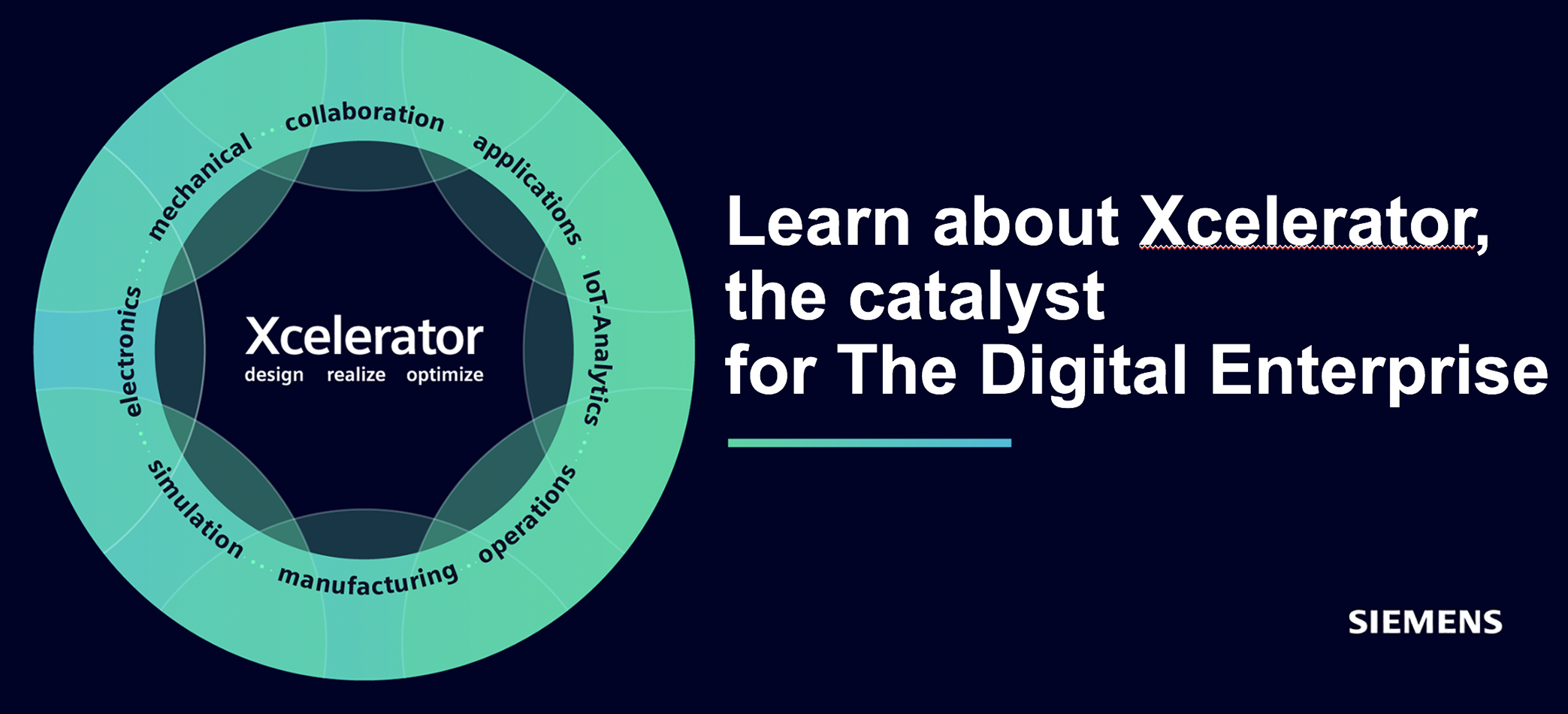
Siemens maintains a massive head start. Its competitive edge is rooted in a mature, turnkey digital twin framework that seamlessly spans the entire value chain—a unique model encompassing three fully synchronized layers, connecting data into a continuous digital thread: • The Digital Twin of the Product (Design)
• The Digital Twin of the Production Line (Manufacturing)
• The Digital Twin of Performance (Operational analytics)
Building and validating this loop takes decades. Schneider simply does not have that time, making the PTC acquisition an indispensable strategic shortcut.
Historically, Schneider has commanded a powerful market position in operational software, energy optimization, and process automation, anchored by its EcoStruxure architecture, AVEVA, and its recent move for Cognite.
What the company lacked was presence in the early engineering phases that precede factory construction or product manufacturing. Through PTC, Schneider finally gains access to critical flagship design suites: Creo (3D CAD) and Windchill (PLM).
But is this enough to truly challenge Siemens for the throne of industrial digital systems?
Click the link below to read more on PLM & ERP News.

En ny PLM- & Automations-jätte tar form: Men kan Schneider utmana Siemens genom PTC-köpet?
Om Schneider Electrics nya 226 miljardersköp av PTC.
Veckans stora nyhet är franska automationsföretaget Schneider Electrics förvärv av PLM-utvecklaren PTC i en kontantaffär värderad till 22,6 miljarder dollar, motsvarande 226 miljarder kronor. Affären skapar omedelbart en ny gigant på den industriella mjukvaru-, automations- och AI-arenan.
Enligt Schneider Electrics CEO, Olivier Blum, skapar sammanslagningen "branschens mest kompletta kraftpaket för mjukvara och AI". Medan PTCs CEO, Neil Barua, tillade att alliansen ger ingenjörsbolaget "betydande skala och resurser för att accelerera innovationen" globalt.
Även om de båda kontrahenterna är långt ifrån framme vid sådana integrerade kapabiliteter har detta förvärv möjligheter att sända chockvågor genom näringslivets produktions-ekosystem och kan i grunden förändra läget för konkurrerande teknikplattformar.
I den moderna eran för industriell mjukvara överskuggas denna transaktion i storlek endast av Synopsys monumentala uppköp av Ansys för 35 miljarder dollar under 2024-25 cykeln. Samtidigt är det ett direkt svar på den aggressiva mjukvaruoffensiven från Schneiders främsta europeiska rival, Siemens – som under de senaste åren har investerat över 15 miljarder dollar i uppköpen av Altair Engineering (simulering & AI) och Dotmatics (life science).
Men trots denna affära potentiual att rubba status quo inom verkstads- och tillverknmings-IT väntar en lång och mödosam integrationsresa innan den nykläckta Schneider-PTC-enheten på allvar kan utmana Siemens Digital Industries globala suveränitet. Siemens har kort sagt ett massivt försprång.
Deras konkurrensfördel är rotad i ett moget, nyckelfärdigt ramverk för digitala tvillingar som sömlöst spänner över hela värdekedjan – en unik modell som omfattar tre helt synkroniserade skikt vilka kopplar samman data till en obruten digital tråd:
• Produktens digitala tvilling (Design)
• Produktionslinjens digitala tvilling (Tillverkning)
• Prestandans digitala tvilling (Driftsanalys)
Att bygga och validera detta kretslopp tar decennier. Den tiden har helt enkelt inte Schneider, vilket gör förvärvet av PTC till en rimlig strategisk genväg, även om ingen ska underskatta tiden det tar att djupintegrera alla lösningar.
Historiskt sett har Schneider haft en stark marknadsposition inom operativ mjukvara, energioptimering och processautomation, förankrad i deras EcoStruxure-arkitektur, AVEVA och det nyligen genomförda klivet in i Cognite. Vad företaget saknade var närvaro i de tidiga ingenjörsfaserna som föregår fabriksbyggen eller produkttillverkning. Genom PTC får Schneider tillgång till framför allt PTCs design, PLM och ALM-sviter: Creo (3D CAD), Windchill (PLM) och Codebeamer. Plus en hel del annat, men är detta tillräckligt för att på allvar utmana Siemens om tronen för industriella digitala system? Klicka på länken nedan för att läsa hela analysen på PLM & ERP News.

Silicon, Software, and Strategy: Inside the $50B Enterprise Consolidation Race
Why SIEMENS Could Hold a Winning Edge in the EDA Super-Cycle.
The battle for dominance in Electronic Design Automation (EDA) has reached a fever pitch. As the largest and fastest-evolving sector within PLM, EDA is undergoing a massive technological disruption—propelled by Artificial Intelligence (AI), High-Performance Computing (HPC), and next-generation software architectures. This shift has turned the rivalry among the industry’s "Big Three"—Synopsys, Cadence, and Siemens EDA—intensely fierce.
The market dynamics underscore the high stakes: together, this triumvirate controls 72% of the global EDA market, with Synopsys leading at 32%, closely followed by Cadence at 29%, and Siemens holding 11%. According to data from PLM analyst firm CIMData, global corporate spending on EDA tools crossed $21 billion in 2025, capturing nearly a quarter of the broader $88 billion PLM market.
Concurrently, a Forbes Business Insights report highlights that AI investments by global manufacturers approached $8 billion in 2025, expanding at a staggering 40% annual growth rate. Meanwhile, the critical, adjacent domain of simulation and analysis grew by 10%, reaching $11.3 billion. Together, EDA and simulation now command nearly 40% of all PLM capital allocation. It is easy to see why the electronics sector has become the primary battleground for the Big Three; the financial stakes are massive, and the future growth prospects are staggering.
Driven by a structural shift where electronics and software consume an ever-larger share of engineering resources, all three giants have poured massive capital into R&D. This trend has been thrown into sharp relief by the rise of generative AI and the exponential performance leaps of NVIDIA-accelerated HPC solutions. These systems leverage specialized GPUs to handle the mammoth, escalating data volumes that routinely choke traditional CPU architectures.
This is no minor evolutionary step; AI integration has triggered a seismic market consolidation, unlocking a wave of enterprise transformation that drove total sector M&A value near $53 billion in 2024-2025 cycle. The competitive playing field was fundamentally rewritten when Synopsys finalized its blockbuster $35 billion acquisition of simulation giant Ansys. In rapid succession, Siemens executed bold growth maneuvers—securing its advanced engineering footprint by acquiring Altair for $10.6 billion and scaling its AI-powered PLM ecosystem into Life Sciences via a $5.1 billion buyout of Dotmatics. Meanwhile, Cadence countered the shifting landscape with a $3.2 billion acquisition of Hexagon D+E.
The ripple effects of these mega-mergers have materialized instantly. To justify these astronomical outlays, companies must rapidly deliver commercial value—triggering a surge of development in agentic AI, corporate Copilots, and deeply integrated, NVIDIA-powered HPC architectures.
In this high-stakes environment, Siemens and Synopsys have emerged as frontrunners at the intersection of AI and HPC. Striking examples include Siemens’ launch of the Fuse EDA AI System and Fuse EDA AI Agent platform and Synopsys' new AgentEngineer and Autopilot platforms.
Yet, structural signs suggest Siemens and Teamcenter hold a true technical edge—one poised to trigger a market-winning growth curve. Bottom line is a simpel truth says Siemens PLM boss, Tony Hemmelgarn (pictured): ”AI isn’t better than the quality of data.”
Click on the headline to read the full story on PLM&ERP News.

Synopsys skippar copiloten: Autonoma AI-agenter tar över ratten i chip- och systemdesign
…men Siemens PLM-ryggrad Teamcenter är ett svårslaget trumfkort i EDA-kontexten.
Halvledarbranschen står inför en brytpunkt där komplexa chip- och systemarkitekturer exploderar samtidigt som utvecklingsfönstren krymper. Ingenjörstimmarna räcker inte till, men EDA-jätten Synopsys agerar.
Bolaget dominerar inom EDA (Electronic Design Automation) med 32 % i marknadsandel. Tillsammans med Cadence och Siemens EDA utgör de ”De Tre Stora” som kontrollerar ca 85 % av marknaden. Synopsys position har stärkts efter köpet av CAE-jätten Ansys.
Med lanseringen av Synopsys AgentEngineer hävdar produktchefen Ravi Subramanian att man tar ett monumentalt kliv förbi dagens enkla AI-assistenter. Det är en bred portfölj av domänspecifika, integrerade AI-agenter som vilar på den nya öppna plattformen Synopsys Autopilot. Målet är att låta agenter självständigt resonera, planera och exekvera komplexa arbetsflöden från kisel till färdigt system. Genom djup domänkunskap inom verifiering, implementering, analog design, tillverkning samt simulering och analys ska tidskrävande ingenjörsprocesser automatseras.
Ravi Subramanian sätter fingret på branschens smärtpunkt: ”Våra kunder tvingas helt omkonstruera sina ingenjörsarbetsflöden för att hålla jämna steg med systemkomplexi-teten. Med AgentEngineer och Autopilot-plattformen accelererar vi skiftet från AI-assisterad design till autonom ingenjörskonst, förankrad i våra EDA- och simuleringsmotorer,” säger Synopsys produktchef, som paradoxalt nog kom till bolaget från konkurrenten Siemens Digital Industries Software.
Ur ett PLM- och systemdesignperspektiv delas Synopsys nya giv upp i två nivåer: domänspecifika agenter för hela arbetsflöden samt specialiserade agenter på uppgiftsnivå. De senare löser tunga uppgifter som autonom täckningsstängning (”coverage closure”), programvaruvalidering, montering av avancerade 3DIC-arkitekturer, PPA-optimering (Power, Performance, Area) samt layoutanalys för analoga kretsar och signalintegritet.
Effektiviteten kräver att agenterna matas med den exakta sanningen – ”ground truth” – direkt från Synopsys EDA-verktyg. Det är som Siemens PLM-chef Tony Hemmelgarn nyligen konstaterade: ”Det handlar i grunden om en enkel princip: bra data ger bra AI, dåliga data ger dålig AI. Det är precis därför som Teamcenter (TC) spelar en så avgörande roll. Systemet utgör den digitala ryggrad som sammanlänkar ingenjörskunskap, produktinformation och processer över hela företaget. Inom ingenjörskonst blir AI effektivt först när tekniken är förankrad i tillförlitliga, uppdaterade data och den specifika kontext som omger dem. Det är TC som lägger den grunden.”
Lösningen fungerar som en central sanning (Single Source of Truth). När en ingenjör ändrar något på ett kretskort i Siemens EDA-miljö kan TC direkt beräkna hur det påverkar produktens mekaniska chassi (i NX CAD), de termiska flödena (i Simcenter CAE) och hela leveranskedjan i ERP-systemet. Datahanteringen är löst i botten.
Synopsys har traditionellt saknat denna övergripande PLM-ryggrad. Men när de nu rullar ut Synopsys Autopilot och sina AgentEngineer-lösningar menar de att de istället byggt en ”agentisk och kognitiv ryggrad”. Frågan är nu: Vem blir industriellt föredragen vinnare i detta?
Klicka på rubriken för att läsa mer på PLM&ERP News.

COMSOL Takes the Technical Lead Among the Big Three in Multiphysics Simulation
In-depth with COMSOL's VP and CTO, ED FONTES, on the fierce competition with ANSYS and SIEMENS, the AI revolution, and how it affects the 2027 release of the Multiphysics platform.
A profound paradigm shift is underway in the world of digital Simulation & Analysis (S&A). Historically, these tools served as digital checkpoints—a clever way to cut down on costly physical prototypes and verify performance at the eleventh hour. Those days are gone. Today, S&A has emerged as a core engine driving product innovation and strategic decision-making across the entire product lifecycle.
Simultaneously, AI is transitioning from hyped experimentation into practical application within the daily workflows of engineers. This is no distant vision; a significant share of global enterprises are already deploying AI solutions in production environments. According to Forbes Business Insights, global manufacturers invested roughly $8 billion in AI during 2025. These investments are fueled by everything from advanced data analytics to leveraging AI to build and optimize the actual simulation models on the CAE side. The annual growth rate is staggering: approximately 40 percent.
In this undeniably dynamic market, a clear trend has emerged: multiphysics simulation is becoming increasingly business-critical. Analyst firm CIMdata highlights a distinct "shift left" in the development cycle, where verification is moved earlier through large-scale, cloud-based virtual environments. At the same time, AI surrogates have begun compressing multiphysics cycle times drastically, democratizing these tools for a broader user base beyond traditional CAE specialists. This evolution plays directly into the hands of Swedish software developer COMSOL and its flagship platform, COMSOL Multiphysics.
When the company recently rolled out its new 2027 platform, which will be released later this fall, the headline breakthrough was a definitive leap into the realm of agentic AI. Previously, AI in this space was limited to generative chatbots offering coding assistance and guidance. Now, COMSOL is introducing an entirely new infrastructure purpose-built for external AI agents, driven by the new COMSOL MCP Server. VP of Development and CTO Ed Fontes was visibly enthusiastic when PLM&ERP News caught up with him at a launch event in Cambridge.
"With the COMSOL MCP Server, we are taking a major step toward agentic simulation. AI assistants and agents can communicate directly with COMSOL Multiphysics through the Model Context Protocol and use large language models to create, modify, run, and analyze models. COMSOL Multiphysics is particularly well suited for this because the entire modeling environment can be controlled through a unified, object-oriented API. An AI agent can therefore work with the complete modeling workflow through a single interface."
With this move, COMSOL cements its status as one of the market’s three sharpest innovators in multiphysics S&A tools.
While debates will always persist over who holds the absolute technical crown, it is undeniable that Ansys/Synopsys, COMSOL, and Siemens/Altair are the three players currently leading the charge in combining AI with multiphysics solutions. Yet, structural signs suggest COMSOL might just hold the true technical edge. The question is: how?
Read the full, unabridged interview at PLM&ERP News.


COMSOL i teknisk spets bland de tre stora inom multifysiksimulering
Möt ED FONTES, VP och utvecklingschef på COMSOL i dagens djupintervju på PLM&ERP News om den tuffa konkurrensen med Ansys och Siemens, AI-revolutionen och den nya 20237-versionen av Multiphysics-plattformen.
Det pågår just nu ett paradigmskifte inom digital simulering och analys (S&A). Historiskt sett har dessa verktyg ofta fungerat som digitala kontrollstationer – ett smart sätt att reducera dyra fysiska prototyper och verifiera prestanda i elfte timmen. Den tiden är förbi. Idag kliver simulering och analys fram som en central motor för produktinnovation och strategiskt beslutsfattande genom hela produktlivscykeln.
Samtidigt tar AI avgörande steg från hajpade experiment till praktiskt verkstadsarbete i ingenjörernas dagliga arbetsflöden. Detta är ingen framtidsvision; en betydande andel globala företag rullar redan ut AI-lösningar i skarp miljö. Enligt Forbes Business Insights investerade världens tillverkningsföretag mellan 7,6 och 8,6 miljarder dollar i AI under 2025. Investeringarna drivs av allt från avancerad dataanalys till att låta AI bygga upp och optimera själva simulerings-modellerna på CAE-sidan. Med en årlig tillväxttakt på runt 40 % förväntas de totala investeringarna spräcka 100-miljardersvallen i början av 2030-talet.
Onekligen en dynamisk marknad alltså, och en tydlig trend är att multifysik-simulering blir alltmer affärskritisk. Analysföretaget CIMdata pekar på att verifieringen flyttar allt längre "åt vänster" i utvecklingskedjan genom storskaliga, molnbaserade virtuella miljöer. Samtidigt har AI-surrogater börjat korta ledtiderna för multifysik så pass mycket att verktygen kan öppnas upp för en bredare massa bortom de renodlade CAE-specialisterna. Just denna utveckling spelar svenska COMSOL och deras plattform Multiphysics rakt i händerna.
När bolaget nyligen lanserade sin nya 2027-version var den stora nyheten att man nu tar klivet fullt ut i den agentiska AI-världen. Tidigare handlade det på detta område om en generativ AI-chatbot för programmeringshjälp och vägledning. Nu lanseras en helt ny infrastruktur, specialbyggd för externa AI-agenter. Integrationen sker med hjälp av nya COMSOL MCP Server. Bolagets utvecklingschef och CTO, Ed Fontes, är entusiastisk när PLM&ERP News träffar honom under ett lanseringsevent i Cambridge.
”Med COMSOL MCP Server tar vi ett stort steg mot agentbaserad simulering," säger han. "AI-assistenter och AI-agenter kan kommunicera direkt med COMSOL Multiphysics genom Model Context Protocol och använda stora språkmodeller för att skapa, modifiera, köra och analysera modeller. COMSOL Multiphysics är särskilt väl lämpat för detta eftersom hela modellerings-miljön kan styras genom ett sammanhållet, objekt-orienterat API. En AI-agent kan därför arbeta med hela modellerings-processen genom ett och samma gränssnitt.”
Genom detta befäster COMSOL sin roll som en av marknadens spetsigaste aktörer inom digitala, multifysiska S&A-verktyg.
”Men det finns betydligt mer,” hävdar Fontes och pekar bland annat på att de fortsätter att utveckla sina AI-baserade surrogatmodeller. ”Bland annat utökar vi funktionaliteten för djupa neurala nätverk, DNN, för tidsberoende modeller.”
Vilka spelare som är tekniskt mest framstående på detta komplexa område kan självfallet diskuteras. Klart är att Ansys/Synopsys, COMSOL och Siemens/Altair är de tre som i dagsläget hunnit längst med att kombinera AI med multifysik-lösningar. I detta och annat i den underliggande strukturen ligger COMSOL bra till för att konkurrera på spetsnivå, hur då?
Klicka på rubriken för att läsa mer på PLM&ERP News.

Responsible and Profitable AI: ”The Path to Higher ROI Demands Governance and Structure”
JOSEFIN ROSÉN, SAS Institute: ”In the Nordics, users choose to override or disregard an average of 27.8 percent of AI-generated recommendations, according to a recent research by SAS Institute and analyst IDC.”
Yet, the dividend for doing it right is staggering: organisations with the most robust frameworks for trustworthy AI are 15 times more likely to report a high return on their AI investments compared to those with the weakest practices. Progress is moving at a breakneck pace, with the region’s Trustworthy AI Index surging from 31.5 in 2025 to 58.3 in 2026—a dramatic leap of 26.8 index points, or approximately 85 percent. These findings stem from the new Data and AI Impact Report: The New Economics of Trust, an initiative by SAS Institute (Statistical Analysis System) built on research insights from IDC.
As AI integration deepens, questions surrounding autonomy and human oversight have taken centre stage across the Nordics. The shift in corporate priorities is stark: the share of Nordic organisations citing the management of autonomy and human oversight as a critical challenge skyrocketed from a mere 1.5 percent in 2025 to 34.2 percent in 2026. Concurrently, the region’s Business and Operational Impact Index climbed from 41.1 in 2025 to 50.4 in 2026, gaining 9.3 index points. These Nordic results clearly demonstrate that as organisations fortify their AI governance, their reported business impact grows in tandem. For Swedish and Nordic enterprises, the next frontier is translating high-level policies into boardroom practice. This requires clear accountability, human oversight, and rigid boundaries for autonomous AI behaviour. Organisations must possess the capability to understand, audit, and track the outputs generated by their AI systems, notes Josefin Rosén, an expert in trustworthy and ethical AI at SAS Institute and a member of the European Commission's AI Act Advisory Forum. The chasm between leaders and laggards in the trustworthy AI space is widening. Among organisations with the most sophisticated frameworks for responsible AI, 62 percent report that they yield at least double the returns on their AI investments, compared to a mere 4 percent among organisations with the weakest practices. When AI works as intended, it delivers tremendous impact. At the same time, it is well-documented that even the most advanced AI agents can exhibit error rates exceeding 25 percent when tackling complex tasks—a failure rate that is entirely unacceptable when dealing with decisions carrying significant real-world consequences. To achieve precision and repeatability, organisations must embed domain expertise into their AI-driven workflows while firmly keeping humans at the center of governance and oversight. The enterprises that succeed in this balancing act will bridge the gap between perceived trust and actual reliability, ultimately securing a distinct competitive advantage through AI, concludes Bryan Harris, CTO at SAS Institute.

The Siemens-Salesforce Agent Superdeal: Rewriting the Rules of Industrial AI
Siemens Boss ROLAND BUSCH: “A critical building block for an industrial AI operating system that connects engineering, operations and business.”
The expanded Siemens-Salesforce partnership, announced at last week’s Dreamforce conference, comes with ambitious claims. It connects Siemens’ complex engineering data with Salesforce’s customer-facing workflows and autonomous AI agents. Siemens remains a global leader in PLM, led by its Teamcenter platform, which stores machinery data, blueprints, and digital twins.
Until now, much of that information has stayed inside engineering teams. By integrating with Salesforce Agentforce, Siemens can make this knowledge available across the business. In short, Siemens brings industrial intelligence and digital twins, while Salesforce adds enterprise AI and commercial workflows—closing the gap for good.
"For decades, engineering expertise has been separated from the people servicing machines in the field. We are closing that gap," says Roland Busch, CEO of Siemens AG. "By embedding our digital twin in commercial workflows, we are giving every service technician and salesperson access to a virtual engineer. Together, we are building the basis for an industrial AI operating system that links engineering, operations, and business processes."
Salesforce strengthens the partnership with autonomous AI agents for front-office work. Powered by Agentforce, these agents act with more initiative and context than traditional systems. They can engage, nurture, and qualify large volumes of sales leads in real time, without human intervention. Siemens is already using the technology to manage and route leads across 132 countries directly to the right sales representatives.
The operational turnaround is immediate: customers and employees can receive precise technical answers within seconds. Field technicians and sales representatives can access engineering-grade data directly in Salesforce. The AI agents can troubleshoot technical issues, identify the right spare part for a specific serial number, or create upgrade quotes that are guaranteed to be manufacturable—all without adding work for Siemens’ engineering teams.
"This is a blueprint for the AI era. It goes beyond connecting technologies: it is meant to speed up transformation, unlock growth, and create new value for customers," notes Salesforce’s chief, Marc Benioff. While this stands as a compelling roadmap for global tech, what practical value will this architecture bring to regional manufacturing giants such as ABB, Sandvik, and SKF?
Read the full analysis on PLM&ERP News via the link below.

Siemens och Salesforces superdeal: Allians kring AI-agenter ritar om industrikartan
Siemenschefen ROLAND BUSCH: ”En affär som stänger gapet mellan verkstadsgolvet/Ingenjörerna och slutkunderna.”
Förra veckans stora nyhet inom PLM- och ERP-världen var det fördjupade partnerskapet mellan Siemens och Salesforce som annonserades på Dreamforce-eventet. Kärnan i samarbetet handlar om att koppla ihop komplex ingenjörsdata med kommersiella kundflöden och autonoma AI-agenter. Siemens är världsledande inom PLM (Product Lifecycle Management), inte minst genom sin plattform Teamcenter där all data om maskiner, ritningar och digitala tvillingar finns samlade. Men historiskt har denna värdefulla information varit isolerad hos ingenjörerna. Genom den nya integrationen med Salesforces Agentforce-plattform blir informationen tillgänglig i hela organisationen. I praktiken innebär det att Siemens bidrar med industriell intelligens och digitala tvillingar, medan Salesforce tillför företags-AI och kommersiella arbetsflöden för att stänga gapet mellan verkstadsgolvet och slutkunden.
”Under decennier har ingenjörens expertkunskap varit helt skild från den som servar maskinen ute på fältet. Nu överbryggar vi den klyftan för gott,” säger Roland Busch, CEO och koncernchef för Siemens AG. ”Genom att baka in vår digitala tvilling i det kommersiella arbetsflödet sätter vi en virtuell ingenjör i händerna på varje servicetekniker och säljare. Tillsammans lägger vi grunden för ett industriellt AI-operativsystem som sömlöst knyter samman konstruktion, drift och affärsprocesser.”
Salesforce lyfter i sin tur partnerskapet till en helt ny nivå genom autonoma AI-agenter i front-office. Med Agentforce blir plattformen proaktiv och kontextmedveten på ett helt annat sätt än traditionella system. Det innebär att AI-agenterna kan bearbeta, kontakta och kvalificera stora volymer av inkommande försäljningsleads i realtid – helt utan mänsklig inblandning. Siemens använder redan i dag denna teknik för att automatiskt hantera leads över 132 länder och slussa dem vidare till rätt säljare.
Detta ger omedelbara kommersiella fördelar genom att leverera tekniska svar i kundflödet på några sekunder. En servicetekniker på fältet eller en säljare kan via Salesforces gränssnitt få direkt tillgång till ingenjörsdata. AI-agenterna kan svara på komplexa tekniska frågor, identifiera rätt reservdelar för specifika serienummer eller skapa offerter på uppgraderingar som är garanterat byggbara, allt utan att Siemens interna ingenjörsteam behöver belastas.
”Detta är en ritning för AI-eran. Det är ett djupt samarbete som sträcker sig långt bortom att bara koppla samman teknik för att accelerera förändring, frigöra ny tillväxt och skapa helt nya värden för kunderna,” konstaterar Salesforces CEO Marc Benioff.
”En lösning för AI-eran” - men vad kan tekniken göra för verkstadsindustrijättar som ABB, Sandvik och SKF?
Klicka på rubriken för att läsa mer på PLM&ERP News.

Military Capability and Virtual Universes: Dassault Systèmes Flexes Its Muscles in a Geopolitical Baptism...
The aerospace and defence (A&D) industry is experiencing a commercial surge, propelled by a volatile global climate, swelling defence budgets, and an accelerating mandate for technological innovation and sovereignty. This trajectory is vividly mirrored in the PLM domain, where demands for rigorous traceability, digitalization, and design optimization have elevated PLM systems to the very backbone of industrial transformation.
Unsurprisingly, the heavyweights in this arena comprise the "Big Three" developers—Siemens, Dassault Systèmes, and PTC—though specialized players such as Ansys/Synopsys and Cadence also command prominent positions within these industrial sectors. While the crown of market leadership depends on whom you ask, the broader picture reveals a fierce competition between Siemens, the fastest-growing entity in this segment, and Dassault, which leverages a historically formidable position rooted in its classic CAD stalwart, CATIA.
To what extent is the A&D segment capitalizing on PLM tools? Statistics range from Grand View Research’s valuation of $11 billion to Fortune Business Insights’ market sizing of $14.6 billion in 2025. From a macro perspective, this sector stands out as one of the single most powerful catalysts for the entire global PLM market. Indeed, it accounts for approximately 15% of all PLM investments—a total market which, according to PLM analyst house CIMdata, climbed to nearly $88 billion in 2025.
Against this backdrop, CIMdata has published a commentary evaluating the strategic deployment of digital solutions within the A&D sector by Dassault Systèmes. The analysis is particularly compelling as it frames a dramatic reshaping of the industry through the lens of a shifting geopolitical landscape—one where national data sovereignty has transformed into an absolute requirement for corporate survival. It further highlights how the launch of the company's seventh-generation representation of the world, in the form of DS 3D UNIV+RSES, demonstrates how virtual twins and AI can now be scaled seamlessly across all industrial boundaries. 3D UNIV+RSES represents Dassault Systèmes' strategic platform initiative, fusing virtual twins with science-based industrial AI to create a powerful convergence of modelling, simulation, real-time data, and generative AI on the 3DEXPERIENCE platform.
CIMdata anchors its commentary on insights gathered during the premier aviation event, the Farnborough International Airshow. David Ziegler, VP Aerospace & Defense at Dassault Systèmes (pictured above), affirms that the company maintains a profound commitment to the sector and is fully dedicated to leveraging its credibility to position AI as a primary engine for future value creation and fresh revenue streams. However, AI does not operate in a vacuum. The bedrock of this monumental strategy remains the virtual twin—a centralized, navigable, and structural mechanism indispensable for comprehending and extracting tangible business value from an enterprise’s vast product information assets.
Click on the headline to read more on PLM&ERP News.