



How much is a company worth that is world-class in HPC (High Performance Computing), simulation & analysis, combined with cutting edge AI capabilities?
“Very much, but maintaining world class is not cheap,” noted Siemens Digital Industries’ PLM head, Tony Hemmelgarn, who put $10.6 billion on the table when it completed its 2025 acquisition of Altair Engineering. It is the company’s largest ever investment for a player in the PLM sphere. But as Hemmelgarn stated, world class costs a lot of money, while the area of simulation and analysis has come to play an increasingly prominent role in both today’s and, above all, tomorrow’s product realization and operation. It is really no stranger than Barcelona spending a billion to buy a class player like Lionel Messi to become the world’s leading soccer team.

S&A is one of the fastest growing sub-PLM domains
The background is that the investments from the world’s companies over the past ten years in this type of digital tool have made the domain one of the fastest growing and largest sub-domains in the entire PLM arena, possibly in competition with the EDA (Electronic Design Automation) area. Growth has been around 10 percent annual increases and is expected to continue at the same high rate, according to analysts such as both CIMdata and Gartner. For 2024, according to a CIMdata webinar in June, growth was just under 9 percent and total revenue for the market players included in the survey landed at around $11 billion. Which means that this type of software had a market share of total PLM-related investments that was 13.7 percent.
In the last half decade alone, market leader Ansys has gone from revenue of around $1.5 billion to nearly $2.6 billion in 2024, while Siemens, as the market third, has gone from about $800 million to about $1.2 billion. If you add to Siemens’ figures those that Altair brings into the nest, $670 million, Siemens had sailed past market second MathWorks’ 2024 figures, and would have landed near $1.9 billion.
The battle is thus coming to a head as to who will take the role of market leader in the future, with the “title match” now between Ansys and Siemens. It is for these reasons, among others, that Siemens Digital Industries Software’s Jean-Claude Ercolanelli finds himself in the hot air as the battle between the two leaders enters a new phase, where several factors are influencing. This is partly about Ansys’s new position after Synopsys’s huge investment of $35 billion in 2024 in the acquisition of Ansys, and partly, of course, about Siemens’ technological and commercial step up after the Altair acquisition. But above all, it is also about a market, product range and demand in strong change where electronics, software, mechanics and AI tend to create a complexity that increasingly requires PLM support to manage the whole. Integration and advanced simulation capacity are becoming keys to success, quality and the faster time to market that today’s tough competition requires in product development work.

“Siemens has Leading Solutions In All Major Simulation Disciplines”
So how does the Siemens/Altair combination change the competitive landscape vis-à-vis Ansys? Are there any specific software or products that will be particularly difficult for Ansys to beat from a technical perspective? Jean-Claude Ercolanelli:
“We are increasingly seeing customers placing greater emphasis on a ‘best of the integrated approach’. This is because they want to realize the benefits of integration between different tools, which enables greater flexibility in how they use their resources, such as personnel and finances, and facilitates the transition to the cloud. Siemens now has leading solutions in all major simulation disciplines. We are focused on speeding end-to-end workflows by integrating simulation, HPC, and AI with systems engineering, design, and manufacturing. Examples include: Simcenter Studio – generative design at the System or Architecture level; Simsolid – mesh-free structural analysis; Simcenter STAR-CCM+ – the engineering world’s standard CFD solution; PhysicsAI – integrating AI-based inferences to our customers existing simulation workflows, such as Hypermesh and Calibre 3DThermal – thermal analysis integrated directly into Integrated Circuit design.
More Interesting Solutions in the Altair Portfolio
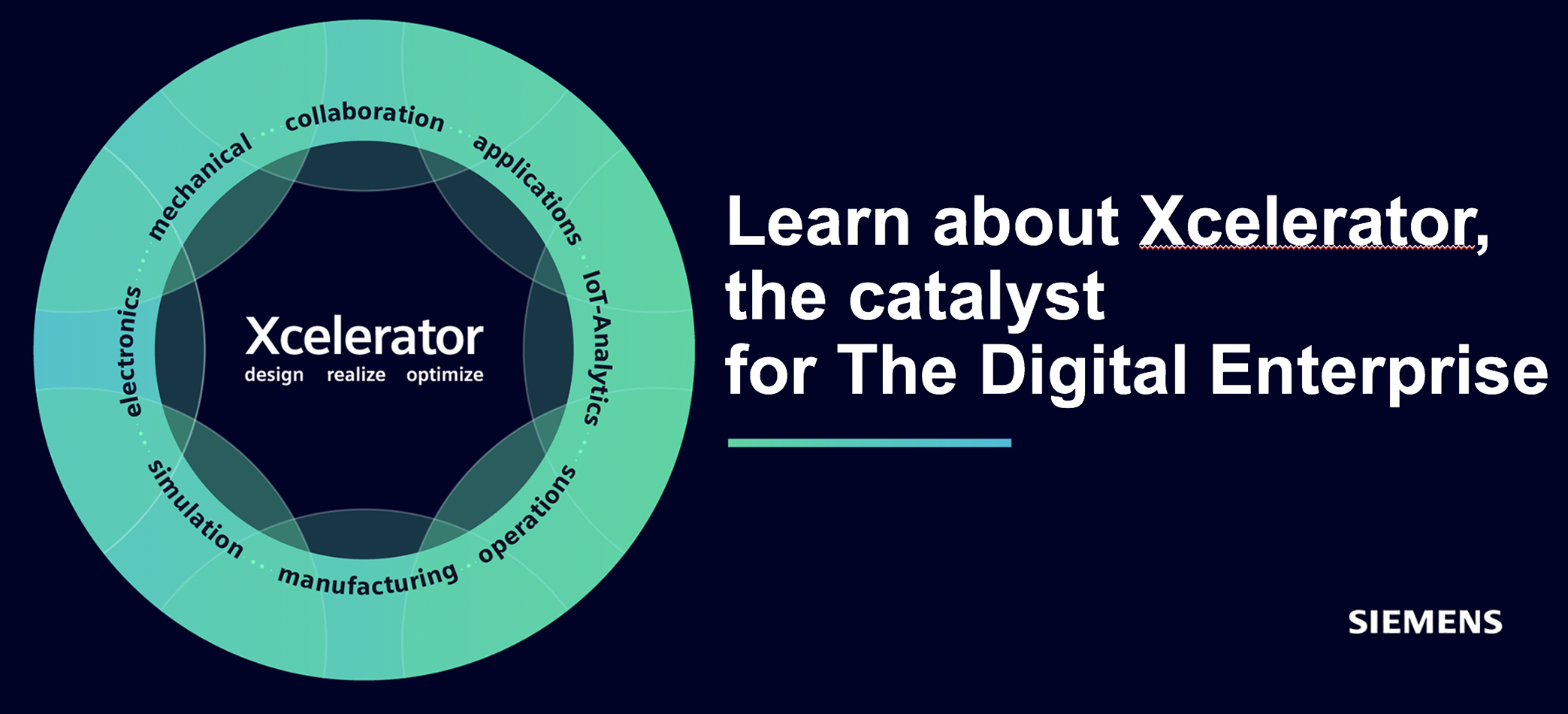
But Ercolanelli points to more solutions from Altair that strengthen the Siemens Xcelerator and Simcenter platforms:

- HyperWorks – which includes a set of tools for various CAE applications, including FEA (Finite Element Analysis), CFD (Computational Fluid Dynamics), multi-body dynamics, optimization, electromagnetic analysis and more.
- OptiStruct – part of the HyperWorks portfolio and an optimization solver used to analyze and optimize designs, especially with a focus on creating lighter, yet efficient designs. Often used in automotive, aerospace and other industries where performance and weight are crucial.
- Last but certainly not least; the solution that several Siemens executives, Ercolanelli included, highlighted during Realize LIVE in Amsterdam as a real golden egg in the Altair portfolio – RapidMiner – which the company acquired in 2022. This advanced data analytics and machine learning platform RapidMiner pioneered the whole concept of visual, explainable data science and was the first platform to introduce automated data science, text analysis, automated feature engineering, deep learning and more. The solution has over 600,000 users in industrial production and finance, as well as an equal number in academic operations.
There is more, such as HPC Works and the Altair One ecosystem platform, but, as Ercolanelli said: “Together, Siemens and Altair strengthen and democratize solutions in terms of smart and intelligent simulation; something that is also one of the most important foundations for effective AI work.”

CAD-Neutral Modeling and Meshing Tools
It is clear that Siemens’ already strong simulation and analysis portfolio before the acquisition has important values to gain from what Altair is bringing into the nest. For example, the analyst CIMdata noted in connection with the acquisition that Siemens already has a significant digital portfolio in its PLM division, but that ”the acquisition of Altair Engineering further expands the portfolio with HPC, data analysis and keys in simulation technologies such as CAD-neutral modeling and meshing tools, implicit and explicit dynamics solvers, electromagnetics solvers and topology optimization, all integrated with state-of-the-art AI/machine learning (ML) functions.”
The analyst further pointed out in its analysis that the combined Siemens and Altair S&A portfolio will be technically more comprehensive covering additional areas, including the core domains of multiphysics simulation, HPC and AI-driven simulation technology:
“When Altair is integrated with Siemens Digital Industries Software offerings such as Simcenter, Teamcenter, NX, Polarion and the EDA pieces, Siemens will have one of the most comprehensive portfolios of digital engineering solutions spanning the entire product lifecycle, from ideation, design, simulation, testing, validation, production, operation, to recovery, reuse and recycling,” wrote CIMdata.
With the focus on the broadly integrated product realization abilities versus the generally more limitedly PLM and manufacturing connected entities that Ansys can offer, the new combination looks to be a tough nut to crack.

What are the Driving Forces Behind Today’s Simulation Investments?
In parallell with upcoming CAE leadership battle, the reality around us is evolving in a way that undoubtedly has implications for product development and realization, as Ercolanelli also emphasizes when we discuss further. No one is immune to factors such as the turbulent global security situation, the ability of economic developments to demand a completely different speed in development work to match the competition, AI, the cloud, the SaaS model and sustainability issues are of great importance.
”Our customers face various challenges in their markets, including uncertain macroeconomic conditions, accelerated development timelines, technological changes in products, such as a move toward software-defined solutions and sustainability, and evolving technology stacks, such as the use of AI. As a result, there is an emphasis on reducing the total cost of ownership for purchased products by lowering deployment, integration, and update costs. This consideration significantly influences our technology roadmap; for example, we are consolidating technology stacks to develop capabilities once and make them accessible to as many customers as possible,” says Siemens’ simulation leader.
Of course, the AI side play one of the heaviest roles in the development strategy Siemens has set out, which was therefore one of the absolute most important reasons for the massive investment. How will AI, a key reason for Siemens’ purchase of Altair, generally affect the market and solutions in the short term?
“They have a massive impact from the start,” notes Jean-Claude Ercolanelli, adding that, “Investing heavily in AI, from recruiting Vasi Philomin, who led Generative AI at AWS (Amazon Web Services), to building Industrial Foundation Models, through to the Altair acquisition. A recent McKinsey report, done in combination with NAFEMS, estimated that 9/10 companies in the automotive industry are using AI/ML with simulation in their product development today. The challenge is maturing the use of AI with simulation, from a niche to become pervasive across engineering processes and disciplines. Two things are key for this: (1) integrating AI into existing tools and processes; (2) strengthening data and knowledge management so that AI can learn from your data and knowledge. Doing so provides context to the vast amounts of data that you already collect and this ensures that the AI delivers answers that are trustworthy.”

Massively Accelerated Speed in Solvers with NVIDIA Technology
In the introduction above we mentioned NVIDIA and, for example, the role that technologies such as their Blackwell have come to play in, not least, the CAE area. In these times of AI breakthroughs, this type of groundbreaking technology is often talked about. Exactly what can be characterized in this way is debatable, but it is clear that few have had such an impact on the product development area in general and simulation and analysis in particular as the technologies that NVIDIA has developed.
A striking feature of this is how many of the traditionally large players in the area have adopted and integrated NVIDIA’s solutions. As well as how quickly the breakthrough has come. NVIDIA Blackwell is an excellent example. It was just over a year ago, at NVIDIA’s GTC AI event 2024, that the company presented the already much talked about and long-awaited Blackwell platform. Today, CAE developers such as Ansys/Synopsys, Siemens/Altair, Cadence, Hexagon and others have embraced the technology. What do you see coming here? Jean-Claude Ercolanelli:
“Siemens works very closely with multiple hyperscalers: NVIDIA, Microsoft, AWS, Google, etc. Two examples with NVIDIA: we’ve massively accelerated the speed of our solvers by leveraging their latest and greatest GPUs hardware; and allowing simulation results to be reviewed in Teamcenter Digital Reality Viewer, which uses NVIDIA Omniverse technology. What’s next? We’re excited about agentic AI – how can we get AI to massively accelerate the design process? With our expertise in design, simulation, data and data management, AI, and close collaboration with key hyperscalers, we believe we’re uniquely positioned to help the engineering industry realize this transformation,” asserts Siemens’ S&A chief.
Similar Work Cultures and Views on Developments in S&A
Finally, Ercolanelli spoke about the cultural landscape within the two companies as being very similar. They have a mindset that is characterized by a common basic assessment of simulation technology as it looks today, how to attack problems and then move forward in development work and the design of the solutions of the future.
An interesting background to what the challenges can look like when it comes to integrating and coordinating new units that are acquired is Siemens’ purchase of Mentor Graphics 2017. The acquisition had a number of very good fundamentals from a technological and business perspective, and today there is hardly anyone who cannot call the deal a success. The EDA and electronics side that this is about today accounts for just over a third of the PLM area’s total revenues. The challenge in these contexts is to succeed in translating good theoretical foundations into a well-functioning reality. It also turned out that the integration, the separation of different units, and the new combinations of different software solutions in Mentor (to result in today’s Siemens EDA) took a little longer than expected. It is not unreasonable to assume that cultural diffrencies played a role in this.

Regarding the integration between Siemens and Altair, this may turn out to be a comparatively minor problem. In Amsterdam, Ercolanelli pointed to the similarities in the cultural parts as an advantage in the upcoming integration work between the two companies. Here’s what he said:
”Siemens and Altair clearly share the same culture of technical innovation thinking, diversity and openness, both show strong coherence, especially in strategic plans for customer-valued functions,” he asserted and continued: “We both put the customer at the center of our decision-making process and both product teams practice ‘NIHITO – Nothing Interesting Happens In The Office’ – which is that if you want to build great products, spend time with your customers. There is a strong focus on innovation and forward thinking. We are constantly focused on how we can accelerate innovation, not just for the sake of technology, but to solve real industrial problems and deliver groundbreaking solutions for our customers.”
An Acquisition that Solidifies Siemens’ Position as a PLM Leader
To sum up: Much of the secret to developing leading PLM solutions is about having a developed sense of what is to come from a technological and domain perspective. The exponentially increasing importance of the electronics field is a good example of this sense. The same applies today to simulation and analysis, as well as to software management in product development and realization work. Those who, like Tony Hemmelgarn, Jean-Claude Ercolanelli and the other Siemens employees, are often out, meeting and listening to what customers and users say, are in a good position to pick up on upcoming key trends.
That both EDA and simulation and analysis components continue to top the digital tool investment list is not surprising, given the increasingly heavy weighting that these domains have now received in most products. Especially in the automotive, aerospace and defense industries.
It is also the case that the explosive development in AI, artificial intelligence, underpins a growth curve in these areas that continues to point sharply upwards.
Given this commercial power and the fact that the automotive, aerospace and defense industries are driving development, it looks like a good idea to, like Siemens Digital Industries Software, invest heavily in AI. These industry segments are the company’s home turf and Siemens customers in these areas account for major parts of the German PLM giant’s revenue streams. And today they want more of the AI functions that speed up the development loops.
The next step is to implement Artificial Intelligence, AI, machine learning ML and holistically insert this into an increasingly digitalized product development context, where simulation and analysis have played an increasingly growing role for at least ten years. As digital models, as digital twins and as products whose life cycles must be tied together with digital threads, there is much to suggest that Siemens’ purchase of Altair Engineering, is on point and can help the company consolidate its role as the world’s leading PLM and factory automation supplier.

