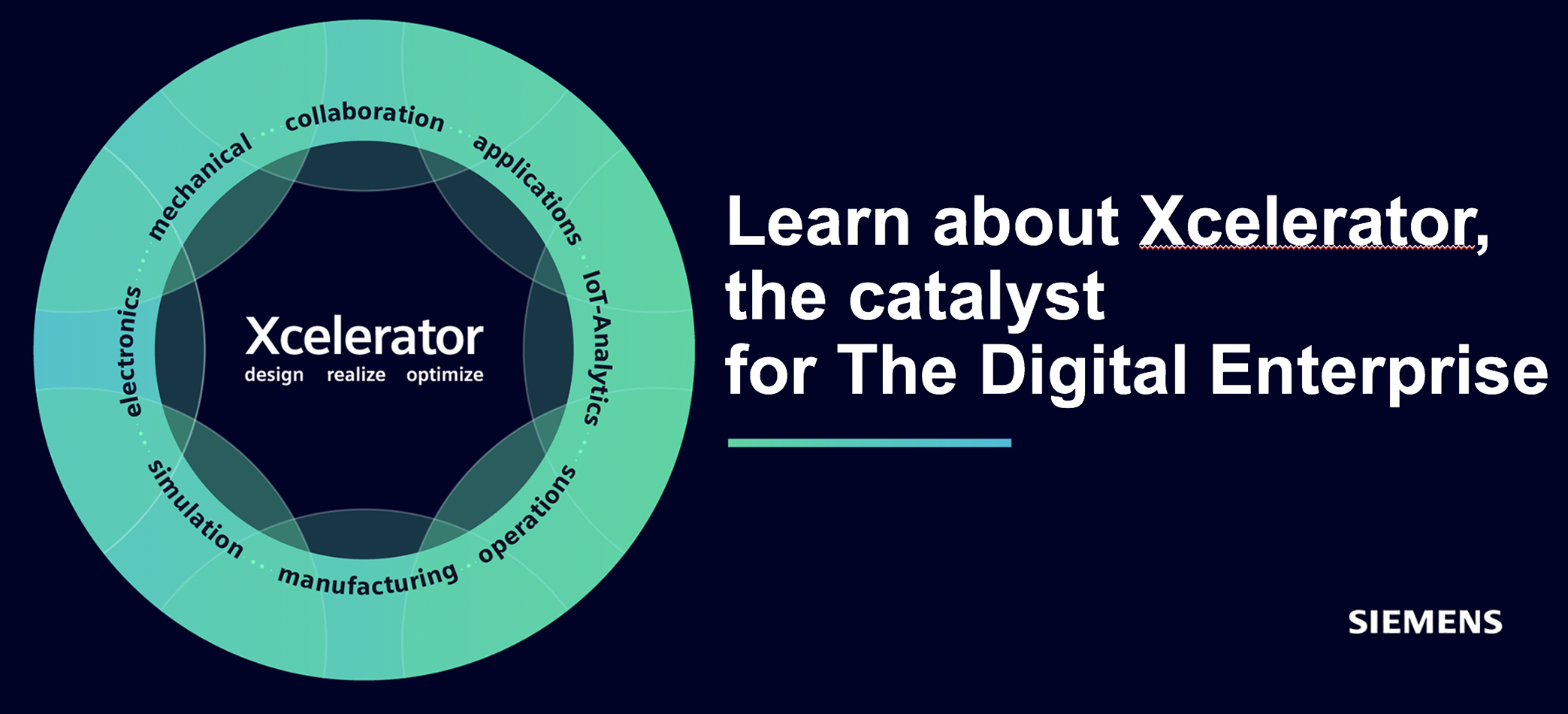


The continued journey forward for the world’s leading player in PLM and smart factory automation, Siemens Digital Industries, is, of course, about AI, but also about the march towards the cloud and the SaaS model.
For a PLM company using a Software-as-a-Service (SaaS) model, annual recurring revenue (ARR) growth is critical because it indicates future revenue predictability, demonstrates sustained business health to investors, and provides the basis for strategic planning. Unlike traditional PLM software sold with one-time licenses, the SaaS model relies on consistent, subscription-based income, making ARR a vital metric for tracking a company’s success and scalability.
Moreover, SaaS is a great option for customers due to its cost-effectiveness, accessibility from anywhere, and convenience. Key advantages include lower total costs with no need for hardware, automatic updates handled by the provider, and flexible scalability to match changing needs. Customers also benefit from easy deployment and accessibility from any internet-connected device, which is ideal for remote work.

An interesting aspect is that AI and the cloud are bidirectionally dependent on each other. In short, the cloud as a technical platform is a prerequisite for effective AI in product development processes, mainly because it provides services and performance for the necessary computing power, scalability, availability, and integrated tools that local infrastructure often cannot offer.
Siemens has therefore invested heavily in these parts during its continued development and has actually succeeded impressively well. The company’s earnings report for the 2025 fiscal year (ended in September) provides evidence of this:
According to Siemens’ report last week, ARR has increased from €4.4 billion (equivalent to $5.1 billion) in Q4 2024 to €5.3 billion (€6.1 billion) in FY2025, of which 49% is cloud-based ARR. This is a 10% growth over the 12 months.
Tony Hemmelgarn delivers ARR and SaaS according to guidelines
Over the past four years, it has delivered impressive results, a momentum that Hemmelgarn predicted in an interview in PLM&ERP News last year would continue into fiscal 2025.
“Our ARR growth reached a very healthy level of plus 14% in FY 2024 compared to the previous year and the plan is to maintain ARR growth in the low plus tens in FY2025, which is above our original 2021 CMD (Capital Market Day) communicated goal of an annual ARR growth of 10%,” Hemmelgarn told PLM&ERP News at the time, adding that, “we will continue this momentum into our fiscal year 2025 and the plan is to maintain ARR growth in the low plus tens throughout FY2025, which is above our original 2021 CMD communicated goal.”
Hemmelgarn continued: “Speaking of our SaaS transition, the cloud segment is now at €1.8 billion, equivalent to 42% of ARR, exceeding our 40% target a year ahead of schedule. And I have asked my team to drive towards the 50% mark by the end of fiscal year 2025.”
How did it go? The FY2025 earnings report is a testament to that, and it is certainly not far off target: It was 49%! With this, PLM division head Tony Hemmelgarn and his team continue to deliver better or equal results compared to what was promised in their guidelines, in a strategic area important not only to the PLM division but to the entire Group.

Regarding the transition to the SaaS model, ie, a subscription or rental-based license model (instead of “perpetual licenses”), the new FY2025 report states that the share of renewals based on total contract value (TVC) has gone from 89% in Q4 FY2024 to 93% in Q4 FY2025.

Effects of the Economic Slowdown
Finally, a few words about the persistent economic situation that has not only affected Siemens automation business, but also many of the world’s major companies in heavy industries, engineering and other PLM-related businesses. What is primarily pulling down the growth figures on the automation side is the prolonged global economic slowdown that has characterized engineering industries in, for example, automotive and heavy machinery equipment, which account for major investments in automation equipment. From this perspective, the years 2024-2025 will not go down in history as a cheerful time for industrial production. Global industrial production experienced a 2.1% decline in 2024. Another factor is that the robotics and automation industry in the continent’s leading industrial nation, Germany, will financially decrease by 10% compared to 2024. This is in parallel with the fact that the automotive segment in Germany, which accounts for 5% of the country’s GDP, has faced, and is facing, heavy challenges.
The outlook for 2025 is mixed but shows some signs of recovery. Positive signs in the global economy include projected global growth of around 3.0% and easing inflation to roughly 2% by late 2025/early 2026. Key drivers of this growth include a stronger US economy, a turnaround for the German industry, a new momentum for the Chinese industry, potentially lower interest rates, and significant investments in AI, which is boosting productivity and creating new industries. Emerging markets may also benefit from lower inflation and interest rates, attracting more investment.

Busch Expects Growth of Between 5-10% in FY2026
For Siemens, Roland Busch is convinced of good growth prospects in the medium term and point to opportunities in AI, data centers, aerospace & defense, the railway industry, and infrastructure, among other things.
Regarding guidelines for how growth will develop in Siemens Digital Industries division during the next fiscal year, 2026, Roland Busch and his team expect it to land between plus 5 to 10%.
“With our ONE Tech Company program, we are laying the foundation for an even stronger customer focus, faster innovations, and higher profitable growth,” he said, adding that growth in the midterm perspective “will be driven by strong demand in the rail, aerospace, defense, and data center industries, as well as artificial intelligence. Developments in semiconductors and life sciences will also increase sales over the next five years,” he commented on the outlook.


