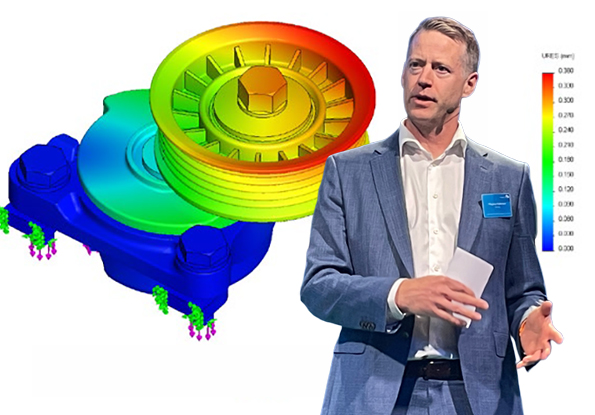

First, a few key, overarching trends in TECHNIA’s development in recent years:
- Strategic Acquisitions: TECHNIA has consistently acquired smaller firms to strengthen its expertise within the Dassault Systèmes portfolio (3DEXPERIENCE, CATIA, ENOVIA).
- Increased Recurring Revenue: A significant portion of revenue is generated from subscriptions and support, providing stability and long-term predictability.
- Digital Transformation: Demand for PLM solutions to streamline product development processes has driven customer demand and will continue to do so in the future.
- In summary: TECHNIA has transitioned from an aggressive growth phase to focusing more on profitability and structural growth through acquisitions during 2024 and 2025.
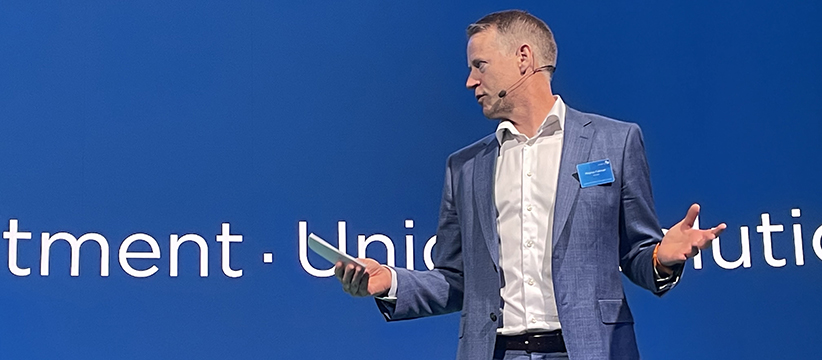
SOLIDWORKS – a Growing Strategic Pillar for TECHNIA
In recent years, the SOLIDWORKS segment of TECHNIA’s portfolio has evolved into an increasingly vital component of the company’s overall sales strategy, according to Magnus Falkman.
”That is correct,” Falkman states. ”The SOLIDWORKS business has transformed into a core strategic pillar of our comprehensive offering. We are seeing robust and consistent demand from enterprises seeking to bridge the gap between intuitive usability and scalable technical capabilities. At TECHNIA, our role extends beyond software delivery; we empower our clients to build sophisticated technical ecosystems centered on SOLIDWORKS, seamlessly integrating design, simulation, data management, and collaboration. This holistic approach is where we anticipate our primary growth in the coming years.”
How are customers adopting cloud-based solutions and the 3DEXPERIENCE platform within the SOLIDWORKS community?
”The shift toward cloud-enabled engineering is clearly accelerating. More customers are exploring how the 3DEXPERIENCE platform can extend the value of SOLIDWORKS beyond traditional CAD. What’s particularly interesting is that adoption is not just technology-driven, it’s business-driven. Companies want better collaboration, traceability, and faster decision-making across distributed teams. That’s exactly where cloud solutions are making a tangible difference.”
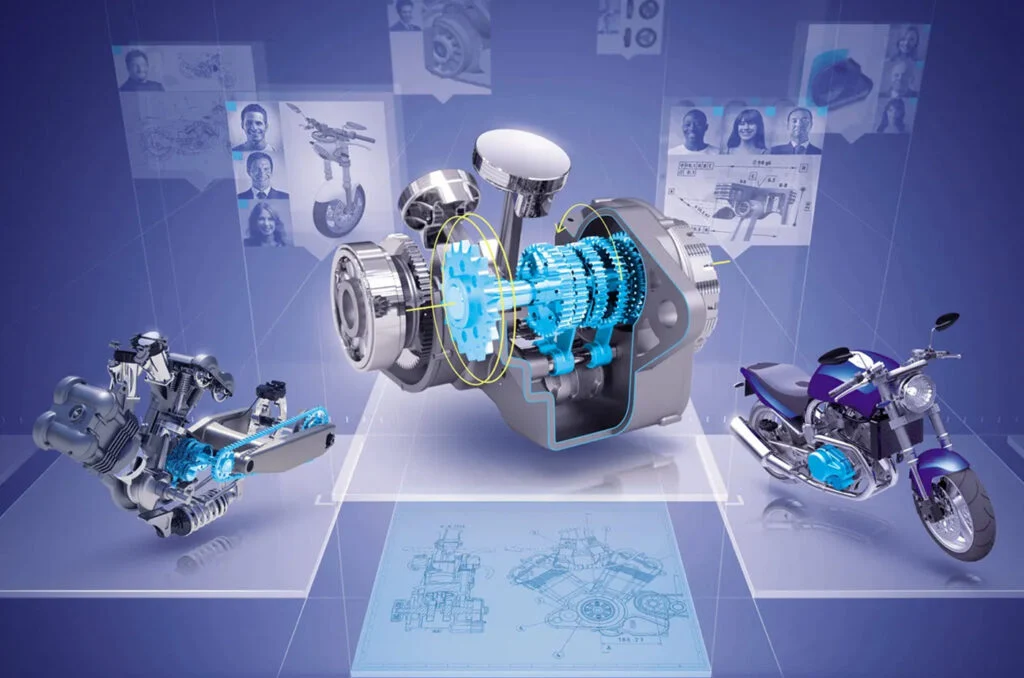
What makes TECHNIA particularly well positioned to grow the SOLIDWORKS business in the Euro-Central region?
”Our expansion in Euro-Central is a natural next step. We already have deep domain expertise, strong customer relationships, and a proven delivery model across multiple industries,” claims Falkman, adding: ”What differentiates TECHNIA is our ability to combine local presence with global capability. Customers benefit from hands-on support while also accessing a much broader ecosystem of expertise, services, and solutions. That combination is key to scaling successfully in new regions.”
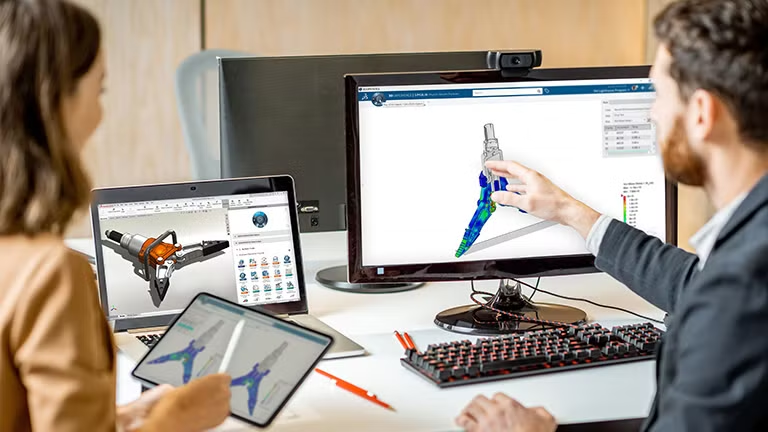
CATIA remains a key part of the portfolio, how has that side of the business developed alongside SOLIDWORKS?
”CATIA continues to play a critical role, particularly in advanced and complex engineering environments. What we’re seeing is not a shift from one solution to another, but rather a broader portfolio approach. Different customers, and even different teams within the same organisation, have different needs. Our strength lies in supporting that full spectrum, from highly advanced product development with CATIA to more accessible and flexible design workflows with SOLIDWORKS,” Falkman summarizes.
says Falkman.
Navigating a Turbulent German Market Amidst Automotive Sector Pressures
The market for digital product development has faced significant headwinds in recent years. While TECHNIA maintained stable demand across the Nordics, the UK, and the US throughout 2025, conditions were considerably more stringent in other regions—most notably in Germany. As TECHNIA’s largest market, Germany accounted for over 40% of the company’s revenue last year.

The primary challenge in this market has been a customer base heavily concentrated within the automotive industry, which has struggled with sluggish demand. This has been further compounded by uncertainties surrounding geopolitical trade barriers, the macroeconomic climate, and prevailing interest rates. Collectively, these factors have led German clients to defer decisions on major systems investments and large-scale projects.
”The situation in the German market necessitated the launch of a cost-savings program at the start of the year. However, the division has successfully secured new clients within the aerospace and defense sectors, and our focus on efficiency-enhancing measures has yielded tangible results,” Magnus Falkman noted in Addnode’s 2026 Annual Report.
How did TECHNIA address the challenges in the German market during 2025?
”During 2025, we implemented extensive efficiency measures that have clearly bolstered our competitiveness. Through structured cost reductions and an intensified operational focus, we have built a more robust and scalable business. Simultaneously, we have acquired numerous new customers and expanded our footprint across several strategic markets, laying the groundwork for continued profitable growth,” concludes TECHNIA’s boss.
How would you describe the overall business outlook for TECHNIA going into 2026 and beyond?
”The overall outlook is positive, with continued momentum driven by digital transformation across industries. We’re seeing increasing demand for solutions that connect the entire product lifecycle, from concept to operation, and that’s exactly where TECHNIA is positioned. Our focus is on sustainable growth, strengthening our capabilities, expanding geographically, and continuing to invest in both our people and our offering. It’s about building long-term value for our customers rather than short-term gains.”
Bottom Line – PLM&ERP News’ Take
A clear pattern in TECHNIA’s trajectory is the shift from rapid expansion toward a more structured, capability-driven growth model. With a strong foundation in the Dassault Systèmes ecosystem and an expanding footprint across Europe and beyond, the company is positioning itself as a long-term partner for digital engineering transformation.

