




The shift to software-defined vehicles (SDVs) is driving a dramatic transformation in how cars are designed, including their hardware integration and lifecycle. By using software instead of hardware for key functions, automakers can introduce and adjust features faster and more cost-effectively.
A striking effect of the shift is that the value of the automotive software market is expected to increase from the current $29 billion annually by 15% each year until 2030. Moreover, the software-defined vehicle market is projected to grow from $213.5 billion in 2024 to $1,237.6 billion by 2030, according to analyst firm MarketsAndMarkets.
Which says a lot about the future of SDVs.
That said, electronics and computer chips, SOCs, will also play significant contextual roles. But why are they important? The simple answer is that they are the central computing power of SDVs, replacing multiple traditional control units to run complex functions such as ADAS, infotainment, and AI by consolidating hardware and software onto a single chip, Siemens PLM boss explains. This consolidation, enabled by multi-core SoCs and specialized AI processing units, provides flexibility, real-time processing, and the ability to update vehicle functions over-the-air (OTA). At the core of the context is the move from distributed ECUs (Electronic Control Units) to a centralized or zonal architecture. Instead of dozens of separate control units for different functions, SDVs are now being built with central computers – high-performance electronic systems that are built using powerful SoCs as their core processors – that can control everything from braking and climate to infotainment and ADAS features. The central computer’s high processing power comes from the advanced SoC that is at its heart.

”OEMs now have access to early validation tools that enable them to overcome challenges in developing ADAS and IVI systems in vehicles, reducing costly redesigns and enabling smarter, safer mobility solutions,” says Siemens PLM leader, Tony Hemmelgarn.
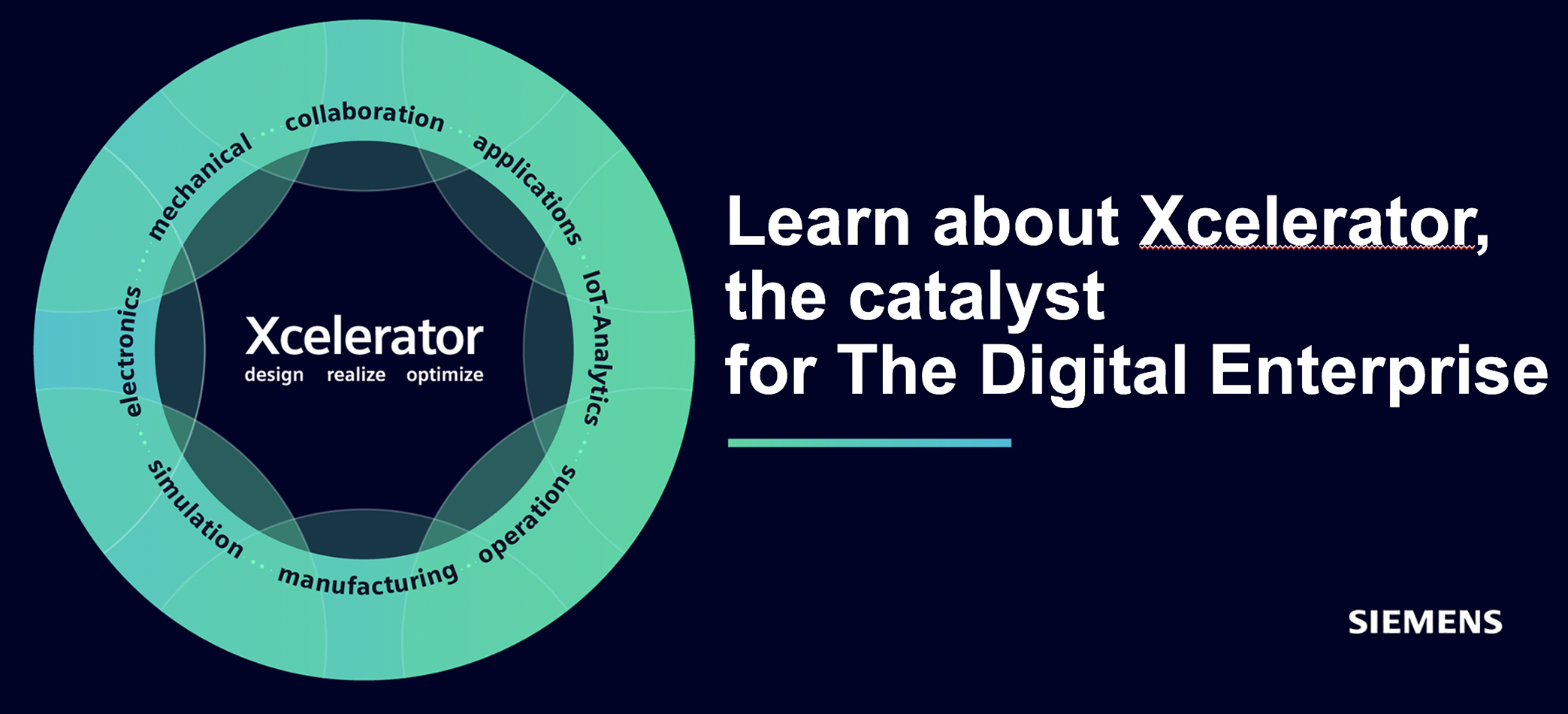
Siemens’ PAVE360 platform can play a powerful role in developing these SoC capabilities. It is possible to work with SoCs from pre-silicon to the finished chip stage using the platform. PAVE360 is a comprehensive digital twin solution that supports the entire SoC development lifecycle, and it does it in a fully Xcelerator portfolio integrated environment. This means that the solution is part of an open, comprehensive, and integrated set of software, hardware, and services that uses a holistic, ”comprehensive”, digital twin to accelerate the development of complex systems, especially in the automotive industry.
This integration provides several key benefits and capabilities:
- Seamless Data Flow and Collaboration allows for a seamless connection and data exchange across various engineering domains (electronics, software, mechanical, etc.) and tools within the Xcelerator portfolio, such as Teamcenter (PLM/PDM), Polarion (ALM, Application Lifecycle Management), and Simcenter (Simulation & Analysis). This breaks down traditional development silos and enables deep collaboration across the automotive supply chain (OEMs, Tier I suppliers, semiconductor companies, etc.).
- Around the Comprehensive Digital Twin: PAVE360, specifically, provides a ”chip-to-city” digital twin environment that scales from individual silicon intellectual property (IP) blocks and systems-on-a-chip (SoCs) to full vehicle models, sensor data fusion, traffic flows, and even smart city simulations. ”Chip-to-city” is a conceptual framework for the comprehensive development and integration of autonomous and electric vehicle technologies, spanning from the design of individual semiconductor chips to the integration of those vehicles within entire smart city ecosystems.
- ”Shift-Left” Validation: This methodology identifies potential issues early in the design cycle, significantly reducing the risk of costly redesigns, shortening development timelines, and improving functional safety.
- Flexibility and Openness: Siemens Xcelerator is an open platform, meaning PAVE360 can also integrate third-party solutions and customer’s in-house models. Combined with the ”as-a-service” offerings (like deployment on AWS or Azure cloud platforms), this gives customers greater choice in their development environments and hardware resources.
- Accelerated Time-to-Market: The combined solution dramatically accelerates innovation and time-to-market for next-generation SDVs, and IVI systems.

A Transformation that Causes Explosive Complexity Growth
With the SDV transition comes a new kind of complexity in vehicle design compared to the traditional one. Among the effects are far-reaching requirements for hardware and software integration and a deep, continuous understanding of how system changes affect other vehicle functions. In addition, it involves a significant degree of uncertainty and therefore estimates how future modifications will affect the design.
The idea of the future SDV implies that all domains are much more dependent on each other than they have been in the past. This means, for example, that changes made in one domain can have consequences in another. Complicating multipliers in this domain can according to Siemens and Tony Hemmelgarn be:
• Physical complexity – with areas such as advanced nodes, 3DIC (3D Integrated Circuits), etc.
• Application complexity – the number of applications is developing explosively and “brings” more functionality, more processors, AI, etc.
• System complexity – which spreads across and involves multiple domains, controls, etc.
A central role in the scenario is played by silicon and computer chips, which are undergoing a process of continuous miniaturization, in parallel with their “ability” to do more and more. The systemic complexity of future products, not least from the perspective of AI-driven vehicle workloads, requires rethinking of how engineering can effectively bring together multiple domains when creating system architectures.
Finally, complexity limits what many existing design tools and methods can do, underlining why a powerful tool like Siemens PAVE360 is important to streamlining product development processes. In short, we are talking about a digital twin virtualization of system-level engineering.
Why AI is a Major Driver of Disruption
So, what are the big trends in this? A major driver of disruptive change is AI. This is true for all industries, including the SDV space. What role will chips play, and how do you adapt them to create efficiencies for specific workloads, in different markets? Speeding up the time from idea to tape-out is a reflection of the need to improve design cycles that have traditionally taken around 2-3 years. Even faster development is needed once the chips are in the systems. Is the software ready? Has it been designed before the “piece of silicon is available”? That’s where all the digital twin virtualization, etc, is needed to shorten the time from silicon to system to final product and market.

“Accelerating the Implementation of Advanced Solutions”
Today, automotive developers are changing both their methodology and their digital tool sets. These pieces are also crucial elements to why SAICEC, a leading provider of chip and system design services to the Asian automotive industry, has begun building complex digital twins of vehicle architectures based on Siemens PAVE360 software, which facilitates comprehensive verification of vehicle components from the system level to the chip level.
SAICEC CEO David He claims that the investment in the PAVE360 suite will accelerate the implementation of advanced solutions that help overcome the challenges of developing software-defined vehicles. It also, he says, supports OEMs in identifying next-generation chip technologies and developing critical systems at the scale and speed that the mobility industry demands.
“Our collaboration with Siemens brings together world-class simulation technology and China’s rapidly growing integrated circuit (IC) ecosystem in the automotive industry,” says David He, adding: “With Siemens’ PAVE360 system-to-chip digital twin capabilities, we can shorten development cycles, improve functional safety, and strengthen the foundation for intelligent mobility design.”

“Shift Left” in the Development Chain
Essentially, digital twins act as a robust, data-driven bridge between the physical and digital worlds, enabling faster, safer, and more efficient development of the sophisticated electronics that power modern vehicles. Siemens’ “comprehensive digital twin concept” can play a major role in the SDV development journey. But how is it all fundamentally structured to support the development of SDVs? What are the benefits? And how are workflows changing?
The main advantage is that software development and integration can start much earlier – what is commonly referred to as a “shift left” in the development chain – in the design cycle using virtual prototypes of the SoC already at the pre-silicon level, rather than waiting for physical hardware availability.
By creating a digital twin, engineers can obtain an exact virtual replica of the SoC and the electronic systems it controls – like ADAS or infotainment systems.
Siemens’ approach to the concept, the “comprehensive digital twin”, has been based from the start on the idea that this virtual model can be used in the next step to conduct extensive testing and validation under a variety of simulated conditions. This could include testing scenarios that would be costly or dangerous to physically replicate, such as extreme weather or rare fault conditions.
For complex systems, such as those powering autonomous driving (ADAS), digital twins can support semiconductor companies and OEMs in collaborating and exploring different architecture choices early in development to ensure that performance requirements are met.
Facilitates seamless integration and validation
As noted above, digital twins facilitate seamless integration and validation of hardware and software components, which also applies throughout the supply chain. A supplier’s digital twin of a chip can be integrated into an OEM’s digital twin of an entire vehicle’s electrical system, ensuring compatibility and functionality before any physical parts are manufactured. This naturally requires deep integration of the software platform used, in this case, PAVE360. The solution is also an integral part of the broader Xcelerator portfolio. This also enables validation of complex “system-of-system” interactions (ADAS, IVI, sensors, actuators) in a single, integrated environment, helping to identify and prevent costly system integration errors that typically occur later in the development cycle.
But the benefits don’t end there. Once the physical vehicles are on the road, sensor data from the SoCs is continuously fed back to their digital twins. This creates a real-time feedback loop that can be used to monitor performance, predict potential failures or maintenance needs, and inform future design improvements or over-the-air (OTA) software updates.

System-Level Verification a Key Factor
In short, next-generation vehicle design is based on an intricate, complex network of system-level interactions that require connections between multiple sensors, actuators, processors, electronic control units (ECUs), networks, and driving scenarios. In this context, the validation of system-of-systems also comes in addition to the validation of system-on-chip (SoC), ECU, and other systems. The whole thing can easily become extremely complex, and the support that an integrated solution like PAVE360 can offer is very valuable. What does the integration look like?
PAVE360 is a central part of the Siemens Xcelerator portfolio and is designed to be fully integrated with the digital tools for electrical/electronics (E/E), mechanical, and software management. The PAVE360 platform serves as a comprehensive digital twin environment, enabling seamless connectivity of different domains, protocols, systems, and tools from both Siemens and its partners. Some examples include:
* E/E and Software: PAVE360 leverages software from Siemens EDA business (formerly Mentor Graphics), such as Questa for simulation and Veloce for emulation. This enables the development and validation of silicon components (ICs), software, and electronic control units (ECUs) before the hardware is available, which is known as the “shift-left” approach.
* Mechanical and Systems: The platform integrates with Simcenter tools, such as Simcenter Prescan for sensor simulation and AMEsim for mechatronics simulation, to model entire vehicle subsystems and environments.
SDV applications are increasing in complexity as consumer expectations for integrated technology continue to rise. Today’s automotive hardware and software teams often work in silos across different environments, with limited access to a system-level view until the final hardware is available. This lack of early validation leads to costly re-engineering when the final hardware fails certification testing. System-level verification before the hardware is available is therefore one of the critical factors for success and faster time-to-market.

