
Did Siemens Pay Too Much for Altair Engineering?
"Ask BARCELONA if it was too expensive to sign up MESSI to the team." The analyst CIMdata has looked at and commented on Siemens Digital Industries' big deal last week: The purchase of American AI, HPC (High Performance Computing), simulation and analysis specialist Altair for $10.6 billion. A purchase that will move Siemens up to become the market's second in the CAE area with revenues around $1.5 B. The German PLM giant thus overtakes both MathWorks and Dassault when it comes to generating CAE revenue. Synopsys-owned Ansys continues to top the list.
CIMdata notes in its commentary that Siemens already has a significant digital portfolio in its PLM division, Digital Industries Software, but that the purchase of Altair Engineering further expands the portfolio with HPC, data analytics and key simulation technologies such as CAD-neutral modeling and meshing tools, implicit and explicit dynamics solvers, electromagnetics solvers, and topology optimization, all integrated with state-of-the-art AI/ML capabilities.
Interesting is also that the revenues that Altair brings also push Siemens up towards the level of $8 B in total for the PLM division. This, in turn, means that it sails up as the overall market leader in terms of PLM-related revenue ahead of Dassault, which in 2023 had $6.46 billion in total.
CIMdata further points out in its analysis that the combined Siemens and Altair S&A portfolio will establish a technically close to complete coverage, including the main domains of multiphysics simulation, HPC and AI-driven simulation technology: "When Siemens integrates with Altair and other Siemens Digital Industries Software offerings such as Simcenter , Teamcenter, NX, Polarion and EDA pieces, Siemens will have one of the most comprehensive portfolios of digital engineering solutions spanning the entire product lifecycle,” writes CIMdata.
Is the purchase too expensive? The question has been circulating for the past few days. There are, of course, several aspects to this, and yes, it was expensive in absolute terms. However, many argue that the technological value that Altair brings can make up for a lot of the $10.6 B price tag. Other bits are that during the last 5-6 year period, Altair developed a growth momentum, based on strategic acquisitions and a heavy internal innovative development culture, which among other things brought with it comprehensive updates and modernizations of interfaces, functionalities and integrations. At the same time, CIMdata believes that the S&A area has continued high growth potential. The analyst calculates with double-digit annual growth over the next five years. If Siemens succeeds in discounting this to expansive sales, the purchase will be a hit, just as the Mentor acquisition has been.
Generally, it's as CEO of Siemens' PLM division, Tony Hemmelgarn, says to PLM&ERP News: "It’s expensive, but then that’s what it takes to play in the software M&A world these days."
He nails the point spot on: maintaining world class takes its toll. Ask Barcelona, for example, why they paid huge money to bring Messi into the team...
Click on the headline to read the full article on PLM&ERP News.
CIMdata notes in its commentary that Siemens already has a significant digital portfolio in its PLM division, Digital Industries Software, but that the purchase of Altair Engineering further expands the portfolio with HPC, data analytics and key simulation technologies such as CAD-neutral modeling and meshing tools, implicit and explicit dynamics solvers, electromagnetics solvers, and topology optimization, all integrated with state-of-the-art AI/ML capabilities.
Interesting is also that the revenues that Altair brings also push Siemens up towards the level of $8 B in total for the PLM division. This, in turn, means that it sails up as the overall market leader in terms of PLM-related revenue ahead of Dassault, which in 2023 had $6.46 billion in total.
CIMdata further points out in its analysis that the combined Siemens and Altair S&A portfolio will establish a technically close to complete coverage, including the main domains of multiphysics simulation, HPC and AI-driven simulation technology: "When Siemens integrates with Altair and other Siemens Digital Industries Software offerings such as Simcenter , Teamcenter, NX, Polarion and EDA pieces, Siemens will have one of the most comprehensive portfolios of digital engineering solutions spanning the entire product lifecycle,” writes CIMdata.
Is the purchase too expensive? The question has been circulating for the past few days. There are, of course, several aspects to this, and yes, it was expensive in absolute terms. However, many argue that the technological value that Altair brings can make up for a lot of the $10.6 B price tag. Other bits are that during the last 5-6 year period, Altair developed a growth momentum, based on strategic acquisitions and a heavy internal innovative development culture, which among other things brought with it comprehensive updates and modernizations of interfaces, functionalities and integrations. At the same time, CIMdata believes that the S&A area has continued high growth potential. The analyst calculates with double-digit annual growth over the next five years. If Siemens succeeds in discounting this to expansive sales, the purchase will be a hit, just as the Mentor acquisition has been.
Generally, it's as CEO of Siemens' PLM division, Tony Hemmelgarn, says to PLM&ERP News: "It’s expensive, but then that’s what it takes to play in the software M&A world these days."
He nails the point spot on: maintaining world class takes its toll. Ask Barcelona, for example, why they paid huge money to bring Messi into the team...
Click on the headline to read the full article on PLM&ERP News.

KRÖNIKA: Betalade Siemens för mycket för Altair Engineering?
”Fråga BARCELONA om det var för dyrt att värva MESSI till laget.” Nu har även analytikern CIMdata tittat på och kommenterat Siemens Digital Industries stora affär i förra veckan: Köpet av amerikanska AI, HPC (High Performance Computing), simulerings- och analys-specialisten Altair för 10,6 miljarder dollar. Ett köp som, om det går igenom de sedvanliga prövningarna, kommer att flytta upp Siemens till att bli marknadstvåa på CAE-området med intäkter runt 1,5 miljarder dollar. Den tyska PLM-giganten går därmed förbi både MathWorks och Dassault när det gäller att generera CAE-intäkter. Detta emedan marknadsettan, Synopsys-ägda Ansys, fortsatt toppar listan.
CIMdata noterar i sin kommentar att Siemens redan har en betydande digital portfölj i sin PLM-division, Digital Industries Software, men att köpet av Altair Engineering utökar portföljen ytterligare med HPC, dataanalys och nycklar inom simuleringstekniker som CAD-neutrala modellerings- och meshingverktyg, implicita och explicita dynamiklösare, elektromagnetik lösare och topologioptimering, allt integrerat med toppmoderna AI/maskininlärningsfunktioner (ML).
Som vi på PLM&ERP News konstaterade i vår kommentar knuffar även de intäkter som Altair för med sig också upp bolaget mot nivån 8 miljarder dollar totalt för PLM-divisionen (mer än 80 miljarder SEK). Detta i sin tur innebär att man seglar upp som marknadsetta totalt när det gäller PLM-relaterade intäkter före Dassault, som 2023 hade 6,46 miljarder dollar in totalt.
CIMdata pekar vidare i sin analys på att den kombinerade Siemens och Altair S&A-portföljen blir tekniskt sett nära nog heltäckande, inkluderat även huvuddomänerna för multifysiksimulering, HPC och AI-driven simuleringsteknik: ”När Altair integreras med Siemens Digital Industries Software-erbjudanden som Simcenter, Teamcenter, NX, Polarion och EDA-bitarna kommer Siemens att ha en av de mest omfattande portföljerna för digitala tekniska lösningar som sträcker sig över hela produktens livscykel, från idé, design, simulering, testning, validering, produktion, drift, till återvinning, återanvändning och återvinning,” skriver CIMdata.
Är köpet för dyrt? Frågan har cirkulerat de senaste dagarna. Det finns förstås flera aspekter på detta, och ja, det blev dyrt i absoluta tal. Däremot talar en hel del för att det teknologiska värde som Altair för med sig kan kompensera en hel del för priset $10.6B. Andra bitar är att Altair under den senaste 5-6 årsperioden utvecklat dels ett tillväxt-momentum, baserat på strategiska förvärv och en tung intern innovativ utvecklingskultur, som bl a fört med sig genomgripande uppdateringar och moderniseringar av gränssnitt, funktionaliteter och integrationer. Parallellt menar CIMdata att S&A-området har en fortsatt hög tillväxtpotential. Analytikern kalkylerar med en tvåsiffrig årlig tillväxt under de kommande fem åren. Om Siemens lyckas diskontera detta till expansiv försäljning blir köpet en fullträff, precis som Mentor-förvärvet blivit det.
Samtidigt är det lite som CEO för Siemens PLM-division, Tony Hemmelgarn, säger till PLM&ERP News: "Visst, det är dyrt, men det är vad som krävs för att spela i M&A-världen nu för tiden."
Han fångar saken exakt: att hålla världsklass kräver sin tribut. Fråga t ex Barcelona varför man betalade enorma pengar för att få med Messi i laget…
Klicka på rubriken för att läsa mer på PLM&ERP News.
CIMdata noterar i sin kommentar att Siemens redan har en betydande digital portfölj i sin PLM-division, Digital Industries Software, men att köpet av Altair Engineering utökar portföljen ytterligare med HPC, dataanalys och nycklar inom simuleringstekniker som CAD-neutrala modellerings- och meshingverktyg, implicita och explicita dynamiklösare, elektromagnetik lösare och topologioptimering, allt integrerat med toppmoderna AI/maskininlärningsfunktioner (ML).
Som vi på PLM&ERP News konstaterade i vår kommentar knuffar även de intäkter som Altair för med sig också upp bolaget mot nivån 8 miljarder dollar totalt för PLM-divisionen (mer än 80 miljarder SEK). Detta i sin tur innebär att man seglar upp som marknadsetta totalt när det gäller PLM-relaterade intäkter före Dassault, som 2023 hade 6,46 miljarder dollar in totalt.
CIMdata pekar vidare i sin analys på att den kombinerade Siemens och Altair S&A-portföljen blir tekniskt sett nära nog heltäckande, inkluderat även huvuddomänerna för multifysiksimulering, HPC och AI-driven simuleringsteknik: ”När Altair integreras med Siemens Digital Industries Software-erbjudanden som Simcenter, Teamcenter, NX, Polarion och EDA-bitarna kommer Siemens att ha en av de mest omfattande portföljerna för digitala tekniska lösningar som sträcker sig över hela produktens livscykel, från idé, design, simulering, testning, validering, produktion, drift, till återvinning, återanvändning och återvinning,” skriver CIMdata.
Är köpet för dyrt? Frågan har cirkulerat de senaste dagarna. Det finns förstås flera aspekter på detta, och ja, det blev dyrt i absoluta tal. Däremot talar en hel del för att det teknologiska värde som Altair för med sig kan kompensera en hel del för priset $10.6B. Andra bitar är att Altair under den senaste 5-6 årsperioden utvecklat dels ett tillväxt-momentum, baserat på strategiska förvärv och en tung intern innovativ utvecklingskultur, som bl a fört med sig genomgripande uppdateringar och moderniseringar av gränssnitt, funktionaliteter och integrationer. Parallellt menar CIMdata att S&A-området har en fortsatt hög tillväxtpotential. Analytikern kalkylerar med en tvåsiffrig årlig tillväxt under de kommande fem åren. Om Siemens lyckas diskontera detta till expansiv försäljning blir köpet en fullträff, precis som Mentor-förvärvet blivit det.
Samtidigt är det lite som CEO för Siemens PLM-division, Tony Hemmelgarn, säger till PLM&ERP News: "Visst, det är dyrt, men det är vad som krävs för att spela i M&A-världen nu för tiden."
Han fångar saken exakt: att hålla världsklass kräver sin tribut. Fråga t ex Barcelona varför man betalade enorma pengar för att få med Messi i laget…
Klicka på rubriken för att läsa mer på PLM&ERP News.
BREAKING NEWS: Därför köper Siemens simulerings- och analysföretaget Altair Engineering för 113 miljarder kronor
Siemens köper de senaste årens starkt växande mjukvaruutvecklare inom AI, HPC och simulering- och analys, amerikanska Altair Engineering. ”Förvärvet kommer att skapa världens mest kompletta AI-drivna design- och simuleringsportfölj – genom att kombinera Altairs kapacitet inom simulering, högpresterande beräkningar, datavetenskap och artificiell intelligens med kraften hos Siemens Xcelerator,” säger Roland Busch, President and CEO of Siemens AG. Köpeskilling: 10.6 miljarder dollar, motsvarande ca 113 miljarder svenska kronor.
Genom det nu annonserade köpet bildas nu världens näst största spelare inom CAE-området. I kommersiella termer går Siemens genom dagens köp från fjärdeplatsen bland världens toppspelare till andra platsen efter Ansys, för övrigt nyligen uppköpta av elektronikutvecklaren Synopsys. Man passerar därmed kommersiellt både MathWorks och Dassault Systemes.
Det händer alltså stora saker inom PLM när de stora spelarna nu formerar sig inför slaget om framtiden. En framtid som inte bara handlar om exponentiellt växande inslag i dagens produkter av AI, mjukvaror, elektronik, och el, utan också om en veritabel nyckelteknologi som berör det mesta inom digital produktutveckling byggd på virtuella prototyper och 3D-modeller: Simulering & Analys (S&A).
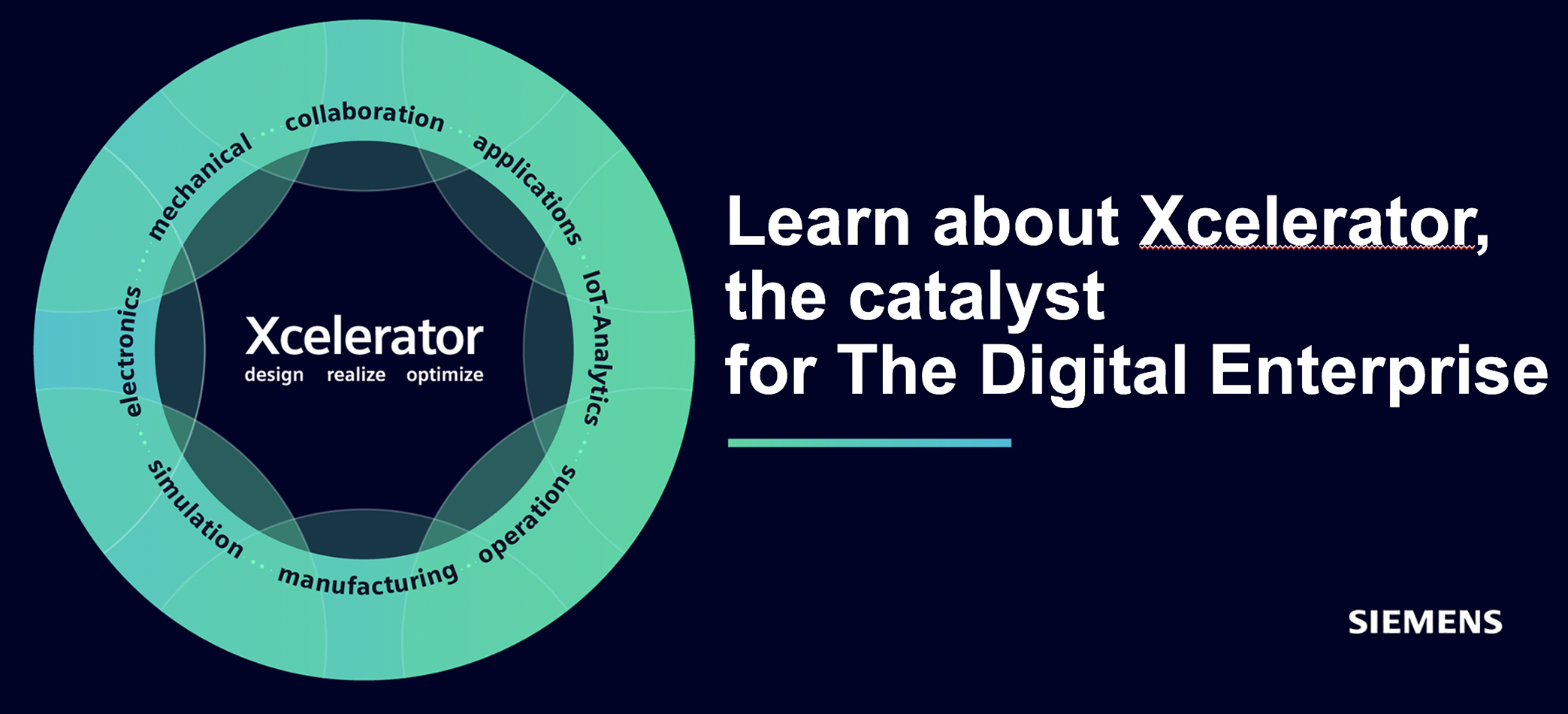
När den nya tidens produkter ska tas fram existerar de inte som fysiska produkter eller prototyper – de är numera i stor omfattning digitalt utvecklade virtuella produkter som i sina inledande utvecklingsfaser existerar enbart som ettor, nollor och egentligen bara som ”teoretiska” digitala modeller i datorer. Men hur kan man säkerställa sånt som funktionaliteter, optimerade materialval, durabilitet, vätskedynamik, prestanda-verifiering, valideringar, integrerade kretsars kapacitet, värmeutveckling, tillverkningsbarhet och annat? Här ger simulerings- och analysverktygen de svar man behöver. Och i detta har Siemens utvecklats enormt mycket genom köp av lösningar och företag som CD-adapco (StarCCM+ var flaggskepet), LMS International (med bl a Amesim-lösningen), Mentor Graphics (specialist med lösningar inom t ex Integrerade Kretsar), m fl. Men också genom strategiska satsningar på att utveckla det man köpt till en av marknadens vassaste CAE-plattformar, Simcenter, också är en del av PLM-portföljen Xcelerator. Dock går dagens annonserade köp, som det f ö ryktats om under någon vecka, utanpå det mesta.
Vad är det man köper? Framför allt en imponerande samling digitala simulerings- och analysverktyg. När det gäller industrisegment har Altair en stark närvaro inom fordons- och transportindustrin, men under de senaste åren, främst genom förvärv, har det expanderat till andra segment, som högteknologisk elektronik, flyg och försvar, medicinsk utrustning och energi. I detta har man gått från att vara en nischleverantör till ett globalt tekniskt företag i företagsklass. Från sina rötter i strukturanalysmjukvara som Hypermesh har Altair nu mjukvara och molnlösningar med välkända varumärken som HyperWorks, solidThinking, Inspire, Altair PBS och SmartWorks, bland annat, inom områdena simuleringsdriven produktutveckling, högpresterande beräkningar (HPC) och dataintelligens.
Klicka på rubriken för att läsa mer på PLM&ERP News.
Genom det nu annonserade köpet bildas nu världens näst största spelare inom CAE-området. I kommersiella termer går Siemens genom dagens köp från fjärdeplatsen bland världens toppspelare till andra platsen efter Ansys, för övrigt nyligen uppköpta av elektronikutvecklaren Synopsys. Man passerar därmed kommersiellt både MathWorks och Dassault Systemes.
Det händer alltså stora saker inom PLM när de stora spelarna nu formerar sig inför slaget om framtiden. En framtid som inte bara handlar om exponentiellt växande inslag i dagens produkter av AI, mjukvaror, elektronik, och el, utan också om en veritabel nyckelteknologi som berör det mesta inom digital produktutveckling byggd på virtuella prototyper och 3D-modeller: Simulering & Analys (S&A).
När den nya tidens produkter ska tas fram existerar de inte som fysiska produkter eller prototyper – de är numera i stor omfattning digitalt utvecklade virtuella produkter som i sina inledande utvecklingsfaser existerar enbart som ettor, nollor och egentligen bara som ”teoretiska” digitala modeller i datorer. Men hur kan man säkerställa sånt som funktionaliteter, optimerade materialval, durabilitet, vätskedynamik, prestanda-verifiering, valideringar, integrerade kretsars kapacitet, värmeutveckling, tillverkningsbarhet och annat? Här ger simulerings- och analysverktygen de svar man behöver. Och i detta har Siemens utvecklats enormt mycket genom köp av lösningar och företag som CD-adapco (StarCCM+ var flaggskepet), LMS International (med bl a Amesim-lösningen), Mentor Graphics (specialist med lösningar inom t ex Integrerade Kretsar), m fl. Men också genom strategiska satsningar på att utveckla det man köpt till en av marknadens vassaste CAE-plattformar, Simcenter, också är en del av PLM-portföljen Xcelerator. Dock går dagens annonserade köp, som det f ö ryktats om under någon vecka, utanpå det mesta.
Vad är det man köper? Framför allt en imponerande samling digitala simulerings- och analysverktyg. När det gäller industrisegment har Altair en stark närvaro inom fordons- och transportindustrin, men under de senaste åren, främst genom förvärv, har det expanderat till andra segment, som högteknologisk elektronik, flyg och försvar, medicinsk utrustning och energi. I detta har man gått från att vara en nischleverantör till ett globalt tekniskt företag i företagsklass. Från sina rötter i strukturanalysmjukvara som Hypermesh har Altair nu mjukvara och molnlösningar med välkända varumärken som HyperWorks, solidThinking, Inspire, Altair PBS och SmartWorks, bland annat, inom områdena simuleringsdriven produktutveckling, högpresterande beräkningar (HPC) och dataintelligens.
Klicka på rubriken för att läsa mer på PLM&ERP News.

BREAKING NEWS: Siemens Aquires Simulation and Analysis Company Altair For $10.6B
FORMING A NEW ERA and THE SECOND LARGEST CAE-PLAYER IN THE WORLD. Siemens buys the strongly growing software developer in AI, HPC, Simulation & Analysis, Altair Engineering. "The acquisition will create the world's most complete AI-driven design and simulation portfolio - by combining Altair's capabilities in simulation, HPC, data science and AI with the power of Siemens Xcelerator," said Roland Busch, CEO of Siemens AG. Siemens is paying $10.6 billion for Altair.
Through the now announced purchase the world's second largest player in the CAE area is formed. In commercial terms Siemens moves from 4th place among the world's top CAE revenue generators to second place after Ansys. Siemens thus pass both MathWorks and Dassault with totally more than $1.5 billion in annual CAE revenue. Moreover, it will push the PLM divison's total annual revenues up to the €8B level.
So, big things are happening within PLM when the big players are now charging up for the battle for the future. A future that is not only about exponentially growing features of AI, software, electronics, and electricity in today's products, but also about a key technology affecting most of digital product development built on 3D models: Simulation & Analysis (S&A).
When the products of the new era are developed, they do not exist as physical products - but are nowadays virtual (3D) models which in their initial phases exist only in binary numbers, zeros and ones, and really only as "theoretical" digital entities. So how do you ensure functionalities, optimized material choices, durable structures, thermal reactions, fluid dynamics, performance verification, validations, correct IC capabilities, manufacturability and more? S&A tools provide the answers. And in this, Siemens has developed strongly through the purchase of solutions and companies such as CD-adapco (flagship StarCCM+), LMS International (Amesim among others), Mentor Graphics (Integrated Circuits, etc), and more. But also, through strategic investments in developing what was bought into one of the market's broadest CAE platforms, Simcenter, also a part of the Xcelerator portfolio. However, today's deal, which has been rumored for a week or so, goes beyond most of it.
What are they buying? In terms of industry segments, Altair has a strong presence in automotive and transportation, but in recent years, mainly through acquisitions, it has expanded into other segments, such as high-tech electronics, aerospace & defense, medical equipment, and energy. In this, it has gone from being a niche supplier to a global enterprise-class technology company. From its roots in structural analysis software such as Hypermesh, Altair now has software and cloud solutions with well-known brands such as HyperWorks, solidThinking, Inspire, Altair PBS and SmartWorks, among others, in the areas of simulation-driven product development, high-performance computing (HPC) and data intelligence.
Click on the headline to read the full article on PLM&ERP News.
Through the now announced purchase the world's second largest player in the CAE area is formed. In commercial terms Siemens moves from 4th place among the world's top CAE revenue generators to second place after Ansys. Siemens thus pass both MathWorks and Dassault with totally more than $1.5 billion in annual CAE revenue. Moreover, it will push the PLM divison's total annual revenues up to the €8B level.
So, big things are happening within PLM when the big players are now charging up for the battle for the future. A future that is not only about exponentially growing features of AI, software, electronics, and electricity in today's products, but also about a key technology affecting most of digital product development built on 3D models: Simulation & Analysis (S&A).
When the products of the new era are developed, they do not exist as physical products - but are nowadays virtual (3D) models which in their initial phases exist only in binary numbers, zeros and ones, and really only as "theoretical" digital entities. So how do you ensure functionalities, optimized material choices, durable structures, thermal reactions, fluid dynamics, performance verification, validations, correct IC capabilities, manufacturability and more? S&A tools provide the answers. And in this, Siemens has developed strongly through the purchase of solutions and companies such as CD-adapco (flagship StarCCM+), LMS International (Amesim among others), Mentor Graphics (Integrated Circuits, etc), and more. But also, through strategic investments in developing what was bought into one of the market's broadest CAE platforms, Simcenter, also a part of the Xcelerator portfolio. However, today's deal, which has been rumored for a week or so, goes beyond most of it.
What are they buying? In terms of industry segments, Altair has a strong presence in automotive and transportation, but in recent years, mainly through acquisitions, it has expanded into other segments, such as high-tech electronics, aerospace & defense, medical equipment, and energy. In this, it has gone from being a niche supplier to a global enterprise-class technology company. From its roots in structural analysis software such as Hypermesh, Altair now has software and cloud solutions with well-known brands such as HyperWorks, solidThinking, Inspire, Altair PBS and SmartWorks, among others, in the areas of simulation-driven product development, high-performance computing (HPC) and data intelligence.
Click on the headline to read the full article on PLM&ERP News.

”An Industrial Drama,” Says Siemens Head of PLM, Tony Hemmelgarn, About Electrification and SDV...
How do the major PLM developers generally view PLM's role in SDV (Software-Defined Vehicles) development and the forward storming electrification technologies as a growing parts of vehicle and transport product realization? The question is brought up to date not least by the announcement this week from the Volvo Group and Daimler Trucks to invest in a 50/50-owned company for the development of an SDV platform for trucks. In two earlier published articles, PLM&ERP News has taken a closer look at this through interviews with leaders of major players in the automotive industry. Siemens Digital Industries Software’s CEO, Tony Hemmelgarn, is one of the PLM profiles interviewed. He is today the longest-serving executive in the entire PLM space. Meet him in my in-depth interview around these two superhot topics.
The claim that the car industry is going through a unique technologically explosive phase right now is no exaggeration, he notes. As AI, electrification, electronics and software—as some of the most prominent new technologies—pave the way and dramatically change product development, timing is everything, for everyone. The right tool at the right time is of the utmost importance. This not only affects PLM developers, such as the leading player in the automotive market, Siemens Digital Industries Software, but also fundamentally changes the situation of car manufacturers. Today’s cars are more connected, software-controlled, autonomous and electric than ever. Each of the vehicles contains, or will soon contain, millions of lines of code and must daily be able to handle terabytes of data. This is a huge undertaking and it has led to a ”volcanic” change in the way several major vehicle manufacturers work, not least to now quickly build up sophisticated infrastructures for software development. ”What the automotive industry is going through is actually nothing less than an industrial drama,” says Tony Hemmelgarn. ”We are talking about survival of the fittest. The fight is fierce and there are three areas that stand out: Software/electronics, digital manufacturing processes and in a 5-10 year perspective the full impact of artificial intelligence.”
In this interview he also comments the problems that the automotive industry is facing in terms of declining share of sales for electric vehicles.
”New technologies are breaking new ground, often resulting in high growth numbers from initially low volumes. But newly established manufacturing methods, high battery costs, decreasing subsidies and a sluggish growth rate in terms of charging stations can, in parallel with a generally declining economy, can backfire in the form of declining sales. We’re talking about a complex chain of events here that not always move in pace. But over time, the assessment is that electric cars are so important to the sustainability and environmental health of the planet, that today’s declining numbers probably represent more of an unexpected notch in the upward curve than a long term decline.”
Click on the headline to be directed to the full interview on PLM&ERP News.
The claim that the car industry is going through a unique technologically explosive phase right now is no exaggeration, he notes. As AI, electrification, electronics and software—as some of the most prominent new technologies—pave the way and dramatically change product development, timing is everything, for everyone. The right tool at the right time is of the utmost importance. This not only affects PLM developers, such as the leading player in the automotive market, Siemens Digital Industries Software, but also fundamentally changes the situation of car manufacturers. Today’s cars are more connected, software-controlled, autonomous and electric than ever. Each of the vehicles contains, or will soon contain, millions of lines of code and must daily be able to handle terabytes of data. This is a huge undertaking and it has led to a ”volcanic” change in the way several major vehicle manufacturers work, not least to now quickly build up sophisticated infrastructures for software development. ”What the automotive industry is going through is actually nothing less than an industrial drama,” says Tony Hemmelgarn. ”We are talking about survival of the fittest. The fight is fierce and there are three areas that stand out: Software/electronics, digital manufacturing processes and in a 5-10 year perspective the full impact of artificial intelligence.”
In this interview he also comments the problems that the automotive industry is facing in terms of declining share of sales for electric vehicles.
”New technologies are breaking new ground, often resulting in high growth numbers from initially low volumes. But newly established manufacturing methods, high battery costs, decreasing subsidies and a sluggish growth rate in terms of charging stations can, in parallel with a generally declining economy, can backfire in the form of declining sales. We’re talking about a complex chain of events here that not always move in pace. But over time, the assessment is that electric cars are so important to the sustainability and environmental health of the planet, that today’s declining numbers probably represent more of an unexpected notch in the upward curve than a long term decline.”
Click on the headline to be directed to the full interview on PLM&ERP News.

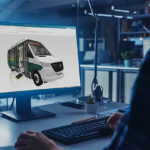
”CAD’s Best-Kept Secret”: Solid Edge 2025 Has a Powerful Technological Level, But Would Benefit...
...and now the software also comes as a SaaS and CLOUD SOLUTION. Siemens Digital Industries Software's mainstream 3D CAD program, Solid Edge (SE), is not without good reason called "the industry's best kept secret". It was developed around the same time as SOLIDWORKS (SW) in the early 1990s, had the same kind of capabilities and introduced 3D CAD into mainstream desktop environments. But it did not take off in the same way as Jon Hirschtick's SW software, despite the fact that it had similar, or sharper, technical capabilities and despite that during the course of development, before the competitors, PDM was integrated into the solution and in addition formed a "PLM light- suite” by integrating excellent simulation and CAM solutions.
This does not prevent SE from continuing to develop its capabilities to match well with competitors in the mid-range segment. In some areas, the solution has also been leading, such as the ability to work both parametrically and with direct modeling. In any case, with the 2025 edition, Solid Edge can be hard-hitting with several heavy initiatives and feature news; which is garnished with a SaaS and cloud variant – like all Siemens programs on SaaS, IaaS and the cloud platform with the suffix X (Solid Edge X).
That is all good, but one problem remains: Solid Edge is priced clearly higher than competing software. One way to increase the global volumes could be to lower the price to be in better parity with, for example, SW.
That said, John Miller, senior VP for Mainstream Engineering at Siemens Digital Industries Software, believes that with the Solid Edge X version and the SaaS concept, significant steps have been taken towards deliveries that are in line with Siemens' strategic goals: "To bring our industry-leading software to customers as a SaaS service,” he says.
Miller further claims that, "Solid Edge delivers transformative technologies that bring together the innate collaboration capabilities of the cloud in combination with cutting-edge AI-based tools, enabling our customers to innovate at the accelerated pace that today's manufacturing industry demands."
Solid Edge has its bulk of users in the US. In the Nordics examples of customers are everything from global players like De Laval to SMB users like Ålö (manufactures e.g. buckets for excavators) and PIAB.
Generally, Solid Edge 2025 includes a number of improvements to increase modeling speed, etching and bend features for sheet metal design, and simplified solutions for model-based definition (MBD). It is also updated on the PDM and collaboration side, as well as it has sharpened solutions in integrated mechanical and electrical design. Moreover, both simulation and CAM has received improved capabilities.
But the most interesting move is the ambitions of the new Solid Edge X that takes the program to the cloud; a new service that provides simplified IT admin, better collaboration, secure and reliable data management and AI-powered productivity support.
Click on the headline to read the full article on PLM&ERP News.
This does not prevent SE from continuing to develop its capabilities to match well with competitors in the mid-range segment. In some areas, the solution has also been leading, such as the ability to work both parametrically and with direct modeling. In any case, with the 2025 edition, Solid Edge can be hard-hitting with several heavy initiatives and feature news; which is garnished with a SaaS and cloud variant – like all Siemens programs on SaaS, IaaS and the cloud platform with the suffix X (Solid Edge X).
That is all good, but one problem remains: Solid Edge is priced clearly higher than competing software. One way to increase the global volumes could be to lower the price to be in better parity with, for example, SW.
That said, John Miller, senior VP for Mainstream Engineering at Siemens Digital Industries Software, believes that with the Solid Edge X version and the SaaS concept, significant steps have been taken towards deliveries that are in line with Siemens' strategic goals: "To bring our industry-leading software to customers as a SaaS service,” he says.
Miller further claims that, "Solid Edge delivers transformative technologies that bring together the innate collaboration capabilities of the cloud in combination with cutting-edge AI-based tools, enabling our customers to innovate at the accelerated pace that today's manufacturing industry demands."
Solid Edge has its bulk of users in the US. In the Nordics examples of customers are everything from global players like De Laval to SMB users like Ålö (manufactures e.g. buckets for excavators) and PIAB.
Generally, Solid Edge 2025 includes a number of improvements to increase modeling speed, etching and bend features for sheet metal design, and simplified solutions for model-based definition (MBD). It is also updated on the PDM and collaboration side, as well as it has sharpened solutions in integrated mechanical and electrical design. Moreover, both simulation and CAM has received improved capabilities.
But the most interesting move is the ambitions of the new Solid Edge X that takes the program to the cloud; a new service that provides simplified IT admin, better collaboration, secure and reliable data management and AI-powered productivity support.
Click on the headline to read the full article on PLM&ERP News.
Hexagon’s Quality and Measurement System, in Leading Role When VW-Owned SEAT Sharpens Manufacturing With...
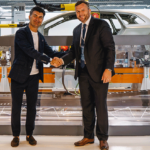
THREE PILLARS aiming to take SEAT to the FOREFRONT OF MANUFACTURING in AUTOMOTIVE. The digitization of the automotive industry in Europe is in full swing on all fronts. Not least when it comes to production. An interesting aspect of this is the development in the use of digital twins, which are now increasingly being implemented on the manufacturing side. A recent example is Volkswagen Group-owned SEAT, which recently announced a developed collaboration with Hexagon regarding measurement and quality control systems.
The expanded collaboration involves integrating a digital twin, which applies measurement data with process simulations to predict results and improve manufacturing efficiency. The solution will use innovative systems to digitize the car body and its components, manage their data and provide reports and analytics that help production staff drive efficiency and reduce costs.
A backdrop is that Hexagon is one of the world's leading companies in digital solutions that combine sensors, software and autonomous technologies. As for SEAT, it has had a long-term collaboration of 25 years with Hexagon's Manufacturing Intelligence division. This collaboration is now being taken to a new, higher technical level. The companies have signed a strategic agreement aimed at deepening SEAT's digital transformation, focusing on digitization of vehicle components, management of digitized information and advanced process simulation.
SEAT's quality director, Daniel Cortina, states that SEAT's now announced investment is logically related to the explosive development in automotive: "Absolutely, we are in a time of unprecedented transformation of our company towards smarter, more connected and efficient production, which means digital transformation of our production processes. Now we will not only acquire data about the quality of our parts faster and more accurately, but we will also be able to improve manufacturing performance with them. This proactive approach to quality enables us to improve our customer satisfaction and significantly reduce the materials used in manufacturing. process, reinforcing our commitment to sustainability," he says.
The collaboration between the companies is based on three fundamental pillars: digitization of the manufactured parts of the vehicle, handling of digitized information and simulation of processes.
SEAT rely on Hexagon's quality inspection and 3D digitization solutions, which they have implemented in their inspection and manufacturing processes for body components. Under the new agreement, Hexagon's PRESTO system will fully automate the high-precision 3D laser scanning of the entire body with high-speed robotic inspection, allowing every detail of the car to be measured and evaluated in real time. More about the three fundamental pillars in the article.
Click on the headline to read the full article on PLM&ERP News.
The expanded collaboration involves integrating a digital twin, which applies measurement data with process simulations to predict results and improve manufacturing efficiency. The solution will use innovative systems to digitize the car body and its components, manage their data and provide reports and analytics that help production staff drive efficiency and reduce costs.
A backdrop is that Hexagon is one of the world's leading companies in digital solutions that combine sensors, software and autonomous technologies. As for SEAT, it has had a long-term collaboration of 25 years with Hexagon's Manufacturing Intelligence division. This collaboration is now being taken to a new, higher technical level. The companies have signed a strategic agreement aimed at deepening SEAT's digital transformation, focusing on digitization of vehicle components, management of digitized information and advanced process simulation.
SEAT's quality director, Daniel Cortina, states that SEAT's now announced investment is logically related to the explosive development in automotive: "Absolutely, we are in a time of unprecedented transformation of our company towards smarter, more connected and efficient production, which means digital transformation of our production processes. Now we will not only acquire data about the quality of our parts faster and more accurately, but we will also be able to improve manufacturing performance with them. This proactive approach to quality enables us to improve our customer satisfaction and significantly reduce the materials used in manufacturing. process, reinforcing our commitment to sustainability," he says.
The collaboration between the companies is based on three fundamental pillars: digitization of the manufactured parts of the vehicle, handling of digitized information and simulation of processes.
SEAT rely on Hexagon's quality inspection and 3D digitization solutions, which they have implemented in their inspection and manufacturing processes for body components. Under the new agreement, Hexagon's PRESTO system will fully automate the high-precision 3D laser scanning of the entire body with high-speed robotic inspection, allowing every detail of the car to be measured and evaluated in real time. More about the three fundamental pillars in the article.
Click on the headline to read the full article on PLM&ERP News.
Hexagons kvalitets- och mätsystem, i huvudroll när VW-ägda SEAT vässar tillverkningen med digitala tvillingar
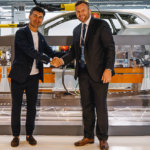
TRE GRUNDPELARE SKA TA UPP SEAT I AUTOMOTIVE-INDUSTRINS FRAMKANT. Digitaliseringen av fordonsindustrin i Europa är i full gång på alla fronter. Inte minst när det gäller produktionen. En intressant aspekt i detta är utvecklingen när det gäller användning av digitala tvillingar, som nu allt oftare implementeras på tillverkningssidan. Ett färskt exempel är Volkswagen Group-ägda SEAT, som i dagarna annonserat ett utvecklat samarbete med Hexagon kring mät- och kvalitetskontrollsystem.
Det utökade samarbetet handlar om att integrera en digital tvilling, som tillämpar mätdata med processimuleringar för att förutsäga resultat och förbättra tillverkningseffektiviteten. Lösningen kommer att använda sig av innovativa system för att digitalisera bilkarossen och dess komponenter, hantera deras data och tillhandahålla rapporter och analyser som hjälper produktionspersonal att driva effektivitet och minska kostnaderna.
Till saken hör att Hexagon är en av de globalt ledande företagen inom digitala lösningar som kombinerar sensorer, mjukvara och autonoma teknologier. När det gäller SEAT har man haft ett långvarigt samarbete under 25 år med Hexagons Manufacturing Intelligence-division. Nu tar man detta samarbete vidare till en ny högre teknisk nivå. Företagen har tecknat ett strategiskt avtal som syftar till att fördjupa SEATs digitala transformation, med fokus på digitalisering av fordonskomponenter, hantering av digitaliserad information och avancerad processimulering.
SEATs kvalitetesdirektör, Daniel Cortina, konstaterar att SEATs nu annonserade satsning är logisk relaterat till den explosiva utvecklingen inom automotive:
”Absolut, vi befinner vi oss i en tid av oöverträffad omvandling av vårt företag mot smartare, mer uppkopplad och effektiv produktion, vilket innebär digital transformation av våra produktionsprocesser. Nu kommer vi inte att skaffa bara data om kvaliteten på våra delar snabbare och mer exakt, men vi kommer också att kunna förbättra tillverkningsprestanda med dem. Denna förutsägande inställning till kvalitet gör det möjligt för oss att förbättra vår kundnöjdhet och avsevärt minska de material som används i tillverkningen. process, vilket förstärker vårt engagemang för hållbarhet," säger han.
Samarbetet mellan bolaget bygger på tre grundpelare: digitalisering av de tillverkade delarna av fordonet, hantering av digitaliserad information och simulering av processer.
SEAT S.A. förlitar sig på Hexagons kvalitetsinspektions- och 3D-digitaliseringslösningar, som de har implementerat i sina inspektions- och tillverkningsprocesser för karosskomponenter. Enligt det nya avtalet kommer Hexagons PRESTO-system att helt automatisera 3D-laserskanningen med hög precision av hela kroppen med höghastighets-robotinspektion, vilket gör att varje detalj i bilen kan mätas och utvärderas i realtid. Mer om detta i artikeltexten.
Klicka på rubriken för att läsa hela artikeln på PLM&ERP News.
Det utökade samarbetet handlar om att integrera en digital tvilling, som tillämpar mätdata med processimuleringar för att förutsäga resultat och förbättra tillverkningseffektiviteten. Lösningen kommer att använda sig av innovativa system för att digitalisera bilkarossen och dess komponenter, hantera deras data och tillhandahålla rapporter och analyser som hjälper produktionspersonal att driva effektivitet och minska kostnaderna.
Till saken hör att Hexagon är en av de globalt ledande företagen inom digitala lösningar som kombinerar sensorer, mjukvara och autonoma teknologier. När det gäller SEAT har man haft ett långvarigt samarbete under 25 år med Hexagons Manufacturing Intelligence-division. Nu tar man detta samarbete vidare till en ny högre teknisk nivå. Företagen har tecknat ett strategiskt avtal som syftar till att fördjupa SEATs digitala transformation, med fokus på digitalisering av fordonskomponenter, hantering av digitaliserad information och avancerad processimulering.
SEATs kvalitetesdirektör, Daniel Cortina, konstaterar att SEATs nu annonserade satsning är logisk relaterat till den explosiva utvecklingen inom automotive:
”Absolut, vi befinner vi oss i en tid av oöverträffad omvandling av vårt företag mot smartare, mer uppkopplad och effektiv produktion, vilket innebär digital transformation av våra produktionsprocesser. Nu kommer vi inte att skaffa bara data om kvaliteten på våra delar snabbare och mer exakt, men vi kommer också att kunna förbättra tillverkningsprestanda med dem. Denna förutsägande inställning till kvalitet gör det möjligt för oss att förbättra vår kundnöjdhet och avsevärt minska de material som används i tillverkningen. process, vilket förstärker vårt engagemang för hållbarhet," säger han.
Samarbetet mellan bolaget bygger på tre grundpelare: digitalisering av de tillverkade delarna av fordonet, hantering av digitaliserad information och simulering av processer.
SEAT S.A. förlitar sig på Hexagons kvalitetsinspektions- och 3D-digitaliseringslösningar, som de har implementerat i sina inspektions- och tillverkningsprocesser för karosskomponenter. Enligt det nya avtalet kommer Hexagons PRESTO-system att helt automatisera 3D-laserskanningen med hög precision av hela kroppen med höghastighets-robotinspektion, vilket gör att varje detalj i bilen kan mätas och utvärderas i realtid. Mer om detta i artikeltexten.
Klicka på rubriken för att läsa hela artikeln på PLM&ERP News.

Blazing the Trail for Women in PLM – Siemens’ Zandra Nilsson Takes Front Line...
"COMPETENCE is MORE IMPORTANT than GENDER". She somewhat instinctively resists the idea that she would have been assigned to the management of one of the major players in PLM, Siemens Digital Industries Software, just because she is a woman. The question comes up, of course, when we meet one of the Nordic movement's greatest promises for the future within PLM, Zandra Nilsson.
Female leaders, or indeed female employees in general other than the market side, are still relatively easy to count in this male-dominated world. In short, the discussion of gender equality has never gained a foothold in the PLM industry, but there are occasional success stories. PLM&ERP News has, for example, told about one of the manufacturing area's top OEMs, SKF, which previously had one of the most prominent female visionaries in the industry as its PLM manager, Victoria van Kamp. But there are more examples from earlier generations, Autodesk's CEO, Carol Bartz, in the 1990s was a global star on the CAD side, and in the 2010s, Dassault Systeme's EVP and Chief Strategy Officer, Monica Mengini, stood out as a blooming, albeit very combative, side shot to CEO Bernard Charles. At present, it looks leaner, even though Siemens Digital Industries in particular has shown a proactive stance with, for example, Eryn Devola as Head of Sustainability in the important area of sustainability and with Brenda Discher as senior VP for Business Strategy & Marketing. But it doesn't stop there, there is more of interest in the gender perspective and this is where Zandra Nilsson enters the plot.
After double degrees–in Engineering and Business Processes at The Institute of Technology at Linköping University–and a good decade at IBM, she was recruited seven years ago to Siemens Digital Industries Software by VP and Nordic executive chief, Mats Friberg. Today, she is sales director for the Nordic region, which, no matter how you look at it from an equality angle, is a tough job. You must not only be deeply technology-savvy, have exciting visions of how and where you can expand, but also overcome the ever-present cold-hammered demands to deliver results. Every quarter, in a continuous process where perseverance and the ability to cope with pressure are the cornerstones of professional life. Zandra Nilsson is right there:
"No one cares what gender you are, regardless of whether you are male or female, it's about showing results. Competence is more important; not just sales figures for the company's top management, but to an even greater extent technically well-functioning and affordable solutions for customers. They must be able to trust that what they get will not only deliver what we promised, but perhaps even better bring new, unexpected profits. It is of course challenging, but we have a great organization, sharp employees, specialists and an incredibly rich set of PLM and automation software in the Xcelerator portfolio, which makes life as a sales manager significantly easier," says Nilsson.
Meet Zandra Nilsson in today's in-depth interview on PLM&ERP News.
Female leaders, or indeed female employees in general other than the market side, are still relatively easy to count in this male-dominated world. In short, the discussion of gender equality has never gained a foothold in the PLM industry, but there are occasional success stories. PLM&ERP News has, for example, told about one of the manufacturing area's top OEMs, SKF, which previously had one of the most prominent female visionaries in the industry as its PLM manager, Victoria van Kamp. But there are more examples from earlier generations, Autodesk's CEO, Carol Bartz, in the 1990s was a global star on the CAD side, and in the 2010s, Dassault Systeme's EVP and Chief Strategy Officer, Monica Mengini, stood out as a blooming, albeit very combative, side shot to CEO Bernard Charles. At present, it looks leaner, even though Siemens Digital Industries in particular has shown a proactive stance with, for example, Eryn Devola as Head of Sustainability in the important area of sustainability and with Brenda Discher as senior VP for Business Strategy & Marketing. But it doesn't stop there, there is more of interest in the gender perspective and this is where Zandra Nilsson enters the plot.
After double degrees–in Engineering and Business Processes at The Institute of Technology at Linköping University–and a good decade at IBM, she was recruited seven years ago to Siemens Digital Industries Software by VP and Nordic executive chief, Mats Friberg. Today, she is sales director for the Nordic region, which, no matter how you look at it from an equality angle, is a tough job. You must not only be deeply technology-savvy, have exciting visions of how and where you can expand, but also overcome the ever-present cold-hammered demands to deliver results. Every quarter, in a continuous process where perseverance and the ability to cope with pressure are the cornerstones of professional life. Zandra Nilsson is right there:
"No one cares what gender you are, regardless of whether you are male or female, it's about showing results. Competence is more important; not just sales figures for the company's top management, but to an even greater extent technically well-functioning and affordable solutions for customers. They must be able to trust that what they get will not only deliver what we promised, but perhaps even better bring new, unexpected profits. It is of course challenging, but we have a great organization, sharp employees, specialists and an incredibly rich set of PLM and automation software in the Xcelerator portfolio, which makes life as a sales manager significantly easier," says Nilsson.
Meet Zandra Nilsson in today's in-depth interview on PLM&ERP News.

Långt ifrån ”varannan damernas” i PLM – men Siemens Zandra Nilsson tvekar inte att...
”KOMPETENS är VIKTIGARE än KÖN”. Hon värjer sig på något vis instinktivt mot att hon bara för att hon är kvinna skulle ha kvoterats in i ledningen för en av de stora spelarna i PLM, Siemens Digital Industries Software. Frågan kommer förstås upp när vi träffar en av Norden-rörelsens största framtidslöften inom PLM, Zandra Nilsson. Kvinnliga ledare, eller egentligen överhuvudtaget kvinnliga medarbetare på annat än marknadssidan, är ännu tämligen lätträknade i denna mansdominerade värld. Kort sagt har diskussionen kring sloganen från börsvärlden, ”varannan damernas”, aldrig fått fotfäste i branschen, men visst finns det enstaka framgångsrika exempel. PLM&ERP News har exempelvis berättat om ett av verkstadsområdets absoluta toppföretag, SKF, som tidigare hade en av de mest framstående kvinnliga visionärerna i branschen som högst PLM-ansvarig, Victoria van Kamp. Men det finns fler exempel från tidigare generationer, Autodesks CEO, Carol Bartz, var på 1990-talet en av CAD-sidans stora globala stjärnor och på 2010-talet stod Dassault Systemes EVP och strategichef, Monica Mengini, ut som ett blommande, om än mycket stridbart, sidoskott till CEOn Bernard Charles. I dagsläget ser det magrare ut, även om just Siemens Digital Industries visat upp en proaktiv hållning med exempelvis Eryn Devola som Head of Sustainability på det viktiga hållbarhetsområdet och med Brenda Discher som senior VP för Business Strategy & Marketing. Men det stannar inte där, det finns mer av intresse i detta perspektiv och det är här Zandra Nilsson kommer in i handlingen.
Efter dubbla examen som civilingenjör och ekonom från Linköpings Tekniska Högskola och Universitet och ett drygt decennium på IBM rekryterades hon för sju år sedan till Siemens Digital Industries Software av VPn och nordenchefen, Mats Friberg. Idag är hon försäljningsdirektör för Norden, vilket alldeles oavsett hur man ser på saken ur en jämlikhetsvinkel är ett tufft jobb. Man ska inte bara vara djupt teknologi-kunnig, ha spännande visioner om hur och var man kan expandera, utan också ta sig över ständigt närvarande kallhamrade krav från toppledningen på att leverera resultat. Varje kvartal, i en kontinuerlig process där uthållighet och förmåga att klara pressen, är yrkestillvarons grundpelare. Just där befinner sig Zandra Nilsson:
”Ingen bryr sig om vilket kön du har, oavsett om du är man eller kvinna handlar det om att visa resultat. Kompetens är viktigare; inte bara försäljningssiffror för toppledningen i bolaget, utan i ännu högre grad tekniskt välfungerande och prisvärda lösningar för kunderna. De måste kunna lita på att det de får inte bara håller vad vi lovat, utan kanske ännu hellre ger nya, oväntade vinster. Det är förstås utmanande, men vi har en bra organisation, en rad vassa medarbetare, specialister och en oerhört rik uppsättning av PLM- och automations-mjukvaror i Xcelerator-portföljen, som gör livet som säljansvarig betydligt lättare,” säger Nilsson.
Men hur ser hon på framtiden för PLM? Vilka är de stora utmaningarna? Och hur ser Siemens roll ut i detta? Möt Zandra Nilsson i dagens djupintervju på PLM&ERP News.
Efter dubbla examen som civilingenjör och ekonom från Linköpings Tekniska Högskola och Universitet och ett drygt decennium på IBM rekryterades hon för sju år sedan till Siemens Digital Industries Software av VPn och nordenchefen, Mats Friberg. Idag är hon försäljningsdirektör för Norden, vilket alldeles oavsett hur man ser på saken ur en jämlikhetsvinkel är ett tufft jobb. Man ska inte bara vara djupt teknologi-kunnig, ha spännande visioner om hur och var man kan expandera, utan också ta sig över ständigt närvarande kallhamrade krav från toppledningen på att leverera resultat. Varje kvartal, i en kontinuerlig process där uthållighet och förmåga att klara pressen, är yrkestillvarons grundpelare. Just där befinner sig Zandra Nilsson:
”Ingen bryr sig om vilket kön du har, oavsett om du är man eller kvinna handlar det om att visa resultat. Kompetens är viktigare; inte bara försäljningssiffror för toppledningen i bolaget, utan i ännu högre grad tekniskt välfungerande och prisvärda lösningar för kunderna. De måste kunna lita på att det de får inte bara håller vad vi lovat, utan kanske ännu hellre ger nya, oväntade vinster. Det är förstås utmanande, men vi har en bra organisation, en rad vassa medarbetare, specialister och en oerhört rik uppsättning av PLM- och automations-mjukvaror i Xcelerator-portföljen, som gör livet som säljansvarig betydligt lättare,” säger Nilsson.
Men hur ser hon på framtiden för PLM? Vilka är de stora utmaningarna? Och hur ser Siemens roll ut i detta? Möt Zandra Nilsson i dagens djupintervju på PLM&ERP News.