
So, Zandra Nilsson has held the top executive position for Siemens Digital Industries Software in the Nordics and Baltics for just over a year. A primary mandate for a leader of this magnitude is assembling their own executive team—a critical step for establishing a unified vision, fostering trust, and driving strategic execution. While a new team is often a mechanism to gain organizational insight, that hardly applies to Nilsson, a decade-long Siemens veteran who previously led the GEO Sales leadership group.

Reflecting on your first year as VP, how would you evaluate the journey so far, and what have been the most significant challenges?
”It’s been an incredibly rewarding first year. Spending nearly a decade here—which some might see as a long time—actually provided the ultimate foundation. It gave me an intimate understanding of our market dynamics, customer needs, and the strength of our ecosystem. While that built a smooth transition, the true challenge and focus have been leveraging my innate curiosity to constantly re-evaluate my leadership, team development, and our role as a digitalization partner in this fast-evolving market,” says Nilsson.
You’ve assembled your own management team for the PLM division (Siemens Digital Industries Software). What does that lineup look like?
”To drive Nordic competitiveness and ensure superior customer support, I was focused on building a team that blends deep Altair (the AI, HPC, Simulation & Analysis company that Siemens bought for $10.6 billion 2025) expertise with diverse industry perspectives. We needed a comprehensive, full-market approach. So, the new leaders I’ve brought in are:
- Joakim Lindholm, who was leading the North Europe Altair team is now leading our strategic customers to ensure we are able to take this strengthened position to our existing larger customers where we have the digital backbones in place within engineering and manufacturing.
- Ola Dahlin, is leading our full simulation portfolio combining the strengths from Simcenter and Altair portfolio.
- Rikard Skogh, is leading our overall market approach, working tightly with our ecosystem to ensure we are supporting larger and smaller, existing and new customers and industries, where we do not have such a large footprint today.
- Erik Mirstam, who has been leading our manufacturing team, is responsible for maximizing the value out of our One Tech approach, the strength of combining our Siemens footprint into something larger and successful execution.”
These contexts often highlight the importance of establishing a vision while simultaneously fostering an understanding—perhaps above all—of customer culture, related needs, and your own team culture. How has that process worked out?
”These elements are always a challenge. We’ve focused on creating a collaborative, customer-centric culture where every team member understands not just our technical capability, but the specific business outcomes our customers aim to achieve.
Our vision is to be the trusted AI-driven digitalization partner, strengthening the competitiveness of the Nordic industry. Home to some of the world’s most innovative manufacturers and a booming unicorn scene, the Nordics need a partner that ensures they stay competitive in the future. We deliver this through deep industry focus, supporting customers on their digital thread journey to ensure end-to-end progression and scalability.”
What are the key commercial segments driving Siemens’ Nordic operations?
”Segments driving Siemens Nordic operations span manufacturing, defense, and the public/finance sectors. While manufacturing companies are leveraging our solutions for increased control and flexibility, the defense industry is prioritizing faster time-to-market. Furthermore, we are actively scaling innovation and AI capabilities across these verticals.”
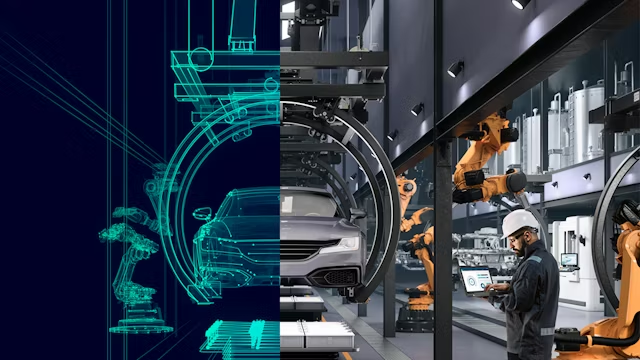
Moreover, there are three aspects of Siemens Digital Twins: The Product Digital Twin – The Production Digital Twin – and The Performance Digital Twin.
Steering Through the Tech-Tide: A Leader’s Guide to the New Industrial Era
Zandra Nilsson has stepped into the top leadership role at a pivotal moment. The current era is defined by a frantic, AI-driven evolution, marked by rapid electrification, electronics proliferation, and the rising supremacy of software. This convergence demands massive transformation across your operations, touching everything from digital product development tools to core workflows.
Success demands a seamless pivot toward agile, integrated platforms. The goal is to leverage existing PLM investments while forging a competitive edge in new technologies. This requires building systems with modular, interchangeable capabilities that can adapt at the speed of innovation.
How are these trends resonating among Siemens’ Nordic customers?
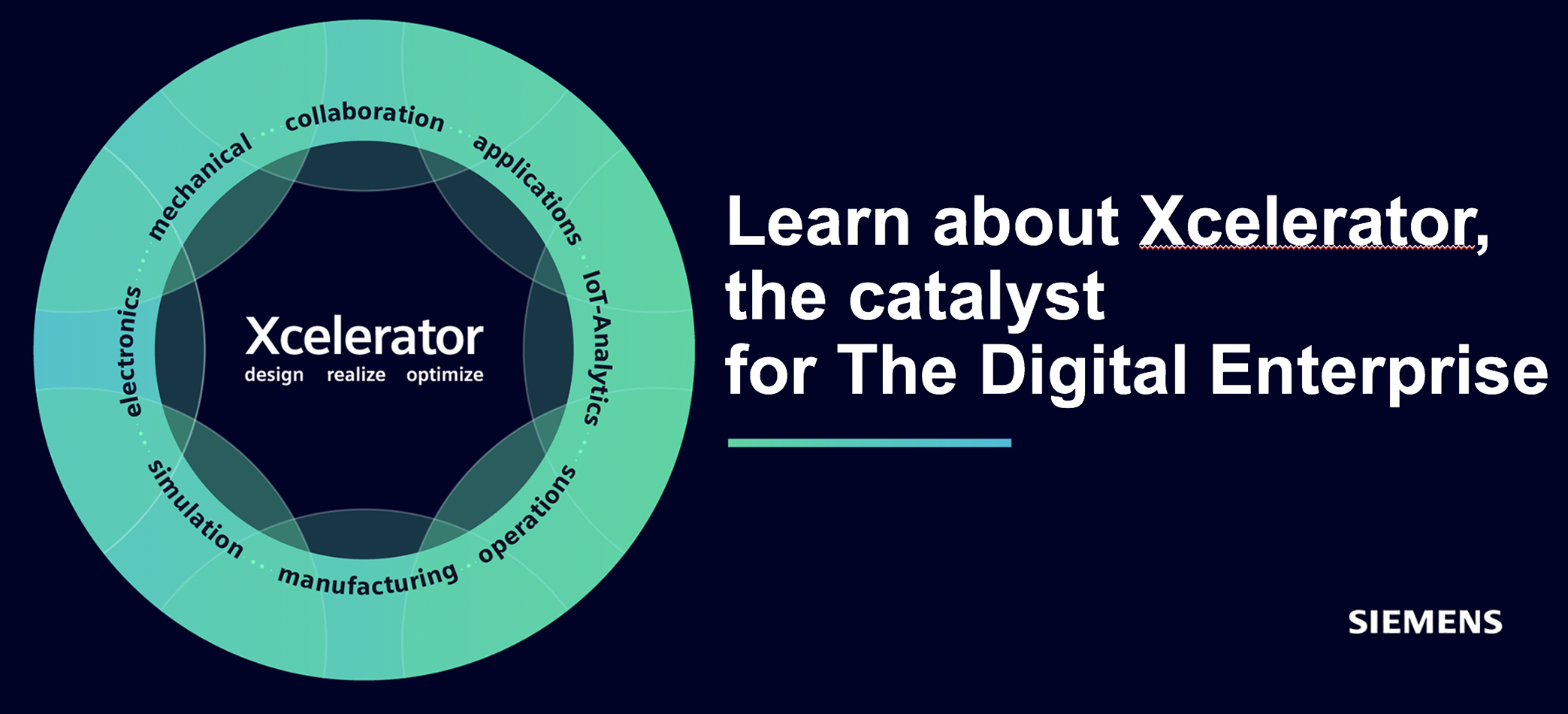
”Your question hits the nail on the head: we are in the midst of a multi-front transformation where AI, electrification, software-defined products, and surging electronics content are no longer separate trends, but a single, converging force. That convergence is driving massive demand for the Siemens Xcelerator portfolio. We aren’t just offering a 3D model; we provide a comprehensive digital twin that spans the entire intelligent lifecycle—from design and manufacturing to in-service operations. This allows our customers to simulate, predict, and optimize before investing in physical resources, accelerating time-to-market and enhancing sustainability—all accelerated by our agentic development platform, evolving from Mendix,” asserts Siemens Digital Industries Software’s Nordics boss, explaining that a major part of the company’s vision is Industrial AI: purpose-built technology for the real world.
”Yes, unlike consumer AI, industrial AI must operate where reliability, safety, and precision are non-negotiable. The factories, production lines, and engineering workflows that underpin our industry cannot be compromised. We are embedding this—what we call Engineering AI—across our entire portfolio. It ranges from intelligent copilots that empower engineers, to predictive maintenance systems that secure uptime, to generative AI accelerating design exploration. This is about equipping Nordic industry with the tools to remain competitive. Furthermore, by linking our know-how and footprint, we are enabling an ’AI Fabric,’ utilizing a semantic layer to connect siloed data and build agentic AI on top.
Siemens’ commitment to an Industrial Foundation Model is a game-changer; we are teaching an LLM to think as an engineer. While the potential in the industrial field is monumental, we are not there yet. However, our ambition, investment, and strategy show we are here to stay.”
Navigating the Downturn: Resilience in the Nordic PLM Market
While Siemens keeps its regional figures close to the vest, industry estimates suggest the Nordic PLM division commands an annual revenue exceeding a quarter of a billion SEK (approx. just under $30 million). But in a tightening economy, the critical question remains:
How has this prolonged downturn impacted the Nordic business?
“The macroeconomic environment is undeniably a factor, not just here but globally,” says Nilsson. “Higher interest rates, supply chain disruptions, inflationary pressures, and geopolitical uncertainty have all left their mark on customer investment decisions.”
Yet, there is a silver lining. “Our Nordic customers know they cannot afford to stand still,” she add. “They are continuing to invest to counter Chinese competition, pushing ahead with AI to sharpen time-to-market and competitiveness. We’re seeing a clear appetite for our expanded portfolio and a desire to learn how to scale AI based on our digital backbone.”
Has the Nordic department managed to sustain growth during FY2026? And how does the Nordic/Baltic region stand in comparison to Siemens’ other European regions?
”While Siemens does not disclose specific regional revenue breakdowns, I can confirm that our Nordic/Baltic performance is strong. We are building significant momentum, with market interest aligning well with our internal growth targets. Our strategic focus on digital threads and industrial AI is resonating deeply with customers, ensuring we remain competitive within the broader European landscape.”
Analysts Pinpoint Siemens as a Main Industrial AI Transformation Force
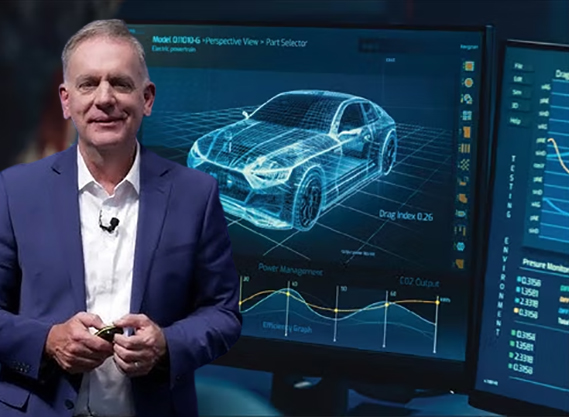
Artificial intelligence is no longer a peripheral strategy; it is the core of industrial transformation. Siemens is capitalizing on this shift, investing heavily to establish market-leading tools that redefine manufacturing. The Group’s PLM strategy, led by divisional CEO and President Tony Hemmelgarn, is delivering quantifiable results. According to reports from ABI Research and the Q3 2025 Forrester Wave, Siemens Digital Industries Software has emerged as a clear leader in developing and integrating AI within PLM.
Notably, the Teamcenter platform (Siemens PLM-solution) was ranked #1 for large manufacturers in ABI Research’s 2025/2026 assessment. Siemens is driving this leadership through ”Teamcenter Copilot”—generative AI embedded directly into engineering workflows. This technology enables optimized digital twins, automated change management, and intelligent part classification.
The Q3 2025 ”Forrester Wave For PLM Platforms For Discrete Manufacturers” solidified this ranking, naming Siemens a Leader. The report praises Teamcenter X (everything with the X suffix is related to the company’s cloud solution) for its robust strategy, innovative roadmap, and superior support for embedded AI capabilities—cementing the foundation for tools like Teamcenter Copilot. Furthermore, the analyst notes: ”Siemens earned outstanding customer feedback, with reference clients citing secure, reliable support and clear communication”.
But there is more: As noted in the introduction, Gartner has affirmed Siemens’ position as a leader in industrial artificial intelligence, naming them ”The Company to beat in Manufacturing. The analyst firm argues that ”the future of the manufacturing AI race lies in integrating advanced AI techniques into engineering, IT and operations, moving beyond simple rule-based systems to more intelligent, agent-based solutions.”
Siemens has wasted no time acting on that vision. At CES 2026, the company unveiled a major, accelerated roadmap focused on creating what it calls the market’s first ”Industrial AI Operating System.” By integrating NVIDIA’s full-stack AI with Siemens’ Xcelerator platform, these solutions are bridging the physical and digital worlds in unprecedented ways.
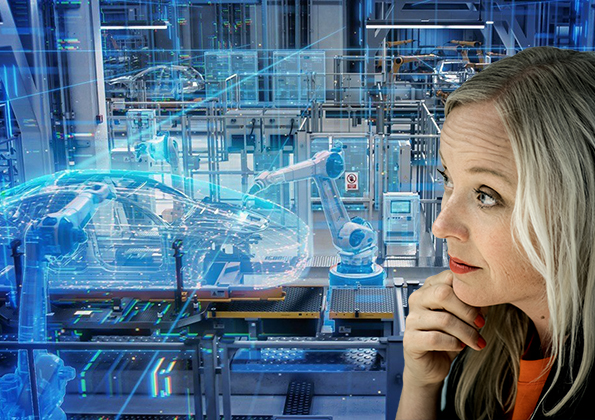
This is a really shift that redefine the boundary between the physical and digital worlds, and can produce dramatic impacts on your customers’ productivity…
”Yes, indeed. Let me also add that we are proud of the recognition from analysts like ABI Research, Forrester, and Gartner, who recognize us as the ’company to beat’ in Manufacturing AI. While these accolades validate our past progress, our announcement at CES 2026 with NVIDIA regarding the Industrial Foundational Model and scalable industrial AI is about our future.
Until now, the best AI integrations in PLM have been siloed point solutions—a copilot here, an optimization tool there. What we mean by an ’Industrial AI Operating System’ is something fundamentally different: a unified layer. The Siemens Xcelerator platform, combined with NVIDIA’s full-stack AI capabilities—from GPU-accelerated computing to Omniverse—creates a continuous, intelligent bridge between the digital model and the physical asset.”
What does this mean in practice?
”The digital twin is no longer a static, design-phase reference, but a living, breathing counterpart to physical assets. It is a dynamic entity that continuously learns, updates, and optimizes performance. As we define it at Siemens, industrial AI is purpose-built for the real world—powering the factories, production lines, and infrastructure that keep economies running. Unlike consumer AI, this technology demands uncompromising reliability, safety, and precision.
The productivity impact is transformative. Engineers are spending less time searching, translating, and validating, allowing decisions that once took weeks—simulations, change impact assessments, part classification—to happen in mere hours or minutes. We’re not simply accelerating existing workflows; we’re eliminating entire categories of manual toil, freeing engineers to focus on what they do best: innovating. And critically, this isn’t a visionary slide deck. With Teamcenter Copilot already integrated into daily workflows, AI-native simulation, and GPU-accelerated EDA, these are real-world capabilities delivering value to customers today.”
Copilots and Agents Affecting the Digital Twin
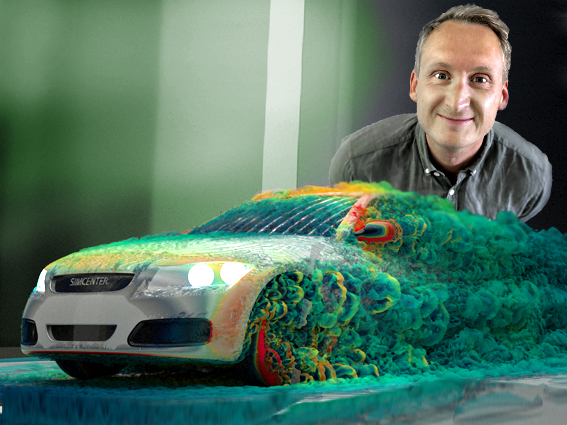
Siemens has unleashed a wave of nine industrial AI copilots designed to embed generative intelligence across the entire value chain. At the forefront is the Eigen Engineering Agent, an autonomous system capable of planning and validating complex automation tasks. This push into AI-native territory extends to simulation and Electronic Design Automation (EDA), where heavy investment in NVIDIA GPU power has unlocked transformative performance. By leveraging this accelerated computing, Siemens has achieved ”trillion-cycle” validation speeds, a boost that powers both their EDA tools and flagship simulation platforms like Simcenter STAR-CCM+.
With this new, unprecedented power, how does this change the ’digital twin’ experience from a design tool to a real-time, actionable operational asset?
”This is where the NVIDIA partnership truly comes alive. The numbers speak for themselves. Historically, high-fidelity simulation—particularly computational fluid dynamics in tools like Simcenter STAR-CCM+—was a luxury, used only selectively. It was too computationally expensive and slow to run on every design iteration, let alone in an operational context. You would simulate your three best candidates and hope you picked the winner.
With NVIDIA GPU acceleration integrated across the Simcenter portfolio, we’ve shattered that constraint. Validation speeds that were once measured in days are now achieved in hours or even minutes. This isn’t just a marginal improvement; it’s a step-change that fundamentally alters what’s possible.”
So, why does that matter for the digital twin?
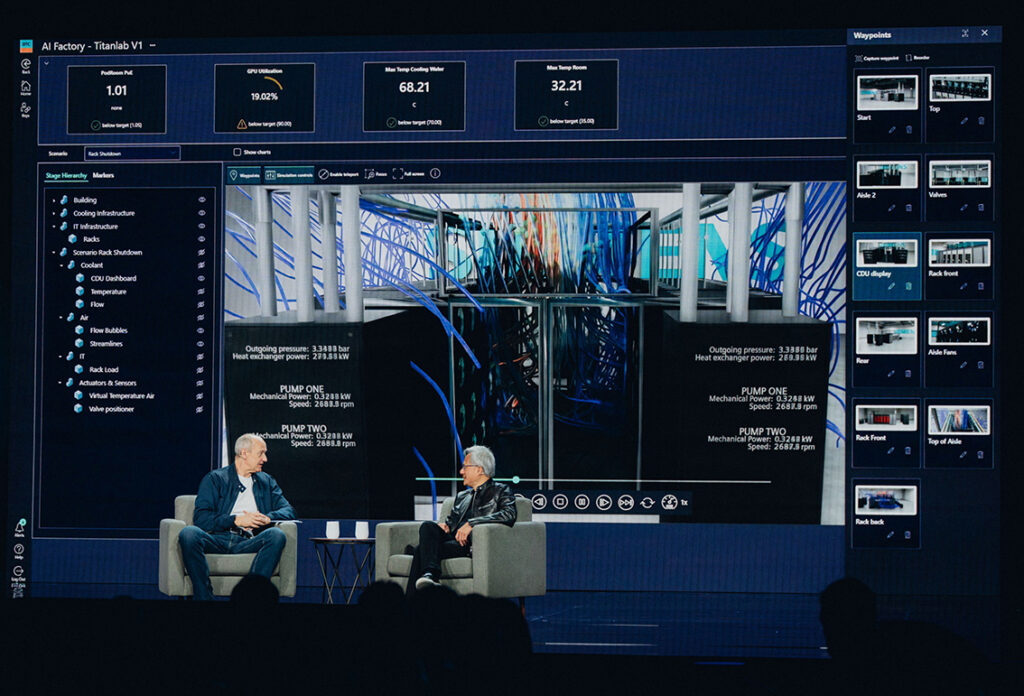
”When simulation is slow, the digital twin is essentially a static snapshot—accurate at the moment it was created but quickly diverging from reality. When simulation becomes near-real-time, the twin transforms into a living, operational asset. You can continuously validate against actual operating conditions and run what-if scenarios while the physical twin is in motion. You can predict failures before they occur and optimize performance on the fly.
This is the true essence of physical AI: bringing intelligence beyond the screen and into the real world, empowering machines to understand and interact with their surroundings. And this is also where physics AI plays a critical role—training AI on fundamental principles like thermodynamics, fluid dynamics, and structural mechanics to revolutionize how we model, predict, and solve real-world problems.
Does this give the digital twin an even broader meaning? Absolutely. For our customers in automotive, aerospace, energy, and electronics, the digital twin is no longer just a design-phase artifact; it is an operational command center. It is a real-time, continuously validated model that drives decisions across the entire product lifecycle—from concept through manufacturing and into service.
Furthermore, this GPU-accelerated approach applies equally to our EDA portfolio, where we are witnessing similarly dramatic speed improvements in electronic design validation. When you remove the computational bottleneck, you unlock entirely new ways of working. We are moving from ’simulating what you can afford’ to ’simulating everything, all the time.’ That is a paradigm shift, and it is happening now,” claims Zandra Nilsson.
Is Reliability in a Fully Automated Validation Chain Possible?
With its latest launches, Siemens is officially transitioning from mere AI assistance to fully autonomous systems in engineering and automation.
As industry moves from ’human-in-the-loop’ to ’human-on-the-loop,’ what does this mean for the role of the industrial engineer? And crucially, how do you ensure absolute reliability in a fully automated validation chain?
”This is perhaps the most important question in industrial AI right now, and it is crucial to be precise about the distinction. The shift lies between copilots—which assist human work—and agentic AI, like our new Eigen Engineering Agent, which autonomously perceives, reasons, and acts to achieve goals.
While agents complete tasks independently, humans remain ’on-the-loop,’ defining goals, setting boundaries, and monitoring outcomes, ultimately elevating the engineer’s role. To ensure reliability, Siemens leverages decades of industrial data, deep domain expertise, and dedicated AI specialists, keeping agents within defined guardrails and utilizing verified data. Furthermore, we are developing orchestration agents to manage complex workflows, providing transparent, auditable, and governed industrial-grade autonomy, empowering engineers to achieve dramatically more.”
Bridging the Gap: Siemens’ Vision for Industrial AI in the Nordics
Siemens has launched a robust and comprehensive program for industrial AI. However, the market remains a treacherous landscape. Entering Q2 2026, industry data highlights a sobering reality: an estimated 80–85% of all AI projects fail to deliver expected business value. Furthermore, studies (including those from MIT) indicate that up to 95% of GenAI pilots fail to generate measurable ROI, while S&P Global reports that 46% of AI projects are abandoned before reaching production—a ”pilot purgatory”
How do you interpret the tough market data—where over 80% of AI projects fail to deliver value and roughly half get stuck in pilot purgatory? Does this align with what you see in the field?
”Those statistics hold true, and we see that reality firsthand. Yet, the critical takeaway is that failure rarely stems from the AI technology itself, but rather a failure to scale. I view this ’80% failure’ rate not as a death knell for AI, but as a symptom of a ’gold rush’ mentality, similar to the IoT era a decade ago. To scale, organizations must move beyond experimentation and secure their data within a robust digital backbone.”
How should industrial leaders approach AI investments to avoid common pitfalls? What is missing, and what do ROI timelines look like?
”The formula for success is to prioritize high-value use cases, prove value, and build for scale. Start with what we call ’Engineering AI’—enhancing existing workflows—then lay the foundational investments necessary to scale.
The most successful implementations I’ve witnessed across sectors begin with a laser-focused, well-understood business challenge. Examples include: ’Our change management process takes six weeks, creating downstream bottlenecks,’ ’40% of our simulation budget is wasted re-running failed validations,’ or ’Engineers spend more time searching for parts than designing.’ These are precise, solvable problems—and AI is an extraordinarily powerful tool to solve them.
Regarding timelines, if built on a solid data foundation, customers are achieving measurable ROI within three to six months on targeted use cases, such as intelligent part classification, automated change impact analysis, and AI-assisted simulation setup. The keyword is targeted. You prove value on a focused project, build organizational confidence, and then scale.
Organizations that attempt an ’enterprise-wide AI transformation’ in one fell swoop are the ones that end up in the failure statistics you mentioned. The winning playbook is clear: Think big, start focused, and scale fast.”
What is Siemens doing differently to defy these statistics and bend the curve toward success for your partners?
”As I stated above, Siemens is uniquely positioned—not merely because we have the best AI algorithms, but because of where and how we deploy them, backed by unparalleled know-how and industrial footprint.
Here are four fundamental differentiators in our approach:
- Unmatched Industrial Data: Siemens leads in AI through decades of real-world operational data. We aren’t a pure-play AI company trying to understand manufacturing; we have lived and breathed these processes for over 175 years. Our AI is trained on genuine design specifications, simulation results, sensor data, and operational logs—advantages no startup or hyperscaler can replicate.
- Deep Domain Expertise: You cannot learn the physics of a turbine blade, the nuances of aerospace certification, or automotive tolerance chains from a large language model. Our AI specialists work hand-in-hand with domain experts who understand these industrial realities implicitly.
- Embedding, Not Adding, AI: We embed AI directly into existing workflows. Teamcenter Copilot doesn’t ask engineers to change their process; it makes their existing work significantly more productive. Our new industrial copilots follow this philosophy, meeting users where they are. Furthermore, our agentic AI—such as the Eigen Engineering Agent—operates autonomously within the precise boundaries and governance structures industrial customers demand.
- The NVIDIA Partnership Crown Jewel: Our partner ecosystem ensures we are building on the most powerful compute infrastructure available, including GPU-accelerated simulation, AI-native EDA, physics-based AI—these aren’t science projects. They are production-ready capabilities fully integrated into the Siemens Xcelerator platform.”
On Gartner’s Wake-Up Call
When Gartner analyst recently predicted that 60% of AI initiatives lacking a robust ’AI-ready’ data foundation will be abandoned by 2026, it sent a ”sobering” shockwave through the market. These failures are rarely technical, analysts suggest, but rather organizational—stemming from poor data maturity, vague business objectives, and an inability to move AI out of the ’lab’ and into daily workflows.
Given Siemens’ pivotal role in industrial digitalization, what is your perspective? Are we witnessing a crisis of integration rather than a lack of innovation?
”Absolutely. Frankly, I think Gartner’s forecast is overdue; the industry needed this wake-up call. Their prediction that 60% of AI initiatives will be abandoned due to poor data foundation precisely aligns with our own observations. The insight that these failures are organizational rather than technical is spot-on, and I’d break that down into three root causes:
- The Data Maturity Trap: Industrial AI is engineered for the physical world, demanding data that mirrors reality with precision. Yet, many enterprises have spent years hoarding data without investing in making it connected, contextualized, and trustworthy. The reality is stark: You cannot build an intelligent digital twin on a foundation of siloed spreadsheets and creaking legacy databases.
- Vague Business Objectives: As noted, ”we need an AI strategy” is a roadmap to nowhere, not a strategy. Conversely, ”reducing time-to-first-article by 30%” is a measurable imperative. Organizations falter when they treat AI as a shiny IT project rather than a core business transformation initiative.
- The Lab-to-Workflow Gap: Perhaps the most insidious failure mode is the ”lab-to-workflow” chasm. A brilliant proof-of-concept trapped in a data scientist’s Jupyter notebook delivers zero enterprise value. To drive impact, AI must be embedded into the daily workflows of the people who actually create value—the engineers, operators, and planners. This is why Siemens has invested so heavily in embedding AI directly into Teamcenter, Simcenter, and our automation tools—not as a bolted-on afterthought, but as a native capability.
”So, make no mistake: we are facing a crisis of integration, not innovation. This is precisely where Siemens’ role in industrial digitalization becomes critical. We go beyond providing AI tools; we deliver the connected data backbone—through Siemens Xcelerator and Teamcenter—that makes AI actionable on the production floor. We supply the workflow integration that drives AI out of the lab and into the engineer’s daily reality, backed by the domain expertise to ensure it solves the right problems.
The companies that will thrive are those that realize AI is not a destination; it is an accelerator. And an accelerator is only as powerful as the vehicle it powers. Our mission is to help customers build that vehicle—a mature, data-rich digital infrastructure—and then turbocharge it with industrial AI.
This is more than a strategy. It is our responsibility as the leading technology partner for industrial digitalization,” Siemens’ Nordics PLM leader states.
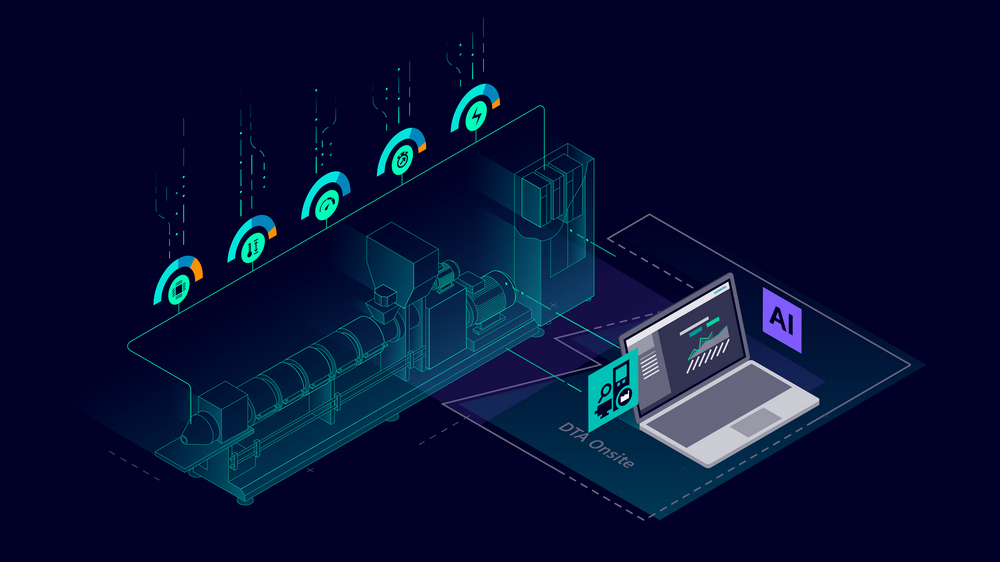
The Importance of The Data Foundation for AI
Given your strong portfolio, how has the initial uptake and feedback been from your Nordic customers within key sectors like automotive, aerospace, and defense? How are they translating the AI hype into concrete, actionable investments?
”The Nordic market is fascinating because it’s both highly advanced and highly pragmatic. What we’re seeing is a clear pattern: the companies that are moving fastest with industrial AI are the ones that already have a strong digital backbone. They’ve invested in PLM, in Teamcenter, in simulation-driven development, and now AI becomes the natural next layer that amplifies everything they’ve already built. For them, adopting Teamcenter copilot or leveraging AI-native simulation isn’t a leap of faith; it’s a logical evolution.
In the automotive space, for example, we see customers using our AI-powered tools to dramatically reduce design iteration cycles, moving from weeks to days on tasks like change impact analysis and part classification. In aerospace and defense, where certification and traceability are non-negotiable, the appeal—and security requirements—are different, but equally powerful: AI that can accelerate validation while maintaining full auditability.”
The key shift I’m observing is that Nordic customers are no longer asking about isolated use cases, but rather how they can scale.”
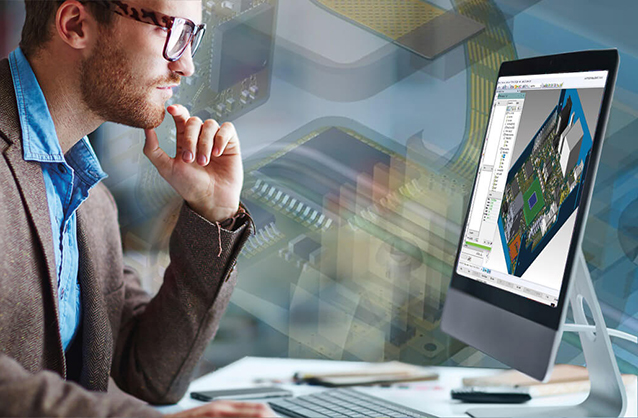
Powering the Future: Electrification and EDA in the Nordic Market
Global corporate investment tells a clear story: electronics and electrification are experiencing powerful, sustained growth—a trend accelerating rapidly across the Nordic region. For Siemens, Electronic Design Automation (EDA) tools have become a cornerstone of our portfolio, accounting for over one-third of total global revenue.
How is this revenue mix shifting within the Nordic market? Furthermore, how are your advancements in EDA driving Siemens’ competitive edge in industrial integration and end-to-end digital transformation?
”Electrification and electronics are among the strongest long-term growth drivers across the Nordic industrial market, and we see this trend accelerating across virtually all industries, from automotive and energy to industrial automation, medtech, aerospace, and defense.
EDA is an increasingly strategic part of Siemens portfolio globally, and we are seeing strong momentum in the Nordic region as customers face growing complexity in electronics, embedded software, connectivity, and system integration. Siemens’ increased investments in IC design technologies and semiconductor solutions are also clearly paying off, strengthening our position in advanced chip, packaging, verification, and system design.
”Siemens’ edge lies in its unique ability to weave EDA, mechanical engineering, and software development into a single, seamless digital thread. Few organizations can bridge the gap between semiconductor design and enterprise-scale manufacturing execution with such precision.
”As products evolve into software-defined ecosystems, old silos are a liability. Today’s leaders need fluid, cross-domain collaboration, seamlessly integrated with cybersecurity and compliance. By bridging chip design, factory optimization, and lifecycle management, Siemens provides the end-to-end digital architecture to master this complexity,” says Zandra Nilsson.
It’s clear that in the race to move beyond AI buzzwords and deliver real, productive substance, the ability to control the entire value chain is paramount. The shift is palpable: Nordic companies are no longer asking for isolated use cases—they are asking how to scale. That is exactly the future Zandra Nilsson’s team is delivering.

