


Annons

The Blueprint for the Intelligent Industry: Capgemini’s Strategic Play for Piterion Group

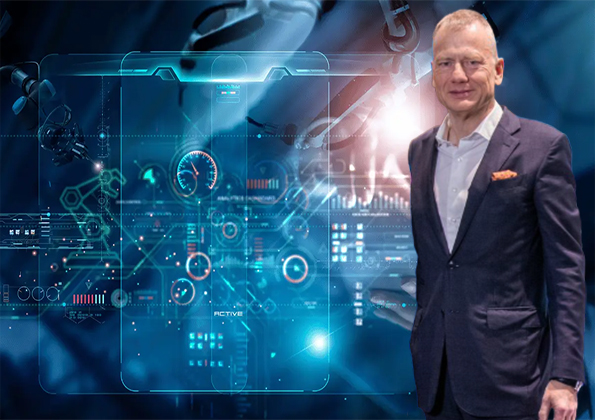
Dr Michael Schulte, CEO of Capgemini Engineering: "Leveraging World-Class PLM, with AI and MOM (Manufacturing Operations Management)."
The major business headline in the PLM sector this week is global consultancy Capgemini’s agreement to acquire the Piterion Group. A premier German independent specialist in PLM and MOM, Piterion’s integration significantly strengthens Capgemini’s capabilities, particularly for clients in complex industrial fields such as automotive and aerospace. By integrating Piterion's agent-based AI with its own portfolio, Capgemini aims to optimize product lifecycles, accelerate time-to-market, and drive cost efficiencies, strengthening its position against industry leaders.
But the move also represents a significant consolidation of Capgemini’s PLM service revenues. While the group does not disclose specific PLM revenue—a small fraction of its total €22.5 billion turnover in 2025—industry analysts at CIMdata estimate the firm’s 2024 collaborative Product Definition management (cPDm) service revenue at approximately $400 million. This places Capgemini eighth globally in a services market currently dominated by titans like Accenture ($2.2B), TCS ($1B), and IBM ($750M), signaling an aggressive, strategic move to close the gap on the leaders.
Capgemini’s prowess in PLM is increasingly defined by its end-to-end digital transformation capabilities and deep-tier manufacturing expertise. This position is underpinned by a sophisticated ecosystem of strategic software partners, most notably the "Big Three": Siemens Digital Industries Software, Dassault Systèmes, and PTC.
Long recognised as a leader in the field, Capgemini continues to champion "digital continuity"—a strategic thread that seamlessly stitches together product design, manufacturing, and maintenance. The firm’s latest move, the acquisition of Stuttgart-based Piterion, is set to further strengthen this "digital thread," ensuring data consistency across the entire industrial lifecycle.
Beyond a $30–40 million revenue boost, the acquisition brings Piterion’s team of over 200 experts into the fold, expanding Capgemini’s footprint across Germany, Italy, Tunisia, and India. Piterion’s expertise in integrating mechanical, electronic, and software solutions for the automotive and aerospace sectors aligns precisely with Capgemini’s industrial focus.
Dr Michael Schulte, CEO of Capgemini Engineering, noted that clients are "increasingly looking to optimise their industrial engineering processes through digitalisation and AI," adding that the acquisition will "expand our agent-based solution offerings and help accelerate growth."
Ravi Nirankari, Co-Founder of Piterion, echoed this sentiment, suggesting that the convergence of AI and connected product ecosystems is "unlocking new opportunities" for global clients. While the purchase price remains undisclosed, the strategic value of the tie-up is clear: a more robust, AI-ready offering for an era of intelligent industry.

Ravi Nirankari further notes that the companies, together with their industrial “world-class manufacturing expertise, support clients in similar sectors to Capgemini and our respective partnership ecosystems are highly complementary, making the group a natural fit for Piterion.”

He adds: “Capgemini’s global scale and breadth of offerings will provide many diverse projects and growth opportunities for our team members. We share Capgemini’s core values ​​and are very excited about the opportunity to join the group.”

Unlocking New Frontiers in Generative AI and Analytics
Piterion specializes in the architectural design and management of complex technical application environments, engineered to optimize manufacturing processes while driving superior efficiency, traceability, and operational reliability. As experts in industrial digitalization—with a core focus on Product Lifecycle Management (PLM)—they excel at harmonizing Manufacturing Execution Systems (MES), Manufacturing Operations Management (MOM), and Enterprise Resource Planning (ERP). By leveraging cutting-edge cloud infrastructure to transition innovative concepts into scalable realities, the team integrates advanced AI into its proprietary accelerators, including high-performance data migration platforms, 3D visualization tools, and robust deployment frameworks.

Of particular note is the integration of Piterion’s PLM and MOM expertise, which serves as a critical catalyst for clients transitioning from legacy on-premises infrastructure to agile, cloud-based environments.

The acquisition of Piterion significantly bolsters Capgemini’s digital industrial capabilities. Of particular note is the integration of Piterion’s Product Lifecycle Management (PLM) and Manufacturing Operations Management (MOM) expertise, which serves as a critical catalyst for clients transitioning from legacy on-premises infrastructure to agile, cloud-based environments. By layering Capgemini’s advanced AI-powered analytics and generative AI models onto these frameworks, the firm is positioned to unlock unprecedented operational agility. 

Why MOM functions are vital
In the industrial ecosystem, MOM functions as the vital architectural bridge between enterprise-level strategic planning (ERP) and shop-floor automation (PLC/MES). It provides the essential software and process framework required to monitor and optimize the end-to-end production lifecycle—from quality control and inventory management to predictive maintenance. 

Synergizing these strengths will enable organizations to accelerate time-to-market, realize substantial cost efficiencies across engineering and manufacturing value chains, and sharpen overall operational responsiveness. The transaction is slated for completion in the coming months, pending customary regulatory approvals and closing conditions. 

Utilize modern MES solutions to streamline production processes. Piterion integrate the EBOMs, MBOMs, and SBOMs to ensure complete traceability—from the serial number down to the smallest component in a BOM system. Benefit: Bridging the gap between engineering and manufacturing (”Design anywhere, produce anywhere”).

”Realizing something much bigger”
Ravi Nirankari said in a LinkedIN statement: ”For me personally, this step feels like a very natural evolution. At Piterion Group we have built more than 20 years of hands-on PLM expertise, working closely with our customers in complex engineering environments. Our focus has always been pragmatic: making PLM work in real industrial operations. Now, by joining forces with Capgemini, something much bigger becomes possible. Capgemini has been strategically strengthening and structuring its PLM and MOM capabilities for years, building a strong global framework around consulting, integration, and transformation. With Pierion Group joining this journey, our clients get stronger global delivery capabilities, deeper operational understanding of complex engineering application landscapes, and the ability to design, implement and operate scalable PLM environments – with a partner who understands both business transformation and engineering reality.”

Print Friendly, PDF & Email

Success Stories

Success Stories

Industriellt

Intressant på PLM TV News

Aktuell ANALYS

Aktuell Analys

Aktuell Analys

3D-printing

Block title