


While the deepened partnership between NVIDIA and Dassault Systèmes regarding AI solutions made headlines in early 2026, the team at DS points to the early 2025 launch of Gen 7 (3D UNIVERSE) as the true catalyst for the next era of MODSIM data. Driven by AI and spatial computing, this evolution positions the 3DEXPERIENCE platform as a preeminent global hub for knowledge and IP management.
Heralded as the seventh generation of virtual environments introduced by Dassault Systèmes during its 44-year tenure, the launch signals a strategic fusion of 3D modeling, simulation, real-time data, and generative AI. This synergy is designed to orchestrate ’Virtual Twins’ that govern the entire lifecycle of intellectual property. Ultimately, the objective is to empower enterprises to safeguard their IP while training AI engines within secure industrial ecosystems—a move widely regarded as the next definitive leap beyond the original 3DEXPERIENCE platform.
HPC and GPU Capabilities Turn Months into Days
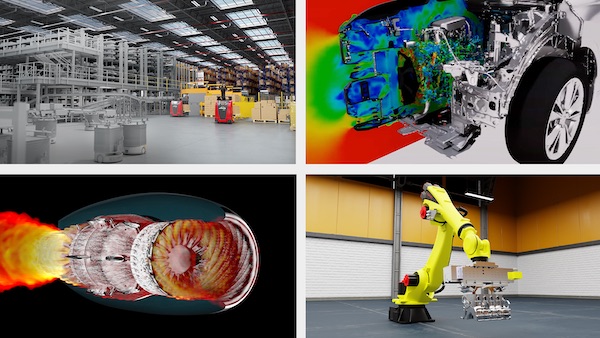
Regardless, the NVIDIA investment is of great significance for Dassault’s move into the AI-driven product development world that is now taking center stage across all industrial fronts. However, do not assume Dassault is alone in this NVIDIA initiative. Through partnerships with all major PLM players—such as Siemens, PTC, Ansys, and Autodesk—NVIDIA has integrated its technologies directly into the digital design and manufacturing tools of most PLM developers. Since NVIDIA’s true breakthrough in 1999 with the launch of the GeForce 256—the first GPU (Graphics Processing Unit) featuring a dedicated transform and lighting engine—the company has systematically embedded itself within the solutions of most PLM players. Today, they play a crucial role in delivering the high-performance computing (HPC) capacity needed to process the vast datasets demanded by modern PLM and smart factory technology. The primary advantage of GPUs compared to the previously dominant CPUs (Central Processing Units) is their capacity for massive parallel processing, making them extremely efficient at executing numerous simple, repetitive calculations simultaneously. This has transformed tasks that once took weeks or days into processes that run in hours or minutes.
Cutting-Edge Infrastructure for Artificial Intelligence
In short, NVIDIA has established itself as the cornerstone provider of AI infrastructure. They offer a comprehensive ”full-stack” solution where high-performance GPU hardware is inextricably linked to specialized software platforms, such as NVIDIA Omniverse and CUDA-X libraries. This dominance is fueled by a unique synergy of parallel processing hardware, dedicated AI cores, and a massive, proprietary software ecosystem. But what does this landscape mean for Dassault Systèmes and the MODSIM environment?
While Dassault Systèmes recently announced a deepened partnership with NVIDIA, the company is no stranger to this arena. The two giants are long-standing collaborators, with a partnership dating back to 2002—the era of the industry’s pivotal transition from mainframes to PCs. However, with the February 2026 agreement, Dassault Systèmes has significantly accelerated its AI transformation. A core pillar of this evolution is the heavy integration of AI into its MODSIM (Modeling and Simulation) solutions.
The strategic shift is clear: moving beyond traditional ”design and testing” toward AI-driven generative design and validation. Alongside this, recent breakthroughs focus on creating ”multiphysics-capable virtual twins.” This empowers MODSIM designers with the tools to predict performance in real-time, fundamentally changing the pace of innovation.

Bridging the Digital and Physical Worlds
As noted above, it can generally be stated that MODSIM provides a unified, integrated environment for both CAD and CAE on the 3DEXPERIENCE platform, effectively eliminating the boundary between design and simulation.
Furthermore, from a conceptual perspective, the digital twin approach plays a pivotal role. While Dassault Systèmes (DS) prefers the term ”virtual twins,” they are nonetheless central to the DS MODSIM concept, serving as a living, data-driven bridge between the virtual and physical worlds. These twins are essential for simulating, predicting, and optimizing entire product or process lifecycles, from design through to operation and maintenance.
In this context, it is appropriate to speak of integrated simulation, as MODSIM unifies simulation software from SIMULIA—including Abaqus, Tosca, and Fe-safe—with the CATIA or SOLIDWORKS design tools within the same interface. Moreover, the solution is multi-physical, supporting advanced analyses in structural, computational fluid dynamics (CFD), electromagnetic, and multi-channel simulation.
1. Agentic AI and Virtual Companions
As of early 2026, Dassault Systèmes has pivoted decisively toward the deep integration of AI within its MODSIM solutions, marking a strategic shift from traditional ”design and testing” to ”AI-driven generative design and validation.” Recent breakthroughs focus on engineering ”virtual twins of physical behavior,” empowering designers to predict performance in real time. Key developments include:
- AI-Driven MODSIM and Virtual Companions (2026)
In February 2026, the company’s agentic AI platform debuted ”virtual companions” designed to collaborate alongside engineers within the 3DEXPERIENCE ecosystem. These intelligent agents streamline workflows by automating simulation setup and data interpretation. - Physics-Based Surrogate Models
By leveraging thousands of automated simulation cycles, the 3DEXPERIENCE platform (R2026x) can now generate AI surrogate models. This allows designers to visualize simulation results in near real-time, facilitating the testing of thousands of design iterations where previously only a handful were possible. - 3DEXPERIENCE MODSIM Summit (April 2026)
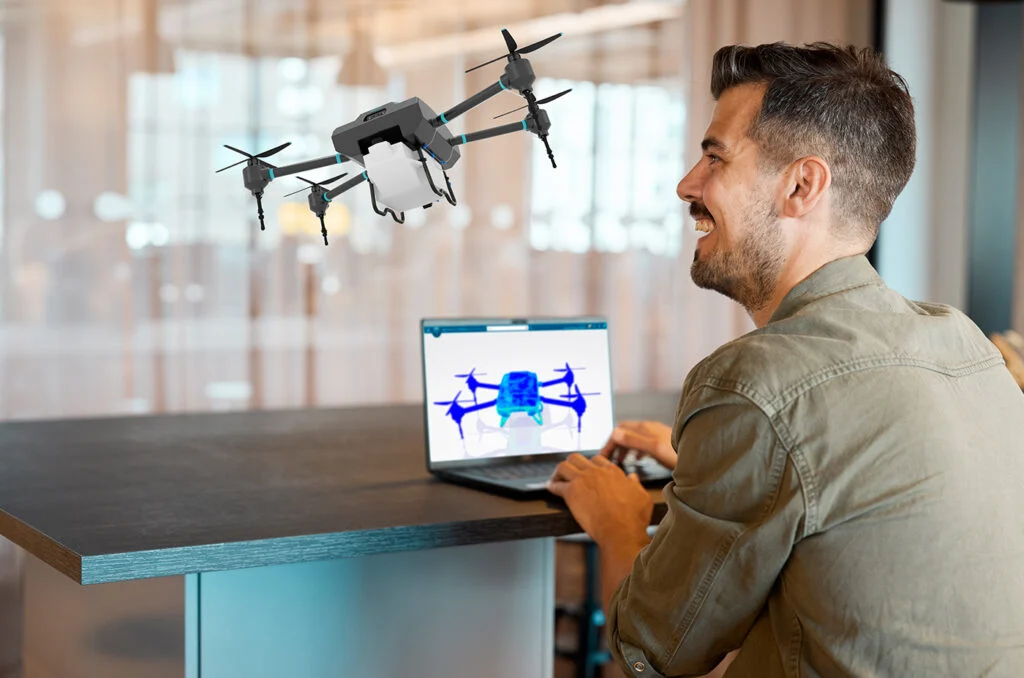
This landmark event showcased how AI-powered MODSIM enables instantaneous prediction of design modifications, highlighting high-profile use cases from industry leaders such as JLR and HORYZN.
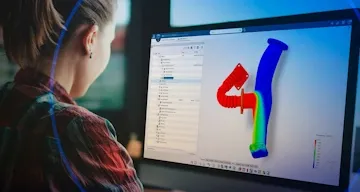
Fluids Simulation Enhancements (R2026x) A unified MODSIM approach connects CAD and simulation with automatic updates and multiphysics optimization for faster innovation. The latest fluid simulation tools, including PowerFLOW 2025 and 2026 updates, solve complex aerodynamics, heat transfer and multiphase flow challenges. New Fluid Dynamics and Plastic Engineer roles improve workflows for designers and CFD specialists.
2. Technical Advancements in R2026x
The R2026x release (April/May 2026) introduced several key enhancements across the SIMULIA simulation portfolio:
- Structures (Abaqus): Significant updates include optimized quad-dominant meshing, a new ”partial extrapolation” feature for geometric trimming, and the introduction of reusable, model-based contact definitions.
- Fluid Dynamics (CFD): This version delivers enhanced cooling components for electronics and refined handling of rotating geometries in pumps. Additionally, a new ”Goals” command streamlines the extraction of KPI-centered results.
- Electromagnetics (CST Studio Suite): Features advanced solvers tailored for antenna and RF design, now bolstered by High-Performance Computing (HPC) acceleration.
- Physics Simulation Advisor: A new AI-driven role designed to empower non-experts to rapidly evaluate design alternatives. It offers improved management of ”favorite” designs and more intuitive tracking of critical KPIs.
3. Industry-Specific Applications
- Modular Construction (MODS Inc.): In March 2026, MODS announced a $500 million commitment to leverage 3DEXPERIENCE virtual twins to industrialize modular housing. This initiative brings aerospace-grade MODSIM capabilities to the construction sector.
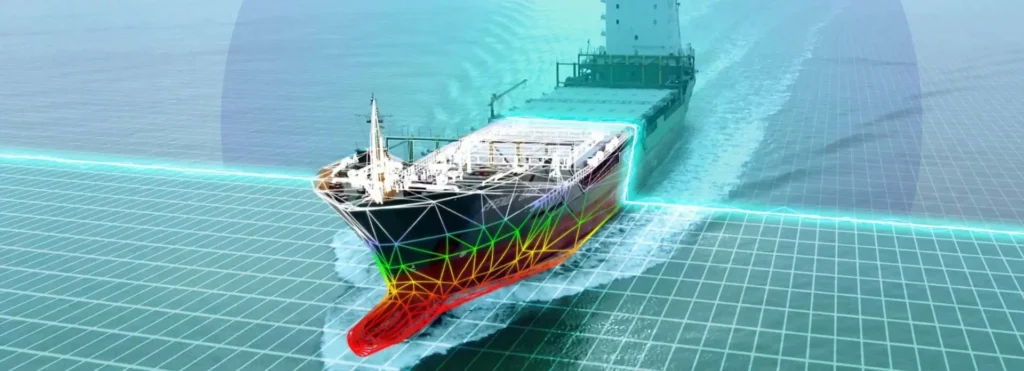
- Marine & Offshore: The company is utilizing MODSIM to accelerate shipbuilding (December 2025). By enabling early-stage structural and fluid analysis, the platform significantly reduces the need for costly, late-stage design modifications.
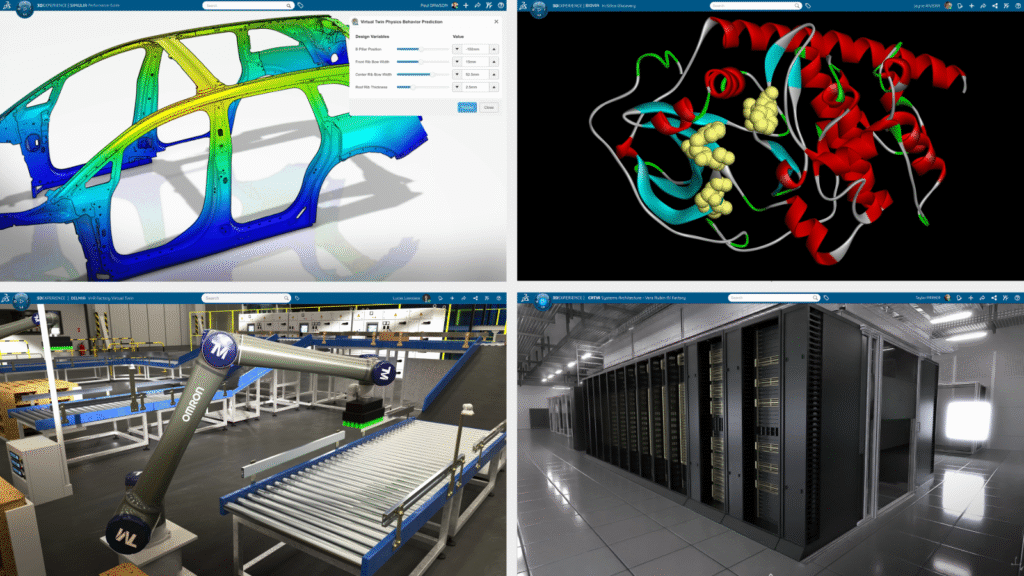
- Autonomous Factories: At the 2026 Hannover Messe, the company demonstrated the seamless integration of DELMIA and SIMULIA, creating the ultimate ”Virtual Twin Experience” for the factories of the future.
4. Strategic Partnerships
* The NVIDIA Alliance (Feb/March 2026): Dassault Systemes has entered into a landmark strategic partnership with NVIDIA. This collaboration integrates NVIDIA’s Omniverse physical AI libraries into the 3DEXPERIENCE platform, rapidly accelerating the deployment of AI-driven industrial virtual twins.
MODSIM in the TECHNIA Ecosystem
In summary, the MODSIM focus for 2026 centers on democratizing simulation for designers through AI, providing rapid real-time feedback via surrogate models, and tightly integrating these tools with generative design capabilities within the cloud-based 3DEXPERIENCE platform. This aspect of democratization is particularly compelling—a point emphasized by TECHNIA’s simulation experts during an interview with the PLM&ERP News team regarding global trends, AI, and the evolution of MODSIM. Here are the key insights:
How is Simulation Evolving within Product Development Among TECHNIA’s Clients?
”Simulation has undergone a fundamental transformation, evolving from a specialized, downstream verification step into a mission-critical decision-making tool utilized throughout the entire development lifecycle. Designers and engineers are increasingly performing their own simulations earlier in the cycle to validate decisions before physical prototypes are ever built.
This democratization accelerates development timelines, reduces costs, and enhances overall product quality. Platforms like 3DEXPERIENCE are central to this shift, seamlessly connecting design, simulation, and data management in a continuous digital thread. Simulation is no longer a niche discipline; it has become a strategic driver of success.”
The Commercial Evolution of MODSIM at TECHNIA
”TECHNIA has strategically developed MODSIM into a premier commercial offering. Central to this is their 12-month cloud-based MODSIM program, which integrates seamless onboarding with dedicated expert support. Furthermore, they have launched a comprehensive simulation learning initiative that spans the entire SIMULIA portfolio. Geographically, TECHNIA has aggressively expanded its simulation footprint through key acquisitions—most notably in North America—underscoring a clear strategic commitment to simulation as a core engine for growth.”
Who Should Invest in Dassault Systèmes MODSIM?
”MODSIM delivers transformative value to any organization where design and simulation teams currently operate in silos, regardless of company size or sector. It is particularly effective for product-driven enterprises under pressure to accelerate innovation, reduce overheads, and shorten time-to-market.
However, it is important to note that in highly regulated and complex sectors—such as Aerospace, Automotive, and Life Sciences—deep specialist knowledge and dedicated expert tools remain indispensable. MODSIM is designed to complement and bridge that expertise rather than replace it.”
What Sets this Concept Apart?
”Unlike competitors who treat modeling and simulation as siloed tools, MODSIM seamlessly unites CAD and CAE into a single, unified data model within the 3DEXPERIENCE platform. The workflow is cyclical rather than linear; simulations update automatically as designs evolve, eliminating the tedious need to restart from scratch. Furthermore, it captures and institutionalizes engineering expertise through standardized templates and workflows, making high-level knowledge reusable across the entire organization.
The real-world impact is compelling. Customers report up to a 60% reduction in development time, a 40% decrease in physical testing, and substantial R&D cost savings.”
Is this Strictly an Enterprise-Level Solution?
”Not at all. Cloud-based delivery makes MODSIM accessible for mid-sized firms, dismantling the historically high barriers to entry. Moreover, virtual validation through MODSIM is increasingly positioned as a cornerstone of sustainability, empowering companies to minimize material waste and drastically reduce their carbon footprint.”
What Makes TECHNIA the Ideal MODSIM Partner?
As Dassault Systemes largest global VAR partner TECHNIA combines deep DS expertise with proprietary tools and a local presence in over 15 countries making them a robust implementation partner for any MODSIM journey.
”But how can we help? Beyond software and licensing, we offer a comprehensive suite of engineering simulation services to support organizations at every stage of their simulation journey. This includes hands-on FEA and CFD consulting, multiphysics simulation, structural integrity analysis, thermal management, and noise and vibration optimization—all delivered by a team of authorized engineers and Ph.D.-level experts with deep SIMULIA knowledge.
For teams looking to accelerate without building internal capacity from scratch, TECHNIA’s virtual team model provides on-demand access to specialized expertise, seamlessly integrated into your existing 3DEXPERIENCE environment. Whether you need to outsource specific analyses, upskill your engineers, or deepen simulation integration into your product development process, TECHNIA’s simulation team acts as a natural extension of your own.”

