



The differences between Siemens and Dassault Systèmes’ partnership with NVIDIA lie primarily in their technical focus and application areas, although both aim to create advanced industrial digital twins. (This article is more about Dassault Systemes new NVIDIA deal, announced last week) than about the partnership between Siemens and NVIDIA, which was announce durint the CES tech show in Las Vegas i January. Don’t miss to read PLM&ERP News report on Siemens NVIDIA bet in an artiucle covering this event. Here’s the link to the article:
Real-World Impact at Scale: Inside SIEMENS’ and NVIDIA’s First AI Operating System
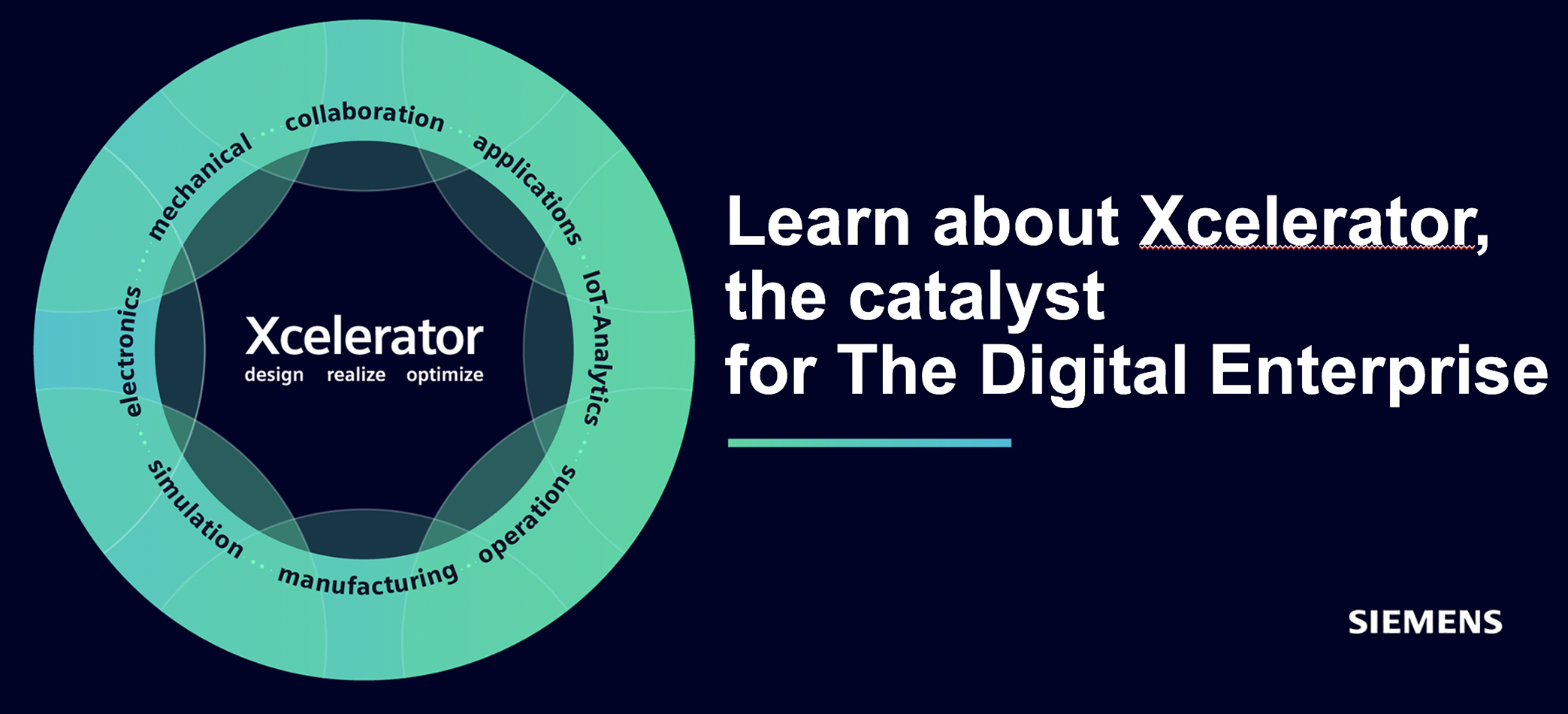
- Siemens NVIDIA collaboration (Siemens Digital Industries Software, the PLM division, include) focuses on building an Industrial AI Operating System that deeply integrates AI across the entire industrial value chain. The main focus is on factory floor operations (OT, Operational Technology), automation and electronic design (EDA), integrating AI into the production line using industrial copilots.
- This, while Dassault Systemes focuses on merging their high-fidelity virtual twin technologies (SIMULIA, DELMIA) with NVIDIA’s AI to create ”physical AI” that simulates products before they are made. The simple explanation is that by combining Dassault Systèmes’ ”Virtual Twin” technology with NVIDIA’s AI infrastructure, open models and accelerated software libraries, they will establish scientifically validated industrial world models and new ways of working through capable virtual companions on the upcoming agent-equipped 3DEXPERIENCE platform.
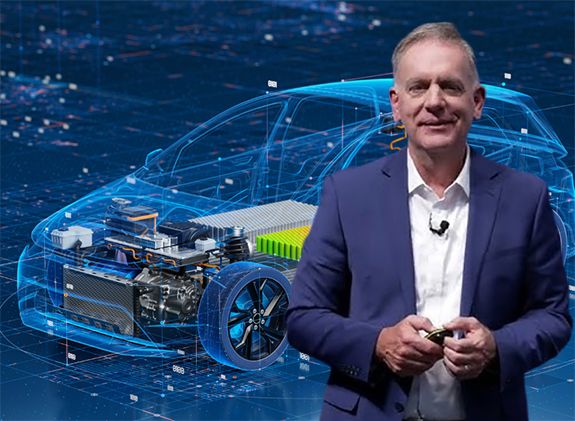
“It gives users access to cutting-edge expertise. We are entering an era where artificial intelligence doesn’t just predict or generate, but understands the real world. When AI is grounded in science, physics, and validated industrial knowledge, it becomes a force multiplier for human ingenuity,” said Pascal Daloz, and he continued:
“Together with NVIDIA, we are building industrial world models that unite virtual twins and accelerated computing to help industry design, simulate, and operate complex systems in biology, materials science, engineering, and manufacturing with confidence. This partnership creates a new foundation for industrial AI, one that is reliable by design and capable of scaling innovation across the generative economy.”
What Does Daloz Mean by “Industry World Models”?
Exactly what Daloz means by the term requires a little more explanation. Here it is: In English, the corresponding term is “Industry World Models” and refers to a new type of large-scale, scientifically validated industrial AI. These models act as a link between physical reality (physical laws, chemistry, biology) and digital twins, powered by NVIDIA’s GPU computing power and Dassault’s 3DEXPERIENCE platform.
In practice, this means that AI not only generates data, but also the effect we talked about earlier in the article: “it understands the physical world” and can be used to design, simulate, and control complex industrial processes with high reliability. GPU stands for Graphics Processing Unit and is a specialized microprocessor designed to efficiently handle and render graphics, images, videos, and complex mathematical calculations, primarily for display output. Unlike a CPU (Central Processing Unit), the GPU is optimized for parallel processing. It thus relieves the main processor (CPU) by handling graphics-intensive tasks in computers in connection with applications such as 3D rendering, complex simulations, and machine learning/AI. The GPU is usually located on a dedicated graphics card, but can also be integrated into the processor (iGPU).
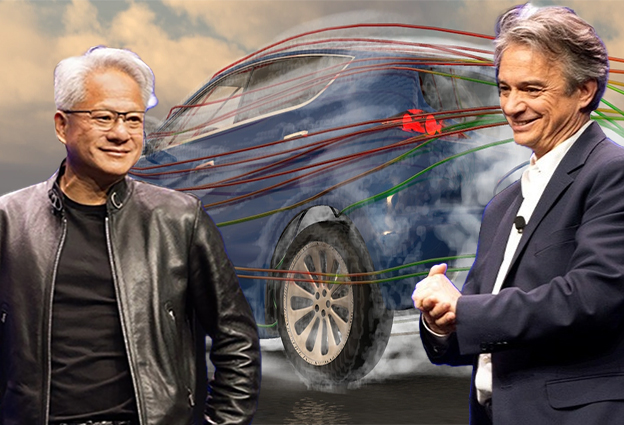
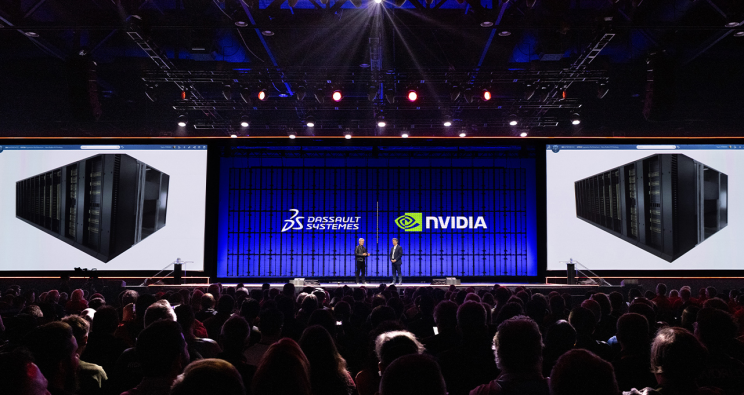
These “Industry World Models” that act as a link between physical reality and digital twins were something that won over Jensen Huang, the NVIDIA CEO, and he claimed in connection with the 3DEXPERIENCE session that physical AI is the next frontier for artificial intelligence based on the laws of the physical world.
“Together with Dassault Systèmes, we are combining decades of industrial leadership with NVIDIA’s AI and Omniverse platforms to transform how millions of scientists, designers, and engineers build the world’s largest industries,” he added.
What NVIDIA Can do for DS and Siemens
What are the key values that NVIDIA solutions can bring to Dassault and Siemens, respectively?
In general, a number of core values that NVIDIA solutions bring to PLM leaders like Siemens and Dassault – high-performance computing, AI-driven simulation, and immersive visualization capabilities apply. These technologies, particularly through NVIDIA Omniverse and GPU acceleration, transform traditional PLM workflows into real-time, AI-enabled, and collaborative experiences, with the goal of creating “Industrial AI” or the “Industrial Metaverse.”
Key NVIDIA value propositions include:
1. High-performance computing for complex simulations (GPU acceleration)
• Accelerate workflows: NVIDIA CUDA-X libraries and H100 Tensor Core GPUs supercharge solutions in applications like Ansys and Siemens NX/Teamcenter, enabling 2-10x faster improvements in key workflows like verification, layout, and simulation.
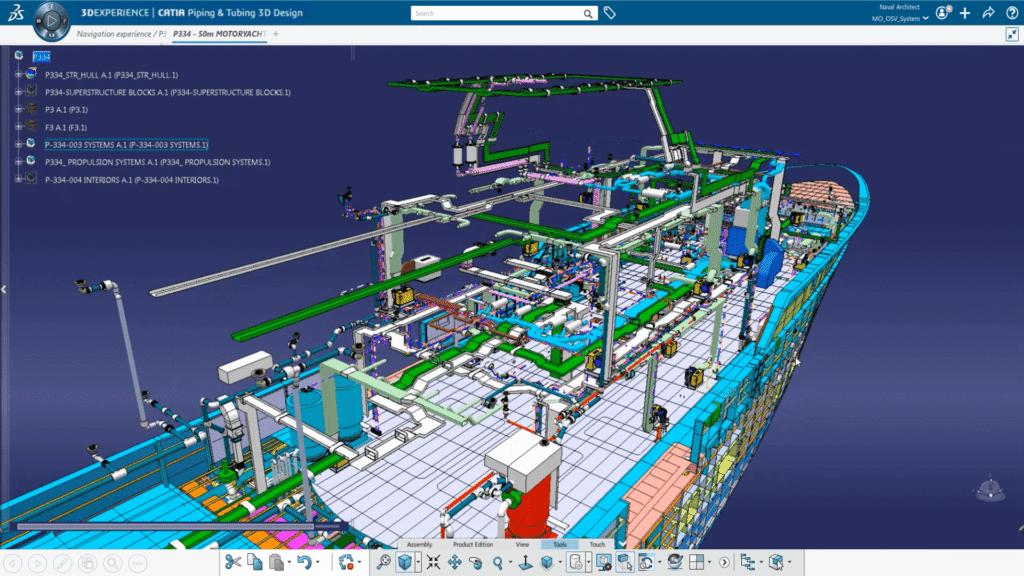
• Complex data management: NVIDIA technology enables interactive visualization of massive, complex, and feature-rich datasets—such as ships with over 7 million parts—within Teamcenter X.
• Generative simulation: Using AI physics models (such as PhysicsNeMo), these partnerships enable autonomous digital twins that can perform real-time design and optimization, reducing time from concept to production.
2. Immersive and Photorealistic Visualization (Omniverse)
• Real-time Rendering: Through NVIDIA Omniverse Cloud APIs, Siemens and Dassault integrate real-time, photorealistic, and physically based rendering directly into their platforms.
• Enhanced Collaboration: The ability to visualize sera design in a realistic context enables stakeholders – from engineers to sales teams – to better understand the look and feel of a product, leading to faster decisions and fewer errors.
3. Industrial AI and Virtual Twins
• World Models for Different Industries: Dassault Systèmes combines its virtual twin technologies with NVIDIA AI infrastructure to create “industry world models” that understand the physics, behaviors, and consequences of actions.
• Virtual Companions: The 3DEXPERIENCE platform leverages NVIDIA Nemotron’s open models to power virtual companions that guide engineers and accelerate the compatible synthesis of virtual twins.
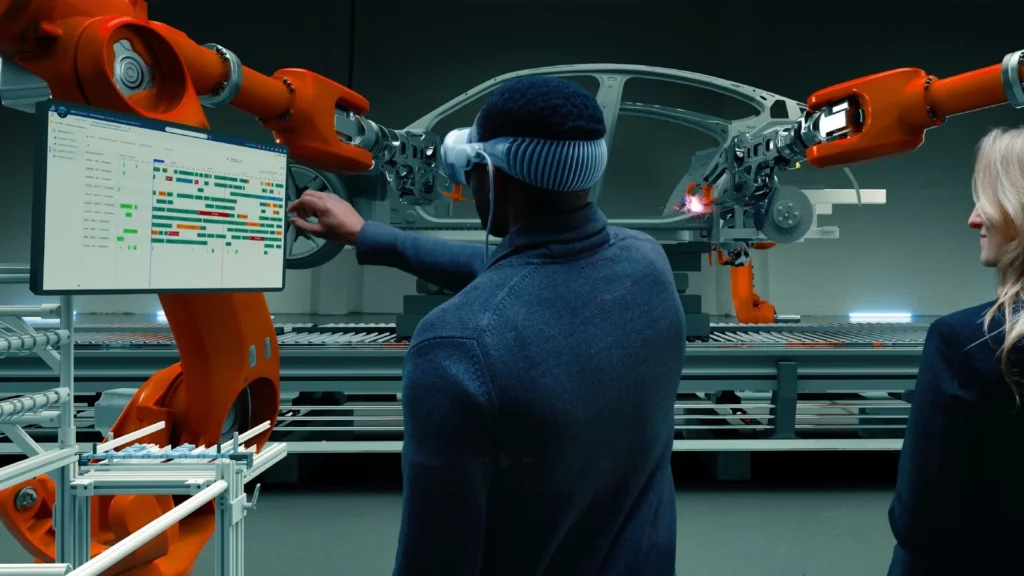
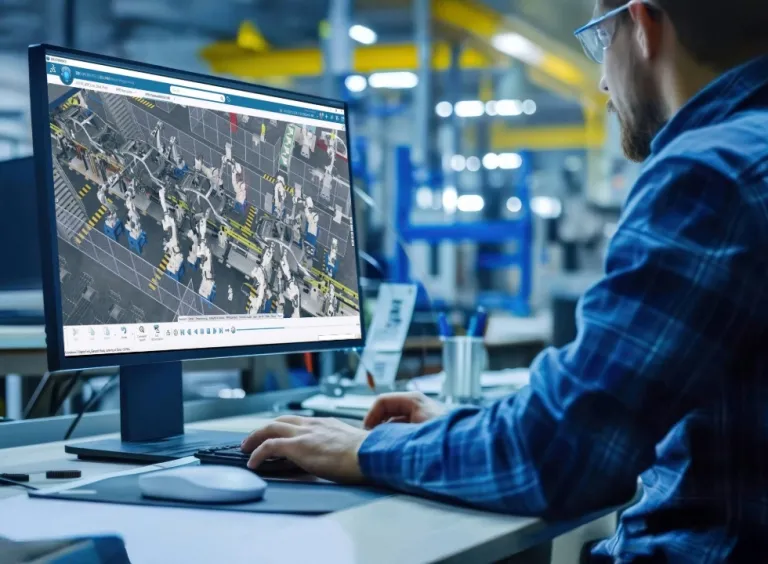
• Autonomous Factories: NVIDIA Omniverse is integrated with Delmia (Dassault) and Siemens Xcelerator to enable autonomous, software-defined manufacturing systems, allowing factories to test improvements in a virtual environment before implementing them on the shop floor.
4. Certified Performance and Infrastructure
• Reliability: NVIDIA professional graphics solutions are certified and recommended by Siemens to ensure stability from day one.
• Superior Cloud Strategy: Dassault Systèmes deploys “AI Factories” using NVIDIA infrastructure through its OUTSCALE brand, ensuring data privacy, intellectual property protection, and customer sovereignty.
Dassault & NVIDIA: “Scientifically Validated World Models”
That said, there are some differences in how the two PLM competitors Dassault and Siemens intend to use NVIDIA’s arsenal in their respective partnerships.
The differences lie primarily in their technical focus and application areas, although both aim to create advanced industrial digital twins.
Dassault Systèmes’ partnership emphasizes scientific precision and “agentic” AI platforms.
Main focus: Biology, materials science and complex engineering.
Key concept: Development of Industry World Models – AI that not only generates data but “understands” the underlying physical and scientific laws.
Technical ecosystem: A combination of the 3DEXPERIENCE platform with NVIDIA’s AI infrastructure and BioNeMo for pharmaceutical and materials research.
Sovereign Cloud: Dassault is using its OUTSCALE brand to deploy “AI factories” across three continents, with a focus on data privacy and sovereignty.

Dassault Systèmes OUTSCALE is, according to DS cchief Pascal Daloz, deploying AI factories as part of the company’s sustainable and sovereign cloud strategy.
“OUTSCALE AI factories will leverage NVIDIA’s latest AI infrastructure across three continents, providing additional capabilities to power AI models on the 3DEXPERIENCE platform, while ensuring data privacy, intellectual property, and sovereignty for Dassault Systèmes customers.”
NVIDIA is using Dassault’s Model-Based Systems Engineering (MBSE) to design AI factories, starting with the NVIDIA Rubin platform and integrating with the NVIDIA Omniverse DSX Blueprint for large-scale AI factory deployments.
This infrastructure will power Dassault’s industrial digital twins using NVIDIA’s open models and libraries, unlocking new opportunities in biology, materials science, engineering, and manufacturing: However, the initial focus is on advances in biology and materials science: the NVIDIA BioNeMo platform, combined with BIOVIA scientifically validated industry world models, will accelerate the discovery of new molecules and next-generation materials.
Over time, AI-driven design and engineering are intended to provide SIMULIA AI-based virtual twins with physics behaviors that leverage NVIDIA CUDA-X libraries and AI physics libraries to enable designers and engineers to accurately and instantly predict outcomes.
Virtual twins for every factory are enabled by NVIDIA Omniverse’s physical AI libraries integrated into DELMIA Virtual Twin of global manufacturing systems.
Virtual companions augment Dassault Systèmes’ 3DEXPERIENCE agent platform, which combines NVIDIA’s AI technology and NVIDIA Nemotron’s open models with Dassault’s Industry World Models.
“This,” said Daloz in Houston, “enables virtual companions to leverage deep industrial context and deliver reliable, actionable intelligence.”
ments with efficiency on an industrial scale.”
Siemens AG & NVIDIA: “Betting on an Industrial Operating System”
Siemens’ collaboration focuses on building an Industrial AI Operating System in 2026 that integrates AI deeply into the entire industrial value chain. The background to this is something that the head of Siemens Digital Industries Software, Tony Hemmelgarn, has highlighted in several PLM&ERP News interviews as one of Siemens’ major competitive advantages:
“Absolutely, we manufacture things, advanced products, and thus, unlike our competitors, have the ability to adapt software support to the requirements and possibilities of physical reality. Software solutions with clear connections and integration between product development and manufacturing enable smart, seamless manufacturing flows that leverage complexity in a way that gives users a competitive advantage, says Hemmelgaren, pointing to the company’s PLM suite in the Xcelerator portfolio:
Main focus: Factory floor automation and electronic design (EDA).
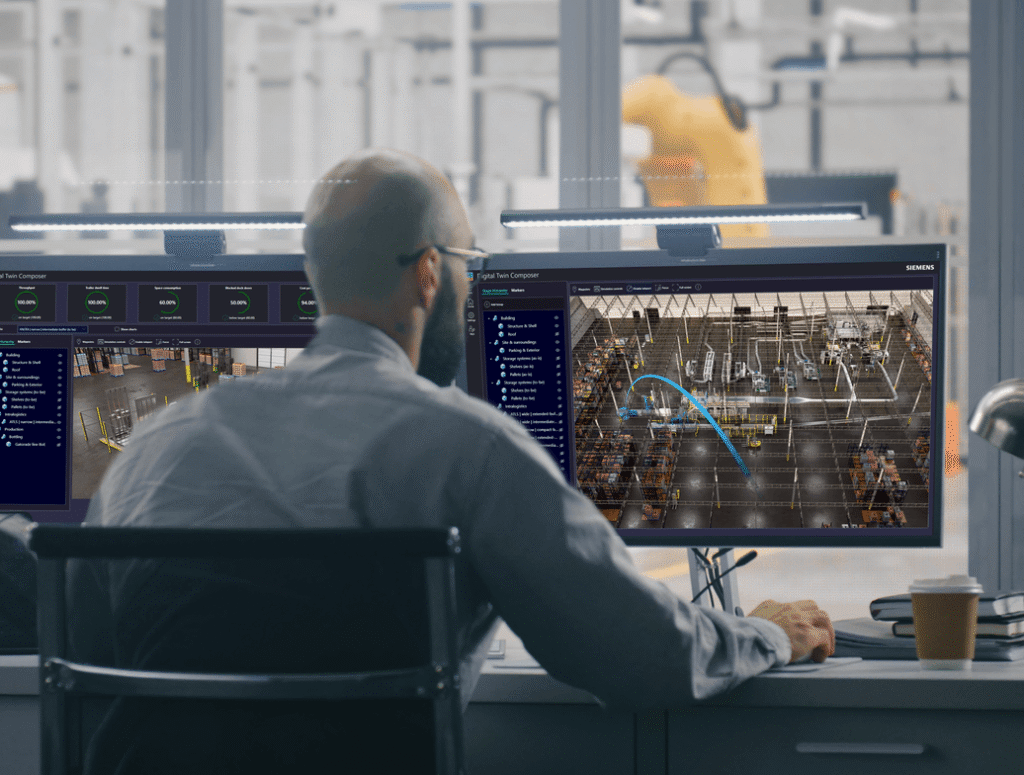
Key Products: Integration of NVIDIA Omniverse into the Siemens Xcelerator Platform and the launch of Digital Twin Composer.
Unique Feature: Siemens is developing nine specific industrial copilots (e.g. for Teamcenter and Opcenter) to help operators navigate product data and automate workflows.
Goal: To create the world’s first fully AI-powered, adaptive manufacturing plants, starting in Erlangen in 2026.
Summary of Key Focus Areas for NVIDIA Partnerships
Siemens: Focuses on connecting Siemens Xcelerator with NVIDIA Omniverse to create immersive, photorealistic, and AI-powered digital twins for the Industrial Metaverse.
Dassault Systèmes: Focuses on integrating NVIDIA AI (physical and agentic) and CUDA-X into the 3DEXPERIENCE Platform to move offline simulations into real-time virtual twins.

