
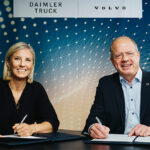
SDVs: Volvo Group and Daimler Truck in Binding Agreement for Development of Platform for...
HQ in GOTHENBURG – WHICH SYSTEM WILL BE USED IN THE DEVELOPMENT WORK? Today's big news in automotive is Volvo Group's and Daimler Trucks' decision to proceed with a binding agreement on the development of a platform for software-defined vehicles - so-called SDVs, "Software Defined Vehicles" - for heavy trucks. The agreement is based on a 50/50 deal and follows an earlier announcement from the companies, from May 2024.
Particularly interesting for Sweden is that this SDV platform aims to set an industry standard and that the plan includes a head office in Gothenburg. In the joint press material, the companies note that the partners' joint goal is to, “develop a truck operating system and to offer the joint venture's brand and versatile application-agnostic products to other commercial vehicle OEMs.” But despite this, competition between the companies must be protected and maintained: "Volvo Group and Daimler Truck will remain competitors in all other business areas and will continue to focus on an independent product and service offering," it writes.
Today's announcement will undoubtedly strengthen the digital transformation not only within Volvo and Daimler, but also within the transport industry. Not least influenced by the fact that we are talking about the heavy truck industry's two largest manufacturers.
An SDV is a vehicle where core functions are handled by a software layer that sits between the driver's or "fleet manager's" vehicle interface and which handles vehicle functions primarily via sensors. This allows the manufacturer to improve both usability and features dynamically via updates, including wireless.
This is a very interesting venture, not least because software-defined vehicles are the next major line of development in the automotive industry. But also because it is the second example within the framework of a couple of years where Volvo and Daimler join forces in an important development area. Previously, since 2020, Volvo and Daimler Truck have a joint venture underway around fuel cell solutions to power the vehicles. Then the Volvo Group bought 50 percent of Daimler Truck Fuel Cell GmbH & Co for a joint development of energy solutions for heavy trucks whose electricity for the batteries is generated from fuel cells powered by hydrogen gas. With the now announced SDV investment, the companies move forward together and share the significant development costs. Undeniably a smart move.
But there are challenges: for example, which systems should be used in the development work? The PLM side is one thing, while software development can land elsewhere. Anyway: Volvo Group has on the PLM side PTC with Windchill as cPDm solution. On the ALM side, PTC's Codebeamer, together with Windchill, will play important roles in PTC's offering. This while Daimler basically works in Siemens environments with Teamcenter and NX CAD. As far as the software side is concerned, Mercedes has used, among other things, IBM Doors. Siemens' ALM solution is called Polarion, which presumably has good hopes of getting into Daimler. The development will be interesting to follow.
Click on the title to read more on PLM&ERP News.
Particularly interesting for Sweden is that this SDV platform aims to set an industry standard and that the plan includes a head office in Gothenburg. In the joint press material, the companies note that the partners' joint goal is to, “develop a truck operating system and to offer the joint venture's brand and versatile application-agnostic products to other commercial vehicle OEMs.” But despite this, competition between the companies must be protected and maintained: "Volvo Group and Daimler Truck will remain competitors in all other business areas and will continue to focus on an independent product and service offering," it writes.
Today's announcement will undoubtedly strengthen the digital transformation not only within Volvo and Daimler, but also within the transport industry. Not least influenced by the fact that we are talking about the heavy truck industry's two largest manufacturers.
An SDV is a vehicle where core functions are handled by a software layer that sits between the driver's or "fleet manager's" vehicle interface and which handles vehicle functions primarily via sensors. This allows the manufacturer to improve both usability and features dynamically via updates, including wireless.
This is a very interesting venture, not least because software-defined vehicles are the next major line of development in the automotive industry. But also because it is the second example within the framework of a couple of years where Volvo and Daimler join forces in an important development area. Previously, since 2020, Volvo and Daimler Truck have a joint venture underway around fuel cell solutions to power the vehicles. Then the Volvo Group bought 50 percent of Daimler Truck Fuel Cell GmbH & Co for a joint development of energy solutions for heavy trucks whose electricity for the batteries is generated from fuel cells powered by hydrogen gas. With the now announced SDV investment, the companies move forward together and share the significant development costs. Undeniably a smart move.
But there are challenges: for example, which systems should be used in the development work? The PLM side is one thing, while software development can land elsewhere. Anyway: Volvo Group has on the PLM side PTC with Windchill as cPDm solution. On the ALM side, PTC's Codebeamer, together with Windchill, will play important roles in PTC's offering. This while Daimler basically works in Siemens environments with Teamcenter and NX CAD. As far as the software side is concerned, Mercedes has used, among other things, IBM Doors. Siemens' ALM solution is called Polarion, which presumably has good hopes of getting into Daimler. The development will be interesting to follow.
Click on the title to read more on PLM&ERP News.

SDVs: Volvo Group och Daimler Truck i bindande avtal för utveckling av plattform för...
HK i GÖTEBORG - men vilka system ska man utveckla i? Dagens stora nyhet inom automotive är Volvo Groups och Daimler Trucks beslut att gå vidare till ett bindande avtal om utveckling av en plattform för mjukvarudefinierade fordon – s k SDVs, ”Software Defined Vehicles" - för tunga lastbilar. Avtalet går ut på en 50/50-deal och följer på ett tidigare meddelande från bolagen, från maj 2024. Särskilt intressant för svenskt vidkommande är att denna SDV-plattform har som mål att sätta en branschstandard och att planen innnefattar ett huvudkontor i Göteborg.
I det gemensamma pressmaterialet noterar bolagen att partnernas gemensamma mål är att, ”utveckla ett lastbilsoperativsystem och att erbjuda joint ventures varumärkes- och mångsidiga applikations-agnostiska produkter till andra OEM-tillverkare av kommersiella fordon.” Men detta till trots ska konkurrensen mellan bolagen värnas och upprätthållas:
”Volvo Group och Daimler Truck kommer att förbli konkurrenter inom alla andra affärsområden och kommer att fortsätta fokusera på ett oberoende produkt- och tjänsteerbjudande,” skriver man.
Dagens besked kommer tveklöst att stärka den digitala transformationen inte bara inom Volvo och Daimler, utan också inom transportbranschen. Inte minst påverkat av det faktum att vi talar om den tunga lastbilsbranschens två största tillverkare.
En SDV är ett fordon där kärnfunktioner hanteras av ett mjukvarulager som sitter mellan förarens eller ”fleet managers” fordonsgränssnitt och som hanterar fordonsfunktioner via främst sensorer. Detta gör att tillverkaren kan förbättra både användbarhet och funktioner dynamiskt via uppdateringar, inklusive trådlösa.
Detta är en mycket intressant satsning, inte minst eftersom mjukvarudefinierade fordon är nästa stora utvecklingslinje inom fordonsindustrin. Men också för att det är det andra exemplet inom ramen för ett par år där Volvo och Daimler går samman inom ett viktigt utvecklingsområde. Tidigare, sedan 2020, har Volvo och Daimler Truck ett joint venture på gång kring bränslecell-lösningar för att driva fordonen. Då köpte Volvokoncernen 50 procent av Daimler Truck Fuel Cell GmbH & Co för en gemensam utveckling av energilösningar för tunga lastbilar vars el till batterierna genereras från bränsleceller drivna med vätgas. Med den nu aviserade SDV-satsningen går bolagen framåt tillsammans och delar på de betydande utvecklingskostnaderna. Onekligen ett smart drag.
Men det finns utmaningar: t ex, vilka system ska man använda i utvecklingsarbetet? PLM-sidan är en sak, medan mjukvaruutvecklingen kan landa på andra ställen. Hur som helst: Volvo Group har på PLM-sidan PTC med Windchill som cPDm-lösning. På ALM-sidan är det annars PTCs Codebeamer som ihop med Windchill kommer att spela viktiga roller i PTCs utbud. Detta medan Daimler principiellt jobbar i Siemens-miljöer med Teamcenter och NX CAD. När det gäller mjukvarusidan har Mercedes använt bl a IBM Doors. Siemens ALM-lösning heter Polarion, som man gissningsvis har goda förhoppningar om att få in på Daimler. Utvecklingen ska bli intressant att följa.
Klicka på rubriken för att läsa mer på PLM&ERP News.
Dagens besked kommer tveklöst att stärka den digitala transformationen inte bara inom Volvo och Daimler, utan också inom transportbranschen. Inte minst påverkat av det faktum att vi talar om den tunga lastbilsbranschens två största tillverkare.
En SDV är ett fordon där kärnfunktioner hanteras av ett mjukvarulager som sitter mellan förarens eller ”fleet managers” fordonsgränssnitt och som hanterar fordonsfunktioner via främst sensorer. Detta gör att tillverkaren kan förbättra både användbarhet och funktioner dynamiskt via uppdateringar, inklusive trådlösa.
Detta är en mycket intressant satsning, inte minst eftersom mjukvarudefinierade fordon är nästa stora utvecklingslinje inom fordonsindustrin. Men också för att det är det andra exemplet inom ramen för ett par år där Volvo och Daimler går samman inom ett viktigt utvecklingsområde. Tidigare, sedan 2020, har Volvo och Daimler Truck ett joint venture på gång kring bränslecell-lösningar för att driva fordonen. Då köpte Volvokoncernen 50 procent av Daimler Truck Fuel Cell GmbH & Co för en gemensam utveckling av energilösningar för tunga lastbilar vars el till batterierna genereras från bränsleceller drivna med vätgas. Med den nu aviserade SDV-satsningen går bolagen framåt tillsammans och delar på de betydande utvecklingskostnaderna. Onekligen ett smart drag.
Men det finns utmaningar: t ex, vilka system ska man använda i utvecklingsarbetet? PLM-sidan är en sak, medan mjukvaruutvecklingen kan landa på andra ställen. Hur som helst: Volvo Group har på PLM-sidan PTC med Windchill som cPDm-lösning. På ALM-sidan är det annars PTCs Codebeamer som ihop med Windchill kommer att spela viktiga roller i PTCs utbud. Detta medan Daimler principiellt jobbar i Siemens-miljöer med Teamcenter och NX CAD. När det gäller mjukvarusidan har Mercedes använt bl a IBM Doors. Siemens ALM-lösning heter Polarion, som man gissningsvis har goda förhoppningar om att få in på Daimler. Utvecklingen ska bli intressant att följa.
Klicka på rubriken för att läsa mer på PLM&ERP News.

How Keysight and Siemens EDA are developing next-generation tools for WIRELESS SYSTEM DESIGN
New product enables BIDIRECTIONAL INTEGRATION with RF and MICROWAVE TECHNOLOGY tools for system design. One of last week's most interesting news concerns an area of importance to the design of wireless communication systems. It's about Keysight Technologies and Siemens EDA, part of Siemens Digital Industries Software, and the goal of building next-generation solutions for wireless design. Creating deeper integration between Keysight's Advanced Design System (ADS) and Siemens Xpedition Enterprise suite of EDA (Electronic Design Automation) tools has enabled more efficient co-design of digital systems and radio frequency (RF) circuits by performing layout and manufacturing in Xpedition and RF Circuit and electromagnetic simulation in Keysight ADS.
This is generally of importance in a number of industry segments, including wireless systems in the field of defense, radar solutions, satellites, etc. But the addressed markets are broader than that and also relate to segments such as automotive, industrial automation, energy and the general semiconductor and electronics markets. So, what’s the main point of the now announced collaboration?
The backdrop is that today's complex systems in these fields require design where the integration between RF and overall system design reach high levels of sophistication. RF stands for Radio Frequency, which represents the oscillation speed of electromagnetic waves. These highly advanced solutions often combine intricate RF components, high-speed digital electronic circuitry, and sophisticated signal processing, all of which must work harmoniously together.
The development of new technologies is thus heavily dependent on RF circuits. These circuits are integrated components in wireless communication systems such as 5/6G, LTE, Bluetooth and IoT devices.
The collaboration between Keysight ADS and Siemens EDA's Xpedition builds on the existing dynamic integration between the companies' tools, with the ability for system designers to have bidirectional integration with RF and microwave technology tools. A key point of this involves integration of complete hierarchical designs bi-directionally between Keysight ADS and Siemens Xpedition Designer and Layout, eliminating the cumbersome and error-prone task of manually translating libraries between the tools.
Keysight's Nilesh Kamdar, EDA Design & Verification notes:
"The bidirectional integration enables engineers to optimize performance across various applications, including 5G/6G and radar systems."
What is the value of bidirectional integration in e.g. radar systems? Bidirectional RF amplifiers are widely used in wireless communication such as radar and satellite communication. They improve base station coverage and signal penetration, thereby sharpening communication quality and user experience. But there is more…
Click on the headline to read more on PLM&ERP News.
This is generally of importance in a number of industry segments, including wireless systems in the field of defense, radar solutions, satellites, etc. But the addressed markets are broader than that and also relate to segments such as automotive, industrial automation, energy and the general semiconductor and electronics markets. So, what’s the main point of the now announced collaboration?
The backdrop is that today's complex systems in these fields require design where the integration between RF and overall system design reach high levels of sophistication. RF stands for Radio Frequency, which represents the oscillation speed of electromagnetic waves. These highly advanced solutions often combine intricate RF components, high-speed digital electronic circuitry, and sophisticated signal processing, all of which must work harmoniously together.
The development of new technologies is thus heavily dependent on RF circuits. These circuits are integrated components in wireless communication systems such as 5/6G, LTE, Bluetooth and IoT devices.
The collaboration between Keysight ADS and Siemens EDA's Xpedition builds on the existing dynamic integration between the companies' tools, with the ability for system designers to have bidirectional integration with RF and microwave technology tools. A key point of this involves integration of complete hierarchical designs bi-directionally between Keysight ADS and Siemens Xpedition Designer and Layout, eliminating the cumbersome and error-prone task of manually translating libraries between the tools.
Keysight's Nilesh Kamdar, EDA Design & Verification notes:
"The bidirectional integration enables engineers to optimize performance across various applications, including 5G/6G and radar systems."
What is the value of bidirectional integration in e.g. radar systems? Bidirectional RF amplifiers are widely used in wireless communication such as radar and satellite communication. They improve base station coverage and signal penetration, thereby sharpening communication quality and user experience. But there is more…
Click on the headline to read more on PLM&ERP News.

Så utvecklar Keysight och Siemens EDA nästa generations verktyg för DESIGN AV TRÅDLÖSA SYSTEM
Möjliggör DUBBELRIKTAD INTEGRATION med RF- och MIKROVÅGSTEKNIK-verktyg för systemdesign. En av förra veckans mest intressanta nyheter berör ett område av betydelse för design av trådlösa kommunikationssystem. Det handlar om Keysight Technologies och Siemens EDA, en del av Siemens Digital Industries Software, och målsättningen att bygga nästa generations plattformar för trådlös design. Genom att skapa fördjupade integrationslösningar mellan Keysights Advanced Design System (ADS) och Siemens Xpedition Enterprise-svit av EDA-verktyg har man möjliggjort att mer effektivt samdesigna digitala system och radiofrekvens-kretsar (RF) genom att utföra layout och tillverkning i Xpedition och RF Circuit och elektromagnetisk simulering i Keysight ADS.
Detta är allmänt av vikt inom en rad industrisegment, men är i fallet Keysight och Siemens framför allt när det gäller trådlösa system inom t ex försvarsområdet, radarlösningar, satelliter, etc. Men verksamheterna är som sagt bredare än så och relaterar även till kunder inom segment som fordons-, industriella automations-, energi- och de allmänna halvledar- och elektronikmarknaderna. Men vad gör det nu annonserade samarbetet viktigt?
Dagens komplexa system på området kräver design där integrationen mellan RF och övergripande systemdesign kräver höga nivåer av sofistikerat avancemang. RF står för Radio Frequency, som representerar oscillationshastigheten för elektromagnetiska vågor. Dessa högt avancerade lösningar kombinerar ofta intrikata RF-komponenter, digitala elektroniska höghastighetskretsar och sofistikerad signalbehandling, som alla måste fungera harmoniskt ihop.
Utvecklingen av nya teknologier är alltså starkt beroende av RF-kretsar. Dessa kretsar är integrerade komponenter i trådlösa kommunikationssystem som 5G, LTE, Bluetooth och IoT (Internet of Things)-enheter.
Samarbetet mellan Keysight ADS och Siemens EDAs Xpedition innebär att man bygger vidare på den existerande dynamiska integrationen mellan bolagens verktyg, med möjligheten för systemdesigner att ha dubbelriktad integration med RF- och mikrovågsteknik-verktyg. En huvudpoäng i detta innebär integration av kompletta hierarkiska konstruktioner dubbelriktat mellan Keysight ADS och Siemens Xpedition Designer och Layout, vilket eliminerar den besvärliga och felbenägna uppgiften att manuellt översätta bibliotek mellan verktygen.
Keysights Nilesh Kamdar, EDA Design & Verification-ledare konstaterar apropå detta:
"Den dubbelriktade integrationen gör det möjligt för ingenjörer att optimera prestanda över olika applikationer, inklusive 5G/6G och radarsystem."
Vad är värdet av dubbelriktad integration i t ex radarsystem? Dubbelriktade RF-förstärkare används i stor utsträckning inom trådlös kommunikation som just radar- och satellitkommunikation. I trådlösa kommunikationssystem förbättrar de basstationens täckning och signalpenetration, och vässar därmed kommunikationskvaliteten och användarupplevelsen. Men det finns mer…
Klicka på rubriken för att läsa mer på PLM&ERP News.
Detta är allmänt av vikt inom en rad industrisegment, men är i fallet Keysight och Siemens framför allt när det gäller trådlösa system inom t ex försvarsområdet, radarlösningar, satelliter, etc. Men verksamheterna är som sagt bredare än så och relaterar även till kunder inom segment som fordons-, industriella automations-, energi- och de allmänna halvledar- och elektronikmarknaderna. Men vad gör det nu annonserade samarbetet viktigt?
Dagens komplexa system på området kräver design där integrationen mellan RF och övergripande systemdesign kräver höga nivåer av sofistikerat avancemang. RF står för Radio Frequency, som representerar oscillationshastigheten för elektromagnetiska vågor. Dessa högt avancerade lösningar kombinerar ofta intrikata RF-komponenter, digitala elektroniska höghastighetskretsar och sofistikerad signalbehandling, som alla måste fungera harmoniskt ihop.
Utvecklingen av nya teknologier är alltså starkt beroende av RF-kretsar. Dessa kretsar är integrerade komponenter i trådlösa kommunikationssystem som 5G, LTE, Bluetooth och IoT (Internet of Things)-enheter.
Samarbetet mellan Keysight ADS och Siemens EDAs Xpedition innebär att man bygger vidare på den existerande dynamiska integrationen mellan bolagens verktyg, med möjligheten för systemdesigner att ha dubbelriktad integration med RF- och mikrovågsteknik-verktyg. En huvudpoäng i detta innebär integration av kompletta hierarkiska konstruktioner dubbelriktat mellan Keysight ADS och Siemens Xpedition Designer och Layout, vilket eliminerar den besvärliga och felbenägna uppgiften att manuellt översätta bibliotek mellan verktygen.
Keysights Nilesh Kamdar, EDA Design & Verification-ledare konstaterar apropå detta:
"Den dubbelriktade integrationen gör det möjligt för ingenjörer att optimera prestanda över olika applikationer, inklusive 5G/6G och radarsystem."
Vad är värdet av dubbelriktad integration i t ex radarsystem? Dubbelriktade RF-förstärkare används i stor utsträckning inom trådlös kommunikation som just radar- och satellitkommunikation. I trådlösa kommunikationssystem förbättrar de basstationens täckning och signalpenetration, och vässar därmed kommunikationskvaliteten och användarupplevelsen. Men det finns mer…
Klicka på rubriken för att läsa mer på PLM&ERP News.
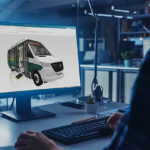
”CAD’s Best-Kept Secret”: Solid Edge 2025 Has a Powerful Technological Level, But Would Benefit...
...and now the software also comes as a SaaS and CLOUD SOLUTION. Siemens Digital Industries Software's mainstream 3D CAD program, Solid Edge (SE), is not without good reason called "the industry's best kept secret". It was developed around the same time as SOLIDWORKS (SW) in the early 1990s, had the same kind of capabilities and introduced 3D CAD into mainstream desktop environments. But it did not take off in the same way as Jon Hirschtick's SW software, despite the fact that it had similar, or sharper, technical capabilities and despite that during the course of development, before the competitors, PDM was integrated into the solution and in addition formed a "PLM light- suite” by integrating excellent simulation and CAM solutions.
This does not prevent SE from continuing to develop its capabilities to match well with competitors in the mid-range segment. In some areas, the solution has also been leading, such as the ability to work both parametrically and with direct modeling. In any case, with the 2025 edition, Solid Edge can be hard-hitting with several heavy initiatives and feature news; which is garnished with a SaaS and cloud variant – like all Siemens programs on SaaS, IaaS and the cloud platform with the suffix X (Solid Edge X).
That is all good, but one problem remains: Solid Edge is priced clearly higher than competing software. One way to increase the global volumes could be to lower the price to be in better parity with, for example, SW.
That said, John Miller, senior VP for Mainstream Engineering at Siemens Digital Industries Software, believes that with the Solid Edge X version and the SaaS concept, significant steps have been taken towards deliveries that are in line with Siemens' strategic goals: "To bring our industry-leading software to customers as a SaaS service,” he says.
Miller further claims that, "Solid Edge delivers transformative technologies that bring together the innate collaboration capabilities of the cloud in combination with cutting-edge AI-based tools, enabling our customers to innovate at the accelerated pace that today's manufacturing industry demands."
Solid Edge has its bulk of users in the US. In the Nordics examples of customers are everything from global players like De Laval to SMB users like Ålö (manufactures e.g. buckets for excavators) and PIAB.
Generally, Solid Edge 2025 includes a number of improvements to increase modeling speed, etching and bend features for sheet metal design, and simplified solutions for model-based definition (MBD). It is also updated on the PDM and collaboration side, as well as it has sharpened solutions in integrated mechanical and electrical design. Moreover, both simulation and CAM has received improved capabilities.
But the most interesting move is the ambitions of the new Solid Edge X that takes the program to the cloud; a new service that provides simplified IT admin, better collaboration, secure and reliable data management and AI-powered productivity support.
Click on the headline to read the full article on PLM&ERP News.
This does not prevent SE from continuing to develop its capabilities to match well with competitors in the mid-range segment. In some areas, the solution has also been leading, such as the ability to work both parametrically and with direct modeling. In any case, with the 2025 edition, Solid Edge can be hard-hitting with several heavy initiatives and feature news; which is garnished with a SaaS and cloud variant – like all Siemens programs on SaaS, IaaS and the cloud platform with the suffix X (Solid Edge X).
That is all good, but one problem remains: Solid Edge is priced clearly higher than competing software. One way to increase the global volumes could be to lower the price to be in better parity with, for example, SW.
That said, John Miller, senior VP for Mainstream Engineering at Siemens Digital Industries Software, believes that with the Solid Edge X version and the SaaS concept, significant steps have been taken towards deliveries that are in line with Siemens' strategic goals: "To bring our industry-leading software to customers as a SaaS service,” he says.
Miller further claims that, "Solid Edge delivers transformative technologies that bring together the innate collaboration capabilities of the cloud in combination with cutting-edge AI-based tools, enabling our customers to innovate at the accelerated pace that today's manufacturing industry demands."
Solid Edge has its bulk of users in the US. In the Nordics examples of customers are everything from global players like De Laval to SMB users like Ålö (manufactures e.g. buckets for excavators) and PIAB.
Generally, Solid Edge 2025 includes a number of improvements to increase modeling speed, etching and bend features for sheet metal design, and simplified solutions for model-based definition (MBD). It is also updated on the PDM and collaboration side, as well as it has sharpened solutions in integrated mechanical and electrical design. Moreover, both simulation and CAM has received improved capabilities.
But the most interesting move is the ambitions of the new Solid Edge X that takes the program to the cloud; a new service that provides simplified IT admin, better collaboration, secure and reliable data management and AI-powered productivity support.
Click on the headline to read the full article on PLM&ERP News.

”CADens bäst bevarade hemlighet”: Solid Edge 2025 kliver på kraftfullt rent tekniskt, men skulle...
…och nu kommer programmet också som SaaS- och MOLN-LÖSNING. Siemens Digital Industries Softwares mainstream 3D CAD-program, Solid Edge, brukar inte utan goda skäl kallas för ”branschens bäst dolda hemlighet”. Den utvecklades ungefär samtidigt som SOLIDWORKS (SW) under de första åren på 1990-talet, hade samma typ av kapabiliteter och introducerade 3D CAD i vanliga desktop-miljöer. Men den lyfte inte på samma vis som Jon Hirschticks SW-mjukvara, trots att den hade liknande, eller t o m vassare, tekniska kapaciteter och trots att man sedan under utvecklingens gång, före konkurrenterna integrerade PDM i lösningen och dessutom skapade en slags ”PLM light-svit” genom att integrera alldeles utmärkta simulerings- och CAM-lösningar.
Detta hindrar nu inte att man fortsätter att utveckla denna mainstream-lösning med kapaciteter som väl matchar konkurrenterna i mellansegmentet. På vissa områden har lösningen även varit ledande, som t ex möjligheten att jobba både parametriskt och med direktmodellering. Hur som helst kan man med 2025-upplagan bli svårslagna med flera tunga initiativ och nyheter; som också garneras med en SaaS- (Software-as-a-Service) och moln-variant – som alla Siemens program på SaaS, IaaS och molnplattformen försedd med suffixet X (Solid Edge X). Notabelt är att även nya AI-aktiverade verktyg kommer med på köpet.
Vad som dock är anmärkningsvärt är prisbilden på Solid Edge, som är klart högre än konkurrerande mjukvaror. Ett sätt att få upp de globala volymerna vore att sänka priset så att man kommer i bättre paritet med t ex SW.
Detta sagt, menar i alla fall John Miller, senior VP för Mainstream Engineering-bitarna på Siemens Digital Industries Software att man med Solid Edge X-versionen och SaaS-kopplingarna tagit rejäla kliv mot leveranser som stämmer väl med Siemens strategiska mål: ”Att föra vår branschledande mjukvara till kunder som en SaaS-tjänst,” säger han.
Miller hävdar vidare i detta att, ”Solid Edge levererar transformativa teknologier som sammanför molnets medfödda samarbetsmöjligheter i kombination med banbrytande AI-baserade verktyg, vilket gör att våra kunder kan förnya sig i den accelererade takt som dagens tillverkningsindustri kräver." Bland de svenska och nordiska användarna finns t ex De Laval, Ålö (tillverkar bl a skopor till grävare), och PIAB.
Allmänt pekar han på att Solid Edge 2025 innehåller en rad förbättringar för att öka modelleringshastigheten, förbättrade etsnings- och böjningsfunktioner för plåtdesign och förenklade lösningar för modellbaserad definition (MBD). Den är också uppdaterad på datahanteringsbitarna och när det gäller samarbetsverktygen, liksom att man har vässat lösningen inom integrerad mekanisk och elektrisk design, på CAE har simuleringsbiten fått sig en uppdatering och på CAM också programmeringen av maskinverktyg.
Men det mest intressanta draget är ambitionerna med nya Solid Edge X som tar programmet till molnet; en ny tjänst ger förenklad IT-admin, bättre samarbete, säker och pålitlig datahantering och AI-driven produktivitetsstöd.
Klicka på rubriken för att läsa mer på PLM&ERP News.
Detta hindrar nu inte att man fortsätter att utveckla denna mainstream-lösning med kapaciteter som väl matchar konkurrenterna i mellansegmentet. På vissa områden har lösningen även varit ledande, som t ex möjligheten att jobba både parametriskt och med direktmodellering. Hur som helst kan man med 2025-upplagan bli svårslagna med flera tunga initiativ och nyheter; som också garneras med en SaaS- (Software-as-a-Service) och moln-variant – som alla Siemens program på SaaS, IaaS och molnplattformen försedd med suffixet X (Solid Edge X). Notabelt är att även nya AI-aktiverade verktyg kommer med på köpet.
Vad som dock är anmärkningsvärt är prisbilden på Solid Edge, som är klart högre än konkurrerande mjukvaror. Ett sätt att få upp de globala volymerna vore att sänka priset så att man kommer i bättre paritet med t ex SW.
Detta sagt, menar i alla fall John Miller, senior VP för Mainstream Engineering-bitarna på Siemens Digital Industries Software att man med Solid Edge X-versionen och SaaS-kopplingarna tagit rejäla kliv mot leveranser som stämmer väl med Siemens strategiska mål: ”Att föra vår branschledande mjukvara till kunder som en SaaS-tjänst,” säger han.
Miller hävdar vidare i detta att, ”Solid Edge levererar transformativa teknologier som sammanför molnets medfödda samarbetsmöjligheter i kombination med banbrytande AI-baserade verktyg, vilket gör att våra kunder kan förnya sig i den accelererade takt som dagens tillverkningsindustri kräver." Bland de svenska och nordiska användarna finns t ex De Laval, Ålö (tillverkar bl a skopor till grävare), och PIAB.
Allmänt pekar han på att Solid Edge 2025 innehåller en rad förbättringar för att öka modelleringshastigheten, förbättrade etsnings- och böjningsfunktioner för plåtdesign och förenklade lösningar för modellbaserad definition (MBD). Den är också uppdaterad på datahanteringsbitarna och när det gäller samarbetsverktygen, liksom att man har vässat lösningen inom integrerad mekanisk och elektrisk design, på CAE har simuleringsbiten fått sig en uppdatering och på CAM också programmeringen av maskinverktyg.
Men det mest intressanta draget är ambitionerna med nya Solid Edge X som tar programmet till molnet; en ny tjänst ger förenklad IT-admin, bättre samarbete, säker och pålitlig datahantering och AI-driven produktivitetsstöd.
Klicka på rubriken för att läsa mer på PLM&ERP News.

Blazing the Trail for Women in PLM – Siemens’ Zandra Nilsson Takes Front Line...
"COMPETENCE is MORE IMPORTANT than GENDER". She somewhat instinctively resists the idea that she would have been assigned to the management of one of the major players in PLM, Siemens Digital Industries Software, just because she is a woman. The question comes up, of course, when we meet one of the Nordic movement's greatest promises for the future within PLM, Zandra Nilsson.
Female leaders, or indeed female employees in general other than the market side, are still relatively easy to count in this male-dominated world. In short, the discussion of gender equality has never gained a foothold in the PLM industry, but there are occasional success stories. PLM&ERP News has, for example, told about one of the manufacturing area's top OEMs, SKF, which previously had one of the most prominent female visionaries in the industry as its PLM manager, Victoria van Kamp. But there are more examples from earlier generations, Autodesk's CEO, Carol Bartz, in the 1990s was a global star on the CAD side, and in the 2010s, Dassault Systeme's EVP and Chief Strategy Officer, Monica Mengini, stood out as a blooming, albeit very combative, side shot to CEO Bernard Charles. At present, it looks leaner, even though Siemens Digital Industries in particular has shown a proactive stance with, for example, Eryn Devola as Head of Sustainability in the important area of sustainability and with Brenda Discher as senior VP for Business Strategy & Marketing. But it doesn't stop there, there is more of interest in the gender perspective and this is where Zandra Nilsson enters the plot.
After double degrees–in Engineering and Business Processes at The Institute of Technology at Linköping University–and a good decade at IBM, she was recruited seven years ago to Siemens Digital Industries Software by VP and Nordic executive chief, Mats Friberg. Today, she is sales director for the Nordic region, which, no matter how you look at it from an equality angle, is a tough job. You must not only be deeply technology-savvy, have exciting visions of how and where you can expand, but also overcome the ever-present cold-hammered demands to deliver results. Every quarter, in a continuous process where perseverance and the ability to cope with pressure are the cornerstones of professional life. Zandra Nilsson is right there:
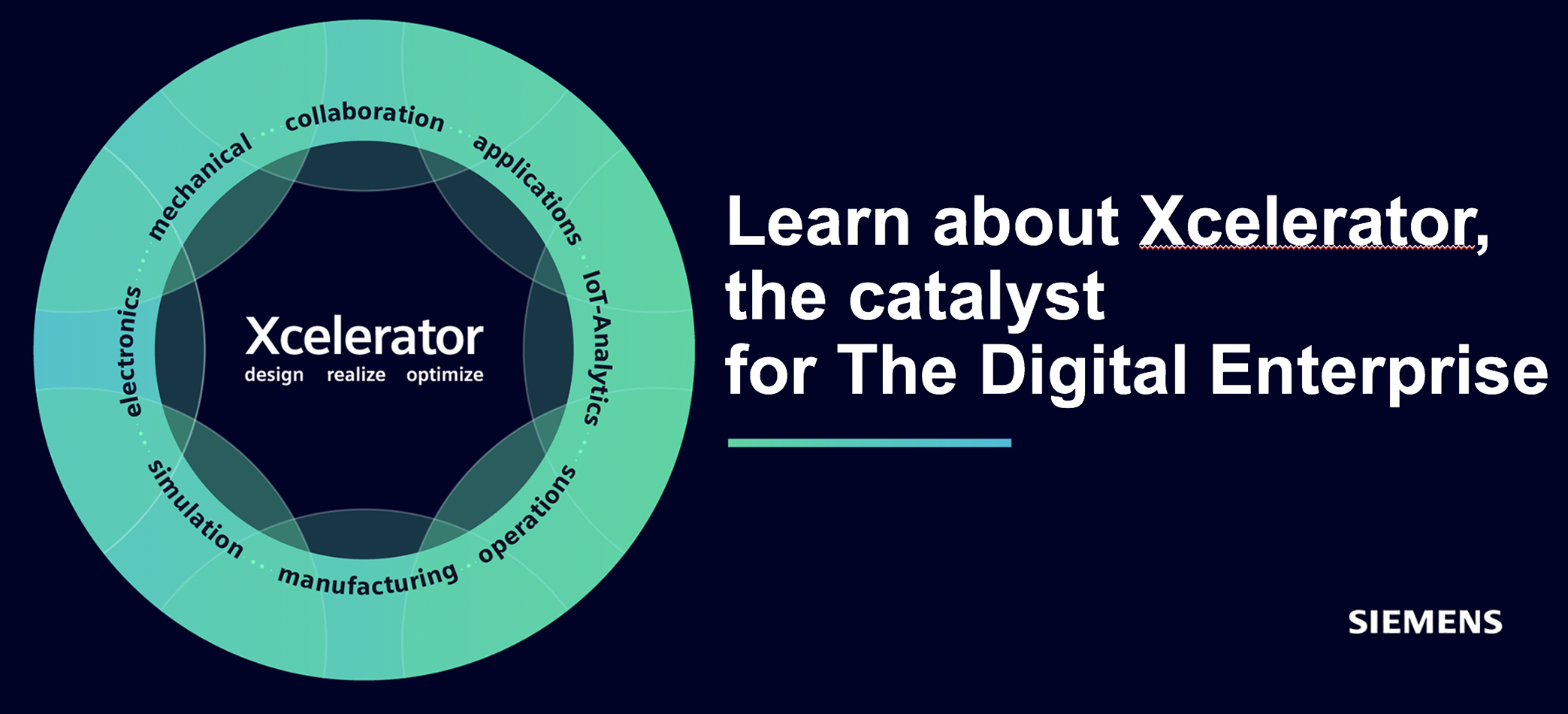
"No one cares what gender you are, regardless of whether you are male or female, it's about showing results. Competence is more important; not just sales figures for the company's top management, but to an even greater extent technically well-functioning and affordable solutions for customers. They must be able to trust that what they get will not only deliver what we promised, but perhaps even better bring new, unexpected profits. It is of course challenging, but we have a great organization, sharp employees, specialists and an incredibly rich set of PLM and automation software in the Xcelerator portfolio, which makes life as a sales manager significantly easier," says Nilsson.
Meet Zandra Nilsson in today's in-depth interview on PLM&ERP News.
Female leaders, or indeed female employees in general other than the market side, are still relatively easy to count in this male-dominated world. In short, the discussion of gender equality has never gained a foothold in the PLM industry, but there are occasional success stories. PLM&ERP News has, for example, told about one of the manufacturing area's top OEMs, SKF, which previously had one of the most prominent female visionaries in the industry as its PLM manager, Victoria van Kamp. But there are more examples from earlier generations, Autodesk's CEO, Carol Bartz, in the 1990s was a global star on the CAD side, and in the 2010s, Dassault Systeme's EVP and Chief Strategy Officer, Monica Mengini, stood out as a blooming, albeit very combative, side shot to CEO Bernard Charles. At present, it looks leaner, even though Siemens Digital Industries in particular has shown a proactive stance with, for example, Eryn Devola as Head of Sustainability in the important area of sustainability and with Brenda Discher as senior VP for Business Strategy & Marketing. But it doesn't stop there, there is more of interest in the gender perspective and this is where Zandra Nilsson enters the plot.
After double degrees–in Engineering and Business Processes at The Institute of Technology at Linköping University–and a good decade at IBM, she was recruited seven years ago to Siemens Digital Industries Software by VP and Nordic executive chief, Mats Friberg. Today, she is sales director for the Nordic region, which, no matter how you look at it from an equality angle, is a tough job. You must not only be deeply technology-savvy, have exciting visions of how and where you can expand, but also overcome the ever-present cold-hammered demands to deliver results. Every quarter, in a continuous process where perseverance and the ability to cope with pressure are the cornerstones of professional life. Zandra Nilsson is right there:
"No one cares what gender you are, regardless of whether you are male or female, it's about showing results. Competence is more important; not just sales figures for the company's top management, but to an even greater extent technically well-functioning and affordable solutions for customers. They must be able to trust that what they get will not only deliver what we promised, but perhaps even better bring new, unexpected profits. It is of course challenging, but we have a great organization, sharp employees, specialists and an incredibly rich set of PLM and automation software in the Xcelerator portfolio, which makes life as a sales manager significantly easier," says Nilsson.
Meet Zandra Nilsson in today's in-depth interview on PLM&ERP News.

Långt ifrån ”varannan damernas” i PLM – men Siemens Zandra Nilsson tvekar inte att...
”KOMPETENS är VIKTIGARE än KÖN”. Hon värjer sig på något vis instinktivt mot att hon bara för att hon är kvinna skulle ha kvoterats in i ledningen för en av de stora spelarna i PLM, Siemens Digital Industries Software. Frågan kommer förstås upp när vi träffar en av Norden-rörelsens största framtidslöften inom PLM, Zandra Nilsson. Kvinnliga ledare, eller egentligen överhuvudtaget kvinnliga medarbetare på annat än marknadssidan, är ännu tämligen lätträknade i denna mansdominerade värld. Kort sagt har diskussionen kring sloganen från börsvärlden, ”varannan damernas”, aldrig fått fotfäste i branschen, men visst finns det enstaka framgångsrika exempel. PLM&ERP News har exempelvis berättat om ett av verkstadsområdets absoluta toppföretag, SKF, som tidigare hade en av de mest framstående kvinnliga visionärerna i branschen som högst PLM-ansvarig, Victoria van Kamp. Men det finns fler exempel från tidigare generationer, Autodesks CEO, Carol Bartz, var på 1990-talet en av CAD-sidans stora globala stjärnor och på 2010-talet stod Dassault Systemes EVP och strategichef, Monica Mengini, ut som ett blommande, om än mycket stridbart, sidoskott till CEOn Bernard Charles. I dagsläget ser det magrare ut, även om just Siemens Digital Industries visat upp en proaktiv hållning med exempelvis Eryn Devola som Head of Sustainability på det viktiga hållbarhetsområdet och med Brenda Discher som senior VP för Business Strategy & Marketing. Men det stannar inte där, det finns mer av intresse i detta perspektiv och det är här Zandra Nilsson kommer in i handlingen.
Efter dubbla examen som civilingenjör och ekonom från Linköpings Tekniska Högskola och Universitet och ett drygt decennium på IBM rekryterades hon för sju år sedan till Siemens Digital Industries Software av VPn och nordenchefen, Mats Friberg. Idag är hon försäljningsdirektör för Norden, vilket alldeles oavsett hur man ser på saken ur en jämlikhetsvinkel är ett tufft jobb. Man ska inte bara vara djupt teknologi-kunnig, ha spännande visioner om hur och var man kan expandera, utan också ta sig över ständigt närvarande kallhamrade krav från toppledningen på att leverera resultat. Varje kvartal, i en kontinuerlig process där uthållighet och förmåga att klara pressen, är yrkestillvarons grundpelare. Just där befinner sig Zandra Nilsson:
”Ingen bryr sig om vilket kön du har, oavsett om du är man eller kvinna handlar det om att visa resultat. Kompetens är viktigare; inte bara försäljningssiffror för toppledningen i bolaget, utan i ännu högre grad tekniskt välfungerande och prisvärda lösningar för kunderna. De måste kunna lita på att det de får inte bara håller vad vi lovat, utan kanske ännu hellre ger nya, oväntade vinster. Det är förstås utmanande, men vi har en bra organisation, en rad vassa medarbetare, specialister och en oerhört rik uppsättning av PLM- och automations-mjukvaror i Xcelerator-portföljen, som gör livet som säljansvarig betydligt lättare,” säger Nilsson.
Men hur ser hon på framtiden för PLM? Vilka är de stora utmaningarna? Och hur ser Siemens roll ut i detta? Möt Zandra Nilsson i dagens djupintervju på PLM&ERP News.
Efter dubbla examen som civilingenjör och ekonom från Linköpings Tekniska Högskola och Universitet och ett drygt decennium på IBM rekryterades hon för sju år sedan till Siemens Digital Industries Software av VPn och nordenchefen, Mats Friberg. Idag är hon försäljningsdirektör för Norden, vilket alldeles oavsett hur man ser på saken ur en jämlikhetsvinkel är ett tufft jobb. Man ska inte bara vara djupt teknologi-kunnig, ha spännande visioner om hur och var man kan expandera, utan också ta sig över ständigt närvarande kallhamrade krav från toppledningen på att leverera resultat. Varje kvartal, i en kontinuerlig process där uthållighet och förmåga att klara pressen, är yrkestillvarons grundpelare. Just där befinner sig Zandra Nilsson:
”Ingen bryr sig om vilket kön du har, oavsett om du är man eller kvinna handlar det om att visa resultat. Kompetens är viktigare; inte bara försäljningssiffror för toppledningen i bolaget, utan i ännu högre grad tekniskt välfungerande och prisvärda lösningar för kunderna. De måste kunna lita på att det de får inte bara håller vad vi lovat, utan kanske ännu hellre ger nya, oväntade vinster. Det är förstås utmanande, men vi har en bra organisation, en rad vassa medarbetare, specialister och en oerhört rik uppsättning av PLM- och automations-mjukvaror i Xcelerator-portföljen, som gör livet som säljansvarig betydligt lättare,” säger Nilsson.
Men hur ser hon på framtiden för PLM? Vilka är de stora utmaningarna? Och hur ser Siemens roll ut i detta? Möt Zandra Nilsson i dagens djupintervju på PLM&ERP News.
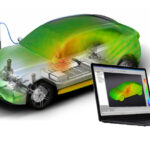
VIBRO-ACOUSTIC Simulation & Analysis: The Solution That Makes Cars and Airplanes Quieter…
ESI Group's VA ONE is used, among others, by AUDI, TOBEY AVIATION and EPIROC. The simulation and analysis developer ESI Group, owned by KeySight, has lately pushed intensively for its vibration-acoustic simulation and analysis software, VA ONE. The reasons are good, not least because the area as such is interesting in today's competitive technology landscape. An important aspect is that noise reduction and vibration management can be critical to the success of products in industries such as automotive, aerospace & defense, and heavy machinery. As consumer and regulatory demands for quieter and more efficient systems increase, traditional methods of noise and vibration control are no longer sufficient. But even technically, the vibro-acoustic analysis is of fundamental importance for things like dimensioning of, for example, mechanical components. Vibrations not only produce mechanical and noise effects, but they can also affect mechanical movements, which in turn can generate material stress and/or unwanted dynamic behavior in a system.
The point is that the digital age requires more and it is in this where vibro-acoustic simulation software such as ESI's VA ONE comes into play. It enables engineers to predict, analyze and mitigate these challenges early in the design process.
Among the well-known automotive players who use VA ONE are companies within the Volkswagen Group, such as Audi. On the aviation side, Joby Aviation developed a first-of-its-kind vibro-acoustic model around an eVTOL aircraft; while Epiroc Drills is a good example from the field of heavy machinery.
But more precisely, what does ESI Group do? In general, the company's software solutions simulate product behavior during testing and use in real life. The software portfolio is differentiated, with predictive simulation technology for the most challenging types of system design. Commercially, ESI holds particularly strong positions in the automotive and aerospace & defense segments, where their solutions with real-time digital twins combine model-driven simulation with data-driven testing to create sharp foundations for realistic digital analysis. A particularly interesting area in the company's portfolio is the metaverse-oriented immersive solutions that not only enable global collaboration in the product development stages, but can also contribute to workflow automation and virtual manufacturing control of production. In this, Virtual Reality software IC.IDO is ESI's flagship. But in today's article the focus is on VA ONE: Why does the solution stand out as a standard tool for vibro-acoustic analyses?
“It is the tool of choice for a range of manufacturing companies worldwide because it integrates various modeling methods, including Finite Element Modeling (FEM), Boundary Element Modeling (BEM), Finite Element Analysis (FEA) and Statistical Energy Analysis (SEA), to cover the entire frequency spectrum, addressing all aspects of vibro-acoustic challenges , and ultimately facilitate smooth automation of the engineering process,” sums up ESI Group's senior product marketing manager, Massimiliano Calloni.
Click on the headline to read the full article on PLM&ERP News.
The point is that the digital age requires more and it is in this where vibro-acoustic simulation software such as ESI's VA ONE comes into play. It enables engineers to predict, analyze and mitigate these challenges early in the design process.
Among the well-known automotive players who use VA ONE are companies within the Volkswagen Group, such as Audi. On the aviation side, Joby Aviation developed a first-of-its-kind vibro-acoustic model around an eVTOL aircraft; while Epiroc Drills is a good example from the field of heavy machinery.
But more precisely, what does ESI Group do? In general, the company's software solutions simulate product behavior during testing and use in real life. The software portfolio is differentiated, with predictive simulation technology for the most challenging types of system design. Commercially, ESI holds particularly strong positions in the automotive and aerospace & defense segments, where their solutions with real-time digital twins combine model-driven simulation with data-driven testing to create sharp foundations for realistic digital analysis. A particularly interesting area in the company's portfolio is the metaverse-oriented immersive solutions that not only enable global collaboration in the product development stages, but can also contribute to workflow automation and virtual manufacturing control of production. In this, Virtual Reality software IC.IDO is ESI's flagship. But in today's article the focus is on VA ONE: Why does the solution stand out as a standard tool for vibro-acoustic analyses?
“It is the tool of choice for a range of manufacturing companies worldwide because it integrates various modeling methods, including Finite Element Modeling (FEM), Boundary Element Modeling (BEM), Finite Element Analysis (FEA) and Statistical Energy Analysis (SEA), to cover the entire frequency spectrum, addressing all aspects of vibro-acoustic challenges , and ultimately facilitate smooth automation of the engineering process,” sums up ESI Group's senior product marketing manager, Massimiliano Calloni.
Click on the headline to read the full article on PLM&ERP News.
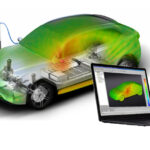
VIBRO-AKUSTISK simulering & analys: Lösningen som får bilar och flygplan att tystna…
ESI Groups VA ONE används bl a av AUDI, TOBEY AVIATION och EPIROC. Simulerings- och analysutvecklaren ESI Group har under några veckor puffat intensivt för sin mjukvara för vibrations-akustisk simulering och analys, VA ONE, i marknadsföringen. Skälen är goda, inte minst för att området som sådant är intressant i dagens konkurrensutsatta tekniklandskap. En viktig aspekt är att minskning av buller och hantering av vibrationer faktiskt kan vara avgörande för framgången för produkter inom branscher som fordon, flyg och försvar och tunga maskiner. När konsument- och myndighetskrav på tystare och effektivare system ökar, räcker det inte längre med traditionella metoder för buller- och vibrationskontroll. Men även rent tekniskt har den vibro-akustiska analysen grundläggande betydelse för sånt som dimensionering av exempelvis mekaniska komponenter. Vibrationer ger inte bara mekanik- och bullereffekter utan de kan även påverka den mekaniska rörelsen, något som i sin tur kan generera materialstress och/eller oönskat dynamiskt beteende i ett system.
Saken landar i att den digitala tidsåldern krävs det mer och det är i detta som vibro-akustisk simuleringsmjukvara som ESIs VA ONE kommer in i bilden. Den gör det möjligt för ingenjörer att förutsäga, analysera och mildra dessa utmaningar tidigt i designprocessen.
Bland kända automotive-spelare som använder VA ONE finns bl a företag inom Volkswagen Group, som Audi. På flygsidan kan nämnas att Joby Aviation utvecklat en först-i-sitt-slag vibroakustisk model ev ett eVTOL flygplan. Medan Epiroc Drills är ett bra exempel från området tung maskinutrustning.
Men mer exakt, vad gör ESI Group? Allmänt gäller att bolagets sofistikerade mjukvarulösningar simulerar en produkts beteende under testning och användning i verkligheten. Mjukvaruportföljen är differentierad, med prediktiv simuleringsteknik för de mest utmanande typerna av systemdesign. Bolaget är särskilt starkt inom automotive- och aerospace & defense-segmenten, där deras lösningar med digitala tvillingar i realtid kombinerar modelldriven simulering med datadriven test för att skapa vassa underlag för realistisk digital analys. Ett särskilt intressant område i bolagsportföljen är de metaverse-orienterade immersiva lösningarna som inte bara möjliggör global kollaborativ samverkan i produktutvecklingsskedena, utan som också kan bidra till automatisering av arbetsflöden och virtuell tillverkningsstyrning av produktionen. I detta är Virtual Reality-mjukvara IC.IDO ESIs flaggskepp. Men i dagens artikel ligger fokus på VA ONE, varför sticker lösningen ut som närmast de facto standardverktyget för vibroakustiska analyser?
”När det gäller vibro-akustisk modellering och simulering är det det föredragna verktyget för en rad tillverkningsföretag över hela världen. Den integrerar olika modelleringsmetoder, inklusive Finita Element Modeling (FEM), Boundary Element Modeling (BEM), Finita Element Analysis (FEA) och Statistical Energy Analysis (SEA), för att täcka hela frekvensspektrumet, ta itu med alla aspekter av vibro-akustisk utmaningar, och i slutänden underlätta en smidig automatisering av ingenjörsprocessen,” summerar ESI Groups seniora produktmarketingansvarige, Massimiliano Calloni.
Klicka på rubriken för att läsa mer på PLM&ERP News.
Saken landar i att den digitala tidsåldern krävs det mer och det är i detta som vibro-akustisk simuleringsmjukvara som ESIs VA ONE kommer in i bilden. Den gör det möjligt för ingenjörer att förutsäga, analysera och mildra dessa utmaningar tidigt i designprocessen.
Bland kända automotive-spelare som använder VA ONE finns bl a företag inom Volkswagen Group, som Audi. På flygsidan kan nämnas att Joby Aviation utvecklat en först-i-sitt-slag vibroakustisk model ev ett eVTOL flygplan. Medan Epiroc Drills är ett bra exempel från området tung maskinutrustning.
Men mer exakt, vad gör ESI Group? Allmänt gäller att bolagets sofistikerade mjukvarulösningar simulerar en produkts beteende under testning och användning i verkligheten. Mjukvaruportföljen är differentierad, med prediktiv simuleringsteknik för de mest utmanande typerna av systemdesign. Bolaget är särskilt starkt inom automotive- och aerospace & defense-segmenten, där deras lösningar med digitala tvillingar i realtid kombinerar modelldriven simulering med datadriven test för att skapa vassa underlag för realistisk digital analys. Ett särskilt intressant område i bolagsportföljen är de metaverse-orienterade immersiva lösningarna som inte bara möjliggör global kollaborativ samverkan i produktutvecklingsskedena, utan som också kan bidra till automatisering av arbetsflöden och virtuell tillverkningsstyrning av produktionen. I detta är Virtual Reality-mjukvara IC.IDO ESIs flaggskepp. Men i dagens artikel ligger fokus på VA ONE, varför sticker lösningen ut som närmast de facto standardverktyget för vibroakustiska analyser?
”När det gäller vibro-akustisk modellering och simulering är det det föredragna verktyget för en rad tillverkningsföretag över hela världen. Den integrerar olika modelleringsmetoder, inklusive Finita Element Modeling (FEM), Boundary Element Modeling (BEM), Finita Element Analysis (FEA) och Statistical Energy Analysis (SEA), för att täcka hela frekvensspektrumet, ta itu med alla aspekter av vibro-akustisk utmaningar, och i slutänden underlätta en smidig automatisering av ingenjörsprocessen,” summerar ESI Groups seniora produktmarketingansvarige, Massimiliano Calloni.
Klicka på rubriken för att läsa mer på PLM&ERP News.