

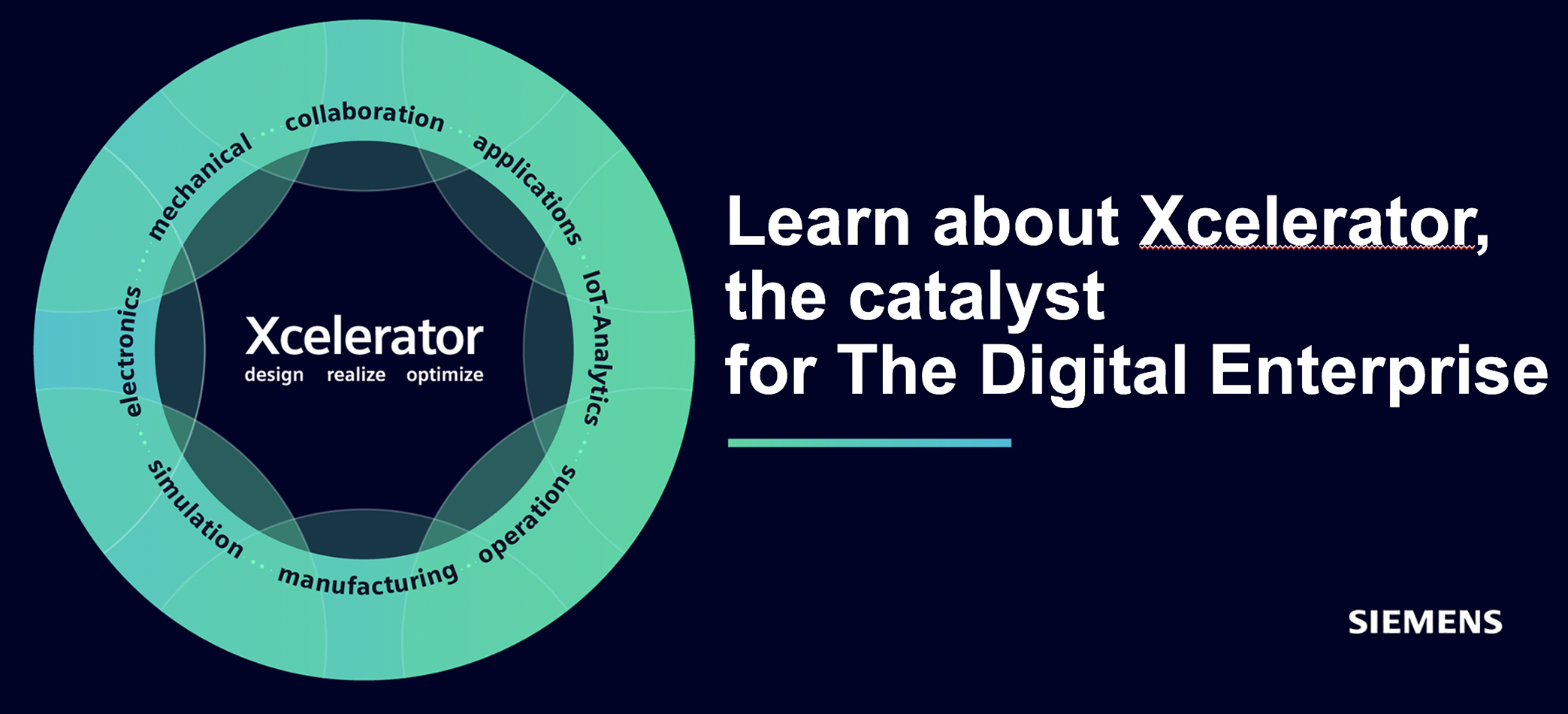


It is not unreasonable, given the high pace of development and the heavy investments—such as Altair and Dotmatics—that Siemens has made over the past year, to conclude that the company is currently leading the industrial AI race. By combining deep expertise in the industrial field (what CEO Roland Busch calls the “real world”) with advanced software capabilities (the “digital world”), the company has established a competitive “moat” which pure software competitors have difficulty replicating. Key elements of this development in 2025, and among the news in 2026, are the AI puzzles that Siemens developers are putting together:
- Forging the Industrial AI Operating System: Siemens and NVIDIA are deepening their partnership to build a unified technology stack—merging data, software, and intelligent hardware to enable autonomous operations and large-scale, AI-driven simulation.
- Next-Gen Digital Twins: The new ”Digital Twin Composer” software, designed to build high-fidelity, photorealistic digital twins within an industrial metaverse environment, is set for release on the Siemens Xcelerator Marketplace by mid-2026.
- Real-Time AI in Production: At a recent Beijing summit, Siemens showcased 26 localized innovations, including AI-driven data center cooling and next-generation PLCs (Programmable Logic Controllers) designed for vastly improved real-time AI decision-making.
- Copilots Across the Portfolio: A new suite of AI copilots has been launched for key software products, including Teamcenter, Polarion, and Opcenter, streamlining workflows from design to regulatory compliance.
- The Rise of Agentic AI: Moving beyond simple Q&A, Siemens has introduced an agentic AI architecture. Nine specialized AI agents have been unveiled, capable of autonomously executing complex industrial workflows.
- Strategic HPC and AI Acquisition: The acquisition of Altair—a premier player in high-performance computing (HPC), simulation, and AI—underscores the strategic direction and immense investment weight placed on these future-critical technologies.
- Accelerating SaaS Transformation: Siemens has successfully migrated a significant portion of its portfolio to the cloud under the ”Xcelerator-as-a-Service” banner. This shift has yielded a portfolio of roughly 25,000 SaaS customers, with a remarkable 70% being new to the company.
- AI-Powered Design Tools: The latest iterations of flagship CAD solutions, Solid Edge 2026 and NX (2025/2026), now feature embedded AI capabilities, such as Magnetic Snap Assembly and automated 2D drafting, drastically reducing time-consuming, repetitive tasks.
- Simcenter Platform Advancements (2025/2026): The platform is evolving toward deeper integration and superior performance. Notably, the latest Simcenter STAR-CCM+ features a significantly enhanced GPU-accelerated solver, cutting complex Computational Fluid Dynamics (CFD) simulations from days to mere hours. Furthermore, by leveraging AI for Reduced Order Modeling (ROM), ”lightweight” simulation models can now run in real-time, enabling Digital Twins to respond instantaneously to sensor data from physical machines.
- Investment in the Future: On the investment front, Siemens is committing €1 billion over the next three years to advance and scale its industrial AI solutions.
Expanding the Drivetrain Analyzer Ecosystem
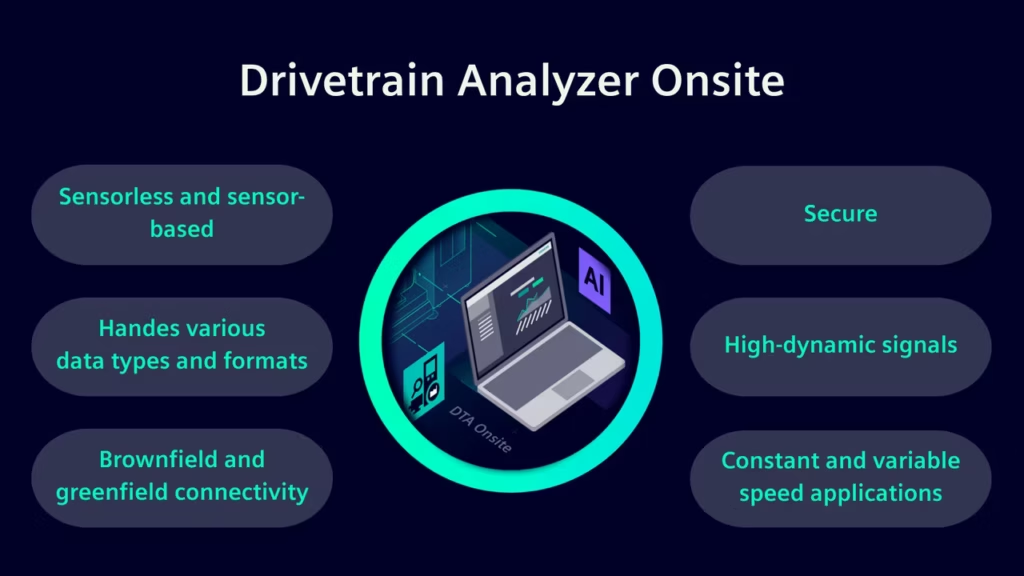
With this top ten AI-list as a backdrop, today’s focus is on the latest launch: Drivetrain Analyzer Onsite. This new solution complements the existing Cloud offering by providing an AI-driven, on-premise analytics platform for industrial drive systems—tailored specifically for operations with stringent data security mandates. Naturally, the software is a core component of the Siemens Xcelerator portfolio.
The value proposition is clear: the solution provides the tools necessary for a seamless transition to predictive maintenance, significantly reducing downtime. By analyzing drive data, the system detects subtle early-warning signs—such as motor overheating or increased vibration—long before they escalate into costly, unplanned failures. This facilitates proactive maintenance scheduling, driving down repair costs while maximizing asset availability and Overall Equipment Effectiveness (OEE).
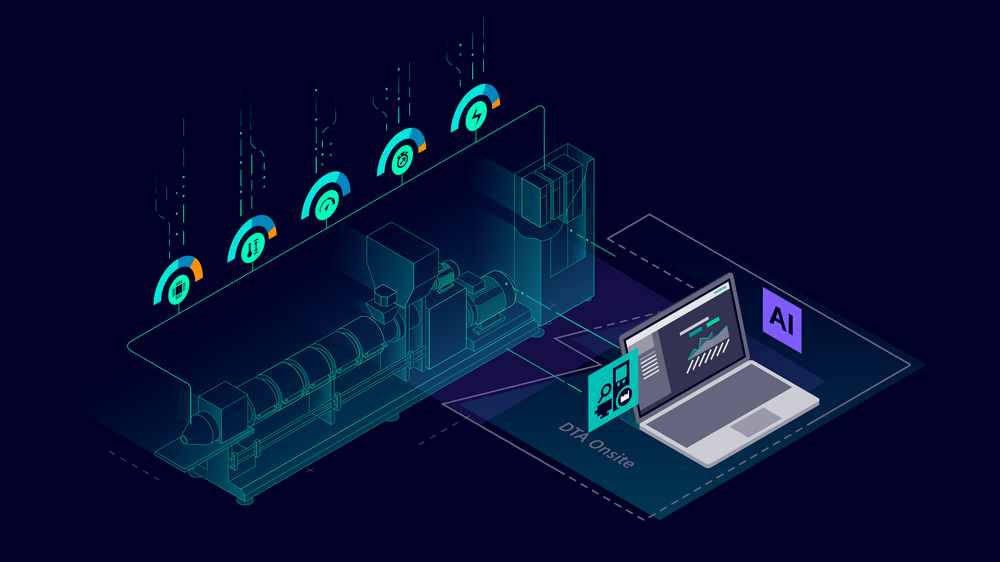
Leading the rollout of this new onsite suite is the DTA Onsite – Monitoring module. This initial release delivers continuous condition monitoring of mechanical and electrical drivetrain components, leveraging locally executed AI for advanced pattern recognition and anomaly detection.
New Module for Local Condition Monitoring
DTA Onsite – Monitoring captures high-resolution, synchronized vibration signals via Precision Time Protocol (PTP) alongside analog data collected through specialized Connection Modules—Vibration (CM VIB), Fast Process Parameters (CM FPP), and IoT (CM IOT)—tailored to specific use cases. This suite integrates vibration data, analog values, and ”fingerprint” signatures, all pre-processed locally before system-wide analysis. The user interface delivers high-level plant overviews, KPI trend visualizations, and granular diagnostic dashboards, all accessible through a standard web browser.
Driven by integrated industrial AI, the system proactively identifies deviations from standard powertrain behavior, flagging potential mechanical shifts or early-stage wear. To ensure maximum data sovereignty, all information remains within the user’s own infrastructure, as all analytics are executed entirely on the on-site industrial PC.
Complementing the Existing Cloud Offering
Siemens is expanding its drivetrain analytics portfolio with the introduction of Drivetrain Analyzer Onsite, a solution tailored specifically for users requiring strict, localized data processing. While Drivetrain Analyzer Cloud—launched last year—supports cloud-based, multi-site analytics and fleet-level evaluations, DTA Onsite targets industrial environments where data sovereignty, latency requirements, or isolated network architectures are critical factors. Although both systems share the same modular concept, they differ in operating models, integration environments, and compliance contexts. Like the Drivetrain Analyzer Cloud, DTA Onsite is an integral part of Siemens Xcelerator.
Wide Range of Industrial Environments
DTA Onsite – Monitoring can be deployed in a wide range of industrial environments and is specifically designed for applications with variable load, speed and operating profiles. This includes production machinery such as extruders, packaging machines and textile machines, where mechanical and process‑related changes must be detected early. The solution is equally suitable for infrastructure applications such as pump stations, compressors or conveyor systems, which often operate continuously or across varying load conditions. Motion‑control applications with dynamic movement profiles also benefit from the detailed monitoring capabilities, as load peaks and changing operating states are systematically captured and analyzed.

