
Unit4 lanserar en nyutvecklad lösning som kan förbättra ERP-effektiviteten inom redovisning och revision
Affärssystem-utvecklaren Unit4 meddelar att man släppt Success4U, en programvara riktat till kunder som använder eller övergår till deras molnbaserade affärssystem, ERPx. Med hjälp av en "Land, Adopt, Expand"-strategi syftar programmet till att optimera kundupplevelser och påskynda värdet från ERP-investeringar genom tydligt definierade framgångsfaktorer. Det omfattar bland annat förbättrad projektledning, optimerade betalningsprocesser och förstärkta rapporteringsfunktioner. Success4U erbjuder två nivåer: Essentials, inkluderat i SaaS-abonnemang, och Professional, som tillhandahåller dedikerade kundansvariga och personaliserade planer. Detta underlättar övergången till molnet, effektiviserar verksamhetsprocesser och minskar störningar för kunderna, både nya och befintliga.
Molnet är på tapeten på de flesta ställen inom ERP-världen. Unit4s nyutveckling av det molnbaserade affärssystemet med Success4U syftar till att omforma kundupplevelsen genom att förenkla övergången och expansionen av företagsresurssystem, bland annat riktat mot enheter inom redovisning, revision och rådgivning i offentlig och privat sektor.
För redovisnings- och revisionsbranschen innebär detta en markant möjlighet. Genom Success4U kan verksamheter få tillgång till förbättrade verktyg för projektledning som optimerar lönsamheten i projekten. Den inkluderar också funktioner som förbättrar betalningsprocesser, ökar transparensen i inköpssystemen och utökar funktionaliteten inom avtal- och kontrakthantering.
Ett annat element är standardisering av datainsamling och förstärkning av rapporteringsfunktioner, som är viktiga för branscher som hanterar omfattande mängder finansiell information. Success4U ger också planeringsprocesser som är både enkla och strukturerade, vilket är viktigt för effektiv resursplanering och insikter från medarbetarnas prestationer.
Jean de Villiers, Chief Customer Officer på Unit4, betonar att "med Success4U kan kunder flytta fokus från att bara köpa funktioner till att rikta in sig på konkreta affärsresultat." Strategin är viktig i en tid där snabb tillgång till tillförlitliga och precisa finansiella data kan vara avgörande för ett företags framgång.
Nyheten publicerad på PLM&ERP News.
Molnet är på tapeten på de flesta ställen inom ERP-världen. Unit4s nyutveckling av det molnbaserade affärssystemet med Success4U syftar till att omforma kundupplevelsen genom att förenkla övergången och expansionen av företagsresurssystem, bland annat riktat mot enheter inom redovisning, revision och rådgivning i offentlig och privat sektor.
För redovisnings- och revisionsbranschen innebär detta en markant möjlighet. Genom Success4U kan verksamheter få tillgång till förbättrade verktyg för projektledning som optimerar lönsamheten i projekten. Den inkluderar också funktioner som förbättrar betalningsprocesser, ökar transparensen i inköpssystemen och utökar funktionaliteten inom avtal- och kontrakthantering.
Ett annat element är standardisering av datainsamling och förstärkning av rapporteringsfunktioner, som är viktiga för branscher som hanterar omfattande mängder finansiell information. Success4U ger också planeringsprocesser som är både enkla och strukturerade, vilket är viktigt för effektiv resursplanering och insikter från medarbetarnas prestationer.
Jean de Villiers, Chief Customer Officer på Unit4, betonar att "med Success4U kan kunder flytta fokus från att bara köpa funktioner till att rikta in sig på konkreta affärsresultat." Strategin är viktig i en tid där snabb tillgång till tillförlitliga och precisa finansiella data kan vara avgörande för ett företags framgång.
Nyheten publicerad på PLM&ERP News.

”Flytta till molnet-pushen kan resultera i enorma migrerings- och implementerings-kostnader utan några större vinster”
Globala support-ledaren inom ERP - RIMINI Streets seniora VP, ERIC HELMER - vill öka medvetenheten kring mjukvaruleverantörernas molnkampanjer. Men han vill också bidra till att minska support- och underhållsavgifterna, bland annat.
Rimini Street är en globalt verksam leverantör av end-to-end programvarusupport för företag, produkter och tjänster. Ovanpå detta är man dessutom den ledande tredjeparts-leverantören av support för Oracle- och SAP-mjukvara, och partner till Salesforce- och AWS-partner. Bolaget gör nu en satsning på den svenska marknaden. Vilka är de tyngsta skälen till detta?
PLM&ERP News har träffat Eric Helmer, SVP och CTO, Chief Technology Officer, på Rimini Street, som nyligen i Sverige för att träffa kunder och prospekts för att ge dem råd om hur de kan minska underhålls- och supportkostnader, diskutera strategiska alternativ till att flytta till molnet och vilka leverantörsspecifika scenarier de behöver överväga.
- Sverige är en intressant marknad för Rimini Street, inte minst på grund av dess robusta tillverkningssektor och många innovationsdrivna företag som vill prioritera IT-investeringar mot funktioner som Digital Experience, AI och CSR. Samtidigt har många företag allokerat upp till 80 procent av sin IT-budget för att underhålla och driva affärskritiska affärs- och transaktionssystem. Vi har funnit att i de flesta fall är support- och underhållsavgifter från de stora ERP-mjukvaruleverantörer de viktigaste kostnadsdrivarna. Vi vill också öka medvetenheten kring den "flytta till molnet-push” som de stora mjukvaruleverantörerna gör, och hur det kan resultera i enorma migrerings-, implementerings- och anpassningskostnader bara för att behålla liknande funktioner som de redan har. Vi erbjuder starka alternativ som låter svenska företag fokusera på det mest strategiska, säger Eric Helmer i dagens intervju.
Hur ser du på er nordiska satsning? Den nordiska marknaden är avgörande för våra tillväxtmål i Europa, och vi ser betydande potential i att samarbeta med kunder för att driva ROI på deras IT-investeringar. Sverige, med sin starka tradition inom tillverkning och teknikdriven marknad, exemplifierar denna potential. Eftersom det råder brist på IT-talanger i Norden tenderar företag att vara öppna för att outsourca mer traditionella uppgifter för att frigöra resurser och kapacitet för mer innovativa områden som AI. Denna strategi stämmer väl överens med vår affärsmodell och den ökade efterfrågan som vi upplever för våra tjänster i denna region, särskilt när det gäller att utnyttja Sveriges innovationskultur för att främja tillväxt och effektivitet.
Klicka på rubriken för att läsa hela intervjun på PLM&ERP News.
Rimini Street är en globalt verksam leverantör av end-to-end programvarusupport för företag, produkter och tjänster. Ovanpå detta är man dessutom den ledande tredjeparts-leverantören av support för Oracle- och SAP-mjukvara, och partner till Salesforce- och AWS-partner. Bolaget gör nu en satsning på den svenska marknaden. Vilka är de tyngsta skälen till detta?
PLM&ERP News har träffat Eric Helmer, SVP och CTO, Chief Technology Officer, på Rimini Street, som nyligen i Sverige för att träffa kunder och prospekts för att ge dem råd om hur de kan minska underhålls- och supportkostnader, diskutera strategiska alternativ till att flytta till molnet och vilka leverantörsspecifika scenarier de behöver överväga.
- Sverige är en intressant marknad för Rimini Street, inte minst på grund av dess robusta tillverkningssektor och många innovationsdrivna företag som vill prioritera IT-investeringar mot funktioner som Digital Experience, AI och CSR. Samtidigt har många företag allokerat upp till 80 procent av sin IT-budget för att underhålla och driva affärskritiska affärs- och transaktionssystem. Vi har funnit att i de flesta fall är support- och underhållsavgifter från de stora ERP-mjukvaruleverantörer de viktigaste kostnadsdrivarna. Vi vill också öka medvetenheten kring den "flytta till molnet-push” som de stora mjukvaruleverantörerna gör, och hur det kan resultera i enorma migrerings-, implementerings- och anpassningskostnader bara för att behålla liknande funktioner som de redan har. Vi erbjuder starka alternativ som låter svenska företag fokusera på det mest strategiska, säger Eric Helmer i dagens intervju.
Hur ser du på er nordiska satsning? Den nordiska marknaden är avgörande för våra tillväxtmål i Europa, och vi ser betydande potential i att samarbeta med kunder för att driva ROI på deras IT-investeringar. Sverige, med sin starka tradition inom tillverkning och teknikdriven marknad, exemplifierar denna potential. Eftersom det råder brist på IT-talanger i Norden tenderar företag att vara öppna för att outsourca mer traditionella uppgifter för att frigöra resurser och kapacitet för mer innovativa områden som AI. Denna strategi stämmer väl överens med vår affärsmodell och den ökade efterfrågan som vi upplever för våra tjänster i denna region, särskilt när det gäller att utnyttja Sveriges innovationskultur för att främja tillväxt och effektivitet.
Klicka på rubriken för att läsa hela intervjun på PLM&ERP News.

IFS lanserar nya industriella AI-funktioner i den senaste versionen av sin molnplattform
Det är full fart framåt som gäller för affärssystemutvecklaren IFS. Som PLM&ERP News rapporterade i förra veckans längre reportage från bolagets användarevent Connect 2024 i Köpenhamn är det nu framför allt tre saker som gäller: AI, molnet och hållbarhets-domänerna. Alla tre är områden som IFS har en rad initiativ igång på.
Idag kommer nyheter som egentligen är kopplat till alla de tre ovan angivna utvecklingsområdena, inte minst då när det gäller AI: Bolaget lanserar nya funktioner i IFS Cloud 24R1, som gör det möjligt för företag att förbättra hur de utnyttjar sina tillgångar, vässar service, driver lönsamhet och använder hållbarhet som en konkurrensfördel.
Det är i den nya versionen av IFS Cloud som det händer intressanta saker relaterat till industriell AI. Dessa nya AI-drivna funktioner gör det möjligt för kunder att förbättra sin operativa effektivitet och lönsamhet, konstaterar IFS nordenchef, Ann-Kristin Sander:
– Så är det, säger hon. Kunderna kommer att kunna dra nytta av en ny nivå av värdefulla AI-funktioner och innovation som verkligen är relevant för deras bransch och påverkar deras verksamhet. I en tid när regleringar i Europa och USA tvingar företag att vidta åtgärder för att fastställa och hantera sina hållbarhetsåtaganden, erbjuder vi nya AI-drivna funktioner som både hjälper företag att förbättra sin verksamhet och rapportera sina framsteg.
Den uppdaterade versionen av IFS Cloud fokuserar också på en mängd uppdaterade och nya funktioner som effektiviserar användarnas verksamheter, stärker lönsamheten samt hållbarhetsarbetet. Särskilt intressant är detta sett till bolagets på tillverkande- och service-relaterade industrivertikaler.
I dagens artikel summerar vi de övergripande förbättringarna och nya lösningarna i IFS Cloud 24R1.
Klart är att vi nu ser tecken på tunga satsningar av affärssystem-leverantörerna på AI. Potentialen för dramatiska produktivitets-förbättringar är hyperintressant för det flesta företag, inte minst på tillverkningssidan, och det är nu slaget om framtiden initierats. Uppenbart är vidare att IFS’s satsning ligger väl i paritet med vad marknadsledaren SAP nu signalerat under Sapphire-eventet i dagarna i Orlando, Florida. Även om man naturligtvis inte agerar efter exakt samma mall finns det övergripande likheter, framförallt som att ta in satsningen i respektive aktörs moln. Hur manifesteras detta i nya IFS Cloud 24R1?
Klicka på rubriken för att läsa mer på PLM&ERP News.
Idag kommer nyheter som egentligen är kopplat till alla de tre ovan angivna utvecklingsområdena, inte minst då när det gäller AI: Bolaget lanserar nya funktioner i IFS Cloud 24R1, som gör det möjligt för företag att förbättra hur de utnyttjar sina tillgångar, vässar service, driver lönsamhet och använder hållbarhet som en konkurrensfördel.
Det är i den nya versionen av IFS Cloud som det händer intressanta saker relaterat till industriell AI. Dessa nya AI-drivna funktioner gör det möjligt för kunder att förbättra sin operativa effektivitet och lönsamhet, konstaterar IFS nordenchef, Ann-Kristin Sander:
– Så är det, säger hon. Kunderna kommer att kunna dra nytta av en ny nivå av värdefulla AI-funktioner och innovation som verkligen är relevant för deras bransch och påverkar deras verksamhet. I en tid när regleringar i Europa och USA tvingar företag att vidta åtgärder för att fastställa och hantera sina hållbarhetsåtaganden, erbjuder vi nya AI-drivna funktioner som både hjälper företag att förbättra sin verksamhet och rapportera sina framsteg.
Den uppdaterade versionen av IFS Cloud fokuserar också på en mängd uppdaterade och nya funktioner som effektiviserar användarnas verksamheter, stärker lönsamheten samt hållbarhetsarbetet. Särskilt intressant är detta sett till bolagets på tillverkande- och service-relaterade industrivertikaler.
I dagens artikel summerar vi de övergripande förbättringarna och nya lösningarna i IFS Cloud 24R1.
Klart är att vi nu ser tecken på tunga satsningar av affärssystem-leverantörerna på AI. Potentialen för dramatiska produktivitets-förbättringar är hyperintressant för det flesta företag, inte minst på tillverkningssidan, och det är nu slaget om framtiden initierats. Uppenbart är vidare att IFS’s satsning ligger väl i paritet med vad marknadsledaren SAP nu signalerat under Sapphire-eventet i dagarna i Orlando, Florida. Även om man naturligtvis inte agerar efter exakt samma mall finns det övergripande likheter, framförallt som att ta in satsningen i respektive aktörs moln. Hur manifesteras detta i nya IFS Cloud 24R1?
Klicka på rubriken för att läsa mer på PLM&ERP News.

“Like a Turbo on Pure Business Logic,” When IFS Goes AI
The cloud drives ERP developer IFS' BUSINESS SUCCESS - and now they are also targeting AI. Meet managing director IFS Nordics, ANN-KRISTIN SANDER, senior VP of R&D, MARTIN GUNNARSSON, and CTO, DAN MATTHEWS.
The most central themes in the development of business and technology systems today are about AI, automation, migration to the cloud and sustainability. Every developer with strong winning instincts tops the agenda with these areas at a time when the possibilities of technology are literally exploding. The development suits some better, others not quite as well, but for IFS it fits like a glove, stated the head of the company's Nordic operations, Ann-Kristin Sander, during the recent user event in Copenhagen.
In front of more than 400 enthusiastic participants, she pointed partly to the technology development in AI as a value creator that customers are now ready to put into action, partly to an innovative business which–with IFS Cloud as a locomotive–made the company a sustainable growth machine. Six years in a row, it has shown double-digit growth numbers and like onions on the salmon: "the recent first quarter of 2024 was the best in the company's history," said Sander in reference to the financial performance of this now billion-dollar company.
The technology then? The cloud in all its glory, but not surprisingly, it was the AI development that was the big number during the event. IFS Cloud was of course also a focus, but it is established and doing well. About a third of the Nordic customers are live/in the process of implementing IFS Cloud, so there is still a journey to make, but most of the IFS customers are on their way in one way or another, notes the Nordic base.
With AI it's a little different, the potential is huge, but the customer journey is in its infancy.
”That's right,” says Sander and continues: "That AI has great potential to deliver value has been clear for a long time, but implementing the solutions is not something you jump into immediately and on a large scale. People have long been interested in use cases, and when they are now starting to arrive, the interest is growing. But where do we start? What might a step-by-step process look like? What are the low hanging fruits? As the answers start to pile up, expectations are built up and we believe that 2024 will be the big establishment year. We are now working intensively with several customers, early adopters, to establish use cases based on our AI stack, which are adapted to the needs of our six main industries: aerospace & defense, energy, construction, manufacturing, services and telecom. It is not difficult to realize the potential that this contains for both IFS and for the customers. But what do IFS' AI solutions look like? Why is IFS composable architecture so valuable? What does the company's ecosystem of consultants mean? PLM&ERP News met two of the key people on the technology development side: Senior VP of R&D, Martin Gunnarsson, and CTO, Dan Matthews. Both collaborate within a product development team involving around 1,800 employees around the world:
”AI is like a turbo on pure business logic. Used correctly, it can give as much as you want,” Gunnarsson summed up. How?
Click on the headline to find out in today’s in-depth interview with him, Dan Matthews and Ann-Kristin Sander on PLM&ERP News.
In front of more than 400 enthusiastic participants, she pointed partly to the technology development in AI as a value creator that customers are now ready to put into action, partly to an innovative business which–with IFS Cloud as a locomotive–made the company a sustainable growth machine. Six years in a row, it has shown double-digit growth numbers and like onions on the salmon: "the recent first quarter of 2024 was the best in the company's history," said Sander in reference to the financial performance of this now billion-dollar company.
The technology then? The cloud in all its glory, but not surprisingly, it was the AI development that was the big number during the event. IFS Cloud was of course also a focus, but it is established and doing well. About a third of the Nordic customers are live/in the process of implementing IFS Cloud, so there is still a journey to make, but most of the IFS customers are on their way in one way or another, notes the Nordic base.
With AI it's a little different, the potential is huge, but the customer journey is in its infancy.
”That's right,” says Sander and continues: "That AI has great potential to deliver value has been clear for a long time, but implementing the solutions is not something you jump into immediately and on a large scale. People have long been interested in use cases, and when they are now starting to arrive, the interest is growing. But where do we start? What might a step-by-step process look like? What are the low hanging fruits? As the answers start to pile up, expectations are built up and we believe that 2024 will be the big establishment year. We are now working intensively with several customers, early adopters, to establish use cases based on our AI stack, which are adapted to the needs of our six main industries: aerospace & defense, energy, construction, manufacturing, services and telecom. It is not difficult to realize the potential that this contains for both IFS and for the customers. But what do IFS' AI solutions look like? Why is IFS composable architecture so valuable? What does the company's ecosystem of consultants mean? PLM&ERP News met two of the key people on the technology development side: Senior VP of R&D, Martin Gunnarsson, and CTO, Dan Matthews. Both collaborate within a product development team involving around 1,800 employees around the world:
”AI is like a turbo on pure business logic. Used correctly, it can give as much as you want,” Gunnarsson summed up. How?
Click on the headline to find out in today’s in-depth interview with him, Dan Matthews and Ann-Kristin Sander on PLM&ERP News.

Ny undersökning: Förväntad kraftfull tillväxt för hybrida multimoln de kommande åren
…OCH I SVERIGE SPÅS DE VÄXA BETYDLIGT MER ÄN GENOMSNITTET. AI, personlig integritet och hållbarhet gör att allt fler svenska IT-chefer söker efter flexiblare IT-infrastruktur med många molnleverantörer och lokala datacenter. Det är en av konklusionerna i den sjätte årliga utgåvan av undersökningen Nutanix Enterprise Cloud Index. Undersökningen, som omfattar 50 IT-beslutsfattare från Sverige, visar att användandet av hybrida multimoln kommer att mer än fördubblas inom de närmaste tre åren vilket är betydligt högre än det globala genomsnittet.
Begreppet hybrida multimoln syftar på IT-miljöer som innefattar så väl flera olika publika molnplattformar - Amazon Web Services och Microsoft Azure är bra exempel - och privata moln, som lokala datacenter (on-prem). Grundtanken är att utnyttja fördelarna med varje typ av lösning, där de kommer till sin rätt i allt från kostnader, prestanda, skalbarhet och funktionalitet till exempelvis geografisk tillgänglighet, tillförlitlighet, administration och säkerhet. Rätt sak på rätt plats.
I undersökningen som berör den svenska marknaden märks följande:
• Nästan alla – 88 procent – av de svenska IT-cheferna anser att deras organisationer kan dra nytta av hybridmiljöer som innefattar både publika och privata moln.
• Hybrida multimoln förutspås växa kraftigt i Sverige, från en andel på 18 procent i dag, till 42 procent under de kommande 1-3 åren. Andelen globalt är 35 procent och i EMEA-området 30 procent.
• Intresset för hybrida multimoln hänger ihop med att fler än 60 procent av de svenska respondenterna planerar att öka investeringarna i modernisering av IT under 2024.
I jämförelse med andra länder sticker Sverige ut genom att satsa mindre på kombinationen lokala datacenter och bara en leverantör av en publik molnplattform. I det senare fallet är andelen svenska deltagare som kommer att satsa under de kommande 1-3 åren nere på noll procent, vilket kan jämföras med elva procent globalt. Det tyder på att inga svenska organisationer planerar att bara ha en enda publik molnleverantör om tre år.
– IT-beslutsfattarna är överens om att hybrida multimoln är den bästa modellen för att uppfylla de krav som finns. Därför investerar Nutanix i stöd för alla de tre stora publika molnleverantörerna Amazon, Microsoft och Google, säger Mats Ericson, regionchef för Sverige, Danmark och Island på Nutanix.
Klicka på rubriken för att läsa mer på PLM&ERP News.
Begreppet hybrida multimoln syftar på IT-miljöer som innefattar så väl flera olika publika molnplattformar - Amazon Web Services och Microsoft Azure är bra exempel - och privata moln, som lokala datacenter (on-prem). Grundtanken är att utnyttja fördelarna med varje typ av lösning, där de kommer till sin rätt i allt från kostnader, prestanda, skalbarhet och funktionalitet till exempelvis geografisk tillgänglighet, tillförlitlighet, administration och säkerhet. Rätt sak på rätt plats.
I undersökningen som berör den svenska marknaden märks följande:
• Nästan alla – 88 procent – av de svenska IT-cheferna anser att deras organisationer kan dra nytta av hybridmiljöer som innefattar både publika och privata moln.
• Hybrida multimoln förutspås växa kraftigt i Sverige, från en andel på 18 procent i dag, till 42 procent under de kommande 1-3 åren. Andelen globalt är 35 procent och i EMEA-området 30 procent.
• Intresset för hybrida multimoln hänger ihop med att fler än 60 procent av de svenska respondenterna planerar att öka investeringarna i modernisering av IT under 2024.
I jämförelse med andra länder sticker Sverige ut genom att satsa mindre på kombinationen lokala datacenter och bara en leverantör av en publik molnplattform. I det senare fallet är andelen svenska deltagare som kommer att satsa under de kommande 1-3 åren nere på noll procent, vilket kan jämföras med elva procent globalt. Det tyder på att inga svenska organisationer planerar att bara ha en enda publik molnleverantör om tre år.
– IT-beslutsfattarna är överens om att hybrida multimoln är den bästa modellen för att uppfylla de krav som finns. Därför investerar Nutanix i stöd för alla de tre stora publika molnleverantörerna Amazon, Microsoft och Google, säger Mats Ericson, regionchef för Sverige, Danmark och Island på Nutanix.
Klicka på rubriken för att läsa mer på PLM&ERP News.


Siemens’ EVP Joe Bohman: ”Xcelerator-as-a-Service and SaaS are Tearing Down Barriers With New Cloud...
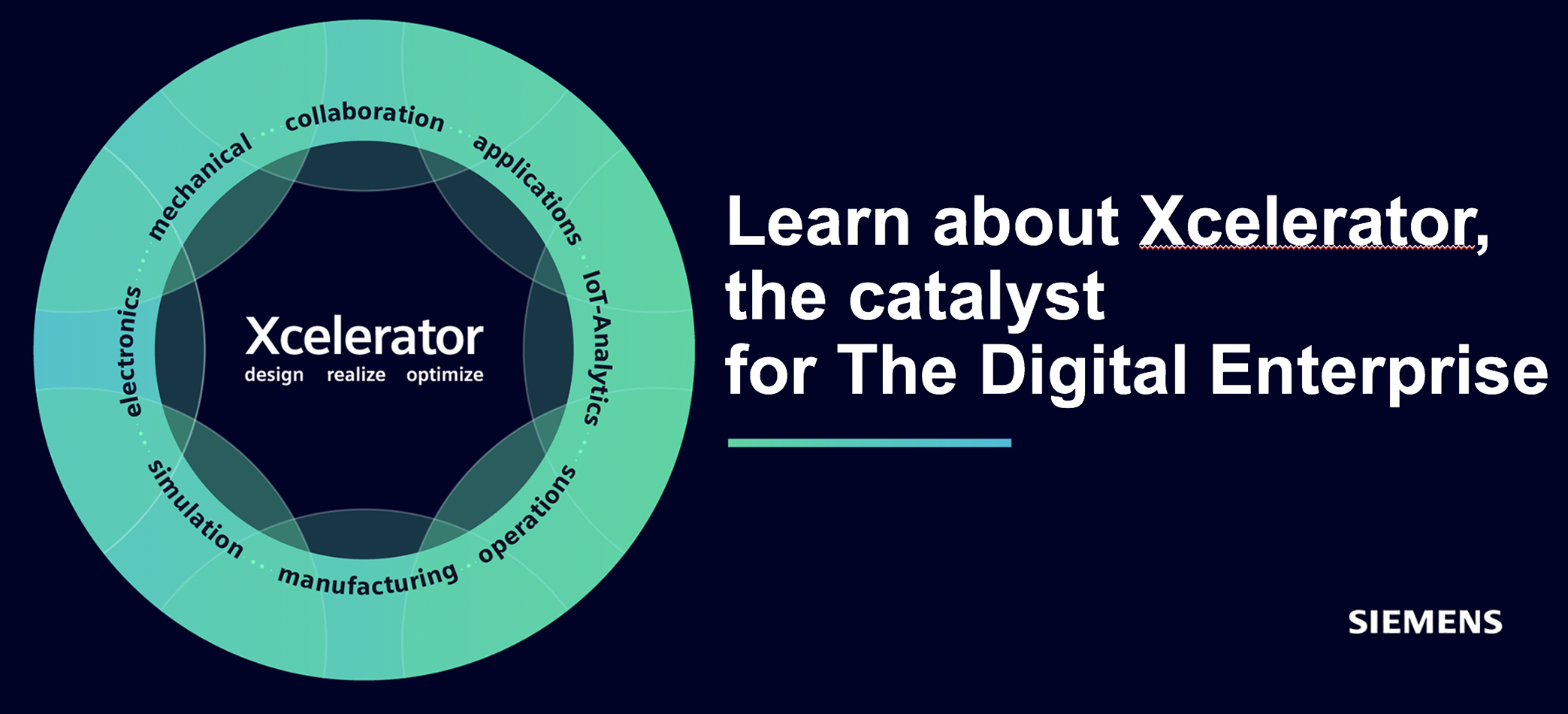
"A COMPLETE SETUP of DIGITAL SaaS TOOLS." Siemens Digital Industries Software is moving ahead in full steam with its SaaS solutions built on the PLM portfolio Xcelerator. All Siemens cloud-based solutions have the letter X as a suffix. This, in turn, is tantamount to them being Xcelerator-as-a-Service solutions, with the cloud as the technical platform.
As PLM&ERP News previously reported from the company's ongoing user event Realize Live Americas in Las Vegas, the PLM solution Teamcenter will be the first service option in the cloud. But there is more to come. In his keynote in front of 2,000 enthusiastic attendees, the company's Teamcenter chief, EVP of PLM Products, Joe Bohman, said that the expansion of the cloud service portfolio continues with the CAD software NX X, the new and very interesting app for manufacturing and shop floor activities Zel X, MOM and MES software Opcenter X, CAE platform Simcenter X and Teamcenter X Essentials (PDM).
The Xcelerator-as-a-Service portfolio, according to Bohman, with the new upcoming additions, brings together the powerful functions of the company's rich software portfolio through purpose-built technology and service experiences that are, "tailored to the requirements of industries and individual users."
“The cloud market will exceed one trillion dollars in 2026 and every CIO (Chief Information Officer) I speak to is intensely interested in what we are doing with the cloud. The answer is Siemens Xcelerator-as-a-Service. We hereby offer our complete suite of digital tools as SaaS (Software-as-a-Service) solutions designed using our digital thread approach, so that everything is connected. We build SaaS solutions that are secure, personalized and customizable with our low-code software Mendix. With this, we contribute to tearing down barriers. Instead, we create platforms that bring together groups of experts, giving people the opportunity to discuss and work together,” stated Joe Bohman during his speech. He added: “Customers tell us they are 33% faster to market with this approach, achieve this at 60% lower IT costs while they still are 100% up-to-dated. Everything with built-in scalability – everything we do is scalable.”
Above all, Bohman emphasized the need to break down barriers in product development. This is done most efficiently with sharp digital tools and it’s clear that the cloud as a technical distribution platform facilitates this type of interconnected process flows.
”Xcelerator-as-a-Service connects all tasks and processes on one platform, giving everyone in the entire value chain the opportunity to work together anywhere, at the same time, with the tools and data they need in one place. These flexible, modular solutions then run on the industry's most robust interoperable data backbone, fully integrating workflows from concept to manufacturing,” Bohman concluded.
Click on the headline to read more on PLM&ERP News.
As PLM&ERP News previously reported from the company's ongoing user event Realize Live Americas in Las Vegas, the PLM solution Teamcenter will be the first service option in the cloud. But there is more to come. In his keynote in front of 2,000 enthusiastic attendees, the company's Teamcenter chief, EVP of PLM Products, Joe Bohman, said that the expansion of the cloud service portfolio continues with the CAD software NX X, the new and very interesting app for manufacturing and shop floor activities Zel X, MOM and MES software Opcenter X, CAE platform Simcenter X and Teamcenter X Essentials (PDM).
The Xcelerator-as-a-Service portfolio, according to Bohman, with the new upcoming additions, brings together the powerful functions of the company's rich software portfolio through purpose-built technology and service experiences that are, "tailored to the requirements of industries and individual users."
“The cloud market will exceed one trillion dollars in 2026 and every CIO (Chief Information Officer) I speak to is intensely interested in what we are doing with the cloud. The answer is Siemens Xcelerator-as-a-Service. We hereby offer our complete suite of digital tools as SaaS (Software-as-a-Service) solutions designed using our digital thread approach, so that everything is connected. We build SaaS solutions that are secure, personalized and customizable with our low-code software Mendix. With this, we contribute to tearing down barriers. Instead, we create platforms that bring together groups of experts, giving people the opportunity to discuss and work together,” stated Joe Bohman during his speech. He added: “Customers tell us they are 33% faster to market with this approach, achieve this at 60% lower IT costs while they still are 100% up-to-dated. Everything with built-in scalability – everything we do is scalable.”
Above all, Bohman emphasized the need to break down barriers in product development. This is done most efficiently with sharp digital tools and it’s clear that the cloud as a technical distribution platform facilitates this type of interconnected process flows.
”Xcelerator-as-a-Service connects all tasks and processes on one platform, giving everyone in the entire value chain the opportunity to work together anywhere, at the same time, with the tools and data they need in one place. These flexible, modular solutions then run on the industry's most robust interoperable data backbone, fully integrating workflows from concept to manufacturing,” Bohman concluded.
Click on the headline to read more on PLM&ERP News.

Siemens Joe Bohman: ”Xcelerator-as-a-Service och SaaS river barriärer och nu kommer nya molntjänster för...
"En komplett uppsättning av digitala verktyg som SaaS-lösningar." Siemens Digital Industries Software ångar på med sin SaaS-lösningar byggda på PLM-portföljen Xcelerator. Alla Siemens molnbaserade lösningar har bokstaven X som suffix. Detta är i sin tur liktydigt med att de är Xcelerator-as-a-Service-lösningar, med molnet som teknisk plattform.
Som PLM&ERP News tidigare rapporterat från bolagets pågående användarevent Realize Live Americas i Las Vegas blir PLM-lösningen Teamcenter först ut som tjänstealternativ i molnet. Men det kommer mera. I sin keynote inför 2 000 entusiastiska deltagare berättade bolagets Teamcenter-ansvarige, EVPn för PLM Products, Joe Bohman, att expansionen av molntjänst-portföljen fortsätter med CAD-mjukvaran NX X, den nya och mycket intressanta appen för tillverkning och verkstadsgolv Zel X, MOM och MES-mjukvaran Opcenter X, CAE-plattformen Simcenter X och Teamcenter X Essentials (PDM).
Xcelerator-as-a-Service-portföljen betyder enligt Joe Bohman att man nu sammanför de kraftfulla funktionerna i bolagets rika mjukvaruportfölj genom specialbyggd teknologi och serviceupplevelser som är, ”skräddarsydda för industriernas och enskilda användares krav.”
- Molnmarknaden kommer att överstiga en biljon dollar 2026 och varje CIO (Chief Information Officer) jag pratar med är intensivt intresserad av vad vi gör med molnet. Svaret är Siemens Xcelerator-as-a-Service. Vi erbjuder med denna vår kompletta uppsättning av digitala verktyg som SaaS-lösningar (Software-as-a -Service) designade med hjälp av vår digitala tråd-metod, så att allt hänger ihop. Vi bygger SaaS-lösningar som är säkra, personliga och anpassningsbara till vår lågkod-mjukvara Mendix. Med detta bidrar vi till att riva ner barriärer. Istället skapar vi plattformar som sammanför expertgrupper, vilket ger människor möjligheten att diskutera och arbeta tillsammans,” konstaterade Joe Bohman under sitt anförande. Han tillade: - Kunderna säger till oss att de är 33 % snabbare ut på marknaden med detta tillvägagångssätt, når detta till 60 % lägre IT-kostnader och är 100 % uppdaterade. Allt med inbyggd skalbarhet – allt vi gör är skalbart.”
Framför allt tryckte Bohman på behovet av att riva barriärer i produktframtagningsarbetet. Detta görs effektivast med vassa digitala verktyg och klart är att molnet som teknisk distributions-plattform underlättar denna typ av ihop-kopplade processflöden.
- Xcelerator-as-a-Service kopplar samman alla uppgifter och processer på en plattform, vilket ger alla i hela värdekedjan möjlighet att arbeta tillsammans var som helst, samtidigt, med de verktyg och data de behöver på ett och samma ställe. Dessa flexibla, modulära lösningar körs sedan på branschens mest robusta interoperabla dataryggrad, och integrerar helt arbetsflöden från idé till tillverkning, summerade Bohman.
Klicka på rubriken för att läsa mer på PLM&ERP News.
Som PLM&ERP News tidigare rapporterat från bolagets pågående användarevent Realize Live Americas i Las Vegas blir PLM-lösningen Teamcenter först ut som tjänstealternativ i molnet. Men det kommer mera. I sin keynote inför 2 000 entusiastiska deltagare berättade bolagets Teamcenter-ansvarige, EVPn för PLM Products, Joe Bohman, att expansionen av molntjänst-portföljen fortsätter med CAD-mjukvaran NX X, den nya och mycket intressanta appen för tillverkning och verkstadsgolv Zel X, MOM och MES-mjukvaran Opcenter X, CAE-plattformen Simcenter X och Teamcenter X Essentials (PDM).
Xcelerator-as-a-Service-portföljen betyder enligt Joe Bohman att man nu sammanför de kraftfulla funktionerna i bolagets rika mjukvaruportfölj genom specialbyggd teknologi och serviceupplevelser som är, ”skräddarsydda för industriernas och enskilda användares krav.”
- Molnmarknaden kommer att överstiga en biljon dollar 2026 och varje CIO (Chief Information Officer) jag pratar med är intensivt intresserad av vad vi gör med molnet. Svaret är Siemens Xcelerator-as-a-Service. Vi erbjuder med denna vår kompletta uppsättning av digitala verktyg som SaaS-lösningar (Software-as-a -Service) designade med hjälp av vår digitala tråd-metod, så att allt hänger ihop. Vi bygger SaaS-lösningar som är säkra, personliga och anpassningsbara till vår lågkod-mjukvara Mendix. Med detta bidrar vi till att riva ner barriärer. Istället skapar vi plattformar som sammanför expertgrupper, vilket ger människor möjligheten att diskutera och arbeta tillsammans,” konstaterade Joe Bohman under sitt anförande. Han tillade: - Kunderna säger till oss att de är 33 % snabbare ut på marknaden med detta tillvägagångssätt, når detta till 60 % lägre IT-kostnader och är 100 % uppdaterade. Allt med inbyggd skalbarhet – allt vi gör är skalbart.”
Framför allt tryckte Bohman på behovet av att riva barriärer i produktframtagningsarbetet. Detta görs effektivast med vassa digitala verktyg och klart är att molnet som teknisk distributions-plattform underlättar denna typ av ihop-kopplade processflöden.
- Xcelerator-as-a-Service kopplar samman alla uppgifter och processer på en plattform, vilket ger alla i hela värdekedjan möjlighet att arbeta tillsammans var som helst, samtidigt, med de verktyg och data de behöver på ett och samma ställe. Dessa flexibla, modulära lösningar körs sedan på branschens mest robusta interoperabla dataryggrad, och integrerar helt arbetsflöden från idé till tillverkning, summerade Bohman.
Klicka på rubriken för att läsa mer på PLM&ERP News.

How Can BAE Systems’ ShareAspace Make a Difference Regarding Interoperability and Data Integrity Within...
ShareAspace Forum 2024 include presentations from Eurostep's MATTIAS JOHANSSON and BAE Systems' DARREN NICE. The now BAE Systems-owned developer of standards-based PLM software, Eurostep, is organizing an event on June 4 around its ShareAspace platform. This solution is a software for collaboration around product data. ShareAspace makes collaboration with suppliers and partners easy, while the information is secure and available in the cloud.
On the user side, we can find prominent players such as Volvo AB, Siemens Energy and U-boat specialist and shipyard Saab Kockums. The latter, Kockum's, is in this context an interesting example of the benefit of the solution. ShareAspace is used as a backbone in a digital thread concept where this PCLS-based (Product Lifecycle Support) platform connects software and data from AVEVA, PTC and other applications.
Currently, ShareAspace has an approximately 30 years long history during which the solution has continued to develop capabilities covering new areas such as BIM and delivery on technical platforms such as the cloud. In the light of this development, Eurostep has become a strong international player in PLM, and now most recently in BIM on the construction and facilities side, with a focus on secure collaboration within the life cycle of products and facilities.
The complexity and evolution within modern digital ecosystems is dynamic and constantly ongoing. Staying updated on this is a key to successful management and at the ShareAspace Forum 2024, products within the ShareAspace family and solutions as well as trends and the latest developments will be presented. This is of particular interest after BAE Systems' purchase of Eurostep last year. How can Eurostep's ShareAspace products continue to play a critical role in enabling seamless interoperability, securing collaborative environments and ensuring data integrity? The question will be answered on June 4 when the event starts at the new World of Volvo Center in Gothenburg. There are also rumors from Eurostep that there will be a User Group meeting in the afternoon at Eurostep's premises in Gothenburg. More on this shortly.
So, what can we expect?
• Mattias Johansson, Eurosteps CEO, and Darren Nice, Digital Asset Management Director at BAE Systems Digital Intelligence will talk about business updates and how this connects to the latest insights in the PLM area.
• There will be deep dives with industry-specific sessions by vertical managers Sylvain Marie, Simon Pettersson and Magnus Färneland, which show real applications and the value ShareAspace products deliver in various sectors.
• An important part of the conference is the meetings and discussions with other professionals, industry leaders and Eurostep’s team during breaks and lunch.
• Attendees will also receive an exclusive guided tour of the brand new World of Volvo Center and its dedicated Volvo exhibition.
“This year's theme, ‘Building bridges’, is more than a metaphor,” says Magnus Färneland. “It reflects our commitment to solving the critical challenges of data integration, collaboration and management in the digital age with ShareAspace.”
To read the full article on PLM&ERP News, click on the headline.
On the user side, we can find prominent players such as Volvo AB, Siemens Energy and U-boat specialist and shipyard Saab Kockums. The latter, Kockum's, is in this context an interesting example of the benefit of the solution. ShareAspace is used as a backbone in a digital thread concept where this PCLS-based (Product Lifecycle Support) platform connects software and data from AVEVA, PTC and other applications.
Currently, ShareAspace has an approximately 30 years long history during which the solution has continued to develop capabilities covering new areas such as BIM and delivery on technical platforms such as the cloud. In the light of this development, Eurostep has become a strong international player in PLM, and now most recently in BIM on the construction and facilities side, with a focus on secure collaboration within the life cycle of products and facilities.
The complexity and evolution within modern digital ecosystems is dynamic and constantly ongoing. Staying updated on this is a key to successful management and at the ShareAspace Forum 2024, products within the ShareAspace family and solutions as well as trends and the latest developments will be presented. This is of particular interest after BAE Systems' purchase of Eurostep last year. How can Eurostep's ShareAspace products continue to play a critical role in enabling seamless interoperability, securing collaborative environments and ensuring data integrity? The question will be answered on June 4 when the event starts at the new World of Volvo Center in Gothenburg. There are also rumors from Eurostep that there will be a User Group meeting in the afternoon at Eurostep's premises in Gothenburg. More on this shortly.
So, what can we expect?
• Mattias Johansson, Eurosteps CEO, and Darren Nice, Digital Asset Management Director at BAE Systems Digital Intelligence will talk about business updates and how this connects to the latest insights in the PLM area.
• There will be deep dives with industry-specific sessions by vertical managers Sylvain Marie, Simon Pettersson and Magnus Färneland, which show real applications and the value ShareAspace products deliver in various sectors.
• An important part of the conference is the meetings and discussions with other professionals, industry leaders and Eurostep’s team during breaks and lunch.
• Attendees will also receive an exclusive guided tour of the brand new World of Volvo Center and its dedicated Volvo exhibition.
“This year's theme, ‘Building bridges’, is more than a metaphor,” says Magnus Färneland. “It reflects our commitment to solving the critical challenges of data integration, collaboration and management in the digital age with ShareAspace.”
To read the full article on PLM&ERP News, click on the headline.

DALE TUTT, VP Siemens Digital Industries Software: ”The industrial metaverse is much more than...
Currently on PLM-ERPnews.se: How the digital transformation journey can provide a stronger position. We live in a technologically explosive era of development. "Across all industries, companies are navigating a period of increased pressure, a mix of uncertainty and opportunity. The presence of smart and connected products in many industries has continued to grow as companies seek to improve functionality and user experience through software and electronics, and an increased interest in sustainable solutions. At the same time, challenges related to supply chain management, workforce dynamics and sustainable innovation create some uncertainty, but also opportunities for companies to gain competitive advantage through creative solutions. These pressures, challenges and the opportunities they create drive companies to innovate themselves both in how they work and what they offer the market,” states today’s guest columnist on PLM-ERPnews.se, Siemens Digital Industries VP of Industry Strategy, Dale Tutt.
There is undeniably an interesting scope in the background to today's development that Dale Tutt paints. But his conclusion is that whoever navigates wisely in the landscape that is now taking shape has every opportunity to become uniquely strong:
“To thrive in the future, it is critical for businesses to become more resilient, agile and adaptable to dynamic conditions. This is possible through a digital transformation strategy that leverages key technologies including the comprehensive digital twin, software and systems engineering, information and operational technology (IT/OT) convergence, and artificial intelligence (AI) and the industrial metaverse – each of which constitutes a aspect of digital transformation.”
Mastering and synthesizing these technologies will enable companies to advance on their digital journeys, achieve higher levels of digital transformation maturity and enable powerful capabilities such as AI-driven generative design and closed-loop optimization, he believes.
In today's article, Tutt dives deeper into the industrial metaverse and how it may prove to be the most transformative in how companies conduct business. “The industrial metaverse continues to show potential to reinvent how products are designed, manufactured and maintained. It combines the physical foundation of the comprehensive digital twin with the impressive visualizations of the metaverse to create a shared and immersive environment where learning is faster and more intuitive, design concepts are easier to understand, and where new ideas can be explored quickly and thoroughly to drive innovation for the future,” Tutt notes.
In short, the industrial metaverse is much more than CAD in VR.
Click on the title to read Dale Tutt's entire guest column on PLM&ERP News.
There is undeniably an interesting scope in the background to today's development that Dale Tutt paints. But his conclusion is that whoever navigates wisely in the landscape that is now taking shape has every opportunity to become uniquely strong:
“To thrive in the future, it is critical for businesses to become more resilient, agile and adaptable to dynamic conditions. This is possible through a digital transformation strategy that leverages key technologies including the comprehensive digital twin, software and systems engineering, information and operational technology (IT/OT) convergence, and artificial intelligence (AI) and the industrial metaverse – each of which constitutes a aspect of digital transformation.”
Mastering and synthesizing these technologies will enable companies to advance on their digital journeys, achieve higher levels of digital transformation maturity and enable powerful capabilities such as AI-driven generative design and closed-loop optimization, he believes.
In today's article, Tutt dives deeper into the industrial metaverse and how it may prove to be the most transformative in how companies conduct business. “The industrial metaverse continues to show potential to reinvent how products are designed, manufactured and maintained. It combines the physical foundation of the comprehensive digital twin with the impressive visualizations of the metaverse to create a shared and immersive environment where learning is faster and more intuitive, design concepts are easier to understand, and where new ideas can be explored quickly and thoroughly to drive innovation for the future,” Tutt notes.
In short, the industrial metaverse is much more than CAD in VR.
Click on the title to read Dale Tutt's entire guest column on PLM&ERP News.

PTCs Onshape fortfarande i topp bland de snabbast växande CAD/PDM-plattformarna
MÖT OCKSÅ den högteknologiska tillverkaren som VÄSSADE PRODUKTUTVECKLINGEN och SPARADE HUNDRATUSENTALS KRONOR på Onshape-investeringen. Den uppåtpekande kurvan fortsätter för PTCs molnbaserade CAD- och PDM SaaS-programvara Onshape (Software-as-a-Service). Lösningen, som köptes 2019 av SOLIDWORKS grundare Jon Hirschtick ‘et alliances’, verkar ha utvecklats utmärkt både teknologiskt och kommersiellt under åren i PTCs händer. Teknologiskt eftersom den kontinuerligt förses med nya integrerade lösningar. Kommersiellt eftersom få andra CAD-PDM-program kan matcha förra årets 23-procentiga tillväxt på den professionella användarnivån.
Dagens Onshape är en kraftfullt expanderande CAx- och PLM-plattform när det gäller kapacitet och samarbetsfunktioner. Bland det som ingår för dem som behöver orkestrera en kapabel digital produktutvecklings-apparat på midmarket-nivå är inbyggt PDM-system, färdiga anslutningar till Arena PLM, och även helt integrerade moduler för saker som simulering och analys (Onshape Simulation), kretskortsdesign ( PCB Studio), CAM (CAM Studio), rendering (Render Studio), AR (Augmented Reality) och annat.
I det senare fallet är den nya Onshape Vision-appen, utvecklad inom ramen för Apple Vision Pro-konceptet, ett anmärkningsvärt framsteg. Detta förvandlar platta datorskärmsmodeller till virtuella 3D-produkter i naturlig storlek, från smarta klockor och industriella produktionsmaskiner till bilar och bussar, som teammedlemmar kan dela, hålla, dra isär och inspektera som om de vore fysiska komponenter.
En tung poäng är att allt detta är tillgängligt via en enda webbläsare i molnet; tillgängligt när som helst, var som helst. Inga program-nedladdningar och installationer av komplex mjukvara och infrastruktur behövs. Du prenumererar på detta för en fast månadskostnad enligt SaaS-konceptet.
Dessa bitar har också börjat få bra kommersiell dragkraft – Onshape-plattformen växer på proffs-användarnivå mer än konkurrerande lösningar i relativa termer. Från 2021 till 2023 har man gått från cirka 16 000 användare till över 27 000. Bara under 2023 ökade antalet professionella användare med cirka 23 procent enligt Griffin Securities mjukvaruanalytiker, Jay Vleeschhouwer.
Oavsett detta ser framtiden ljusare ut av ett annat skäl: Onshape har för närvarande 3,4 miljoner utbildningslicenser igång och den genomsnittliga nedladdningsfrekvensen är 50 proicent högre än den var för bara två år sedan. Det betyder att vi med tiden får en generation av unga användare som inte är vana vid något annat än att ha tillgång till sina designverktyg på ett ställe och att fritt kunna dela modeller med vem som helst, som bara behöver ha tillgång till en webbläsare.
I dagens case-artikel ska vi titta på ett användarfall som väl illustrerar värden som Onshape kan tillföra produktutvecklingsarbetet: Det handlar om Withings, en Frankrikebaserad tillverkare av smarta hybridklockor, smarta vågar, blodtrycksmätare, termometrar och sömnsensorer som spårar kondition och hälsa via en mobilapp. Deras produkter säljs i mer än 40 länder. De bytte ut sitt gamla CAD- och PDM-system och investerade istället i Onshapes molnplattform. Resultatet blev att de tekniska processerna vässades betydligt och besparingar på hundratusentals kronor.
Klicka på rubriken för att läsa mer på PLM&ERP News.
Dagens Onshape är en kraftfullt expanderande CAx- och PLM-plattform när det gäller kapacitet och samarbetsfunktioner. Bland det som ingår för dem som behöver orkestrera en kapabel digital produktutvecklings-apparat på midmarket-nivå är inbyggt PDM-system, färdiga anslutningar till Arena PLM, och även helt integrerade moduler för saker som simulering och analys (Onshape Simulation), kretskortsdesign ( PCB Studio), CAM (CAM Studio), rendering (Render Studio), AR (Augmented Reality) och annat.
I det senare fallet är den nya Onshape Vision-appen, utvecklad inom ramen för Apple Vision Pro-konceptet, ett anmärkningsvärt framsteg. Detta förvandlar platta datorskärmsmodeller till virtuella 3D-produkter i naturlig storlek, från smarta klockor och industriella produktionsmaskiner till bilar och bussar, som teammedlemmar kan dela, hålla, dra isär och inspektera som om de vore fysiska komponenter.
En tung poäng är att allt detta är tillgängligt via en enda webbläsare i molnet; tillgängligt när som helst, var som helst. Inga program-nedladdningar och installationer av komplex mjukvara och infrastruktur behövs. Du prenumererar på detta för en fast månadskostnad enligt SaaS-konceptet.
Dessa bitar har också börjat få bra kommersiell dragkraft – Onshape-plattformen växer på proffs-användarnivå mer än konkurrerande lösningar i relativa termer. Från 2021 till 2023 har man gått från cirka 16 000 användare till över 27 000. Bara under 2023 ökade antalet professionella användare med cirka 23 procent enligt Griffin Securities mjukvaruanalytiker, Jay Vleeschhouwer.
Oavsett detta ser framtiden ljusare ut av ett annat skäl: Onshape har för närvarande 3,4 miljoner utbildningslicenser igång och den genomsnittliga nedladdningsfrekvensen är 50 proicent högre än den var för bara två år sedan. Det betyder att vi med tiden får en generation av unga användare som inte är vana vid något annat än att ha tillgång till sina designverktyg på ett ställe och att fritt kunna dela modeller med vem som helst, som bara behöver ha tillgång till en webbläsare.
I dagens case-artikel ska vi titta på ett användarfall som väl illustrerar värden som Onshape kan tillföra produktutvecklingsarbetet: Det handlar om Withings, en Frankrikebaserad tillverkare av smarta hybridklockor, smarta vågar, blodtrycksmätare, termometrar och sömnsensorer som spårar kondition och hälsa via en mobilapp. Deras produkter säljs i mer än 40 länder. De bytte ut sitt gamla CAD- och PDM-system och investerade istället i Onshapes molnplattform. Resultatet blev att de tekniska processerna vässades betydligt och besparingar på hundratusentals kronor.
Klicka på rubriken för att läsa mer på PLM&ERP News.