
PTC CXO Summit 2024 in Stockholm: ”We’re at a Tipping Point – Can Your...
IN-DEPTH with PTC’s COO Mike DeTullio and Chalmers Professor Johan Stahre.
Who will be employed in your company in 2030? Who are your customers?
Professor Johan Stahre, head of the production systems division at Swedish Chalmers Institute of Technology, asked the questions from the stage during PLM developer PTC's event, CXO Summit, in Stockholm a few weeks ago. They may possibly sound a little secondary in the usual PLM context, but if you drill deeper, the answers contain serious and explosive issues in a time when technological and social development is challenging the industrial world like never before. Not least in the light of things like AI, intelligent product development technology, manufacturing automation, product-as-a-service concepts, and global security problems with, among other things, dramatically disrupted distribution chains.
The dynamics are powerful and it’s not a bad idea to look up not only to the technological horizon, but equally to the societal, social and demographic horizons too: How are social trends changing the way we do business? Can our production systems meet sustainability requirements? Are we moving towards "product-as-a-service" models instead of buying things? How does this affect PLM and product realization systems? And how do we meet the demographic development with an ever-smaller number of active workers who have to support an aging population? The questions are many, difficult, and the interaction between them means ending up in tough, balancing trade-offs. Therefore, definitive answers are hard to deliver, but, as professor Stahre emphasized during his keynote, "by discussing developments based on known facts, we gain a more secure foundation to stand on in the navigation of the future journey."
Wise words of course and for these reasons among others, it was an important event moderated by PTC leaders Erling Kvalheim, head of EMEA North, and Filip Stål, sales VP and Nordics MD, offered from the stage in Stockholm, with an audience from major PTC users like Volvo, Vestas, Electrolux Professional and Atlas Copco on site.
In today’s article we will also meet, PTC's COO, Mike DiTullio, who delivered an interesting keynote on the theme, "Transforming the Complexity of Product Lifecycle Processes." And transformed they have been, for example in 2011 it was predicted that software would eat the world. "In 2024, software has already eaten the world," DiTullio said, noting that the dramatic transformation is well illustrated by the more than 150 million lines of code in today’s cars.
“When Apollo 11 flew to the moon in 1969, it had 145,000 lines of code,” DiTullio added, also addressing several other trending factors complicating product realization, business models and end-customer usage: “AI is everywhere. Software, electricity and electronics have become dominant product features. At the same time, quality and regulatory issues have come into focus. This while industrial engineering and work step by step will be put in the hands of a non-documenting Google generation. This parallels the fact that sustainability issues have taken place as existential challenges. Bottom line: We’re at a tipping point and the question is: do we have the right PLM setup to handle these and other effects of market pressure?”
Click on the headline to read the full article on PLM&ERP News.
Who will be employed in your company in 2030? Who are your customers?
Professor Johan Stahre, head of the production systems division at Swedish Chalmers Institute of Technology, asked the questions from the stage during PLM developer PTC's event, CXO Summit, in Stockholm a few weeks ago. They may possibly sound a little secondary in the usual PLM context, but if you drill deeper, the answers contain serious and explosive issues in a time when technological and social development is challenging the industrial world like never before. Not least in the light of things like AI, intelligent product development technology, manufacturing automation, product-as-a-service concepts, and global security problems with, among other things, dramatically disrupted distribution chains.
The dynamics are powerful and it’s not a bad idea to look up not only to the technological horizon, but equally to the societal, social and demographic horizons too: How are social trends changing the way we do business? Can our production systems meet sustainability requirements? Are we moving towards "product-as-a-service" models instead of buying things? How does this affect PLM and product realization systems? And how do we meet the demographic development with an ever-smaller number of active workers who have to support an aging population? The questions are many, difficult, and the interaction between them means ending up in tough, balancing trade-offs. Therefore, definitive answers are hard to deliver, but, as professor Stahre emphasized during his keynote, "by discussing developments based on known facts, we gain a more secure foundation to stand on in the navigation of the future journey."
Wise words of course and for these reasons among others, it was an important event moderated by PTC leaders Erling Kvalheim, head of EMEA North, and Filip Stål, sales VP and Nordics MD, offered from the stage in Stockholm, with an audience from major PTC users like Volvo, Vestas, Electrolux Professional and Atlas Copco on site.
In today’s article we will also meet, PTC's COO, Mike DiTullio, who delivered an interesting keynote on the theme, "Transforming the Complexity of Product Lifecycle Processes." And transformed they have been, for example in 2011 it was predicted that software would eat the world. "In 2024, software has already eaten the world," DiTullio said, noting that the dramatic transformation is well illustrated by the more than 150 million lines of code in today’s cars.
“When Apollo 11 flew to the moon in 1969, it had 145,000 lines of code,” DiTullio added, also addressing several other trending factors complicating product realization, business models and end-customer usage: “AI is everywhere. Software, electricity and electronics have become dominant product features. At the same time, quality and regulatory issues have come into focus. This while industrial engineering and work step by step will be put in the hands of a non-documenting Google generation. This parallels the fact that sustainability issues have taken place as existential challenges. Bottom line: We’re at a tipping point and the question is: do we have the right PLM setup to handle these and other effects of market pressure?”
Click on the headline to read the full article on PLM&ERP News.

PTC CXO Summit 2024: ”Vi är vid en vändpunkt i utvecklingen – kan din...
PÅ DJUPET med PTCs COO Mike DeTullio och CHALMERS-PROFESSORN Johan Stahre under PTCs Stockholms-event.
Vilka är anställda i ditt företag 2030? Vilka är dina kunder?
Chalmers-professorn Johan Stahre, chef för produktionssystem-divisionen, ställde frågorna från scenen under PLM-utvecklaren PTCs event, CXO Summit, i Stockholm, för några veckor sedan. De kan möjligen låta lite sekundära i den ”vanliga” PLM-kontexten, men gräver man djupare innehåller svaren stort allvar och sprängstoff i en tid när den teknologiska och sociala utvecklingen utmanar industrivärlden som aldrig förr. Inte minst i skenet av sånt som AI, intelligent produktutvecklings-teknologi, tillverknings-automatisering, produkten som tjänst och globala säkerhetsproblem med bl a dramatiskt störda distributionskedjor.
Dynamiken är kraftfull och det är ingen dum idé att höja blicken, inte bara mot den teknologiska horisonten, utan i lika hög grad mot den samhälleliga, sociala och demografiska: Hur förändrar sociala trender affärslivet? Kan våra produktionssystem uppfylla hållbarhetskrav? Går vi mot "produkt-som-en-tjänst-modeller” istället för att köpa saker? Hur påverkar detta PLM och produktutvecklingssystem? Och hur möter vi den demografiska utvecklingen med allt färre aktiva yrkesarbetande som måste försörja en åldrande befolkning? Frågorna är många, svåra och interaktionen mellan dem landar i industriellt tuffa, balanskrävande avvägningar. Tvärsäkra svar är svårlevererade, men, som professor Stahre framhöll, ”genom att diskutera utvecklingen utifrån kända fakta får vi en säkrare grund att stå på i navigeringen av framtidsresan.”
Kloka ord förstås och bland annat av dessa skäl var det ett angeläget event modererande PTC-ledarna Erling Kvalheim, chef för EMEA North, och Filip Stål, Nordenbas, bjöd på från scenen i Stockholm, med folk från stora PTC-användare som Volvo, Vestas, Electrolux Professional och Atlas Copco på plats.
I dagens artikel möter vi också PTCs COO, Mike DiTullio, som levererade en intressant keynote på temat, "Transforming the Complexity of Product Lifecycle Processes." Och förvandlats har de, 2011 förutsåg man t ex att mjukvara kommer att ”äta världen”. ”2024 har mjukvara redan ätit upp världen,” sa DiTullio och konstaterade att transformationen är dramatisk och pekade bl a på dagens bilars mer än 150 miljoner rader mjukvarukod.
”När Aplollo 11 flög till månen 1969 hade man 145,000 rader kod,” tillade DiTullio och tog även upp flera trendande faktorer som komplicerar produktframtagning, affärsmodeller och slutkunds-användning: ”AI finns överallt. Mjukvara, el och elektronifiering har blivit dominanta produktinslag. Samtidigt har kvalitets- och regulatoriska frågor hamnat i fokus. Vidare tenderar arbetet att läggas i händerna på en icke-dokumenterande Google-generation. Detta parallellt med att hållbarhetsfrågorna tagit plats som existentiella utmaningar. Vi är vid en vändpunkt och frågan är: har vi rätt PLM-uppställning för att hantera dessa och andra effekter av marknadens förändringstryck?”
Klicka på rubriken för att läsa hela artikeln på PLM&ERP News.
Vilka är anställda i ditt företag 2030? Vilka är dina kunder?
Chalmers-professorn Johan Stahre, chef för produktionssystem-divisionen, ställde frågorna från scenen under PLM-utvecklaren PTCs event, CXO Summit, i Stockholm, för några veckor sedan. De kan möjligen låta lite sekundära i den ”vanliga” PLM-kontexten, men gräver man djupare innehåller svaren stort allvar och sprängstoff i en tid när den teknologiska och sociala utvecklingen utmanar industrivärlden som aldrig förr. Inte minst i skenet av sånt som AI, intelligent produktutvecklings-teknologi, tillverknings-automatisering, produkten som tjänst och globala säkerhetsproblem med bl a dramatiskt störda distributionskedjor.
Dynamiken är kraftfull och det är ingen dum idé att höja blicken, inte bara mot den teknologiska horisonten, utan i lika hög grad mot den samhälleliga, sociala och demografiska: Hur förändrar sociala trender affärslivet? Kan våra produktionssystem uppfylla hållbarhetskrav? Går vi mot "produkt-som-en-tjänst-modeller” istället för att köpa saker? Hur påverkar detta PLM och produktutvecklingssystem? Och hur möter vi den demografiska utvecklingen med allt färre aktiva yrkesarbetande som måste försörja en åldrande befolkning? Frågorna är många, svåra och interaktionen mellan dem landar i industriellt tuffa, balanskrävande avvägningar. Tvärsäkra svar är svårlevererade, men, som professor Stahre framhöll, ”genom att diskutera utvecklingen utifrån kända fakta får vi en säkrare grund att stå på i navigeringen av framtidsresan.”
Kloka ord förstås och bland annat av dessa skäl var det ett angeläget event modererande PTC-ledarna Erling Kvalheim, chef för EMEA North, och Filip Stål, Nordenbas, bjöd på från scenen i Stockholm, med folk från stora PTC-användare som Volvo, Vestas, Electrolux Professional och Atlas Copco på plats.
I dagens artikel möter vi också PTCs COO, Mike DiTullio, som levererade en intressant keynote på temat, "Transforming the Complexity of Product Lifecycle Processes." Och förvandlats har de, 2011 förutsåg man t ex att mjukvara kommer att ”äta världen”. ”2024 har mjukvara redan ätit upp världen,” sa DiTullio och konstaterade att transformationen är dramatisk och pekade bl a på dagens bilars mer än 150 miljoner rader mjukvarukod.
”När Aplollo 11 flög till månen 1969 hade man 145,000 rader kod,” tillade DiTullio och tog även upp flera trendande faktorer som komplicerar produktframtagning, affärsmodeller och slutkunds-användning: ”AI finns överallt. Mjukvara, el och elektronifiering har blivit dominanta produktinslag. Samtidigt har kvalitets- och regulatoriska frågor hamnat i fokus. Vidare tenderar arbetet att läggas i händerna på en icke-dokumenterande Google-generation. Detta parallellt med att hållbarhetsfrågorna tagit plats som existentiella utmaningar. Vi är vid en vändpunkt och frågan är: har vi rätt PLM-uppställning för att hantera dessa och andra effekter av marknadens förändringstryck?”
Klicka på rubriken för att läsa hela artikeln på PLM&ERP News.
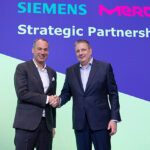
Smart Digital Manufacturing is the Heavy Point in Siemens’ Partnership With Global Pharmaceutical Giant...
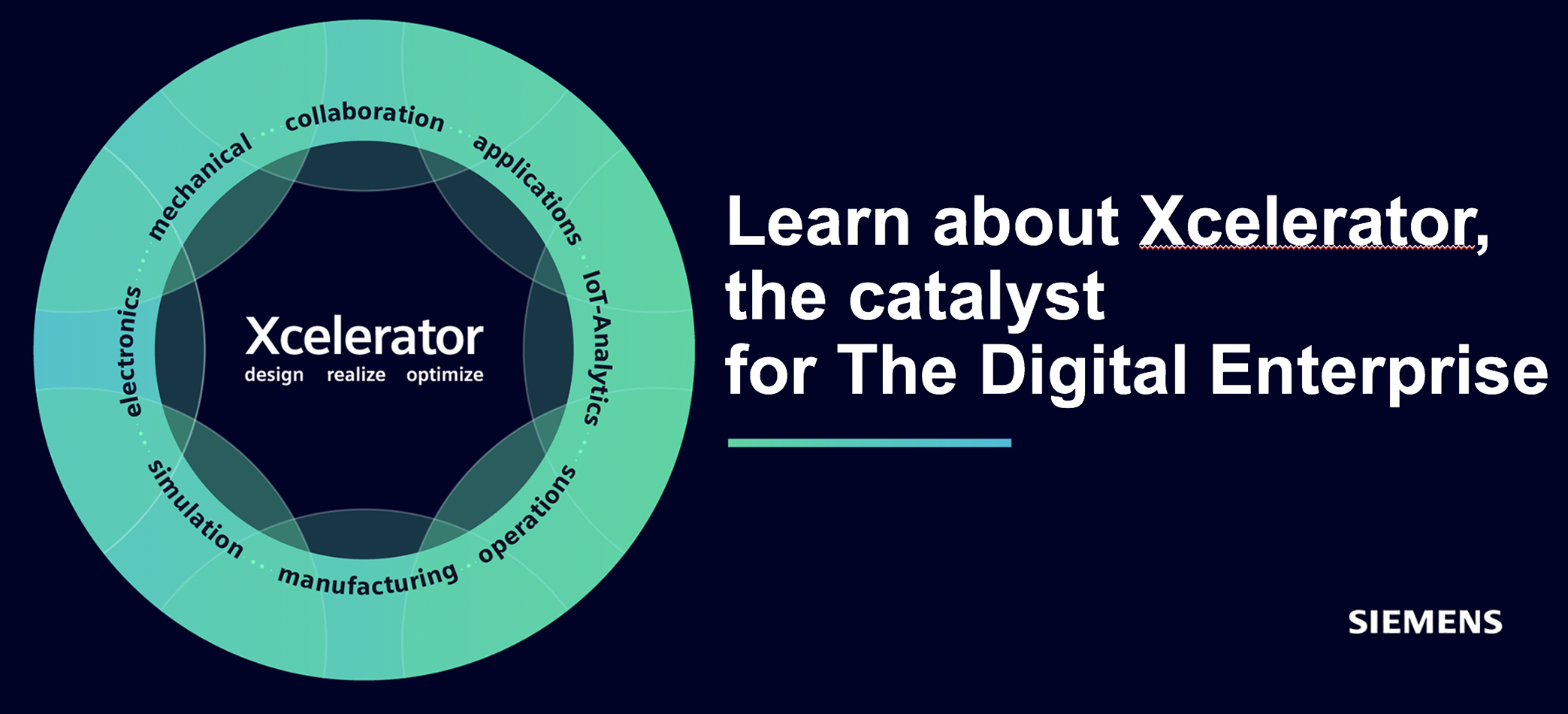
From MASS PRODUCTION to MODULAR PRODUCT REAZLIZATION built on the XCELERATOR PLATFORM sets a NEW STANDARD. Siemens Digital Industries and the pharmaceutical giant Merck have signed an MoU (Memorandum of Understanding) which involves sharpening production in three of Merck's business sectors: Health, Life Science and Electronics. The background is that Siemens, after introducing the Xcelerator platform at the company, together with Merck will take smart manufacturing to the next level. You can call it a partnership in that the companies will jointly develop the solutions, but a natural implication is also that Merck will invest in Siemens Digital Industries' solutions.
“By combining Merck's expertise in these important sectors with Siemens' cutting-edge hard and software, we are moving from a concept of mass production to one built on a modular approach, which saves time and increases flexibility. With the now signed MoU agreement, we are striving to set new global standards for future production," says Cedrik Neike, CEO of Siemens Digital Industries and board member of Siemens AG. From Merck, it was Kai Beckmann, CEO Electronics business and board member of the company, who signed the MoU.
An overall conclusion is that the MoU is about driving the digital transformation further at Merck through strategic projects in all three of the above-mentioned business sectors.
In the press material, the matter is described as an effort to reach the next level of automation. With Siemens and the Xcelerator platform as preferred partners/solution in this development work, Merck's Kai Beckmann claims that the goal is to bring new products to market faster, more cost-effectively and with an increased focus on sustainability. They talk about "Smartfacturing", which is an abbreviation for Smart Manufacturing.
"Smartfacturing is crucial to achieving the goals, and Siemens is a perfectively reasonable partner in this journey. Their deep domain expertise and longstanding familiarity with Merck uniquely positions them to rapidly implement and scale our vision," notes Beckman.
Central to this partnership is Siemens Xcelerator platform, which will provide Merck with the necessary soft and hardware solutions. A key factor is modular production based on the "plug & produce principle". This approach allows individual process modules to be easily added, removed or reconfigured, which significantly reduces time to market, increases flexibility, lowers investment costs and can help reduce CO2 emissions. This way of laying out the components of the product development work is very close to the so-called Product Innovation Platforms (PIP) jointly introduced by PLM analyst firms Gartner and CIMdata. A PIP was defined as a set of modular and easily exchangeable functional domains developed around processes, life cycles, technical domains, profitability management, quality and regulatory compliance.
Click on the headline to read the full article on PLM&ERP News.
“By combining Merck's expertise in these important sectors with Siemens' cutting-edge hard and software, we are moving from a concept of mass production to one built on a modular approach, which saves time and increases flexibility. With the now signed MoU agreement, we are striving to set new global standards for future production," says Cedrik Neike, CEO of Siemens Digital Industries and board member of Siemens AG. From Merck, it was Kai Beckmann, CEO Electronics business and board member of the company, who signed the MoU.
An overall conclusion is that the MoU is about driving the digital transformation further at Merck through strategic projects in all three of the above-mentioned business sectors.
In the press material, the matter is described as an effort to reach the next level of automation. With Siemens and the Xcelerator platform as preferred partners/solution in this development work, Merck's Kai Beckmann claims that the goal is to bring new products to market faster, more cost-effectively and with an increased focus on sustainability. They talk about "Smartfacturing", which is an abbreviation for Smart Manufacturing.
"Smartfacturing is crucial to achieving the goals, and Siemens is a perfectively reasonable partner in this journey. Their deep domain expertise and longstanding familiarity with Merck uniquely positions them to rapidly implement and scale our vision," notes Beckman.
Central to this partnership is Siemens Xcelerator platform, which will provide Merck with the necessary soft and hardware solutions. A key factor is modular production based on the "plug & produce principle". This approach allows individual process modules to be easily added, removed or reconfigured, which significantly reduces time to market, increases flexibility, lowers investment costs and can help reduce CO2 emissions. This way of laying out the components of the product development work is very close to the so-called Product Innovation Platforms (PIP) jointly introduced by PLM analyst firms Gartner and CIMdata. A PIP was defined as a set of modular and easily exchangeable functional domains developed around processes, life cycles, technical domains, profitability management, quality and regulatory compliance.
Click on the headline to read the full article on PLM&ERP News.
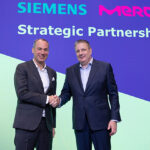
Smart digital tillverkning är en verkligt tung poäng i Siemens partnerskap med globala läkemedelsjätten...
Från massproduktion till modulär produktframtagning byggt på XCELERATOR-PLATTFORMEN sätter en NY STANDARD. Siemens Digital Industries och läkemedelsjätten Merck har signerat ett MoU (Memorandum of Understanding) som går ut på att vässa produktion inom tre av Mercks affärssektorer: Hälsa, Life Science och Electronics. Bakgrunden är att Siemens, efter att ha infört Xcelerator-plattformen på bolaget, tillsammans med Merck ska ta smart tillverkning till nästa nivå. Man kan kalla det för ett partnerskap i det att bolagen tillsammans ska utveckla lösningarna, men en naturlig innebörd är också att Merck kommer att investera i Siemens Digital Industries lösningar.
”Genom att kombinera Mercks expertis inom dessa viktiga sektorer med Siemens banbrytande hård- och mjukvara övergår vi från ett koncept med massproduktion till ett koncept byggt på ett modulärt tillvägagångssätt, vilket sparar tid och ökar flexibiliteten. Med det nu signerade MoU-avtalet strävar vi nu efter att sätta nya globala standarder för den framtida produktionen,” säger Cedrik Neike, CEO för Siemens Digital Industries och styrelsemedlem i Siemens AG. Från Merck var det Kai Beckmann, CEO Electronics business och styrelsemedlem i bolaget, som signerade MoU-avtalet.
Det hela handlar alltså i stor utsträckning om att driva den digitala transformationen vidare på Merck genom strategiska projekt inom alla de tre ovan angivna affärssektorerna.
I pressmaterialet beskrivs saken som en strävan att nå nästa nivå av automation. Med Siemens och Xcelerator-plattformen som föredragna partners/lösningar i detta utvecklingsarbete hävdar Mercks Kai Beckmann att målet är att få ut nya produkter på marknaden snabbare, mer kostnadseffektivt och med ett ökat fokus på hållbarhet. Man talar om ”Smartfacturing”, vilket är en förkortning för Smart Manufacturing.
”Smartfacturing är avgörande för att uppnå målen, och Siemens är en synnerligen rimlig partnern i denna resa. Deras djupa domänexpertis och mångåriga förtrogenhet med Merck positionerar dem unikt för att snabbt implementera och skala vår vision," konstaterar Beckman.
Centralt i detta partnerskap är Siemens Xcelerator-plattform, som kommer att förse Merck med de mjuk- och hårdvarulösningar som behövs. En nyckelfaktor är modulär produktion baserad på ”plug & produce-principen”. Detta tillvägagångssätt gör att individuella processmoduler enkelt kan läggas till, tas bort eller omkonfigureras, vilket avsevärt minskar tiden till marknaden, ökar flexibiliteten, sänker investeringskostnaderna och kan bidra till att minska CO2-utsläppen. Detta sätt att lägga upp komponenterna i produktframtagnings-arbetet ligger mycket nära de s k Product Innovation Plattformar (PIP) som de ledande PLM-analytikerna på Gartner och CIMdata gemensamt introducerade 2014. En produktinnovations-plattform definierades som en uppsättning modulära och lätt utbytara funktionella domäner som utvecklas kring processer, livscyklar och tekniska domäner som systemidéer, också med sånt som lönsamhetshantering, kvalitet och regelefterlevnad.
Klicka på rubriken för att läsa mer om detta på PLM&ERP News.
”Genom att kombinera Mercks expertis inom dessa viktiga sektorer med Siemens banbrytande hård- och mjukvara övergår vi från ett koncept med massproduktion till ett koncept byggt på ett modulärt tillvägagångssätt, vilket sparar tid och ökar flexibiliteten. Med det nu signerade MoU-avtalet strävar vi nu efter att sätta nya globala standarder för den framtida produktionen,” säger Cedrik Neike, CEO för Siemens Digital Industries och styrelsemedlem i Siemens AG. Från Merck var det Kai Beckmann, CEO Electronics business och styrelsemedlem i bolaget, som signerade MoU-avtalet.
Det hela handlar alltså i stor utsträckning om att driva den digitala transformationen vidare på Merck genom strategiska projekt inom alla de tre ovan angivna affärssektorerna.
I pressmaterialet beskrivs saken som en strävan att nå nästa nivå av automation. Med Siemens och Xcelerator-plattformen som föredragna partners/lösningar i detta utvecklingsarbete hävdar Mercks Kai Beckmann att målet är att få ut nya produkter på marknaden snabbare, mer kostnadseffektivt och med ett ökat fokus på hållbarhet. Man talar om ”Smartfacturing”, vilket är en förkortning för Smart Manufacturing.
”Smartfacturing är avgörande för att uppnå målen, och Siemens är en synnerligen rimlig partnern i denna resa. Deras djupa domänexpertis och mångåriga förtrogenhet med Merck positionerar dem unikt för att snabbt implementera och skala vår vision," konstaterar Beckman.
Centralt i detta partnerskap är Siemens Xcelerator-plattform, som kommer att förse Merck med de mjuk- och hårdvarulösningar som behövs. En nyckelfaktor är modulär produktion baserad på ”plug & produce-principen”. Detta tillvägagångssätt gör att individuella processmoduler enkelt kan läggas till, tas bort eller omkonfigureras, vilket avsevärt minskar tiden till marknaden, ökar flexibiliteten, sänker investeringskostnaderna och kan bidra till att minska CO2-utsläppen. Detta sätt att lägga upp komponenterna i produktframtagnings-arbetet ligger mycket nära de s k Product Innovation Plattformar (PIP) som de ledande PLM-analytikerna på Gartner och CIMdata gemensamt introducerade 2014. En produktinnovations-plattform definierades som en uppsättning modulära och lätt utbytara funktionella domäner som utvecklas kring processer, livscyklar och tekniska domäner som systemidéer, också med sånt som lönsamhetshantering, kvalitet och regelefterlevnad.
Klicka på rubriken för att läsa mer om detta på PLM&ERP News.
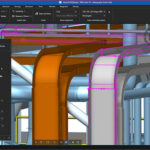
Industrial Design With New Interface, Integration for Digital Twins and Extended APIs in Intergraph...
Provides an ITERATIVE DESIGN ENVIRONMENT. A heavy point in all types of digital design is to make them fully visible to stakeholders at all times. The reasons are several, but great aspects are about being able to make early and well-informed decisions, this by allowing model review with and by key stakeholders at various design stages. Facilitating collaboration across disciplines for design reviews is another.
When it comes to industrial facilities, offshore, shipbuilding and the metal and mining industry, Hexagon's Intergraph Smart 3D is a frequently used solution. This software for designing industrial facilities of virtually any size is tailored to these pieces and built on an interesting engineering approach that utilizes concurrent design, rules, relationships and real-time automation.
Hexagon's Asset Lifecycle Intelligence division recently launched the 14th and latest version of Intergraph Smart 3D. Developed to handle all major project needs, the release offers comprehensive and broad facility design functionality with lifelike 3D renderings showing the finished building. The version supports the entire life cycle of the facility in terms of design, procurement and construction (EPC) companies as well as owners and operators.
Cheryl LaGrone, Executive Product Manager, Hexagon, claims the solution breaks down barriers found in more traditional technology:
“Exactly, and this entails and provides a truly iterative design environment. In the new version, we've listened to our customers and delivered a modern, intuitive interface that increases productivity and provides value at every stage of the project lifecycle. Whether it's customizing commands, managing complex 3D models or streamlining deliveries, our focus is on enabling users to work smarter and faster, providing a competitive edge to EPCs and operators and owners alike,” she says.
An interesting aspect of Smart 3D is about how it works in integrated environments. One such point is about Intergraph Smart 3D re-use of data in Smart 3D that has already been typed into authoring tools such as SmartPlant P&ID and SmartPlant Instrumentation. In this integrated environment, data is published to and retrieved from a central repository. During a publish operation, drawings, reports, or 3D model data is sent to the repository. During a retrieve operation, the design basis is brought into the software and then related to 3D objects. Design basis is the term used for piping, instrumentation, electrical, and equipment data from other applications outside Smart 3D. The role of SmartPlant Foundation is crucial in an integrated environment, not only from the standpoint of managing the transfer of the data but also setting up the project structure.
Click on the headline to read the full article on PLM&ERP News.
When it comes to industrial facilities, offshore, shipbuilding and the metal and mining industry, Hexagon's Intergraph Smart 3D is a frequently used solution. This software for designing industrial facilities of virtually any size is tailored to these pieces and built on an interesting engineering approach that utilizes concurrent design, rules, relationships and real-time automation.
Hexagon's Asset Lifecycle Intelligence division recently launched the 14th and latest version of Intergraph Smart 3D. Developed to handle all major project needs, the release offers comprehensive and broad facility design functionality with lifelike 3D renderings showing the finished building. The version supports the entire life cycle of the facility in terms of design, procurement and construction (EPC) companies as well as owners and operators.
Cheryl LaGrone, Executive Product Manager, Hexagon, claims the solution breaks down barriers found in more traditional technology:
“Exactly, and this entails and provides a truly iterative design environment. In the new version, we've listened to our customers and delivered a modern, intuitive interface that increases productivity and provides value at every stage of the project lifecycle. Whether it's customizing commands, managing complex 3D models or streamlining deliveries, our focus is on enabling users to work smarter and faster, providing a competitive edge to EPCs and operators and owners alike,” she says.
An interesting aspect of Smart 3D is about how it works in integrated environments. One such point is about Intergraph Smart 3D re-use of data in Smart 3D that has already been typed into authoring tools such as SmartPlant P&ID and SmartPlant Instrumentation. In this integrated environment, data is published to and retrieved from a central repository. During a publish operation, drawings, reports, or 3D model data is sent to the repository. During a retrieve operation, the design basis is brought into the software and then related to 3D objects. Design basis is the term used for piping, instrumentation, electrical, and equipment data from other applications outside Smart 3D. The role of SmartPlant Foundation is crucial in an integrated environment, not only from the standpoint of managing the transfer of the data but also setting up the project structure.
Click on the headline to read the full article on PLM&ERP News.


Industriell design med nytt gränssnitt, integration för digitala tvillingar och utökade APIer i nya...
Om HEXAGONs nya version av INTERGRAPH Smart 3D V14. En tung poäng inom alla typer av digital design är att göra konstruktioner fullt synliga för intressenter hela tiden. Orsakerna är flera, men goda skäl handlar om att kunna ta tidiga och välgrundade beslut, detta genom att tillåta modellgranskning med och av och nyckelintressenter i olika designstadier. Att underlätta samarbete över discipliner för designgranskningar är ett annat.
När det gäller industri-anläggningar, offshore, varvsindustri och metall- och gruvindustri är Hexagons Intergraph Smart 3D en ofta använd lösning. Denna mjukvara för konstruktion av industrianläggningar i egentligen alla storlekar är skräddarsydd för de här bitarna och byggd på en intressant ingenjörsmetod som utnyttjar samtidig design, regler, relationer och automation i realtid.
I dagarna har Hexagons division för Asset Lifecycle Intelligence lanserat den 14:e och senaste versionen av Intergraph Smart 3D. Releasen, som är utvecklad för att kunna hantera alla viktiga projektbehov, erbjuder omfattande och bred funktionalitet för design av anläggningar med verklighetstrogna 3D-framställningar som visar den färdiga byggnaden. Versionen stöder hela livscykeln för anläggningen vad gäller konstruktions-, upphandlings- och byggnads- (EPC) företag samt ägare och operatörer.
Cheryl LaGrone, Executive Product Manager, Hexagon, hävdar att lösningen bryter ner barriärer som finns i mer traditionell teknik:
”Precis, och detta medför och ger en verkligt iterativ konstruktionsmiljö. I den nya versionen har vi lyssnat på våra kunder och levererat ett modernt, intuitivt gränssnitt som ökar produktiviteten och ger värde i varje steg av projektets livscykel. Oavsett om det handlar om att anpassa kommandon, hantera komplexa 3D-modeller eller effektivisera leveranserna, ligger vårt fokus på att göra det möjligt för användarna att arbeta smartare och snabbare och ge en konkurrensfördel till både EPCer och operatörer och ägare,” säger hon.
PLM&ERP News har i dagens artikel tittat på de viktigaste nyheterna i lösningen. Klicka på rubriken för att läsa hela artikeln.
När det gäller industri-anläggningar, offshore, varvsindustri och metall- och gruvindustri är Hexagons Intergraph Smart 3D en ofta använd lösning. Denna mjukvara för konstruktion av industrianläggningar i egentligen alla storlekar är skräddarsydd för de här bitarna och byggd på en intressant ingenjörsmetod som utnyttjar samtidig design, regler, relationer och automation i realtid.
I dagarna har Hexagons division för Asset Lifecycle Intelligence lanserat den 14:e och senaste versionen av Intergraph Smart 3D. Releasen, som är utvecklad för att kunna hantera alla viktiga projektbehov, erbjuder omfattande och bred funktionalitet för design av anläggningar med verklighetstrogna 3D-framställningar som visar den färdiga byggnaden. Versionen stöder hela livscykeln för anläggningen vad gäller konstruktions-, upphandlings- och byggnads- (EPC) företag samt ägare och operatörer.
Cheryl LaGrone, Executive Product Manager, Hexagon, hävdar att lösningen bryter ner barriärer som finns i mer traditionell teknik:
”Precis, och detta medför och ger en verkligt iterativ konstruktionsmiljö. I den nya versionen har vi lyssnat på våra kunder och levererat ett modernt, intuitivt gränssnitt som ökar produktiviteten och ger värde i varje steg av projektets livscykel. Oavsett om det handlar om att anpassa kommandon, hantera komplexa 3D-modeller eller effektivisera leveranserna, ligger vårt fokus på att göra det möjligt för användarna att arbeta smartare och snabbare och ge en konkurrensfördel till både EPCer och operatörer och ägare,” säger hon.
PLM&ERP News har i dagens artikel tittat på de viktigaste nyheterna i lösningen. Klicka på rubriken för att läsa hela artikeln.

Does SAP Cloud PLM Have a Future in the Mid-Market?
"TOUGH to BREAK INTO a MARKET that is DOMINATED by SIEMENS, DASSAULT, PTC, ARAS and AUTODESK." What does it look like for business system giant SAP when it comes to PLM for mid-market companies? The analyst CIMdata has looked into the matter in a recently published commentary.
The background is that even mid-market companies, just like the big players, have to face increasing product complexity. This, of course, requires a range of capabilities, somewhat depending on what the PLM definition looks like. But for the sake of simplicity, let's go with CIMdata's definition, which in brief is as follows: PLM is a strategic method to support the collaboration, management, dissemination and use of product definition information from idea to life cycle to integrate people, processes, business systems, and information.
That said, a PLM system should be comprehensively built from a range of enabling technologies such as product data management (PDM), CAD, collaboration, visualization, digital manufacturing and simulation & analysis. In light of the increasing product complexity–above all in terms of electricity, electronics and software–integrated digital tools like EDA (Electronic Design Automation) and ALM (Application Lifecycle Management) should also be part of the lineup.
In this, CIMdata writes that SAP has most of what is needed: "SAP’s PLM software provides all the core PLM capabilities product-centric companies require." The analyst includes things like requirements/specification management, CAD integration, system development, collaboration, BOM, document, variant, and change management, to name the most important.
All that sounds good in theory, but the reality is that SAP's success on the PLM side is limited. It is certainly the world's dominant player in ERP and in terms of connections between the PLM and ERP systems related to manufacturing, such as mBOMs (manufacturing BOMs) and business transaction-related efforts in this context. But when it comes to product development, eBOMs (engineering BOMs) and the like, players such as Dassault, Siemens, PTC, Aras PLM, Autodesk and others completely dominate the market.
The reality is that SAP's footprint in mid-market PLM is small. In the Nordic countries, there are certainly some customers in industries such as food & beverages, while on the manufacturing side, they are less common. Tetra Pak is one example–albeit with PTC's PDM Link as integrated PLM/PDM support–and a rather problematic installation at Sandvik Coromant is another. But generally SAP PLM is rare.
PLM&ERP News has previously reported on SAP and the reseller deal it has had for 3 years regarding Siemens PLM package, Teamcenter. The question now is whether SAP tries to reposition itself to a more offensive approach towards the mid-market as the cloud gains entry as a technical platform. In any case, CIMdata is impressed by SAP's cloud-based SaaS PLM offering based on microservices. How it goes remains to be seen. Based on its historical efforts as a PLM developer, SAP is likely to meet tough challenges – why?
Click on the headline to read the full article on PLM&ERP News.
The background is that even mid-market companies, just like the big players, have to face increasing product complexity. This, of course, requires a range of capabilities, somewhat depending on what the PLM definition looks like. But for the sake of simplicity, let's go with CIMdata's definition, which in brief is as follows: PLM is a strategic method to support the collaboration, management, dissemination and use of product definition information from idea to life cycle to integrate people, processes, business systems, and information.
That said, a PLM system should be comprehensively built from a range of enabling technologies such as product data management (PDM), CAD, collaboration, visualization, digital manufacturing and simulation & analysis. In light of the increasing product complexity–above all in terms of electricity, electronics and software–integrated digital tools like EDA (Electronic Design Automation) and ALM (Application Lifecycle Management) should also be part of the lineup.
In this, CIMdata writes that SAP has most of what is needed: "SAP’s PLM software provides all the core PLM capabilities product-centric companies require." The analyst includes things like requirements/specification management, CAD integration, system development, collaboration, BOM, document, variant, and change management, to name the most important.
All that sounds good in theory, but the reality is that SAP's success on the PLM side is limited. It is certainly the world's dominant player in ERP and in terms of connections between the PLM and ERP systems related to manufacturing, such as mBOMs (manufacturing BOMs) and business transaction-related efforts in this context. But when it comes to product development, eBOMs (engineering BOMs) and the like, players such as Dassault, Siemens, PTC, Aras PLM, Autodesk and others completely dominate the market.
The reality is that SAP's footprint in mid-market PLM is small. In the Nordic countries, there are certainly some customers in industries such as food & beverages, while on the manufacturing side, they are less common. Tetra Pak is one example–albeit with PTC's PDM Link as integrated PLM/PDM support–and a rather problematic installation at Sandvik Coromant is another. But generally SAP PLM is rare.
PLM&ERP News has previously reported on SAP and the reseller deal it has had for 3 years regarding Siemens PLM package, Teamcenter. The question now is whether SAP tries to reposition itself to a more offensive approach towards the mid-market as the cloud gains entry as a technical platform. In any case, CIMdata is impressed by SAP's cloud-based SaaS PLM offering based on microservices. How it goes remains to be seen. Based on its historical efforts as a PLM developer, SAP is likely to meet tough challenges – why?
Click on the headline to read the full article on PLM&ERP News.

”Today there is more money in the Aerospace & Defense industry than people to...
Meet TODD TUTHILL, VP of Aerospace & Defense (A&D) at Siemens Digital Industries Software, in today's guest column. In a world where the global security situation has been seriously sharpened in recent years, one effect is that more money than ever is allocated to the aerospace and defense industry. At the same time, it is becoming increasingly clear that money is far from solving everything. Just like in so many other industries, there is, among other things, a demographic problem: People with specialist knowledge are getting older while the flow of human competence into the industry is decreasing, which will have effects in waves for at least one to two decades to come.
According to a survey quoted by today's guest columnist on PLM&ERP News, Todd Tuthill, VP of Aerospace and Defense at Siemens Digital Industries Software, nearly 30 percent of the industry's workforce is over 55 years old. What happens to the knowledge and experience bank these individuals represent when they retire and walk out the compoany doors? This is a problem not only for the bigger players but perhaps even more so for smaller companies.
There are several central issues in this: Can educational efforts help? But even more important: Can digitization compensate for this development setback? Tuthill believes that this is the case:
"Digital transformation is not unfamiliar to the A&D industry. Companies have been implementing it in various forms for the past two decades. However, the current speed and scale of this transformation are not enough to effectively combat the industry’s workforce issues. To help companies assess where they are in their digital transformation journeys, we developed a five-step framework of digital transformation maturity,” states Siemens Digital Industries Software's VP.
It is also clear that Todd Tuthill knows what he is talking about. He joined Siemens in June 2022 after more than 30 years in the aerospace and defense industry. His engineering background is in systems design with functional engineering and program management roles and a strong vision for digital transformation. Experience-wise, his expertise spans all aspects of A&D programs, including design, model-based systems engineering, software development, lean product development, supplier/partner management, and program management. Furthermore, his career in the industry spans a number of well-known major players, such as McDonnell Douglas/Boeing, Moog, Raytheon and, as I said, Siemens.
In his new role at Siemens, Tuthill is a passionate advocate for the development of digital transformation within the A&D industry.
"Embracing the maturity of digital transformation offsets the effects of the A&D industry's labor shortage by changing how work is done," he notes.
Click on the headline to read the full article on PLM&ERP News.
According to a survey quoted by today's guest columnist on PLM&ERP News, Todd Tuthill, VP of Aerospace and Defense at Siemens Digital Industries Software, nearly 30 percent of the industry's workforce is over 55 years old. What happens to the knowledge and experience bank these individuals represent when they retire and walk out the compoany doors? This is a problem not only for the bigger players but perhaps even more so for smaller companies.
There are several central issues in this: Can educational efforts help? But even more important: Can digitization compensate for this development setback? Tuthill believes that this is the case:
"Digital transformation is not unfamiliar to the A&D industry. Companies have been implementing it in various forms for the past two decades. However, the current speed and scale of this transformation are not enough to effectively combat the industry’s workforce issues. To help companies assess where they are in their digital transformation journeys, we developed a five-step framework of digital transformation maturity,” states Siemens Digital Industries Software's VP.
It is also clear that Todd Tuthill knows what he is talking about. He joined Siemens in June 2022 after more than 30 years in the aerospace and defense industry. His engineering background is in systems design with functional engineering and program management roles and a strong vision for digital transformation. Experience-wise, his expertise spans all aspects of A&D programs, including design, model-based systems engineering, software development, lean product development, supplier/partner management, and program management. Furthermore, his career in the industry spans a number of well-known major players, such as McDonnell Douglas/Boeing, Moog, Raytheon and, as I said, Siemens.
In his new role at Siemens, Tuthill is a passionate advocate for the development of digital transformation within the A&D industry.
"Embracing the maturity of digital transformation offsets the effects of the A&D industry's labor shortage by changing how work is done," he notes.
Click on the headline to read the full article on PLM&ERP News.

”Det finns idag mer pengar i Aerospace & Defense-branschen än människor att spendera dem”
Möt TODD TUTHILL, VP för Aerospace & Defense (A&D) i Siemens Digital Industries Software, i dagens gästkrönika. I en värld där det säkerhetspolitiska läget spetsats till ordentligt de senaste åren är en effekt att mer pengar än någonsin läggs på militära utgifter främst allokerade till flyg- och försvarsindustrin. Samtidigt blir det allt tydligare att pengar långt ifrån löser allt. Precis som i så många andra branscher finns bl a ett demografiskt problem: Folk med specialistkunskaper blir äldre samtidigt som det humana kompetensflödet in i branschen minskar, vilket kommer att få effekter i vågor under minst ett till två decennier framöver.
Enligt en undersökning citerad av dagens gästkrönikör på PLM&ERP News, Todd Tuthill, VP för Aerospace och Defense på Siemens Digital Industries Software, är närmare 30 procent av branschens arbetskraft över 55 år. Vad händer med den kunskaps- och erfarenhetsbank som dessa individer representerar när de pensioneras och går ut genom företagsdörrarna? Detta är ett problem inte bara för de större spelarna utan kanske i ännu större omfattning för mindre företag.
Det finns flera centrala frågeställningar i detta: Hur långt förslår utbildningsinsatser? Men ännu viktigare: Kan digitaliseringen kompensera? Tuthill menar att så är fallet:
”Digital transformation är inte främmande för A&D-branschen. Företag har implementerat det i olika former under de senaste två decennierna. Men den nuvarande hastigheten och omfattningen av denna omvandling är dock inte tillräckligt för att effektivt bekämpa branschens arbetskraftsfrågor. För att hjälpa företag att bedöma var de befinner sig i sina digitala transformationsresor, utvecklade vi ett femstegs ramverk för mognad i digital transformation,” skriver Siemens Digital Industries Softwares VP.
Klart är också att Todd Tuthill vet vad han talar om. Han började på Siemens i juni 2022 efter mer än 30 år i flyg- och försvarsindustrin. Hans ingenjörsbakgrund är inom systemdesign med funktionella ingenjörs- och programledarroller och en stark vision för digital transformation. Erfarenhetsmässigt omfattar hans kompetens alla aspekter av A&D-program, inklusive design, modellbaserad systemteknik, mjukvaruutveckling, lean produktutveckling, leverantörs-/partnerhantering och programhantering. Vidare sträcker sig hans karriär i branschen över en rad välkända stora aktörer, som McDonnell Douglas/Boeing, Moog, Raytheon och som sagt, Siemens.
I sin nya roll på Siemens är Tuthill en passionerad förespråkare för utvecklingen av digital transformation inom A&D-branschen.
”Att anamma mognad för digital transformation kompenserar effekterna av A&D-branschens brist på arbetskraft, genom att förändra hur arbetet utförs,” konstaterar han.
Klicka på rubriken för att läsa mer på PLM&ERP News.
Enligt en undersökning citerad av dagens gästkrönikör på PLM&ERP News, Todd Tuthill, VP för Aerospace och Defense på Siemens Digital Industries Software, är närmare 30 procent av branschens arbetskraft över 55 år. Vad händer med den kunskaps- och erfarenhetsbank som dessa individer representerar när de pensioneras och går ut genom företagsdörrarna? Detta är ett problem inte bara för de större spelarna utan kanske i ännu större omfattning för mindre företag.
Det finns flera centrala frågeställningar i detta: Hur långt förslår utbildningsinsatser? Men ännu viktigare: Kan digitaliseringen kompensera? Tuthill menar att så är fallet:
”Digital transformation är inte främmande för A&D-branschen. Företag har implementerat det i olika former under de senaste två decennierna. Men den nuvarande hastigheten och omfattningen av denna omvandling är dock inte tillräckligt för att effektivt bekämpa branschens arbetskraftsfrågor. För att hjälpa företag att bedöma var de befinner sig i sina digitala transformationsresor, utvecklade vi ett femstegs ramverk för mognad i digital transformation,” skriver Siemens Digital Industries Softwares VP.
Klart är också att Todd Tuthill vet vad han talar om. Han började på Siemens i juni 2022 efter mer än 30 år i flyg- och försvarsindustrin. Hans ingenjörsbakgrund är inom systemdesign med funktionella ingenjörs- och programledarroller och en stark vision för digital transformation. Erfarenhetsmässigt omfattar hans kompetens alla aspekter av A&D-program, inklusive design, modellbaserad systemteknik, mjukvaruutveckling, lean produktutveckling, leverantörs-/partnerhantering och programhantering. Vidare sträcker sig hans karriär i branschen över en rad välkända stora aktörer, som McDonnell Douglas/Boeing, Moog, Raytheon och som sagt, Siemens.
I sin nya roll på Siemens är Tuthill en passionerad förespråkare för utvecklingen av digital transformation inom A&D-branschen.
”Att anamma mognad för digital transformation kompenserar effekterna av A&D-branschens brist på arbetskraft, genom att förändra hur arbetet utförs,” konstaterar han.
Klicka på rubriken för att läsa mer på PLM&ERP News.

PTC and ALM: The Software Revolution in Automotive Leads to ”Seismic Changes in the...
PTC strengthens ALM in the Nordics via NEW PARTNERSHIP with German NANGA SYSTEMS. What does the future look like for PLM developer PTC in terms of software design management solutions and SDVs? The question is relevant, not least in that the ALM domain, Application Lifecycle Management, together with the electrical and electronics side, is one of the absolute fastest growing areas of the past decade in terms of share of development work.
There are no small changes coming in these tracks either, whose processes at the OEM level are starting to gain real momentum. Mercedes Benz CSO, Chief Software Officer, Magnus Östberg calls it, "seismic changes in the way of working", claiming that no one will be able to stand aside from the development on the software side. Volkswagen (VW), Mercedes Benz (MB), Volvo Cars and other big players are good examples of places where the winds of change are felt. Today, in this context, we speak of SDVs, Software Defined Vehicles.
For OEMs of the rank of VWs, MBs and Volvos with long analog industrial histories, the changes are no walk in the park. But the dynamics of development are inexorable; you have to move forward: SDV platforms do not only belong to the future in automotive and transport, "it applies here and now," states PTC's Nordic manager, Filip Stål in today's interview on PLM&ERP News. VW's forecasts back in 2020 were that a car would need to integrate up to 1 billion lines of code by 2025. "This position car manufacturers as software companies," says Stål, quoting former VW boss Herbert Diess, who also predicted that over 90% of automotive innovation will to derive from software.
At VW, they are thus in full steam to build a software management infrastructure system, and PTC announced late last year that the company's Codebeamer and Windchill software will play important roles in supporting the development and integration of software to enable greater efficiency in The VW Group engineering practice for requirements management, testing, synchronization, and release control.
"Software and electrification represent the future of the automotive industry, and we are leveraging these two factors together to better meet customer expectations," stated VW's Klaus Blüm, head of the company's Group IT Products & Architecture. He added: "Volkswagen Group sees PTC as a strategic supplier for our group-wide product development strategy, and we look forward to making Codebeamer a successful tool for our software development teams."
In parallel, it’s clear that the development of ALM solutions in all industrial environments, not just automotive, requires deep competence and capable partners. PTC is known for partner-side excellence in most sub-PLM domains, from CAD and PDM to IIoT, AR and service management, but what about ALM excellence?
In addition to partners who are already on the ALM side, PTC invest heavily in strengthening the area even further. This summer's news is that the German ALM specialist Nanga System, which currently has consultants working within VW, will play an important role in this: PTC is establishing a new Nordic partnership with Nanga Systems, under the leadership of experienced ALM-man Roger Thyrell.
Why is this happening now? What are the challenges? PLM&ERP News has discussed this with Filip Stål and Roger Thyrell. Click on the headline to read the full article.
There are no small changes coming in these tracks either, whose processes at the OEM level are starting to gain real momentum. Mercedes Benz CSO, Chief Software Officer, Magnus Östberg calls it, "seismic changes in the way of working", claiming that no one will be able to stand aside from the development on the software side. Volkswagen (VW), Mercedes Benz (MB), Volvo Cars and other big players are good examples of places where the winds of change are felt. Today, in this context, we speak of SDVs, Software Defined Vehicles.
For OEMs of the rank of VWs, MBs and Volvos with long analog industrial histories, the changes are no walk in the park. But the dynamics of development are inexorable; you have to move forward: SDV platforms do not only belong to the future in automotive and transport, "it applies here and now," states PTC's Nordic manager, Filip Stål in today's interview on PLM&ERP News. VW's forecasts back in 2020 were that a car would need to integrate up to 1 billion lines of code by 2025. "This position car manufacturers as software companies," says Stål, quoting former VW boss Herbert Diess, who also predicted that over 90% of automotive innovation will to derive from software.
At VW, they are thus in full steam to build a software management infrastructure system, and PTC announced late last year that the company's Codebeamer and Windchill software will play important roles in supporting the development and integration of software to enable greater efficiency in The VW Group engineering practice for requirements management, testing, synchronization, and release control.
"Software and electrification represent the future of the automotive industry, and we are leveraging these two factors together to better meet customer expectations," stated VW's Klaus Blüm, head of the company's Group IT Products & Architecture. He added: "Volkswagen Group sees PTC as a strategic supplier for our group-wide product development strategy, and we look forward to making Codebeamer a successful tool for our software development teams."
In parallel, it’s clear that the development of ALM solutions in all industrial environments, not just automotive, requires deep competence and capable partners. PTC is known for partner-side excellence in most sub-PLM domains, from CAD and PDM to IIoT, AR and service management, but what about ALM excellence?
In addition to partners who are already on the ALM side, PTC invest heavily in strengthening the area even further. This summer's news is that the German ALM specialist Nanga System, which currently has consultants working within VW, will play an important role in this: PTC is establishing a new Nordic partnership with Nanga Systems, under the leadership of experienced ALM-man Roger Thyrell.
Why is this happening now? What are the challenges? PLM&ERP News has discussed this with Filip Stål and Roger Thyrell. Click on the headline to read the full article.