

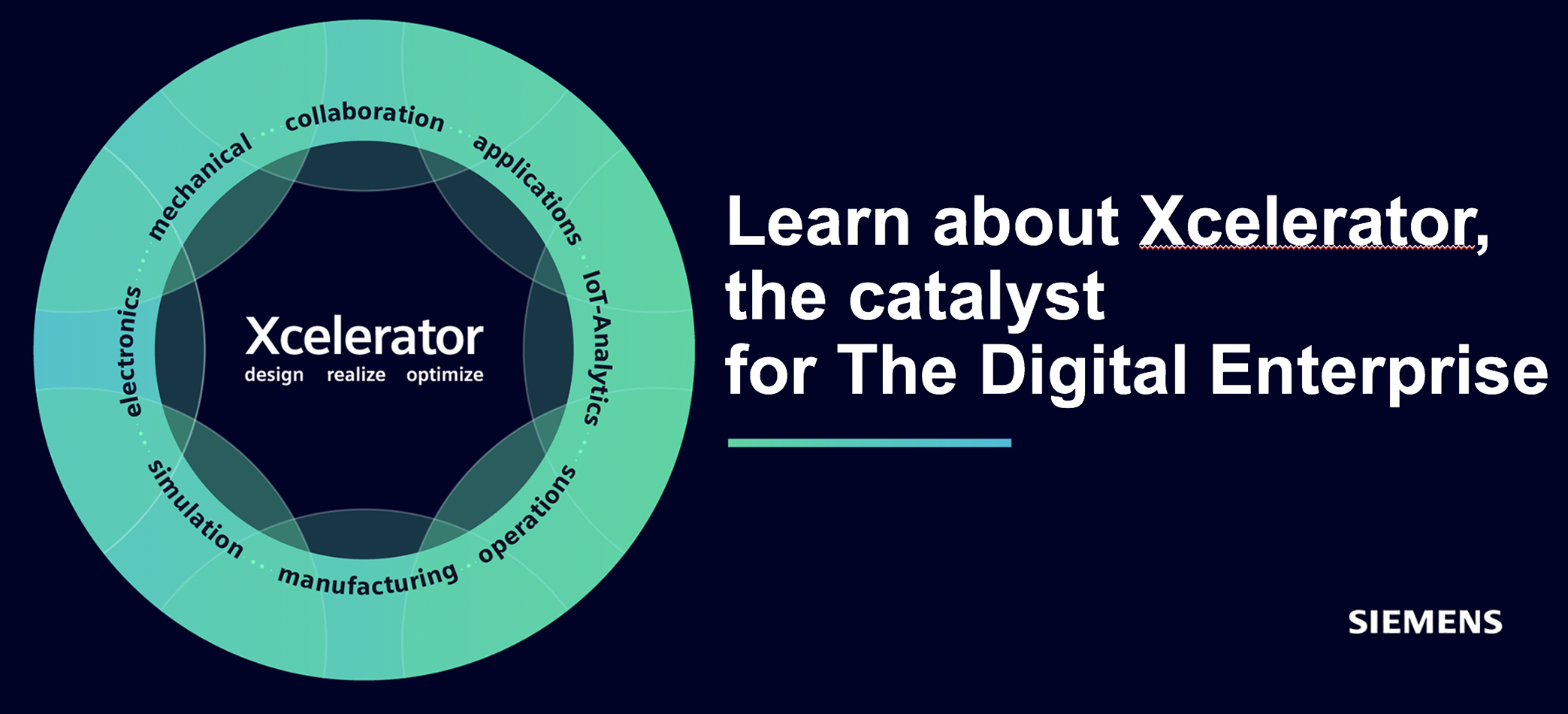



Fuse EDA AI System and an Integrated Way of Working
Siemens Fuse EDA (often referred to as Fuse EDA AI System) is an advanced, AI-powered electronic design automation (EDA) platform previously launched by Siemens Digital Industries Software. It is designed to revolutionize the way semiconductors (chips) and printed circuit boards (PCBs) are designed, verified, and manufactured by integrating generative and agentic AI directly into the workflow. With increasing complexity in chip design (such as 3D ICs and advanced nodes), traditional manual methods are no longer sufficient. Siemens introduced the Fuse EDA AI System to addres this complexity, reduce time-to-market, and increase efficiency across the entire product development cycle.
The new Questa One Agentic Toolkit works seamlessly with the Fuse EDA AI System, providing users who want a fully integrated Siemens experience with optimized performance and deep integration. This integration delivers the ’Fuse Advantage’—providing enhanced features and recognizing that customer choice is paramount, the framework-agnostic architecture protects existing investments, and integrates with other agentic platforms without compromise. Whether teams are using existing or new frameworks, Questa One Agentic workflows adapt to their environment with standardized interfaces that work consistently across platforms.

Siemens Advantage: Engines, Integration, and Transparency
These intelligent agentic workflows represent a fundamentally different approach than what is seen from startups and point solution providers. Siemens combines unique expertise in verification engines with deep AI integration and customer choice through three differentiating pillars:
1. Engine-native intelligence: Siemens creates both the industry-leading Questa One tools and the Model Context Protocols (MCPs) that expose them to agentic frameworks. Built using NVIDIA Llama Nemotron and NVIDIA NIM, these workflows understand verification status in real time and maintain comprehensive awareness and contextual intelligence relationships between designs, test benches, test plans, and specifications. This provides customers with autonomous goal-splitting, adaptive strategies for different runs, and sustained expertise building.
2. Coding application and platform independence: The solution works with common AI coding applications – including GitHub Copilot, Claude Code, Cursor, Cline, and Siemens’ own Fuse – and can be used in CLI mode or IDEs (e.g. VS-Code). While optimized for a seamless experience within Siemens’ Fuse framework for customers who want a fully integrated experience based on Siemens’ toolset, these workflows remain completely independent and adapt to the customer’s workflows rather than forcing customization.
3. Scalable, connected, data-driven foundation: Leveraging the connected verification ecosystem that dynamically orchestrates between tools, including Questa One, Tessent software for DFT, and the Veloce CS hardware-assisted verification and validation system, these agentic workflows provide AI-driven capabilities across the full design-to-signoff lifecycle.
Intelligent Agents and Verification Workflows
Questa One Agentic Toolkit launches with the following intelligent agents that demonstrate the potential of agentic AI:
– RTL Code Agent generates synthesizable RTL code from natural language descriptions while checking for coding violations and suggesting fixes in line with industry standards, providing engineers with clean, high-quality RTL for review.
– Lint Agent optimally configures lint analysis and reads existing RTL code to check for design errors and coding style violations. Designers review these results to implement automated, AI-driven fixes or exceptions, ensuring the highest quality RTL.
– CDC Agent optimally configures and then runs clock domain crossing verification on a design. Suggestions for configuration fine-tuning are made based on the results. This empowers designers to achieve the cleanest asynchronous designs by streamlining review and automating AI-driven fixes or exceptions.
– The Verification Planning Agent analyzes design specifications and automatically generates comprehensive verification plans. Engineers review and approve each step while the AI handles section structuring, creates detailed functional descriptions, defines scenarios, and checks strategies.
– The Troubleshooting Agent accelerates root cause analysis by intelligently correlating waveforms, assertions, coverage data, and log files. It identifies suspicious signal transitions, suggests potential failure mechanisms, and generates targeted troubleshooting scenarios for engineering reviews.
These agents leverage the toolbox’s MCPs to work directly with Questa One Verification IQ, Questa One SFV, Questa One Sim, and other tools, supported by curated prompt libraries developed by domain experts.
Partner and Customer Experiences
In the press release, Siemens has highlighted some customer experiences from early adopters, and they are already seeing significant productivity improvements:
NVIDIA. “The increasing complexity of modern chip design and verification requires a new generation of intelligent, agentic workflows that can reason through complex tasks while maintaining the highest levels of accuracy,” said Tim Costa, head of Industrial and Computational Engineering, NVIDIA. “By leveraging NVIDIA NIM and Nemotron’s reasoning models, Siemens is giving engineers a powerful, AI-powered foundation to accelerate the development of the world’s most advanced electronic systems.”
MediaTek: “The productivity gains delivered by the Questa One Agentic Toolkit were both immediate and significant,” said Akshay Aggarwal, Senior Director of Engineering, MediaTek. “Our engineers were able to become proficient in a matter of hours, despite limited prior exposure to the tool – they completed tasks that would normally take days and mastered workflows that would normally take weeks of training. Combined with MediaTek’s existing advanced internal verification methodology, the Questa One Agentic Toolkit not only bridged the knowledge gap but also fundamentally accelerated our operational processes.”
Tsavorite Scalable Intelligence: “By combining AI and verification, Questa One enabled our team to rapidly adopt full agentic formal property verification and automatically remediate issues with Lint Agent,” said Shalesh Thusoo, founder and CEO of Tsavorite Scalable Intelligence. “With the Agentic Toolkit, we leverage these capabilities and their productivity gains at the optimal point in our development flow.”
In Summary: Driving Productivity
In electronic design automation (EDA), agentic AI marks a paradigm shift from basic assistance to autonomous, goal-oriented systems. These agents reason, plan, and execute multi-step workflows across the entire semiconductor design and verification lifecycle.
This is a natural evolution, not a disruption; rather than merely reacting to prompts, Siemens’ agentic AI proactively manages complex tasks—from RTL generation to verification planning and debugging. This transition allows engineers to transcend manual testing, stepping into the role of “verification architects” who oversee AI-driven workflows to accelerate the speed, coverage, and quality of IC development.

