
Addnode slog förväntningarna för andra kvartalet 2025 och köper ny Autodesk-verksamhet i USA
Inte bara jätteaffärer som AUTODESKs övervägande att köpa PTC... Som vanligt händer det en hel del intressant på förvärvsfronten inom PLM när semester-tiderna infaller. Sommaren 2025 blir inget undantag. Den stora diskussionpunkten just nu är förstås Autodesks övervägande om ett köp av PLM-utvecklaren PTC. PLM&ERP News återkommer med en kommentar kring denna eventuella affär senare i veckan. Men dessförinnan kan noteras att svenska Addnode Group, som bl a äger PLM-konsulten TECHNIA, världsledande VAR (”Value Added Reseller”) för Dassault Systemes, och Symetri, även detta dotterbolag en världsledande partner inom PLM- och designområdet, men då med Autodesks olika produkter som huvudpunkter på programmet, gjort ett förvärv.
Det är nu inget större köp som dagens av Addnode Group annonserade förvärv handlar om: den del av amerikanska Repro Products som hanterar programvara från Autodesk. Någon köpeskilling anges inte i pressmaterialet, men de köpta delarna, som landar i Addnode-divisionen Design Management och Symetri, har hur som helst åtta anställda och förväntas generera cirka 24 miljoner kronor i nettoomsättning under 2025. Men intressant är den kundstock som följer med förvärvet: den adderar cirka 900 kunder till Symetris globala kundbas, som efter förvärvet nu uppgår till cirka 22 000.
Den del av Repro Products som Symetri nu förvärvar är baserad i Smyrna, Georgia, USA, och har i trettio år utvecklat och erbjudit tjänster och lösningar baserade på Autodesks programvara. Cirka 80 procent av deras kunder är verksamma inom AEC-sektorn och de övriga 20 procenten är verksamma inom tillverkningsindustrin. Ungefär hälften av kundbasen består av offentliga organisationer.
"Detta är ytterligare ett förvärv som stärker vår marknadsposition i USA. Vi fortsätter att bredda vår kundbas, utöka vår expertis, stärka vår lokala närvaro, och allt detta med ett team som delar våra värderingar och engagemang för innovation och kundframgång. Tillsammans med de talangfulla medarbetarna från Repro Products ser vi fram emot att vårda och bygga vidare på deras starka kundrelationer", säger Jens Kollserud, CEO för Symetri.
Allmänt kan noteras att Addnode Group har gjort en imponerande tillväxtresa inom både PLM och mera specifikt även AEC-området, det senare inte minst genom Symetri. När bolaget idag redovisar siffrorna för andra kvartalet 2025 så var reaktionerna positiva: bolaget överträffade kort sagt förväntningarna, även om omsättningen sjönk. Det senare har dock en mycket rimlig förklaring i Autodesks förändrade affärsmodell. Hur då? Klicka på rubriken för att läsa mer i artikeln på PLM&ERP News.
"När vi blickar framåt är vi trygga med våra bolags förmåga att anpassa erbjudande och organisation till efterfrågan och konjunktur på respektive marknad", säger Addnode-gruppens CEO Johan Andersson, i en kommentar.
Klicka på rubriken för att läsa mer.
Det är nu inget större köp som dagens av Addnode Group annonserade förvärv handlar om: den del av amerikanska Repro Products som hanterar programvara från Autodesk. Någon köpeskilling anges inte i pressmaterialet, men de köpta delarna, som landar i Addnode-divisionen Design Management och Symetri, har hur som helst åtta anställda och förväntas generera cirka 24 miljoner kronor i nettoomsättning under 2025. Men intressant är den kundstock som följer med förvärvet: den adderar cirka 900 kunder till Symetris globala kundbas, som efter förvärvet nu uppgår till cirka 22 000.
Den del av Repro Products som Symetri nu förvärvar är baserad i Smyrna, Georgia, USA, och har i trettio år utvecklat och erbjudit tjänster och lösningar baserade på Autodesks programvara. Cirka 80 procent av deras kunder är verksamma inom AEC-sektorn och de övriga 20 procenten är verksamma inom tillverkningsindustrin. Ungefär hälften av kundbasen består av offentliga organisationer.
"Detta är ytterligare ett förvärv som stärker vår marknadsposition i USA. Vi fortsätter att bredda vår kundbas, utöka vår expertis, stärka vår lokala närvaro, och allt detta med ett team som delar våra värderingar och engagemang för innovation och kundframgång. Tillsammans med de talangfulla medarbetarna från Repro Products ser vi fram emot att vårda och bygga vidare på deras starka kundrelationer", säger Jens Kollserud, CEO för Symetri.
Allmänt kan noteras att Addnode Group har gjort en imponerande tillväxtresa inom både PLM och mera specifikt även AEC-området, det senare inte minst genom Symetri. När bolaget idag redovisar siffrorna för andra kvartalet 2025 så var reaktionerna positiva: bolaget överträffade kort sagt förväntningarna, även om omsättningen sjönk. Det senare har dock en mycket rimlig förklaring i Autodesks förändrade affärsmodell. Hur då? Klicka på rubriken för att läsa mer i artikeln på PLM&ERP News.
"När vi blickar framåt är vi trygga med våra bolags förmåga att anpassa erbjudande och organisation till efterfrågan och konjunktur på respektive marknad", säger Addnode-gruppens CEO Johan Andersson, i en kommentar.
Klicka på rubriken för att läsa mer.

Volvo CE Supercharges Its Product-as-a-Service Approach With $700 million Purchase of Key Dealer Swecon
“PTC’s PLM solutions can play an important role as VCE aims to sharpen the connections between products and services.” What do you do as a manufacturer if you want to develop your offering with stronger links between products and services? The matter lies in the time as a fundamental idea in the Product-as-a-Service concept; that is, to sell service capacity rather than products. A good idea is to do what Volvo Group announced yesterday regarding its subsidiary Volvo Construction Equipment (VCE) and one of the company's most important dealers, Swecon. VCE, which produces and develops construction machinery, like excavators, wheel loaders, articulated haulers, soil and asphalt compactors, etc, is buying Swecon's operations in Sweden, Germany and the Baltics, including Entrack. The companies have had a well-developed collaboration over the years and Swecon is a leading dealer for VCE in Sweden, parts of Germany and the Baltics (Estonia, Latvia and Lithuania). They are owned by Lantmännen and offer a wide range of services, including sales of new and used construction machinery, equipment, spare parts, rental services, training and after-sales support.
Volvo CE will pay SEK 7 billion (around $700 million) for the acquisition, subject to regulatory approval, and the deal is expected to close in the second half of 2025. Swecon’s 1,400 employees are included in the deal, which VCE describes as, “a strategic move to further invest in retail operations in key markets; not least Germany, which is Europe’s largest market for construction equipment, Sweden of course, which is Volvo CE’s home market, as well as the Baltic states.”
In addition to the current retail operations, this acquisition means that Volvo CE will own the majority of the company’s operations in Europe, making retail a core business for Volvo CE in Europe. For the full year 2024, Swecon’s revenue amounted to $1 billion. Entrack, also a part of the deal, is a supplier of aftermarket products, independent and wholly owned by Lantmännen.
“In this time of transformation of our industry, where our competitiveness is being tested, it is even more important to collaborate directly with our customers to be successful, and through the acquisition of Swecon we believe we can drive increased customer satisfaction,” comments Melker Jernberg, President of Volvo CE.
An interesting aspect of today's major business is that manufacturing companies are in many cases investing in establishing Product-as-a-Service solutions. The strategy involves, among other things, adding services to their product offerings and creating package solutions. This is how you can differentiate yourself in a tough market. Product and service systems have good potential for high value creation and sharp customer experiences. However, this change requires innovation in business models and the capacity and resources to handle things like spare parts, distribution, training, financing and other things related to continuous operation. Anyone who has chosen to buy digging capacity instead of investing in the purchase of, for example, an excavator must not suffer downtime related to deficiencies in these respects. Swecon has the capabilities needed to add value to a manufacturing company like VCE in this respect.
In this, PLM systems also play an important role and Volvo CE uses PTC's Windchill as a platform, supplemented with e.g. Creo CAD, Codebeamer (requirements management/ALM) and ThingWorx (IIoT).
Click on the headline to read the full story on PLM&ERP News.
Volvo CE will pay SEK 7 billion (around $700 million) for the acquisition, subject to regulatory approval, and the deal is expected to close in the second half of 2025. Swecon’s 1,400 employees are included in the deal, which VCE describes as, “a strategic move to further invest in retail operations in key markets; not least Germany, which is Europe’s largest market for construction equipment, Sweden of course, which is Volvo CE’s home market, as well as the Baltic states.”
In addition to the current retail operations, this acquisition means that Volvo CE will own the majority of the company’s operations in Europe, making retail a core business for Volvo CE in Europe. For the full year 2024, Swecon’s revenue amounted to $1 billion. Entrack, also a part of the deal, is a supplier of aftermarket products, independent and wholly owned by Lantmännen.
“In this time of transformation of our industry, where our competitiveness is being tested, it is even more important to collaborate directly with our customers to be successful, and through the acquisition of Swecon we believe we can drive increased customer satisfaction,” comments Melker Jernberg, President of Volvo CE.
An interesting aspect of today's major business is that manufacturing companies are in many cases investing in establishing Product-as-a-Service solutions. The strategy involves, among other things, adding services to their product offerings and creating package solutions. This is how you can differentiate yourself in a tough market. Product and service systems have good potential for high value creation and sharp customer experiences. However, this change requires innovation in business models and the capacity and resources to handle things like spare parts, distribution, training, financing and other things related to continuous operation. Anyone who has chosen to buy digging capacity instead of investing in the purchase of, for example, an excavator must not suffer downtime related to deficiencies in these respects. Swecon has the capabilities needed to add value to a manufacturing company like VCE in this respect.
In this, PLM systems also play an important role and Volvo CE uses PTC's Windchill as a platform, supplemented with e.g. Creo CAD, Codebeamer (requirements management/ALM) and ThingWorx (IIoT).
Click on the headline to read the full story on PLM&ERP News.

Nio kommuner flyttar till molnet – utvecklar gemensam förvaltningsorganisation
Molnet och digitalisering stöper om inte bara industriell verksamhet, utan också en rad offentliga verksamheter, som t ex kommunal förvaltning, vilket dagens case-story från affärssystemutvecklarens, Unit4, miljöer är ett intressant exempel på. När nio kommuner i östra Skaraborg gick samman i ett samverkansprojekt för att dela ekonomisystem var målet att effektivisera och standardisera ekonomihanteringen. Idag, ett par år efter implementationen, tar projektet nu nästa steg i digitaliseringsresan genom att migrera till molnet samtidigt som projektet håller koll på 900 integrationer till affärssystemet.
Ö9 ett samarbete mellan kommuner i östra Skaraborg för effektivisering och förbättring av kommunernas tjänster. Dess användarorganisation tillhandahåller idag användar- och systemsupport samt ansvarar för driften av ett affärssystem med 1 800 användare. En stor utmaning är att varje kommun har egen IT-drift och egna anslutna system, vilket har resulterat i närmare 900 integrationer till affärssystemet. Majoriteten av dessa är filbaserade integrationer (filöverföring i batcher i tex. csv eller xml-format), vilket underlättar migreringen jämfört med äldre databaskopplingar.
En framgångsfaktor i projektet har varit det strategiska beslutet att arbeta webbaserat, där nästan alla användare arbetar i ett webbgränssnitt vilket minskar licenskostnader och hanteringen av mjukvara. För att ytterligare hantera komplexiteten i projektet etablerades en särskild organisation.
”Vi har en styrgrupp med ekonomichefer från alla nio kommuner som är med och driver arbetet framåt. Vårt team i Skövde hanterar integrationerna tillsammans med leverantören Unit4s experter och trots komplexiteten har arbetet flutit på bra. Det är en utmaning att koordinera en central organisation med nio olika IT-miljöer, men med rätt kompetens och samarbete går det,” säger Malin Markebro som är enhetschef på systemförvaltningsenheten i Skövde kommun.
Klicka på rubriken för att läsa mer på PLM&ERP News.
Ö9 ett samarbete mellan kommuner i östra Skaraborg för effektivisering och förbättring av kommunernas tjänster. Dess användarorganisation tillhandahåller idag användar- och systemsupport samt ansvarar för driften av ett affärssystem med 1 800 användare. En stor utmaning är att varje kommun har egen IT-drift och egna anslutna system, vilket har resulterat i närmare 900 integrationer till affärssystemet. Majoriteten av dessa är filbaserade integrationer (filöverföring i batcher i tex. csv eller xml-format), vilket underlättar migreringen jämfört med äldre databaskopplingar.
En framgångsfaktor i projektet har varit det strategiska beslutet att arbeta webbaserat, där nästan alla användare arbetar i ett webbgränssnitt vilket minskar licenskostnader och hanteringen av mjukvara. För att ytterligare hantera komplexiteten i projektet etablerades en särskild organisation.
”Vi har en styrgrupp med ekonomichefer från alla nio kommuner som är med och driver arbetet framåt. Vårt team i Skövde hanterar integrationerna tillsammans med leverantören Unit4s experter och trots komplexiteten har arbetet flutit på bra. Det är en utmaning att koordinera en central organisation med nio olika IT-miljöer, men med rätt kompetens och samarbete går det,” säger Malin Markebro som är enhetschef på systemförvaltningsenheten i Skövde kommun.
Klicka på rubriken för att läsa mer på PLM&ERP News.

Major Nordic Consultant AFRY Deepens Military Product Development Agreement with BAE Systems Hägglunds
"Hägglunds designs in Dassault's CATIA, but Siemens NX CAD and the PLM platform TEAMCENTER dominate within the entire BAE Group." Major Nordic consultancy AFRY announces that it has entered into a five-year framework agreement with BAE Systems Hägglunds, developer of of vehicle systems for military and civil applications, including world-leading combat vehicle CV90. AFRY will according to the deal deliver engineering services covering product development, purchasing, quality and production-related services in several parts of the company's operations. The estimated annual order value for the agreement is $15-20 million.
BAE Systems Hägglunds is within the British defense and military group specialized in the design, development and production of military systems, and with the now extended agreement, deepens its cooperation with AFRY. The new agreement will take effect in the second quarter of 2025 and extends until 2030. AFRY will deliver engineering services within, among other things, product development, purchasing, quality and production-related services with the aim of strengthening BAE Systems Hägglunds' productivity and efficiency.
In the product development aspect the PLM tools play important roles and BAE Systems Hägglunds has when it comes to the CAD domain long worked in Dassault Systemes CATIA V5, in which, for example, the successful CV90 concept was developed. This combat vehicle is a product developed by and has been mainly manufactured at BAE Hägglund's Örnsköldsvik, Sweden, facility. CV90 is used by the Swedish Armed Forces, and by the Finnish, Swiss, Norvegian and Danish armys, among others, and is an export success. Not least the vehicle has received high marks for its capacity in the field in connection with Ukraine's defense efforts against the Russian occupation forces. The CV90 is available in many different variants, including tanks, anti-aircraft gun carriages, fire control carriages and other specialized vehicles.
Notably for the BAE Group when it comes to PLM and CAD is that Siemens Digital Industries Software's NX CAD and the PLM platform Teamcenter are the dominant digital development tools.
Another interesting fact is that Swedish Eurostep's software ShareAspace–today the company is a part of BAE Systems acquiered in October 2023–has played significant roles in terms of data management in the development and maintenance work around CV90. BAE Systems Hägglunds in Örnsköldsvik has used the ShareAspace software for many years in terms of data management. But they have also, at least for a period, also used Aras PLM and Innovator.
Martin Öman (pictured above with CV90 in the background), Division Manager at Industrial & Digital Solutions at AFRY, says in a comment that the extended and new agreement with BAE Systems Hägglunds, "is a clear recognition of our ability to deliver high-quality engineering solutions."
Why did BAE Systems Hägglunds choose to extend and deepen the collaboration with AFRY?
Click on the headline to read more on PLM&ERP News.
BAE Systems Hägglunds is within the British defense and military group specialized in the design, development and production of military systems, and with the now extended agreement, deepens its cooperation with AFRY. The new agreement will take effect in the second quarter of 2025 and extends until 2030. AFRY will deliver engineering services within, among other things, product development, purchasing, quality and production-related services with the aim of strengthening BAE Systems Hägglunds' productivity and efficiency.
In the product development aspect the PLM tools play important roles and BAE Systems Hägglunds has when it comes to the CAD domain long worked in Dassault Systemes CATIA V5, in which, for example, the successful CV90 concept was developed. This combat vehicle is a product developed by and has been mainly manufactured at BAE Hägglund's Örnsköldsvik, Sweden, facility. CV90 is used by the Swedish Armed Forces, and by the Finnish, Swiss, Norvegian and Danish armys, among others, and is an export success. Not least the vehicle has received high marks for its capacity in the field in connection with Ukraine's defense efforts against the Russian occupation forces. The CV90 is available in many different variants, including tanks, anti-aircraft gun carriages, fire control carriages and other specialized vehicles.
Notably for the BAE Group when it comes to PLM and CAD is that Siemens Digital Industries Software's NX CAD and the PLM platform Teamcenter are the dominant digital development tools.
Another interesting fact is that Swedish Eurostep's software ShareAspace–today the company is a part of BAE Systems acquiered in October 2023–has played significant roles in terms of data management in the development and maintenance work around CV90. BAE Systems Hägglunds in Örnsköldsvik has used the ShareAspace software for many years in terms of data management. But they have also, at least for a period, also used Aras PLM and Innovator.
Martin Öman (pictured above with CV90 in the background), Division Manager at Industrial & Digital Solutions at AFRY, says in a comment that the extended and new agreement with BAE Systems Hägglunds, "is a clear recognition of our ability to deliver high-quality engineering solutions."
Why did BAE Systems Hägglunds choose to extend and deepen the collaboration with AFRY?
Click on the headline to read more on PLM&ERP News.

Militär produktutveckling: Nytt jätteavtal i hamn när AFRY fördjupar samarbetet med BAE Systems Hägglunds
”Hägglunds designar i Dassaults CATIA, men Siemens NX CAD och PLM-plattformen TEAMCENTER dominerar inom hela BAE-koncernen.” Storkonsulten AFRY meddelar att man ingått ett femårigt ramavtal med BAE Systems Hägglunds för att leverera ingenjörstjänster som omfattar produktutveckling, inköp, kvalitet och produktionsrelaterade tjänster i flera delar av företagets verksamhet. Det uppskattade årliga ordervärdet för avtalet är 150–200 miljoner kronor.
BAE Systems Hägglunds är inom ramen för den brittiska försvarskoncernen specialiserat på design, utveckling och produktion av militära system, och fördjupar med det nu utökade avtalet sitt samarbete med AFRY. Det nya avtalet träder i kraft under andra kvartalet 2025 och sträcker sig fram till 2030. AFRY ska leverera ingenjörstjänster inom bland annat produktutveckling, inköp, kvalitet och produktionsrelaterade tjänster med målet att stärka BAE Systems Hägglunds produktivitet och effektivitet.
På sub-PLM-sidan och när det gäller CAD-domänen har BAE Systems Hägglunds sedan länge jobbat i Dassault Systemes CATIA V5, i vilket t ex det framgångsrika CV90-konceptet är utvecklat. Detta stridsfordon är produktutvecklat av och har huvudsakligen tillverkats i BAE Hägglunds Örnsköldsviks-anläggning. CV90 används bl a av den svenska försvarsmakten, men är också en exportsuccé och har exporterats till flera andra länder, inte minst har fordonet fått höga betyg för sin kapacitet i fält i samband med Ukrainas försvarsinsatser mot de ryska ockupationsstyrkorna. CV90 finns i många olika varianter, inklusive stridsvagnar, luftvärnskanonvagnar, eldledningsvagnar och andra specialiserade fordon.
Notabelt för BAE-koncernen som helhet när det gäller PLM och CAD är att Siemens Digital Industries Softwares NX CAD och PLM-plattformen Teamcenter är de dominerande digitala utvecklingsverktygen.
Ett annat intressant faktum är att svenska Eurosteps mjukvara ShareAspace – numera är bolaget uppköpt av BAE Systems - har spelat betydande roller ifråga om datahantering i utvecklings- och underhållsarbetet kring CV90. Men den brittiska försvarsjätten har bl a också använt ShareAspace i den tekniska informationen för Royal Navys hangarfartyg HMS Queen Elizabeth. Och som sagt, även inom BAE Systems Hägglunds i Örnsköldsvik har ShareAspace-mjukvaran alltså också under många år utnyttjats ifråga om datahantering. Men man har även, i alla fall under en period, utnyttjat även Aras PLM och Innovator.
Martin Öman (bilden ovan med CV90 i bakgrunden), divisionschef på Industrial & Digital Solutions på AFRY, säger i en kommentar att det förlängda och nya avtalet med BAE Systems Hägglunds, ”är ett tydligt erkännande av vår förmåga att leverera högkvalitativa ingenjörslösningar.” Varför valde BAE Systems Hägglunds att förlänga och fördjupa samarbetet med AFRY?
Klicka på rubriken för att läsa mer på PLM&ERP News.
BAE Systems Hägglunds är inom ramen för den brittiska försvarskoncernen specialiserat på design, utveckling och produktion av militära system, och fördjupar med det nu utökade avtalet sitt samarbete med AFRY. Det nya avtalet träder i kraft under andra kvartalet 2025 och sträcker sig fram till 2030. AFRY ska leverera ingenjörstjänster inom bland annat produktutveckling, inköp, kvalitet och produktionsrelaterade tjänster med målet att stärka BAE Systems Hägglunds produktivitet och effektivitet.
På sub-PLM-sidan och när det gäller CAD-domänen har BAE Systems Hägglunds sedan länge jobbat i Dassault Systemes CATIA V5, i vilket t ex det framgångsrika CV90-konceptet är utvecklat. Detta stridsfordon är produktutvecklat av och har huvudsakligen tillverkats i BAE Hägglunds Örnsköldsviks-anläggning. CV90 används bl a av den svenska försvarsmakten, men är också en exportsuccé och har exporterats till flera andra länder, inte minst har fordonet fått höga betyg för sin kapacitet i fält i samband med Ukrainas försvarsinsatser mot de ryska ockupationsstyrkorna. CV90 finns i många olika varianter, inklusive stridsvagnar, luftvärnskanonvagnar, eldledningsvagnar och andra specialiserade fordon.
Notabelt för BAE-koncernen som helhet när det gäller PLM och CAD är att Siemens Digital Industries Softwares NX CAD och PLM-plattformen Teamcenter är de dominerande digitala utvecklingsverktygen.
Ett annat intressant faktum är att svenska Eurosteps mjukvara ShareAspace – numera är bolaget uppköpt av BAE Systems - har spelat betydande roller ifråga om datahantering i utvecklings- och underhållsarbetet kring CV90. Men den brittiska försvarsjätten har bl a också använt ShareAspace i den tekniska informationen för Royal Navys hangarfartyg HMS Queen Elizabeth. Och som sagt, även inom BAE Systems Hägglunds i Örnsköldsvik har ShareAspace-mjukvaran alltså också under många år utnyttjats ifråga om datahantering. Men man har även, i alla fall under en period, utnyttjat även Aras PLM och Innovator.
Martin Öman (bilden ovan med CV90 i bakgrunden), divisionschef på Industrial & Digital Solutions på AFRY, säger i en kommentar att det förlängda och nya avtalet med BAE Systems Hägglunds, ”är ett tydligt erkännande av vår förmåga att leverera högkvalitativa ingenjörslösningar.” Varför valde BAE Systems Hägglunds att förlänga och fördjupa samarbetet med AFRY?
Klicka på rubriken för att läsa mer på PLM&ERP News.


Full Year Forecast 2025: The German Robotics and Automation Industry Continues To Falter
A 10 percent REVENUE DECLINE is expected for the full year 2025, according to an updated forecast from the heavy industry association VDMA Robotics + Automation. There is no doubt that times are tough for the European manufacturing industry in general. Not least, the figures for the German robotics and automation industry reflect the challenging situation. Today, the industry association, the VDMA Robotics + Automation Association (VDMA R+A), with more than 420 member companies - and which is also part of the larger VDMA, which represents 3,600 German and European companies in mechanical and plant engineering - notes in a press release that German industrial companies in the field are expected to reduce their sales by 10 percent compared to last year. In total, sales are expected to fall to 14.5 billion euros in 2025, according to an updated forecast.
"The revenue weakness announced at the beginning of the year has been confirmed in our current forecast for 2025," says Dr. Dietmar Ley, Chairman of the Board of Directors of VDMA Robotics + Automation. "The growth outlook is currently cloudy in all sub-sectors until the end of the year."
The sharpest decline is expected in Automated Solutions, with a forecast revenue decline of 15 percent to 7.7 billion euros. The figures for robotics also continue to point downwards and have deteriorated slightly in the new forecast from minus 3 percent to minus 5 percent, with expected revenues of 3.7 billion euros for 2025. This is while the subsector Machine Vision is stagnating with zero growth and is expected to generate industrial revenues of 3.1 billion euros.
As important reasons for the economic weakness in Europe and Germany, the German industry association points to, among other things, postponed investment plans due to current geopolitical tensions and increasing competitive pressure from Asian rivals. Effects that are of course also linked to the US Trump administration's tariff war, although this is not explicitly pointed out in the press material.
"Robotics and automation are key technologies without which industrial production in a high-wage country like Germany will no longer be conceivable in the future," says Dr. Ley and adds: "Politics and business must now take joint measures to reduce location-based disadvantages in international competition and set the course for renewed growth." To this end, the previously published "VDMA Robotics Action Plan for Europe" sets out three core requirements - what are they? Click on the main heading to read more on PLM&ERP News.
"The revenue weakness announced at the beginning of the year has been confirmed in our current forecast for 2025," says Dr. Dietmar Ley, Chairman of the Board of Directors of VDMA Robotics + Automation. "The growth outlook is currently cloudy in all sub-sectors until the end of the year."
The sharpest decline is expected in Automated Solutions, with a forecast revenue decline of 15 percent to 7.7 billion euros. The figures for robotics also continue to point downwards and have deteriorated slightly in the new forecast from minus 3 percent to minus 5 percent, with expected revenues of 3.7 billion euros for 2025. This is while the subsector Machine Vision is stagnating with zero growth and is expected to generate industrial revenues of 3.1 billion euros.
As important reasons for the economic weakness in Europe and Germany, the German industry association points to, among other things, postponed investment plans due to current geopolitical tensions and increasing competitive pressure from Asian rivals. Effects that are of course also linked to the US Trump administration's tariff war, although this is not explicitly pointed out in the press material.
"Robotics and automation are key technologies without which industrial production in a high-wage country like Germany will no longer be conceivable in the future," says Dr. Ley and adds: "Politics and business must now take joint measures to reduce location-based disadvantages in international competition and set the course for renewed growth." To this end, the previously published "VDMA Robotics Action Plan for Europe" sets out three core requirements - what are they? Click on the main heading to read more on PLM&ERP News.

Prognos för helåret 2025: Den tyska robot- och automations-industrin fortsätter hacka
10-procentig INTÄKTSNEDGÅNG förväntas för helåret 2025 enligt uppdaterad prognos från tunga branschorganisationen VDMA.
Att tiderna är tuffa för den europeiska tillverknings-industrin i allmänhet behöver ingen tvivla över. Inte minst är siffrorna för den tyska robot- och automationsindustrin en spegling av det utmanande läget. Idag noterar branschorganisationen, VDMA Robotics + Automation Association (VDMA R+A), med mer än 420 medlemsföretag - och som också är en del av den större VDMA, som representerar 3 600 tyska och europeiska företag inom mekanik och anläggningsteknik - i en pressrelease att de tyska industribolagen på området förväntas minska sin försäljning med 10 procent jämfört med förra året. Totalt beräknas försäljningen landa på 14,5 miljarder euro 2025.
"Intäktssvagheten som meddelades i början av året har bekräftats i vår nuvarande prognos för 2025", säger Dr. Dietmar Ley, styrelseordförande för VDMA Robotics + Automation. "Tillväxtutsikterna är för närvarande grumliga i alla undersektorer fram till slutet av året."
Jämfört med de tidigare prognoserna som PLM&ERP News rapporterade om tidigare i år förväntas den kraftigaste nedgången komma inom Automated Solutions (automationslösningar), med en prognostiserad intäktsminskning på 15 procent till 7,7 miljarder euro. Även siffrorna för robotik fortsätter peka nedåt och har i den nya prognosen har försämrats något från minus 3 procent till minus 5 procent, med förväntade intäkter på 3,7 miljarder euro för 2025. Detta medan undersektorn Machine Vision (maskinvision) stagnerar med nolltillväxt och förväntas generera industriintäkter på 3,1 miljarder euro.
Som viktiga orsaker till den ekonomiska svagheten i Europa och Tyskland pekar den tyska branschorganisationen på bl a uppskjutna investeringsplaner på grund av nuvarande geopolitiska spänningar och ökande konkurrenstryck från asiatiska rivaler. Effekter som naturligtvis också har kopplingar till den amerikanska Trump-administrationens tullkrig, även om man inte explicit pekar ut detta i pressmaterialet.
"Robotik och automation är nyckelteknologier utan vilka industriell produktion i ett höglöneland som Tyskland inte längre kommer att vara tänkbar i framtiden", säger dr Ley och tillägger: "Politik och näringsliv måste nu vidta gemensamma åtgärder för att minska platsbaserade nackdelar i internationell konkurrens och sätta kursen mot förnyad tillväxt." För detta ändamål anger den tidigare publicerade, "VDMA Robotics Action Plan for Europe" tre kärnkrav - vilka är de? Klicka på huvudrubriken för att läsa mer på PLM&ERP News.
"Intäktssvagheten som meddelades i början av året har bekräftats i vår nuvarande prognos för 2025", säger Dr. Dietmar Ley, styrelseordförande för VDMA Robotics + Automation. "Tillväxtutsikterna är för närvarande grumliga i alla undersektorer fram till slutet av året."
Jämfört med de tidigare prognoserna som PLM&ERP News rapporterade om tidigare i år förväntas den kraftigaste nedgången komma inom Automated Solutions (automationslösningar), med en prognostiserad intäktsminskning på 15 procent till 7,7 miljarder euro. Även siffrorna för robotik fortsätter peka nedåt och har i den nya prognosen har försämrats något från minus 3 procent till minus 5 procent, med förväntade intäkter på 3,7 miljarder euro för 2025. Detta medan undersektorn Machine Vision (maskinvision) stagnerar med nolltillväxt och förväntas generera industriintäkter på 3,1 miljarder euro.
Som viktiga orsaker till den ekonomiska svagheten i Europa och Tyskland pekar den tyska branschorganisationen på bl a uppskjutna investeringsplaner på grund av nuvarande geopolitiska spänningar och ökande konkurrenstryck från asiatiska rivaler. Effekter som naturligtvis också har kopplingar till den amerikanska Trump-administrationens tullkrig, även om man inte explicit pekar ut detta i pressmaterialet.
"Robotik och automation är nyckelteknologier utan vilka industriell produktion i ett höglöneland som Tyskland inte längre kommer att vara tänkbar i framtiden", säger dr Ley och tillägger: "Politik och näringsliv måste nu vidta gemensamma åtgärder för att minska platsbaserade nackdelar i internationell konkurrens och sätta kursen mot förnyad tillväxt." För detta ändamål anger den tidigare publicerade, "VDMA Robotics Action Plan for Europe" tre kärnkrav - vilka är de? Klicka på huvudrubriken för att läsa mer på PLM&ERP News.
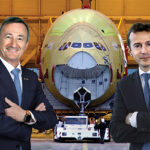
Airbus is a Feather in Dassault Systemes’ Cap, But What Was Included in This...
“DS is far from alone in PLM within Airbus - Siemens, PTC and Aras are just a few examples of competitors that continue to be present.” Playing a leading role as a supporting PLM system for one of the giants in the aerospace and defense industry not only brings technological prestige but also involves big money. When Dassault Systemes (DS) announced a few weeks ago that it had signed an extended contract extension with the aircraft giant Airbus, it was a deal that, with its estimated 20,000 users, both internally and externally, is a matter of tens of millions of euros even in a shorter contract perspective.
In the light of this, it is not surprising that DS has brought in the heavy artillery on the sales side, with executive chairman Bernard Charles in the lead. He is known as a great PLM visionary, with a keen sense of what is required to sell advanced digital technology in areas such as aerospace & defense and automotive. He has always played important roles when DS has completed major business deals around the 3DEXPERIENCE platform (3DX). Remember, for example, the big deal with Boeing in 2017, where DS, in a tough fight with Siemens Digital Industries Software, won an order extension for the 3DX platform in a 30 year contract, worth more than $1 billion.
When the extension with Airbus was announced, Charles was at the forefront again:
"Our long history of collaboration with Airbus begins its next chapter, enabling the entire company and its value chain to innovate globally, efficiently and virtually for decades to come. Airbus can take full advantage of AI and scientific advances in materials science, modeling, simulation, and production efficiency to create new opportunities with our 3DEXPERIENCE platform. This is ultimately about things that will define the future of the aerospace industry," he commented. So what was included?
It is clear that CATIA CAD is a cornerstone. This solution has a very strong position in the aerospace industry. It is not least dominant at the two giants Airbus and Boeing, although in organizations of this size there are always several players in the game. But CATIA, with its roots in Dassault Aviation, is the program that was the earliest to come out with solutions that could handle the complex geometries required in aircraft development, such as geometric modeling of complex Class A surfaces. But today, what DS can bring to the table has broadened enormously.
According to information provided to PLM&ERP News, Airbus will now utilize the full breadth of Dassault's 3DEXPERIENCE platform, which not only integrates CATIA but also SIMULIA for advanced simulation, DELMIA for manufacturing, and ENOVIA plus NETVIBES for collaborative product lifecycle data management. The indication in DS press materials is that 3DX will be deployed across Airbus and will function as support in the heavy business units – including Airbus Civil, Defence & Space and Helicopters. It has the potential to cover lifecycles, from initial requirements management to engineering, manufacturing and aftermarket support.
Airbus CEO Guillaume Faury points out that the renewed partnership with DS will accelerate the company's digitalization, including AI support.
But DS is not alone on the PLM side within Airbus; for example Siemens, PTC and Aras PLM are in the game too, how then?
Click on the headline to read the full story on PLM&ERP News.
In the light of this, it is not surprising that DS has brought in the heavy artillery on the sales side, with executive chairman Bernard Charles in the lead. He is known as a great PLM visionary, with a keen sense of what is required to sell advanced digital technology in areas such as aerospace & defense and automotive. He has always played important roles when DS has completed major business deals around the 3DEXPERIENCE platform (3DX). Remember, for example, the big deal with Boeing in 2017, where DS, in a tough fight with Siemens Digital Industries Software, won an order extension for the 3DX platform in a 30 year contract, worth more than $1 billion.
When the extension with Airbus was announced, Charles was at the forefront again:
"Our long history of collaboration with Airbus begins its next chapter, enabling the entire company and its value chain to innovate globally, efficiently and virtually for decades to come. Airbus can take full advantage of AI and scientific advances in materials science, modeling, simulation, and production efficiency to create new opportunities with our 3DEXPERIENCE platform. This is ultimately about things that will define the future of the aerospace industry," he commented. So what was included?
It is clear that CATIA CAD is a cornerstone. This solution has a very strong position in the aerospace industry. It is not least dominant at the two giants Airbus and Boeing, although in organizations of this size there are always several players in the game. But CATIA, with its roots in Dassault Aviation, is the program that was the earliest to come out with solutions that could handle the complex geometries required in aircraft development, such as geometric modeling of complex Class A surfaces. But today, what DS can bring to the table has broadened enormously.
According to information provided to PLM&ERP News, Airbus will now utilize the full breadth of Dassault's 3DEXPERIENCE platform, which not only integrates CATIA but also SIMULIA for advanced simulation, DELMIA for manufacturing, and ENOVIA plus NETVIBES for collaborative product lifecycle data management. The indication in DS press materials is that 3DX will be deployed across Airbus and will function as support in the heavy business units – including Airbus Civil, Defence & Space and Helicopters. It has the potential to cover lifecycles, from initial requirements management to engineering, manufacturing and aftermarket support.
Airbus CEO Guillaume Faury points out that the renewed partnership with DS will accelerate the company's digitalization, including AI support.
But DS is not alone on the PLM side within Airbus; for example Siemens, PTC and Aras PLM are in the game too, how then?
Click on the headline to read the full story on PLM&ERP News.

The Rise of the AI Agents: SAP Goes All-In on Joule
SAPPHIRE 2025: “A new SaaS with the entire suite as a service – the end of point automation.” Things are moving fast in a world where the software side of things is largely about AI and agents. It was hardly surprising that the topic dominated SAP’s annual Sapphire conference this week. What happened on stage in Orlando, Florida, is a clear reflection of how fundamental and transformative AI is right now. It is equally certain that SAP, as the clear market leader with around 110,000 employees and operations in 180 countries, is a player whose AI agenda functions as a kind of powerhouse. It is no coincidence that SAP CEO Christian Klein pointed to how AI-based functionality is explosively changing resource planning systems. He noted that the key SAP tools, especially the AI assistant Joule, which are now being developed, enable companies to centralize data management and create comprehensive analyses across the entire business. The value that comes with AI's capacity for overview and, at the same time, can connect broad business aspects with detailed real-time data is in its own way earth-shaking. Systems that standardize and not just automate processes in a piecemeal manner not only make administration more qualitatively precise - a reasonable outcome is also that AI can significantly sharpen operational efficiency, save money and, in SAP's case, already increase productivity by up to 30 percent today.
The conclusion from Sapphire 2025 is that SAP is going "all in" on AI agents and Joule is the tool that moves simple task automation to a proactive overall solution for process design and problem management. Orchestrated by Joule, the agents reason, advise and act to help users, and they form the core of what SAP's board member for Product & Engineering, Muhammad Alam, described as the heart of the company's overall strategy: "With the new SaaS (Software-as-a-Service) that SAP is putting on the table, the point is, the entire integrated software suite as a service, not just different point solutions." That is the goal where agentic AI is the technical framework and Joule agents are the building blocks.
In using the term “Business AI”, SAP includes a combo of applications, data and AI. Just as SAP Business Suite forms the integrated foundation.
“That’s right, SAP combines the world’s most powerful collection of business applications with rich data and the latest AI innovations to create value for customers. We are realizing Business AI through further development of Joule, partnerships with leading AI pioneers and a series of innovations in the SAP Business Data Cloud. This helps users succeed in an increasingly unpredictable world,” summed up Christian Klein.
The prospects are mindboggling. Just over ten years ago, an analyst, Gartner’s Mark Halpern, pointed to SAP as an admittedly large and market-dominated player in the ERP arena and also active in PLM. “But,” he added, “with size comes inertia. It is developmentally tough to get a transatlantic steamer going or turn it around. SAP is moving like a glacier; slowly but surely and institutionally grinding.”
Today, the scene has completely changed. SAP is reinventing itself. How? Click on the headline to read the full story on PLM&ERP News.
The conclusion from Sapphire 2025 is that SAP is going "all in" on AI agents and Joule is the tool that moves simple task automation to a proactive overall solution for process design and problem management. Orchestrated by Joule, the agents reason, advise and act to help users, and they form the core of what SAP's board member for Product & Engineering, Muhammad Alam, described as the heart of the company's overall strategy: "With the new SaaS (Software-as-a-Service) that SAP is putting on the table, the point is, the entire integrated software suite as a service, not just different point solutions." That is the goal where agentic AI is the technical framework and Joule agents are the building blocks.
In using the term “Business AI”, SAP includes a combo of applications, data and AI. Just as SAP Business Suite forms the integrated foundation.
“That’s right, SAP combines the world’s most powerful collection of business applications with rich data and the latest AI innovations to create value for customers. We are realizing Business AI through further development of Joule, partnerships with leading AI pioneers and a series of innovations in the SAP Business Data Cloud. This helps users succeed in an increasingly unpredictable world,” summed up Christian Klein.
The prospects are mindboggling. Just over ten years ago, an analyst, Gartner’s Mark Halpern, pointed to SAP as an admittedly large and market-dominated player in the ERP arena and also active in PLM. “But,” he added, “with size comes inertia. It is developmentally tough to get a transatlantic steamer going or turn it around. SAP is moving like a glacier; slowly but surely and institutionally grinding.”
Today, the scene has completely changed. SAP is reinventing itself. How? Click on the headline to read the full story on PLM&ERP News.

Mölnlycke Health Care Upgrades Its SAP System and Boosts the Internal Core Competence
Working in SAP's S/HANA in ERP and 3DEXPERIENCE from Dassault Systemes in PLM. Swedish medical technology company Mölnlycke Health Care has recently taken a big step forward on the digitalization side and when it comes to its business systems. This is through the deployment of a cloud-based system from SAP, a change that affects nearly 1,900 employees globally. The company is a world leader in its field with solutions that equip healthcare professionals around the globe with clinical material specialized in innovative solutions for wound care and surgical procedures.
When it comes to business systems, they have been working in SAP environment since 2000, while when it comes to product development, they work on Dassault Systemes' 3DEXPERIENCE platform. The latter is a state-of-the-art PLM platform that has meant a lot in terms of lead time savings within Mölnycke, which will be discussed in a coming article based on a presentation at PLM consultant TECHNIA's Innovation Forum 2024.
But it is on the ERP side that the company has now launched an upgrade to SAP's cloud-based solution, S/4HANA Private Cloud. The background is that Mölnycke has expanded considerably since the introduction of SAP around the turn of the millennium, which has created new needs for what the business system should be able to handle.
It was at the turn of the year 2024/25 that the decision was made to upgrade to S/4HANA Private Cloud, using the 'RISE with SAP' concept to accelerate continued digital development. RISE with SAP is a transformation set up that supports cloud migration with proven methodology, advanced tools and expert guidance.
Before the start of the project, Mölnlycke realized that much of the expertise surrounding the existing business system was in the hands of external service partners and to strengthen its own capabilities, the company has now chosen to invest in an internal skills upgrade to drive digitalization forward.
“Exactly, we are experienced SAP users and our business system already handles around half a million transaction events every day. However, we have noticed that much of the knowledge about what SAP can do for us has disappeared over time and therefore we have now chosen to invest a large part of the budget in a skills upgrade for our own employees. In this way, we secure our core competence in the long term,” says Mikael Björk, IT Manager at Mölnlycke.
It is noteworthy in this context that sustainability and digitalization efforts are at the center of the execution of the company’s mission towards its customers around the world. The IT department is organized around teams that take ultimate responsibility for solutions within different business areas, currently four: Wound Care, Operating Room Solutions, Gloves and Antiseptics. Mölnlycke’s current IT landscape is characterized by large COTS/SaaS platforms for ERP, CRM and PLM, which primarily support the internal core processes. In this perspective, they work according to agile development and DevOps methods, including end-to-end Software Delivery Lifecycle processes.
Initially, approximately 80–85 percent of existing processes will be moved to the new system – but what does the rest of the journey look like? How does AI come into play?
Click on the headline to read the full story on PLM&ERP News.
When it comes to business systems, they have been working in SAP environment since 2000, while when it comes to product development, they work on Dassault Systemes' 3DEXPERIENCE platform. The latter is a state-of-the-art PLM platform that has meant a lot in terms of lead time savings within Mölnycke, which will be discussed in a coming article based on a presentation at PLM consultant TECHNIA's Innovation Forum 2024.
But it is on the ERP side that the company has now launched an upgrade to SAP's cloud-based solution, S/4HANA Private Cloud. The background is that Mölnycke has expanded considerably since the introduction of SAP around the turn of the millennium, which has created new needs for what the business system should be able to handle.
It was at the turn of the year 2024/25 that the decision was made to upgrade to S/4HANA Private Cloud, using the 'RISE with SAP' concept to accelerate continued digital development. RISE with SAP is a transformation set up that supports cloud migration with proven methodology, advanced tools and expert guidance.
Before the start of the project, Mölnlycke realized that much of the expertise surrounding the existing business system was in the hands of external service partners and to strengthen its own capabilities, the company has now chosen to invest in an internal skills upgrade to drive digitalization forward.
“Exactly, we are experienced SAP users and our business system already handles around half a million transaction events every day. However, we have noticed that much of the knowledge about what SAP can do for us has disappeared over time and therefore we have now chosen to invest a large part of the budget in a skills upgrade for our own employees. In this way, we secure our core competence in the long term,” says Mikael Björk, IT Manager at Mölnlycke.
It is noteworthy in this context that sustainability and digitalization efforts are at the center of the execution of the company’s mission towards its customers around the world. The IT department is organized around teams that take ultimate responsibility for solutions within different business areas, currently four: Wound Care, Operating Room Solutions, Gloves and Antiseptics. Mölnlycke’s current IT landscape is characterized by large COTS/SaaS platforms for ERP, CRM and PLM, which primarily support the internal core processes. In this perspective, they work according to agile development and DevOps methods, including end-to-end Software Delivery Lifecycle processes.
Initially, approximately 80–85 percent of existing processes will be moved to the new system – but what does the rest of the journey look like? How does AI come into play?
Click on the headline to read the full story on PLM&ERP News.