



Does SAP Cloud PLM Have a Future in the Mid-Market?
"TOUGH to BREAK INTO a MARKET that is DOMINATED by SIEMENS, DASSAULT, PTC, ARAS and AUTODESK." What does it look like for business system giant SAP when it comes to PLM for mid-market companies? The analyst CIMdata has looked into the matter in a recently published commentary.
The background is that even mid-market companies, just like the big players, have to face increasing product complexity. This, of course, requires a range of capabilities, somewhat depending on what the PLM definition looks like. But for the sake of simplicity, let's go with CIMdata's definition, which in brief is as follows: PLM is a strategic method to support the collaboration, management, dissemination and use of product definition information from idea to life cycle to integrate people, processes, business systems, and information.
That said, a PLM system should be comprehensively built from a range of enabling technologies such as product data management (PDM), CAD, collaboration, visualization, digital manufacturing and simulation & analysis. In light of the increasing product complexity–above all in terms of electricity, electronics and software–integrated digital tools like EDA (Electronic Design Automation) and ALM (Application Lifecycle Management) should also be part of the lineup.
In this, CIMdata writes that SAP has most of what is needed: "SAP’s PLM software provides all the core PLM capabilities product-centric companies require." The analyst includes things like requirements/specification management, CAD integration, system development, collaboration, BOM, document, variant, and change management, to name the most important.
All that sounds good in theory, but the reality is that SAP's success on the PLM side is limited. It is certainly the world's dominant player in ERP and in terms of connections between the PLM and ERP systems related to manufacturing, such as mBOMs (manufacturing BOMs) and business transaction-related efforts in this context. But when it comes to product development, eBOMs (engineering BOMs) and the like, players such as Dassault, Siemens, PTC, Aras PLM, Autodesk and others completely dominate the market.
The reality is that SAP's footprint in mid-market PLM is small. In the Nordic countries, there are certainly some customers in industries such as food & beverages, while on the manufacturing side, they are less common. Tetra Pak is one example–albeit with PTC's PDM Link as integrated PLM/PDM support–and a rather problematic installation at Sandvik Coromant is another. But generally SAP PLM is rare.
PLM&ERP News has previously reported on SAP and the reseller deal it has had for 3 years regarding Siemens PLM package, Teamcenter. The question now is whether SAP tries to reposition itself to a more offensive approach towards the mid-market as the cloud gains entry as a technical platform. In any case, CIMdata is impressed by SAP's cloud-based SaaS PLM offering based on microservices. How it goes remains to be seen. Based on its historical efforts as a PLM developer, SAP is likely to meet tough challenges – why?
Click on the headline to read the full article on PLM&ERP News.
The background is that even mid-market companies, just like the big players, have to face increasing product complexity. This, of course, requires a range of capabilities, somewhat depending on what the PLM definition looks like. But for the sake of simplicity, let's go with CIMdata's definition, which in brief is as follows: PLM is a strategic method to support the collaboration, management, dissemination and use of product definition information from idea to life cycle to integrate people, processes, business systems, and information.
That said, a PLM system should be comprehensively built from a range of enabling technologies such as product data management (PDM), CAD, collaboration, visualization, digital manufacturing and simulation & analysis. In light of the increasing product complexity–above all in terms of electricity, electronics and software–integrated digital tools like EDA (Electronic Design Automation) and ALM (Application Lifecycle Management) should also be part of the lineup.
In this, CIMdata writes that SAP has most of what is needed: "SAP’s PLM software provides all the core PLM capabilities product-centric companies require." The analyst includes things like requirements/specification management, CAD integration, system development, collaboration, BOM, document, variant, and change management, to name the most important.
All that sounds good in theory, but the reality is that SAP's success on the PLM side is limited. It is certainly the world's dominant player in ERP and in terms of connections between the PLM and ERP systems related to manufacturing, such as mBOMs (manufacturing BOMs) and business transaction-related efforts in this context. But when it comes to product development, eBOMs (engineering BOMs) and the like, players such as Dassault, Siemens, PTC, Aras PLM, Autodesk and others completely dominate the market.
The reality is that SAP's footprint in mid-market PLM is small. In the Nordic countries, there are certainly some customers in industries such as food & beverages, while on the manufacturing side, they are less common. Tetra Pak is one example–albeit with PTC's PDM Link as integrated PLM/PDM support–and a rather problematic installation at Sandvik Coromant is another. But generally SAP PLM is rare.
PLM&ERP News has previously reported on SAP and the reseller deal it has had for 3 years regarding Siemens PLM package, Teamcenter. The question now is whether SAP tries to reposition itself to a more offensive approach towards the mid-market as the cloud gains entry as a technical platform. In any case, CIMdata is impressed by SAP's cloud-based SaaS PLM offering based on microservices. How it goes remains to be seen. Based on its historical efforts as a PLM developer, SAP is likely to meet tough challenges – why?
Click on the headline to read the full article on PLM&ERP News.

MathWorks Release 2024b of MATLAB and Simulink: Enhancements designed to scale, automate, and streamline...
New Apps and Features SHARPENS the Development of SIGNAL PROCESSING APPLICATIONS. When CAE player and mathematical computing software developer MathWorks releases new software versions, it's always of great interest. The company's solutions can be found in many places and is one of the dominant players in its field with MATLAB, a programming environment for algorithm development, data analysis, visualization and numerical computation, and Simulink, which is a block diagram environment for simulation and model-based design of multi-domain and embedded engineering system.
Interestingly in the Simulink context, MathWorks also offers an MBSE tool, Simscape, which leverages the Simulink System Composer core module. MBSE stands for Model Based Systems Engineering and is a systems engineering approach that uses models to represent different aspects of a system throughout its life cycle, from concept to retirement. In MBSE, a model is a simplified representation of a system that captures its key properties and behavior. The model can be used to analyze the system, simulate its behavior and test its performance under different conditions. Simscape is spanning mechanical, electrical, hydraulic and other physical domains and its models can be deployed to other simulation environments, including hardware-in-the-loop (HiL) systems, via automatic C code generation.
With these solutions and others, MathWorks has taken a position as the market's number two in terms of annual revenue on the commercial simulation and analysis side behind Ansys. In recent years, according to CIM data, it has had a market share of around 13-14 percent with annual revenues in the region of $1.3 billion.
Especially in emerging areas such as embedded applications/controls, data analytics, AI and ML, MathWorks is globally recognized as a leader. The company actually has over a million MATLAB users worldwide in both industry and academia. It also has a significant ecosystem of third-party developers of over 500 solutions based on MATLAB and Simulink covering a wide range of advanced products, including automotive systems, flight controls and avionics, telecommunications and more.
This said as a backdrop to MathWorks recently announced Release 2024b of MATLAB and Simulink. R2024b introduces several major updates that streamline the workflows of engineers and researchers working with wireless communication systems, control systems, and digital signal processing applications.
In general, in addition to product improvements to the MathWorks platform, R2024b contains major updates to the MATLAB and Simulink tools in particular. PLM&ERP News today takes a quick look at the most important pieces of this.
"An organization's ability to deliver high-quality, reliable and secure products underscores the critical role of simulation and model-based design," comments MathWorks VP of Design Automation, Andy Grace.
Interestingly in the Simulink context, MathWorks also offers an MBSE tool, Simscape, which leverages the Simulink System Composer core module. MBSE stands for Model Based Systems Engineering and is a systems engineering approach that uses models to represent different aspects of a system throughout its life cycle, from concept to retirement. In MBSE, a model is a simplified representation of a system that captures its key properties and behavior. The model can be used to analyze the system, simulate its behavior and test its performance under different conditions. Simscape is spanning mechanical, electrical, hydraulic and other physical domains and its models can be deployed to other simulation environments, including hardware-in-the-loop (HiL) systems, via automatic C code generation.
With these solutions and others, MathWorks has taken a position as the market's number two in terms of annual revenue on the commercial simulation and analysis side behind Ansys. In recent years, according to CIM data, it has had a market share of around 13-14 percent with annual revenues in the region of $1.3 billion.
Especially in emerging areas such as embedded applications/controls, data analytics, AI and ML, MathWorks is globally recognized as a leader. The company actually has over a million MATLAB users worldwide in both industry and academia. It also has a significant ecosystem of third-party developers of over 500 solutions based on MATLAB and Simulink covering a wide range of advanced products, including automotive systems, flight controls and avionics, telecommunications and more.
This said as a backdrop to MathWorks recently announced Release 2024b of MATLAB and Simulink. R2024b introduces several major updates that streamline the workflows of engineers and researchers working with wireless communication systems, control systems, and digital signal processing applications.
In general, in addition to product improvements to the MathWorks platform, R2024b contains major updates to the MATLAB and Simulink tools in particular. PLM&ERP News today takes a quick look at the most important pieces of this.
"An organization's ability to deliver high-quality, reliable and secure products underscores the critical role of simulation and model-based design," comments MathWorks VP of Design Automation, Andy Grace.

MathWorks Release 2024b av MATLAB och Simulink: Förbättringar för att skala, automatisera och effektivisera...
Nya appar och funktioner vässar utvecklingsarbetet av APPLIKATIONER för SIGNALBEHANDLING. När CAE-spelaren och utvecklaren av matematisk datormjukvara, MathWorks, släpper nya programversioner är det alltid av stort intresse. Bolagets lösningar finns på många ställen och är en av de dominerande aktörerna på sitt område med MATLAB - en programmeringsmiljö för algoritmutveckling, dataanalys, visualisering och numerisk beräkning – och Simulink, som är en blockschema-miljö för simulering och modellbaserad design av multidomän- och inbäddade ingenjörssystem. Intressant i Simulink-sammanhanget är att MathWorks också erbjuder ett MBSE-verktyg, Simscape, som utnyttjar kärnmodulen Simulink System Composer. MBSE står för Model Based Systems Engineering och är en teknik där man skapar och utnyttjar virtuella systemmodeller som den huvudsakliga plattformen för kunskapsutbyte mellan inblandade parter, snarare än via externa dokument eller separata informationskanaler. Med Simscape får man en miljö för modellering och simulering av fysiska system som spänner över mekaniska, elektriska, hydrauliska och andra fysiska domäner. Simscape-modeller kan distribueras till andra simuleringsmiljöer, inklusive hardware-in-the-loop-system (HiL), via automatisk C-kodgenerering.
Med de här lösningarna och andra har MathWorks tagit en position som marknadstvåa vad avser årliga intäkter på den kommersiella simulerings- och analys-sidan efter klara ettan, Synopsys-ägda Ansys. De senaste åren har man enligt CIMdata legat på en marknadsandel runt 13-14 procent med årliga intäkter i trakterna av 1,3 miljarder dollar, motsvarande ca tio gånger så mycket i svenska kronor.
Särskilt inom växande områden som inbäddade program/kontroller, dataanalys, artificiell intelligens och maskininlärning är MathWorks globalt erkänd som ledande. Bolaget har faktiskt långt över en miljon MATLAB-användare världen över i både industri och akademi. Man har också ett betydande ekosystem av tredjepartsutvecklare av över 500 lösningar som bygger på MATLAB och Simulink. Dessa lösningar hjälper till att utveckla ett brett utbud av avancerade produkter, inklusive fordonssystem, flygkontroller och flygelektronik, telekommunikations- och annan elektronikutrustning, industrimaskiner och medicinsk utrustning.
Detta sagt presenterade MathWorks nyligen release 2024b (R2024b) av produktfamiljerna MATLAB och Simulink. R2024b introducerar flera stora uppdateringar som effektiviserar arbetsflödena för ingenjörer och forskare som arbetar med trådlösa kommunikationssystem, kontrollsystem och digitala signalbehandlingsapplikationer.
Allmänt, förutom produktförbättringar av MathWorks-plattformen, innehåller R2024b stora uppdateringar av just MATLAB- och Simulink-verktygen. PLM&ERP News tar idag en snabbtitt på de viktigaste bitarna i detta.
"En organisations förmåga att leverera högkvalitativa, tillförlitliga och säkra produkter understryker den kritiska rollen av simulering och modellbaserad design", kommenterar MathWorks VP för Design Automation, Andy Grace.
Klicka på rubriken för att läsa mer på PLM&ERP News.
Med de här lösningarna och andra har MathWorks tagit en position som marknadstvåa vad avser årliga intäkter på den kommersiella simulerings- och analys-sidan efter klara ettan, Synopsys-ägda Ansys. De senaste åren har man enligt CIMdata legat på en marknadsandel runt 13-14 procent med årliga intäkter i trakterna av 1,3 miljarder dollar, motsvarande ca tio gånger så mycket i svenska kronor.
Särskilt inom växande områden som inbäddade program/kontroller, dataanalys, artificiell intelligens och maskininlärning är MathWorks globalt erkänd som ledande. Bolaget har faktiskt långt över en miljon MATLAB-användare världen över i både industri och akademi. Man har också ett betydande ekosystem av tredjepartsutvecklare av över 500 lösningar som bygger på MATLAB och Simulink. Dessa lösningar hjälper till att utveckla ett brett utbud av avancerade produkter, inklusive fordonssystem, flygkontroller och flygelektronik, telekommunikations- och annan elektronikutrustning, industrimaskiner och medicinsk utrustning.
Detta sagt presenterade MathWorks nyligen release 2024b (R2024b) av produktfamiljerna MATLAB och Simulink. R2024b introducerar flera stora uppdateringar som effektiviserar arbetsflödena för ingenjörer och forskare som arbetar med trådlösa kommunikationssystem, kontrollsystem och digitala signalbehandlingsapplikationer.
Allmänt, förutom produktförbättringar av MathWorks-plattformen, innehåller R2024b stora uppdateringar av just MATLAB- och Simulink-verktygen. PLM&ERP News tar idag en snabbtitt på de viktigaste bitarna i detta.
"En organisations förmåga att leverera högkvalitativa, tillförlitliga och säkra produkter understryker den kritiska rollen av simulering och modellbaserad design", kommenterar MathWorks VP för Design Automation, Andy Grace.
Klicka på rubriken för att läsa mer på PLM&ERP News.

”Today there is more money in the Aerospace & Defense industry than people to...
Meet TODD TUTHILL, VP of Aerospace & Defense (A&D) at Siemens Digital Industries Software, in today's guest column. In a world where the global security situation has been seriously sharpened in recent years, one effect is that more money than ever is allocated to the aerospace and defense industry. At the same time, it is becoming increasingly clear that money is far from solving everything. Just like in so many other industries, there is, among other things, a demographic problem: People with specialist knowledge are getting older while the flow of human competence into the industry is decreasing, which will have effects in waves for at least one to two decades to come.
According to a survey quoted by today's guest columnist on PLM&ERP News, Todd Tuthill, VP of Aerospace and Defense at Siemens Digital Industries Software, nearly 30 percent of the industry's workforce is over 55 years old. What happens to the knowledge and experience bank these individuals represent when they retire and walk out the compoany doors? This is a problem not only for the bigger players but perhaps even more so for smaller companies.
There are several central issues in this: Can educational efforts help? But even more important: Can digitization compensate for this development setback? Tuthill believes that this is the case:
"Digital transformation is not unfamiliar to the A&D industry. Companies have been implementing it in various forms for the past two decades. However, the current speed and scale of this transformation are not enough to effectively combat the industry’s workforce issues. To help companies assess where they are in their digital transformation journeys, we developed a five-step framework of digital transformation maturity,” states Siemens Digital Industries Software's VP.
It is also clear that Todd Tuthill knows what he is talking about. He joined Siemens in June 2022 after more than 30 years in the aerospace and defense industry. His engineering background is in systems design with functional engineering and program management roles and a strong vision for digital transformation. Experience-wise, his expertise spans all aspects of A&D programs, including design, model-based systems engineering, software development, lean product development, supplier/partner management, and program management. Furthermore, his career in the industry spans a number of well-known major players, such as McDonnell Douglas/Boeing, Moog, Raytheon and, as I said, Siemens.
In his new role at Siemens, Tuthill is a passionate advocate for the development of digital transformation within the A&D industry.
"Embracing the maturity of digital transformation offsets the effects of the A&D industry's labor shortage by changing how work is done," he notes.
Click on the headline to read the full article on PLM&ERP News.
According to a survey quoted by today's guest columnist on PLM&ERP News, Todd Tuthill, VP of Aerospace and Defense at Siemens Digital Industries Software, nearly 30 percent of the industry's workforce is over 55 years old. What happens to the knowledge and experience bank these individuals represent when they retire and walk out the compoany doors? This is a problem not only for the bigger players but perhaps even more so for smaller companies.
There are several central issues in this: Can educational efforts help? But even more important: Can digitization compensate for this development setback? Tuthill believes that this is the case:
"Digital transformation is not unfamiliar to the A&D industry. Companies have been implementing it in various forms for the past two decades. However, the current speed and scale of this transformation are not enough to effectively combat the industry’s workforce issues. To help companies assess where they are in their digital transformation journeys, we developed a five-step framework of digital transformation maturity,” states Siemens Digital Industries Software's VP.
It is also clear that Todd Tuthill knows what he is talking about. He joined Siemens in June 2022 after more than 30 years in the aerospace and defense industry. His engineering background is in systems design with functional engineering and program management roles and a strong vision for digital transformation. Experience-wise, his expertise spans all aspects of A&D programs, including design, model-based systems engineering, software development, lean product development, supplier/partner management, and program management. Furthermore, his career in the industry spans a number of well-known major players, such as McDonnell Douglas/Boeing, Moog, Raytheon and, as I said, Siemens.
In his new role at Siemens, Tuthill is a passionate advocate for the development of digital transformation within the A&D industry.
"Embracing the maturity of digital transformation offsets the effects of the A&D industry's labor shortage by changing how work is done," he notes.
Click on the headline to read the full article on PLM&ERP News.
TERMISK ANALYS/Integrerade kretsar: Blir Siemens nya Calibre 3DThermal ett genombrott för mainstream 3D-IC?
”En robust plattform som fångar och analyserar termisk data genom hela IC-designprocessen.” Utan att renderas någon större medial uppmärksamhet har Siemens Digital Industries Software under sommaren introducerat en innovativ programvara för termisk analys, verifiering och felsökning i 3D-integrerade kretsar (3D-IC), Calibre 3DThermal. Rätt eller fel hävdar bolaget att lösningen kan bli ett genombrott för mainstream 3D-IC. Varför är detta ett stort steg?
Skälen är flera, säger Michael Buehler-Garcia, VP för Calibre Product Management, inom Siemens Digital Industries Software, men övergripande pekar han på de stora värden som ligger i att man med bolagets integrerade och kapabla designverktyg kan sätta upp en robust plattform som fångar och analyserar termisk data genom hela designprocessen av chip och 3D-montering från 3D-monteringsutforskning till design-signoff.
”Detta är ett betydande framsteg bl a just för detta, att konstruktörer inom 3D-IC-design och -verifiering ges de möjligheter de behöver att hantera termiska utmaningar tidigt i designprocessen, säger han och tillägger: "Genom att integrera termisk analys direkt i alla stadier av IC-designflödet gör vi det möjligt för våra användare att skapa mer pålitliga, högpresterande 3DICer med större tillförsikt och effektivitet."
Som en bakgrund kan noteras att termisk analys handlar om hur värme kan skapa kemiska, fysikaliska och strukturella förändringar i ett material, integrerade kretsar inkluderade. Temperaturen är i princip en grundläggande tillståndsvariabel som påverkar de flesta kemiska processer, fysikaliska egenskaper och strukturella omvandlingar. Hur detta påverkar ICer och deras funktionella kapaciteter är förstås av väldigt stor betydelse. Alla integrerade kretsar genererar värme när de utsätts för spänning. För att hålla temperatur under det maximalt tillåtna för optimal funktion är därför en analys av värmeflödet genom paketet av stor vikt.
Med Calibre 3DThermal blir det möjligt för chipdesigners att snabbt modellera, visualisera och mildra termiska effekter i sina konstruktioner under hela designresan. Detta genom att Siemens integrerat delar av Calibre-verifieringsprogram och Calibre 3DSTACK-programvara tillsammans med företagets Simcenter Flotherm som mjukvarumotor för lösningarna. ”Calibre 3DThermal tillhandahåller de utgångar som krävs för att termiska effekter ska beaktas i elektriska simuleringar. Dessutom kan Calibre 3DThermal både konsumera som ingångs-gränsvillkor och ge utsignal till Simcenter Flotherm – vilket möjliggör äkta IC till systemtermisk modellering från IC till paket eller till kort på systemnivå,” summerar Siemens i pressmaterialet, som rubricerats med att den nya lösningen är, "ett stort steg mot upptaget av 3D-IC på mainstream-sidan.
Klicka på rubriken för att läsa mer på PLM&ERP News.
Skälen är flera, säger Michael Buehler-Garcia, VP för Calibre Product Management, inom Siemens Digital Industries Software, men övergripande pekar han på de stora värden som ligger i att man med bolagets integrerade och kapabla designverktyg kan sätta upp en robust plattform som fångar och analyserar termisk data genom hela designprocessen av chip och 3D-montering från 3D-monteringsutforskning till design-signoff.
”Detta är ett betydande framsteg bl a just för detta, att konstruktörer inom 3D-IC-design och -verifiering ges de möjligheter de behöver att hantera termiska utmaningar tidigt i designprocessen, säger han och tillägger: "Genom att integrera termisk analys direkt i alla stadier av IC-designflödet gör vi det möjligt för våra användare att skapa mer pålitliga, högpresterande 3DICer med större tillförsikt och effektivitet."
Som en bakgrund kan noteras att termisk analys handlar om hur värme kan skapa kemiska, fysikaliska och strukturella förändringar i ett material, integrerade kretsar inkluderade. Temperaturen är i princip en grundläggande tillståndsvariabel som påverkar de flesta kemiska processer, fysikaliska egenskaper och strukturella omvandlingar. Hur detta påverkar ICer och deras funktionella kapaciteter är förstås av väldigt stor betydelse. Alla integrerade kretsar genererar värme när de utsätts för spänning. För att hålla temperatur under det maximalt tillåtna för optimal funktion är därför en analys av värmeflödet genom paketet av stor vikt.
Med Calibre 3DThermal blir det möjligt för chipdesigners att snabbt modellera, visualisera och mildra termiska effekter i sina konstruktioner under hela designresan. Detta genom att Siemens integrerat delar av Calibre-verifieringsprogram och Calibre 3DSTACK-programvara tillsammans med företagets Simcenter Flotherm som mjukvarumotor för lösningarna. ”Calibre 3DThermal tillhandahåller de utgångar som krävs för att termiska effekter ska beaktas i elektriska simuleringar. Dessutom kan Calibre 3DThermal både konsumera som ingångs-gränsvillkor och ge utsignal till Simcenter Flotherm – vilket möjliggör äkta IC till systemtermisk modellering från IC till paket eller till kort på systemnivå,” summerar Siemens i pressmaterialet, som rubricerats med att den nya lösningen är, "ett stort steg mot upptaget av 3D-IC på mainstream-sidan.
Klicka på rubriken för att läsa mer på PLM&ERP News.
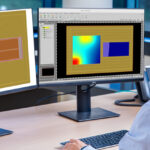
THERMAL ANALYSIS/Integrated Circuits: Is Siemens’ New Calibre 3DThermal a Major Leap Towards Mainstream 3D-IC...
“A ROBUST PLATFORM that captures and ANALYZES THERMAL DATA throughout the IC DESIGN PROCESS” Without much media attention, Siemens Digital Industries Software has introduced during the summer an innovative software for thermal analysis, verification and debugging in 3D integrated circuits (3D-IC), Caliber 3DTermal. Rightly or wrongly, the company claims that the solution could be a breakthrough for mainstream 3D-IC. Why is this a big step?
There are several reasons, says Michael Buehler-Garcia, VP of Caliber Product Management, within Siemens Digital Industries Software, but overall he points to the great value that lies in that with the company's integrated and capable design tools, you can set up a robust platform that captures and analyzes thermal data throughout the chip and 3D assembly design process from 3D assembly exploration to design signoff.
"This is a significant step forward for, among other things, that designers in 3D-IC design and verification are given the capabilities they need to deal with thermal challenges early in the design process," he says, adding: "By integrating thermal analysis directly into all stages of the IC design flow, we enable our users to create more reliable, high-performance 3DICs with greater confidence and efficiency."
As a background, thermal analysis deals with how heat can create chemical, physical and structural changes in a material, integrated circuits included. Temperature is basically a fundamental state variable that affects most chemical processes, physical properties, and structural transformations. How this affects ICs and their functional capacities is of course of great importance. All integrated circuits generate heat when exposed to voltage. In order to keep the temperature below the maximum allowed for optimal function, an analysis of the heat flow through the package is therefore of great importance. It is essential to avoid the overheating that can cause circuit malfunctions.
Calibre 3DThermal enables chip designers to quickly model, visualize and mitigate thermal effects in their designs throughout the design journey. This is because Siemens integrated parts of the Calibre verification program and Calibre 3DSTACK software together with the company's Simcenter Flotherm as software engine for the solutions.
“Calibre 3DThermal provides the outputs required for thermal effects to be considered in electrical simulations. In addition, the software can both consume as input boundary conditions and provide output to Simcenter Flotherm – enabling true IC to system thermal modeling from IC to package or to board at the system level,” Siemens writes in the press material, claiming that it is, "a major leap toward mainstream 3D-IC adoption."
Click on the headline to read the full article on PLM&ERP News.
There are several reasons, says Michael Buehler-Garcia, VP of Caliber Product Management, within Siemens Digital Industries Software, but overall he points to the great value that lies in that with the company's integrated and capable design tools, you can set up a robust platform that captures and analyzes thermal data throughout the chip and 3D assembly design process from 3D assembly exploration to design signoff.
"This is a significant step forward for, among other things, that designers in 3D-IC design and verification are given the capabilities they need to deal with thermal challenges early in the design process," he says, adding: "By integrating thermal analysis directly into all stages of the IC design flow, we enable our users to create more reliable, high-performance 3DICs with greater confidence and efficiency."
As a background, thermal analysis deals with how heat can create chemical, physical and structural changes in a material, integrated circuits included. Temperature is basically a fundamental state variable that affects most chemical processes, physical properties, and structural transformations. How this affects ICs and their functional capacities is of course of great importance. All integrated circuits generate heat when exposed to voltage. In order to keep the temperature below the maximum allowed for optimal function, an analysis of the heat flow through the package is therefore of great importance. It is essential to avoid the overheating that can cause circuit malfunctions.
Calibre 3DThermal enables chip designers to quickly model, visualize and mitigate thermal effects in their designs throughout the design journey. This is because Siemens integrated parts of the Calibre verification program and Calibre 3DSTACK software together with the company's Simcenter Flotherm as software engine for the solutions.
“Calibre 3DThermal provides the outputs required for thermal effects to be considered in electrical simulations. In addition, the software can both consume as input boundary conditions and provide output to Simcenter Flotherm – enabling true IC to system thermal modeling from IC to package or to board at the system level,” Siemens writes in the press material, claiming that it is, "a major leap toward mainstream 3D-IC adoption."
Click on the headline to read the full article on PLM&ERP News.

SIMULATION & ANALYSIS: Full Steam Ahead for Altair With Big Bets Around the RapidMiner...
Why the Data Science and Machine Learning platform is positioned as a LEADER in GARTNER's Magic Quadrant. American AI, HPC, simulation and analytics player Altair is starting the fall season with a series of offensive moves, most notably regarding the RapidMiner platform. In general, Altair has made a name for itself in the CAE space for its structural engineering analysis and optimization tools ranging from simulation-driven design concepts to detailed virtual product validation and simplified modeling workflows. In terms of revenue, the company is ranked fifth globally by the PLM analyst CIMdata, after Ansys, MathWorks, Siemens and Dassault Systemes, with close to $630 million 2023. This gives the company a market share of around 7 percent.
In terms of industry segments, Altair has a strong presence in the automotive and transportation industries, but in recent years, mainly through acquisitions, it has expanded into other segments, such as high-tech electronics, aerospace and defense, medical equipment, and energy. In this, it has gone from being a niche supplier to a global technical company in enterprise class. From its roots in structural analysis software such as Hypermesh, Altair now has software and cloud solutions with well-known brands such as HyperWorks, solidThinking, Inspire, Altair PBS, and SmartWorks, among others, in the areas of simulation-driven product development, high performance computing (HPC) and data intelligence.
In this scenario, Altair’s RapidMiner platform is focused on data analytics and AI. The solution includes tools for data preparation, data science, MLOps, orchestration and visualization solutions. It was bought in 2022 for $100 million.
Clearly, the RapidMiner acquisition has given Altair a footprint in the banking and finance sector, which is unusual for an engineering software company. But here there are now interesting connections to other industry segments. By combining its traditional simulation products with the data analysis suite in RapidMiner the potential for significant continued growth is high, something that last week's news surrounding the solution indicates:
* Altair buys the RapidMiner platform reseller, KSK Analytics. This Japanese company offers strategic consulting and training in AI and data analysis, with a focus on the manufacturing sector.
* In parallel, a new agreement is signed on the European reseller side with Crown Point Technologies, a company that specializes in technical solutions for authorities and the healthcare sector. Crown has also been given the status of official dealer for the USA.
* More about RapidMiner is its new collaboration with the Faculty of Data and Decision Sciences at the Technion - Israel Institute of Technology.
* On the topic of data analysis, a new agreement as a European channel partner has also been signed with the Belgian Collaboration Betters the World (CBTW).
Click on the headline to reda the full article on PLM&ERP News.
In terms of industry segments, Altair has a strong presence in the automotive and transportation industries, but in recent years, mainly through acquisitions, it has expanded into other segments, such as high-tech electronics, aerospace and defense, medical equipment, and energy. In this, it has gone from being a niche supplier to a global technical company in enterprise class. From its roots in structural analysis software such as Hypermesh, Altair now has software and cloud solutions with well-known brands such as HyperWorks, solidThinking, Inspire, Altair PBS, and SmartWorks, among others, in the areas of simulation-driven product development, high performance computing (HPC) and data intelligence.
In this scenario, Altair’s RapidMiner platform is focused on data analytics and AI. The solution includes tools for data preparation, data science, MLOps, orchestration and visualization solutions. It was bought in 2022 for $100 million.
Clearly, the RapidMiner acquisition has given Altair a footprint in the banking and finance sector, which is unusual for an engineering software company. But here there are now interesting connections to other industry segments. By combining its traditional simulation products with the data analysis suite in RapidMiner the potential for significant continued growth is high, something that last week's news surrounding the solution indicates:
* Altair buys the RapidMiner platform reseller, KSK Analytics. This Japanese company offers strategic consulting and training in AI and data analysis, with a focus on the manufacturing sector.
* In parallel, a new agreement is signed on the European reseller side with Crown Point Technologies, a company that specializes in technical solutions for authorities and the healthcare sector. Crown has also been given the status of official dealer for the USA.
* More about RapidMiner is its new collaboration with the Faculty of Data and Decision Sciences at the Technion - Israel Institute of Technology.
* On the topic of data analysis, a new agreement as a European channel partner has also been signed with the Belgian Collaboration Betters the World (CBTW).
Click on the headline to reda the full article on PLM&ERP News.

SIMULERING & ANALYS: Full fart framåt för Altair med stora satsningar kring RapidMiner
Positionering som LEDARE i GARTNERS Magic Quadrant för datavetenskap och maskininlärning. Amerikanska AI-, HPC-, simulerings- och analysspelaren Altair inleder höstsäsongen med en rad offensiva åtgärder, framför allt när det gäller RapidMiner-plattformen. Generellt har Altair gjort sig känt på CAE-området för sina analys- och optimeringsverktyg för konstruktionsteknik i allt från simuleringsdrivna designkoncept till detaljerad virtuell produktvalidering och förenklade arbetsflöden för modellering. Intäktsmässigt ligger bolaget placerat som global femma av PLM-analytikern CIMdata, efter Ansys, MathWorks, Siemens Digital Industries Software och Dassault Systemes, med nära 630 miljoiner dollar för 2023. Detta ger bolaget en marknadsandel kring 7 procent.
När det gäller industrisegment har Altair en stark närvaro inom fordons- och transportindustrin, men de senaste åren har man genom framför allt bolagsköp expanderat in i andra segment, som högteknologisk elektronik, flyg- och försvarsindustrin, konsumentprodukter, medicinsk utrustning, energi och AEC. Man har i detta gått från att vara en nischleverantör till ett globalt tekniskt företag i företagsklass. Från sina rötter i strukturanalysmjukvara som Hypermesh, har Altair nu mjukvara och molnlösningar med kända varumärken som HyperWorks, solidThinking, Inspire, Altair PBS, och SmartWorks, m fl, inom områdena simuleringsdriven produktutveckling, högpresterande beräkningar (HPC) och dataintelligens.
I detta scenario är Altair RapidMiner-plattformen inriktad på dataanalys och AI. Lösningen inkluderar verktyg för dataförberedelse, datavetenskap, MLOps, orkestrerings- och visualiseringslösningar. Den köptes i september 2022 för 100 miljoner dollar, motsvarande drygt en miljard svenska kronor. Altair positionerades f ö nyligen av Gartner som ledare inom Magic Quadrant för datavetenskap och ML-plattformar med RapidMiner.
Klart är att RapidMiner-förvärvet givit Altair ett fotavtryck inom bank- och finanssektorn, vilket är ovanligt för ett ingenjörsmjukvaruföretag. Men här finns nu intressanta kopplingar till andra industrisegment. Genom att kombinera sina traditionella simuleringsprodukter med dataanalyssviten i RapidMiner. är potentialen för betydande fortsatt tillväxt stor, något som den gångna veckans nyheter kring lösningen indikerar på:
* Man köper återförsäljaren av Altair RapidMiner-plattformen, KSK Analytics. Detta japanska bolag erbjuder strategisk rådgivning och utbildning inom AI och dataanalys, med fokus på tillverkningssektorn.
* Parallellt tecknar man ett nytt avtal på den europeiska återförsäljarsidan med Crown Point Technologies, ett företag som specialiserat sig på tekniska lösningar för myndigheter och hälsovårdssektorn. Crown har även fått status som officiell återförsäljare för USA.
* Mer kring RapidMiner handlar om en nytecknat samarbete med fakulteten för data- och beslutsvetenskap vid Technion – Israel Institute of Technology. Avtalet kommer att ge universitetets fakultet, forskare och studenter utbildning och obegränsad tillgång till Altair RapidMiner.
Apropå data analys har också ett nytt avtal som europeisk kanalpartner tecknats med belgiska Collaboration Betters the World (CBTW). Här sägs samarbetet syfta till att, ”påskynda framstegen inom dataanalys i hela EMEA-regionen, och leverera banbrytande lösningar som gör det möjligt för företag att frodas i dagens digitala tidsålder.”
Klicka på rubriken för att läse mer på PLM&ERP News.
När det gäller industrisegment har Altair en stark närvaro inom fordons- och transportindustrin, men de senaste åren har man genom framför allt bolagsköp expanderat in i andra segment, som högteknologisk elektronik, flyg- och försvarsindustrin, konsumentprodukter, medicinsk utrustning, energi och AEC. Man har i detta gått från att vara en nischleverantör till ett globalt tekniskt företag i företagsklass. Från sina rötter i strukturanalysmjukvara som Hypermesh, har Altair nu mjukvara och molnlösningar med kända varumärken som HyperWorks, solidThinking, Inspire, Altair PBS, och SmartWorks, m fl, inom områdena simuleringsdriven produktutveckling, högpresterande beräkningar (HPC) och dataintelligens.
I detta scenario är Altair RapidMiner-plattformen inriktad på dataanalys och AI. Lösningen inkluderar verktyg för dataförberedelse, datavetenskap, MLOps, orkestrerings- och visualiseringslösningar. Den köptes i september 2022 för 100 miljoner dollar, motsvarande drygt en miljard svenska kronor. Altair positionerades f ö nyligen av Gartner som ledare inom Magic Quadrant för datavetenskap och ML-plattformar med RapidMiner.
Klart är att RapidMiner-förvärvet givit Altair ett fotavtryck inom bank- och finanssektorn, vilket är ovanligt för ett ingenjörsmjukvaruföretag. Men här finns nu intressanta kopplingar till andra industrisegment. Genom att kombinera sina traditionella simuleringsprodukter med dataanalyssviten i RapidMiner. är potentialen för betydande fortsatt tillväxt stor, något som den gångna veckans nyheter kring lösningen indikerar på:
* Man köper återförsäljaren av Altair RapidMiner-plattformen, KSK Analytics. Detta japanska bolag erbjuder strategisk rådgivning och utbildning inom AI och dataanalys, med fokus på tillverkningssektorn.
* Parallellt tecknar man ett nytt avtal på den europeiska återförsäljarsidan med Crown Point Technologies, ett företag som specialiserat sig på tekniska lösningar för myndigheter och hälsovårdssektorn. Crown har även fått status som officiell återförsäljare för USA.
* Mer kring RapidMiner handlar om en nytecknat samarbete med fakulteten för data- och beslutsvetenskap vid Technion – Israel Institute of Technology. Avtalet kommer att ge universitetets fakultet, forskare och studenter utbildning och obegränsad tillgång till Altair RapidMiner.
Apropå data analys har också ett nytt avtal som europeisk kanalpartner tecknats med belgiska Collaboration Betters the World (CBTW). Här sägs samarbetet syfta till att, ”påskynda framstegen inom dataanalys i hela EMEA-regionen, och leverera banbrytande lösningar som gör det möjligt för företag att frodas i dagens digitala tidsålder.”
Klicka på rubriken för att läse mer på PLM&ERP News.

PTC och ALM: Mjukvarurevolutionen inom automotive leder till ”seismiska förändringar av arbetssättet”
PTC satsar på NYTT PARTNERSKAP med tyska NANGA SYSTEMS. Hur ser framtiden ut för PLM-utvecklaren PTC när det gäller mjukvaruområdet? Frågan är relevant, inte minst i det att ALM-domänen, Applikation Lifecycle Management, är ett av det senaste decenniets absolut snabbast växande områden ifråga om andel av utvecklingsarbetet.
Det är heller inga små förändringar som kommer i detta spår. Mercedes Benz CSO, Chief Software Officer, Magnus Östberg kallat det som händer på mjukvarusidan för, ”seismiska förändringar av arbetssättet”. Ingen kommer att kunna ställa sig vid sidan av utvecklingen. Volkswagen (VW), Mercedes Benz (MB), Volvo Cars och de andra storspelarna inom automotive är goda exempel där man känner av förändringens vindar.
Man talar idag i denna kontext om SDVs, Software Defined Vehicles. För OEMer av VWs, MBs och Volvos rang med lång analog industriell historik handlar förändringarna inte om någon söndagspromenad. Men utvecklingsdynamiken är obönhörlig; man måste framåt: SDV-plattformar tillhör inte bara framtiden inom automotive och transport, ”den gäller här och nu,” konstaterar PTCs Norden-chef, Filip Stål i dagens intervju på PLM&ERP News. VWs prognoser redan 2020 var att en bil skulle behöva integrera upp till 1 miljard rader kod år 2025. ”Detta positionerar biltillverkare som mjukvaruföretag,” säger Stål och citerar tidigare VW-chefen, Herbert Diess, som också förutspådde att över 90 % av fordonsinnovationen kommer att härröra från mjukvara.
På VW är man sålunda igång med bygget av ett infrastruktursystem för hantering av mjukvara, och PTC annonserade i slutet av förra året att bolagets Codebeamer- och Windchill mjukvaror kommer att spela viktiga roller som stöd i utvecklingen och integrationen av mjukvaror för att möjliggöra större effektivitet i VW-gruppens ingenjörspraxis för hantering av mjukvarukrav, tester och releasestyrning.
”Mjukvara och elektrifiering representerar fordonsindustrins framtid, och vi utnyttjar dessa två faktorer tillsammans för att bättre möta kundernas förväntningar,” konstaterade VWs Klaus Blüm, chef för bolagets Group IT Products & Architecture. Han tillade: ”Volkswagen Group ser PTC som en strategisk leverantör för vår koncern-övergripande produktutvecklings-strategi, och vi ser fram emot att göra Codebeamer till ett framgångsrikt verktyg för våra mjukvaruutvecklings-team.”
Samtidigt är det klart att utvecklingen av ALM-lösningar i alla industriella miljöer, inte bara automotive, kräver djup kompetens och kapabla partners. PTC är känt för att ha spetsig kompetens på partnersidan i de flesta sub-PLM-domänerna, från CAD och PDM till IIoT, AR och reservdelshantering, men hur ser det ut med spetskompetensen på ALM-området?
I tillägg till partners som redan finns med på ALM-sidan satsar PTC hårt på på att förstärka och spetsa till området ytterligare. Sommarens nyhet är att tyska ALM-specialisten Nanga System, som i dagsläget bl a har konsulter igång inom VW, kommer att spela en viktig roll i detta: PTC etablerar ett nytt nordiskt partnerskap med Nanga Systems, under ledning av rutinerade ALM-mannen Roger Thyrell.
Varför händer detta nu? Vilka är utmaningarna? PLM&ERP News har diskuterat kring detta med PTCs Norden-chef, Filip Stål och Roger Thyrell.
Man talar idag i denna kontext om SDVs, Software Defined Vehicles. För OEMer av VWs, MBs och Volvos rang med lång analog industriell historik handlar förändringarna inte om någon söndagspromenad. Men utvecklingsdynamiken är obönhörlig; man måste framåt: SDV-plattformar tillhör inte bara framtiden inom automotive och transport, ”den gäller här och nu,” konstaterar PTCs Norden-chef, Filip Stål i dagens intervju på PLM&ERP News. VWs prognoser redan 2020 var att en bil skulle behöva integrera upp till 1 miljard rader kod år 2025. ”Detta positionerar biltillverkare som mjukvaruföretag,” säger Stål och citerar tidigare VW-chefen, Herbert Diess, som också förutspådde att över 90 % av fordonsinnovationen kommer att härröra från mjukvara.
På VW är man sålunda igång med bygget av ett infrastruktursystem för hantering av mjukvara, och PTC annonserade i slutet av förra året att bolagets Codebeamer- och Windchill mjukvaror kommer att spela viktiga roller som stöd i utvecklingen och integrationen av mjukvaror för att möjliggöra större effektivitet i VW-gruppens ingenjörspraxis för hantering av mjukvarukrav, tester och releasestyrning.
”Mjukvara och elektrifiering representerar fordonsindustrins framtid, och vi utnyttjar dessa två faktorer tillsammans för att bättre möta kundernas förväntningar,” konstaterade VWs Klaus Blüm, chef för bolagets Group IT Products & Architecture. Han tillade: ”Volkswagen Group ser PTC som en strategisk leverantör för vår koncern-övergripande produktutvecklings-strategi, och vi ser fram emot att göra Codebeamer till ett framgångsrikt verktyg för våra mjukvaruutvecklings-team.”
Samtidigt är det klart att utvecklingen av ALM-lösningar i alla industriella miljöer, inte bara automotive, kräver djup kompetens och kapabla partners. PTC är känt för att ha spetsig kompetens på partnersidan i de flesta sub-PLM-domänerna, från CAD och PDM till IIoT, AR och reservdelshantering, men hur ser det ut med spetskompetensen på ALM-området?
I tillägg till partners som redan finns med på ALM-sidan satsar PTC hårt på på att förstärka och spetsa till området ytterligare. Sommarens nyhet är att tyska ALM-specialisten Nanga System, som i dagsläget bl a har konsulter igång inom VW, kommer att spela en viktig roll i detta: PTC etablerar ett nytt nordiskt partnerskap med Nanga Systems, under ledning av rutinerade ALM-mannen Roger Thyrell.
Varför händer detta nu? Vilka är utmaningarna? PLM&ERP News har diskuterat kring detta med PTCs Norden-chef, Filip Stål och Roger Thyrell.

”AI, Immersive Technology, Electromechanical Flows and the New Cloud Version of NX CAD Unleash...
"Siemens NX is probably THE FASTEST GROWING HIGH-END CAD SOLUTION OF RECENT YEARS." MEET Siemens ROLF EMDEVIK in today's interview about the new NX versions.
It is doubtful if any high-end CAD software has grown more and faster than Siemens Digital Industries Software's flagship NX in recent years. The German software giant doesn't reveal exact numbers, but with announced orders from a number of heavy-duty OEM players, an upward trend is clear: NX is gaining share in a market, OEM, where switching CAD systems is uncommon.
PLM&ERP News has in recent years reported on aerospace giant Lockheed Martin's NX venture, as well as Bombardier's. On the automotive side, the near-term vehicle manufacturer KIA Motors' transition to NX is an example. But there are also fast-growing players here, such as the world's largest manufacturer of electric cars, Chinese BYD (Buy Your Dreams), which in the wake of growth has brought in large new orders. On the shipyard side, the Hyundai Group is a good example, while for example Sony represents large new investments in NX in high-tech/electronics. These changes alone add up to between 20,000 to 25,000 new NX users.
What is behind this? The question is relevant and is brought up to date right now by the fact that the company released new updates of NX, and also launched a hyper-interesting cloud CAD version, NX X. But also, in general technologically, the development dynamics around NX is remarkable. PLM&ERP News has discussed this with Rolf Emdevik, business developer on the NX side at Siemens Digital Industries Software.
There are several important factors that make NX more relevant than competitors' in a changed product landscape, he notes:
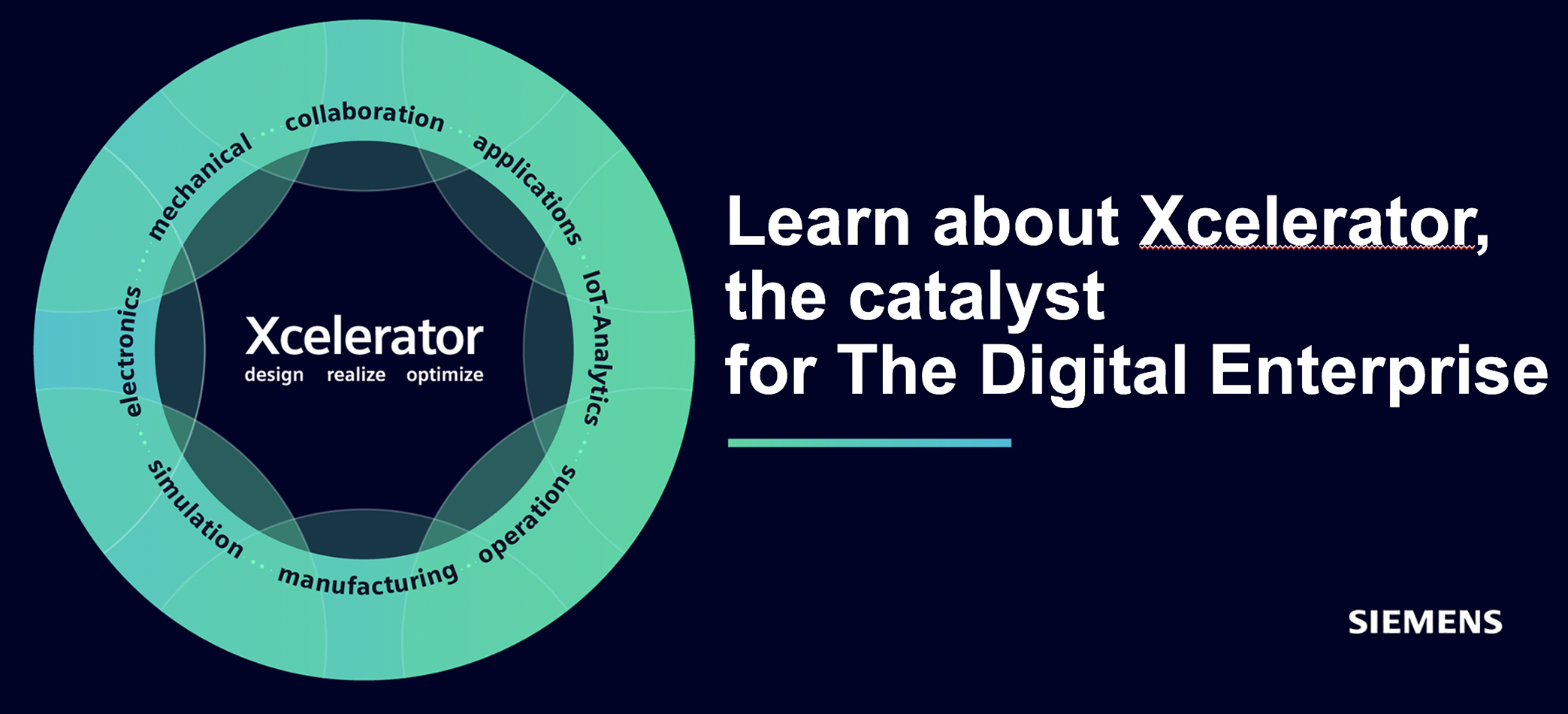
"Above all, it's things like electronics, software, collaboration across multiple domains, strong simulation connections within the framework of the PLM portfolio Xcelerator and design intelligence that have become increasingly important. Today we also talk a lot about the impact of AI, not least in the new updated versions. NX has here taken big steps towards becoming ‘self-driving’; understanding the individual's way of working and predictively assist with commands that you usually use. You don't have to sit in menus and search. In parallel, things like immersive technologies have emerged in the new NX. Not least, this is crucial when collaborative technologies that support industrial metaverses become increasingly important. At the same time Siemens’ strength is its strong connections between the digital product development and manufacturing automation, where with just a few clicks you can send over CAD-designed 3D models directly to manufacturing and the CAM side (virtual commissioning)." says Emdevik. He also highlights the CAD suite's sustainability capabilities, which are key in today's product development, where the target images speak of net-zero environmental impact: "Ensuring a product's environmental impact involves, among other things, optimization at the design point. It is said that over 80 percent of all product-related environmental impact is determined during the design phase. The capabilities of the CAD tool to meet this are of the utmost importance.”
Click on the headline to read the full article on PLM&ERP News.
PLM&ERP News has in recent years reported on aerospace giant Lockheed Martin's NX venture, as well as Bombardier's. On the automotive side, the near-term vehicle manufacturer KIA Motors' transition to NX is an example. But there are also fast-growing players here, such as the world's largest manufacturer of electric cars, Chinese BYD (Buy Your Dreams), which in the wake of growth has brought in large new orders. On the shipyard side, the Hyundai Group is a good example, while for example Sony represents large new investments in NX in high-tech/electronics. These changes alone add up to between 20,000 to 25,000 new NX users.
What is behind this? The question is relevant and is brought up to date right now by the fact that the company released new updates of NX, and also launched a hyper-interesting cloud CAD version, NX X. But also, in general technologically, the development dynamics around NX is remarkable. PLM&ERP News has discussed this with Rolf Emdevik, business developer on the NX side at Siemens Digital Industries Software.
There are several important factors that make NX more relevant than competitors' in a changed product landscape, he notes:
"Above all, it's things like electronics, software, collaboration across multiple domains, strong simulation connections within the framework of the PLM portfolio Xcelerator and design intelligence that have become increasingly important. Today we also talk a lot about the impact of AI, not least in the new updated versions. NX has here taken big steps towards becoming ‘self-driving’; understanding the individual's way of working and predictively assist with commands that you usually use. You don't have to sit in menus and search. In parallel, things like immersive technologies have emerged in the new NX. Not least, this is crucial when collaborative technologies that support industrial metaverses become increasingly important. At the same time Siemens’ strength is its strong connections between the digital product development and manufacturing automation, where with just a few clicks you can send over CAD-designed 3D models directly to manufacturing and the CAM side (virtual commissioning)." says Emdevik. He also highlights the CAD suite's sustainability capabilities, which are key in today's product development, where the target images speak of net-zero environmental impact: "Ensuring a product's environmental impact involves, among other things, optimization at the design point. It is said that over 80 percent of all product-related environmental impact is determined during the design phase. The capabilities of the CAD tool to meet this are of the utmost importance.”
Click on the headline to read the full article on PLM&ERP News.